


Filters Elements
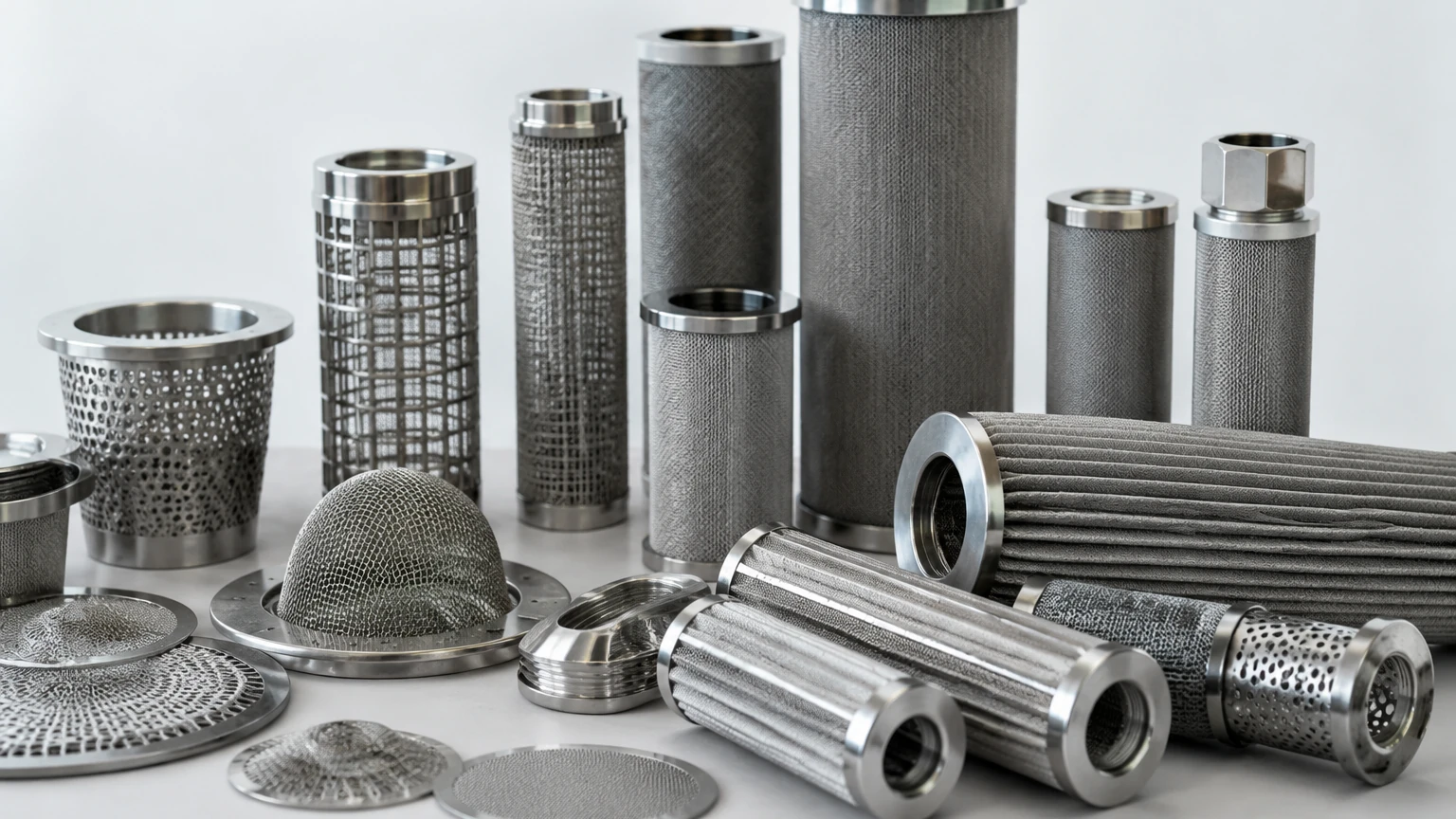
In industrial filtration, the performance of a system is fundamentally defined by its internal components. These components, commonly referred to as filters elements, are the functional heart of any filtration assembly, responsible for the physical separation of contaminants from a fluid or gas stream. For engineers and procurement specialists, selecting the correct filter element is not merely a matter of finding a part that fits a housing; it requires a deep understanding of material science, fluid dynamics, and the specific mechanical stresses of the application environment.
Industrial filters elements must maintain structural integrity while providing precise micron ratings under varying pressures and temperatures. Stainless steel has emerged as the premier material for these components due to its corrosion resistance, thermal stability, and cleanability. This guide examines the technical specifications, design variations, and selection criteria essential for optimizing industrial filtration processes.
Engineering Fundamentals of Industrial Filters Elements
The primary role of a filter element is to provide a barrier that allows the carrier fluid to pass while trapping particles of a specific size. This process is governed by several physical mechanisms, including direct interception, inertial impaction, and diffusion. In liquid applications, the efficiency of these mechanisms is heavily influenced by the flow velocity and the viscosity of the medium.
Filters elements are generally categorized into two types: surface filters and depth filters.
1. Surface Filtration: These elements utilize a single layer of material, such as a fine wire mesh, to catch particles on the upstream side. The advantage of surface filtration is the precision of the pore size and the ease of cleaning through backwashing or ultrasonic methods.
2. Depth Filtration: These elements use a thicker medium, often multiple layers of sintered mesh or fiber felt, to trap particles throughout the thickness of the material. Depth filtration offers a higher dirt-holding capacity but can be more challenging to clean once fully loaded.
For high-stakes industrial environments, such as chemical processing or hydraulic systems, the choice between these two types depends on the nature of the contaminant and the required service life between maintenance cycles.
Material Selection and Metallurgy
The longevity of filters elements is dictated by their compatibility with the process fluid. Stainless steel is the industry standard for demanding applications, but the specific grade of steel must be matched to the chemical environment.
* AISI 304/304L: This is the most common grade used for general industrial filtration. It offers good corrosion resistance and is suitable for water treatment, food processing, and standard hydraulic fluids.
* AISI 316/316L: Containing molybdenum, 316L provides superior resistance to chlorides and acids. It is the preferred choice for marine environments, pharmaceutical manufacturing, and aggressive chemical processing.
* Specialty Alloys: In cases of extreme temperature or highly corrosive chemicals, alloys such as Hastelloy, Monel, or Inconel may be utilized. These materials ensure that the filter element does not undergo stress corrosion cracking or pitting, which could lead to bypass or downstream contamination.
Beyond the chemical composition, the mechanical form of the stainless steel—whether it is woven wire mesh, sintered metal powder, or perforated plate—determines the element's permeability and mechanical strength.
Structural Designs: Pleated vs. Cylindrical Elements
The geometry of a filter element significantly impacts its performance characteristics, specifically the available filtration area and the pressure drop across the media.
Pleated Filter Elements
To maximize the surface area within a confined housing volume, manufacturers often pleat the filter media. Pleating can increase the effective filtration area by as much as 3 to 10 times compared to a standard cylindrical design. This increased area results in a lower face velocity, which improves filtration efficiency and extends the time between cleanings. Pleated elements are ideal for high-flow applications where minimizing pressure drop is critical.
Cylindrical and Sintered Elements
Cylindrical elements are simpler in construction and are often used when the filtration media is inherently rigid, such as wedge wire or heavy-duty sintered mesh. Sintered metal elements are created by bonding multiple layers of wire mesh or metal fibers together using heat and pressure without the use of binders. This creates a robust, monolithic structure capable of withstanding extreme differential pressures and high-temperature sterilization cycles.
Key Performance Indicators (KPIs) for Selection
When evaluating filters elements, engineers must focus on specific technical metrics to ensure the component will meet the operational requirements of the system.
Micron Rating: Absolute vs. Nominal
A critical distinction in filtration is the difference between nominal and absolute micron ratings. A nominal rating is an indicative value, often representing the size of the smallest particle that the filter can trap with approximately 60% to 95% efficiency. In contrast, an absolute rating refers to the diameter of the largest hard spherical particle that will pass through the filter under specified test conditions. For critical applications, such as protecting high-pressure fuel injectors or pharmaceutical purity, absolute-rated elements are mandatory.
Differential Pressure (Delta P)
Differential pressure ($ΔP$) is the difference in pressure between the upstream and downstream sides of the filter. Every filter element has a clean pressure drop and a maximum allowable pressure drop. As the element captures contaminants, the $ΔP$ increases. It is essential to select an element with a low initial $ΔP$ to conserve energy and ensure the system pump operates within its efficient range. The structural collapse pressure of the element must also be significantly higher than the maximum system pressure to prevent catastrophic failure.
Dirt-Holding Capacity (DHC)
DHC defines the total mass of a specific contaminant an element can retain before reaching its terminal differential pressure. A higher DHC translates directly to longer service intervals and lower total cost of ownership (TCO) by reducing the frequency of element replacement or cleaning.
Application-Specific Considerations
Different industries impose unique demands on filters elements. Understanding these nuances is vital for selecting a product that provides both performance and compliance.
* Food and Beverage: Elements must be constructed from FDA-compliant materials and often require high-temperature resistance for Steam-In-Place (SIP) or Clean-In-Place (CIP) sterilization processes. Smooth surface finishes are required to prevent bacterial growth.
* Oil and Gas: Filtration in this sector often involves high pressures and the presence of hydrogen sulfide (H2S), necessitating high-strength alloys and robust mechanical seals.
* Hydraulic Systems: Filters elements in hydraulic circuits must handle rapid flow fluctuations and high-viscosity fluids while protecting sensitive valves and actuators from wear-inducing particles.
* Chemical Processing: Compatibility with solvents, catalysts, and varying pH levels is the primary concern. Stainless steel elements are often used here because they do not leach contaminants into the process stream.
To explore specific technical configurations and engineering support for these applications, professionals can Review product options and application support to align their requirements with manufacturing capabilities.
Maintenance, Cleaning, and Replacement Cycles
Unlike disposable polymer filters, stainless steel filters elements are often designed for reuse. However, the cleaning process must be handled with precision to avoid damaging the delicate mesh or media.
Cleaning Methods
1. Ultrasonic Cleaning: This is the most effective method for removing fine particles trapped within the depth of the media. High-frequency sound waves create cavitation bubbles that dislodge contaminants.
2. Backwashing: For surface filters, reversing the flow of the process fluid can effectively clear the filter surface. This is often automated in continuous process systems.
3. Chemical Cleaning: Soaking elements in specific solvents or acids can dissolve organic or mineral deposits. This must be done with careful consideration of the element's metallurgy.
Determining Replacement
Even with regular cleaning, filters elements eventually reach the end of their service life. This may be due to "permanent fouling," where particles become irrecoverably lodged in the media, or mechanical fatigue from repeated pressure cycling. Regular inspection for mesh deformation, broken wires, or compromised seals is essential for maintaining system integrity.
Customization and OEM Procurement
In many industrial projects, standard off-the-shelf filters elements do not meet the exact spatial or performance requirements. Customization allows for the optimization of the filter to the specific housing geometry and flow characteristics.
When working with a manufacturer for custom elements, engineers should confirm the following:
* End Cap Configuration: Whether the element requires DOE (Double Open End), SOE (Single Open End), or specific threaded connections.
* Seal Material: Selection of O-rings (Viton, EPDM, PTFE) based on chemical and thermal exposure.
* Reinforcement: The need for internal support cores or external cages to prevent collapse or bursting under high differential pressure.
By focusing on these technical details during the procurement phase, organizations can ensure that their filtration systems operate at peak efficiency with minimal downtime. The integration of high-quality stainless steel filters elements is a strategic investment in the reliability and purity of industrial processes.
