


Polyester Foam Suppliers
In the landscape of industrial filtration and material science, identifying the right polyester foam suppliers is a critical step for engineers and procurement professionals. Polyester-based polyurethane foam, often referred to simply as polyester foam, is a versatile, open-cell material widely utilized across the chemical processing, automotive, and HVAC industries. Its unique structure—characterized by a uniform cell size and high resistance to hydrocarbons—makes it a staple for applications requiring fluid management, air filtration, and acoustic insulation.
However, selecting a supplier involves more than comparing price points. For technical applications, the performance of the foam is dictated by its manufacturing precision, chemical composition, and reticulation quality. This guide examines the technical parameters engineers must evaluate when vetting polyester foam suppliers and discusses when industrial applications might require a transition to more durable filtration media, such as the stainless steel solutions found on our Main Page.
Understanding the Technical Profile of Polyester Foam
Polyester foam is distinguished from its counterpart, polyether foam, by its superior mechanical strength and resistance to oils and solvents. When communicating with polyester foam suppliers, it is essential to understand the specific properties that define the material's performance in industrial environments.
1. Reticulation and Porosity
Most industrial-grade polyester foams undergo a process called reticulation. In this process, the thin cell membranes (or "windows") are removed, leaving only the dodecahedron skeletal structure. This results in a highly porous, open-cell foam that allows for efficient fluid or airflow with minimal pressure drop. Suppliers typically categorize these foams by Pores Per Inch (PPI), ranging from 10 PPI (very coarse) to 100 PPI (very fine). Engineers must confirm that a supplier can maintain consistent PPI counts across different production batches to ensure predictable filtration efficiency.
2. Chemical and Hydrocarbon Resistance
One of the primary reasons engineers seek out polyester foam suppliers over polyether alternatives is the material's inherent resistance to petroleum products, alcohols, and non-polar solvents. This makes it ideal for gaskets, seals, and pre-filters in machinery where oil mist or fuel vapors are present. However, polyester foam is susceptible to hydrolysis—degradation caused by long-term exposure to high humidity and heat. Suppliers should provide technical data sheets (TDS) detailing the material’s performance under specific environmental stressors.
3. Physical Durability
Polyester foam exhibits high tensile strength, elongation, and tear resistance. These properties are vital for applications where the foam is subjected to mechanical stress, such as in vibrating equipment or as a protective barrier in hydraulic systems. When evaluating suppliers, request information on the "compression set," which measures the foam's ability to return to its original thickness after being compressed. A low compression set is indicative of a high-quality, durable polymer structure.
Key Evaluation Criteria for B2B Suppliers
Choosing a supplier for industrial-grade foam requires a rigorous vetting process that goes beyond basic material availability. Because polyester foam is often a component in larger, complex systems, the reliability of the supplier directly impacts the final product's performance.
Manufacturing Consistency and Quality Control
In filtration, even a slight deviation in cell structure can lead to bypass or premature clogging. Reliable polyester foam suppliers should adhere to ISO 9001 standards and provide lot-to-lot traceability. Ask potential partners about their testing protocols: Do they perform regular airflow resistance tests? How do they verify the uniformity of the reticulation process? For high-precision industries like pharmaceuticals or aerospace, these quality markers are non-negotiable.
Customization and Conversion Capabilities
Rarely is polyester foam used in its raw "bun" or sheet form. Most B2B buyers require specific shapes, thicknesses, or laminations. Leading suppliers often offer "conversion" services, which include:
- Die-cutting: Precision cutting of gaskets and filters into complex geometries.
- Slitting: Reducing large rolls or buns into specific widths and thicknesses.
- Laminating: Bonding the foam to adhesives, films, or other substrates.
- Impregnation: Adding functional coatings, such as flame retardants or anti-microbial agents.
Supply Chain Stability and Lead Times
Given the global nature of chemical manufacturing, polyester foam suppliers can be affected by fluctuations in raw material costs (polyols and isocyanates). A stable supplier should have a diversified sourcing strategy and transparent lead times. For OEM manufacturers, the ability of a supplier to hold buffer stock or provide Just-In-Time (JIT) delivery is a significant advantage in maintaining production schedules.
Common Risks in Procuring Polyester Foam
While polyester foam is a cost-effective solution for many applications, it is not without its risks. Procurement teams should be aware of several common pitfalls when dealing with lower-tier suppliers.
1. Incomplete Reticulation: If the cell membranes are not fully removed, the foam will have higher air resistance and lower dust-holding capacity. This is often a result of poorly controlled manufacturing processes.
2. Outgassing: In sensitive electronic or optical applications, the release of volatile organic compounds (VOCs) from the foam can cause damage. High-quality suppliers offer low-outgassing grades specifically for these environments.
3. Dimensional Instability: Foam that has not been properly cured may shrink or expand after cutting, leading to fitment issues in the final assembly.
When to Move Beyond Foam: The Case for Metal Filtration
While polyester foam is an excellent medium for pre-filtration and light-duty industrial use, it has physical limits. In many demanding B2B applications, engineers find that foam cannot withstand the operational rigors of the environment. This is where the expertise of a manufacturer like Kaifil becomes essential.
Temperature and Pressure Constraints
Polyester foam typically has an upper operating temperature limit of approximately 100°C to 120°C (212°F to 248°F). Beyond this, the polymer begins to soften and lose structural integrity. Furthermore, foam cannot withstand high differential pressures; it will compress or collapse, leading to a total failure of the filtration system. In contrast, stainless steel wire mesh and sintered metal filters are designed to operate at temperatures exceeding 500°C and can handle extreme pressure spikes without deformation.
Chemical Aggression and Sterilization
Although polyester is resistant to many hydrocarbons, it will degrade when exposed to strong acids, bases, or steam. In industries like food and beverage or pharmaceuticals, where Clean-In-Place (CIP) and Steam-In-Place (SIP) protocols are standard, foam is often unsuitable. Stainless steel filtration components offer the chemical inertness and durability required for repeated sterilization cycles. For a comprehensive look at how metal filtration solves these challenges, engineers can review the options available on our Main Page.
Longevity and Total Cost of Ownership (TCO)
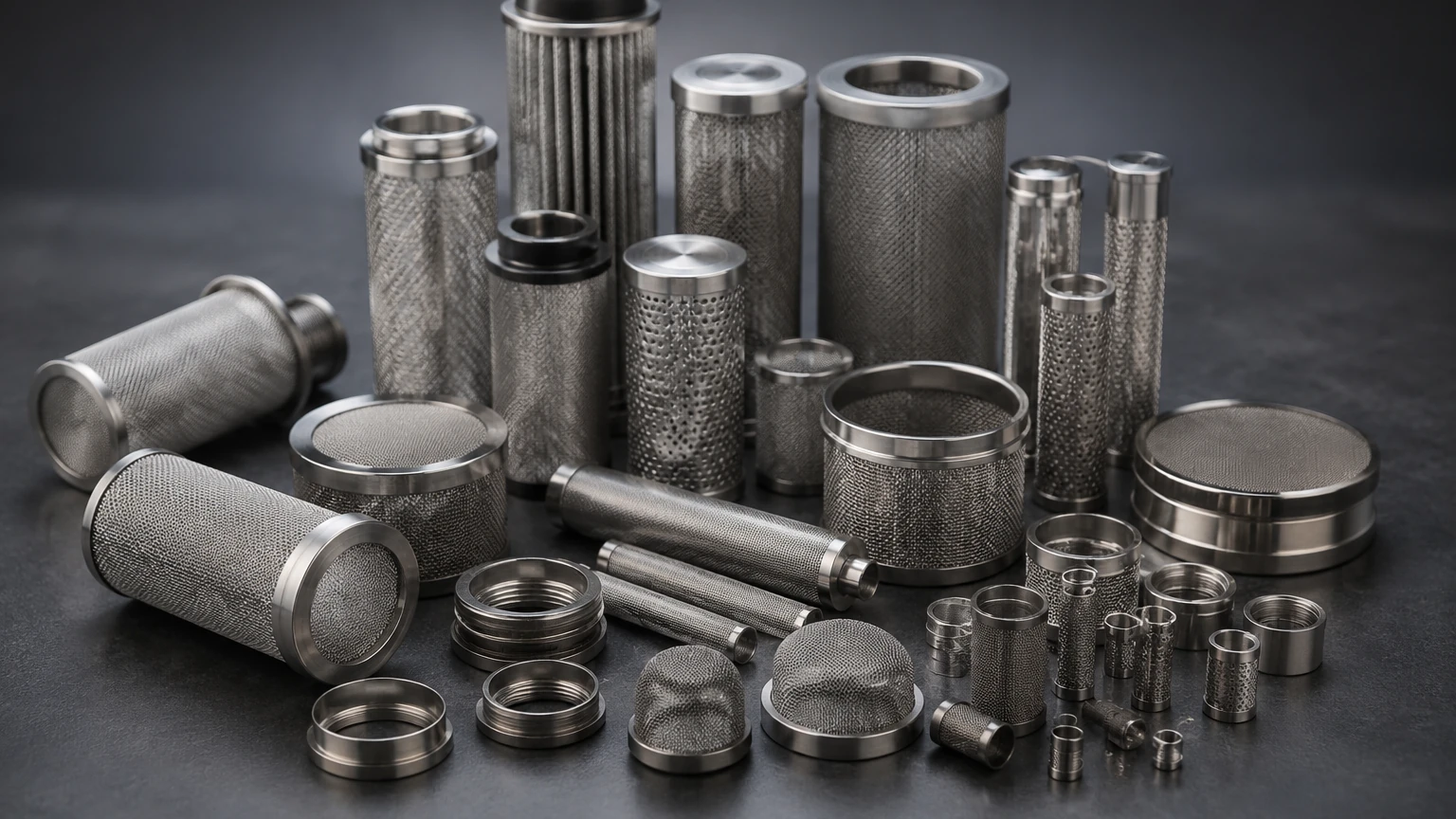
Polyester foam is generally considered a disposable medium. While the initial purchase price is low, the cumulative cost of frequent replacements, labor for maintenance, and the environmental impact of waste can be high. Stainless steel filters, while requiring a higher initial investment, are cleanable and reusable, often lasting for years in the same application. This long-term durability significantly reduces the total cost of ownership for industrial facilities.
Engineering Considerations for Filter Selection
When deciding between polyester foam and more permanent solutions, engineers should perform a thorough application analysis. Consider the following factors:
- Target Particle Size: Polyester foam is effective for coarse filtration (typically >10 microns). For sub-micron filtration or high-precision separation, stainless steel wire mesh or sintered cartridges are superior.
- Flow Rate Requirements: Foam allows for high flow rates at low pressure, but if the fluid is viscous or the flow is turbulent, a rigid metal structure is necessary to prevent media migration.
- Environmental Exposure: If the filter will be exposed to UV light, ozone, or fluctuating humidity, metal is the safer choice, as polyester foam will eventually embrittle and crumble under these conditions.
Questions to Ask Potential Polyester Foam Suppliers
Before finalizing a contract with a supplier, technical teams should pose the following questions to ensure the material meets their specific needs:
1. What is the specific PPI tolerance for this grade? (e.g., +/- 5 PPI).
2. Can you provide a certificate of conformance (CoC) for every shipment?
3. What is the maximum continuous operating temperature for this specific formulation?
4. Are there any additives used that might leach into the fluid stream?
5. What are the minimum order quantities for custom-cut dimensions?
By securing clear answers to these questions, procurement teams can mitigate the risk of component failure and ensure that the polyester foam integrated into their systems performs as engineered.
Conclusion: Strategic Sourcing for Industrial Success
Identifying reliable polyester foam suppliers is a foundational task for many industrial projects. The material’s ability to manage airflow, filter out large particulates, and resist oils makes it indispensable in the right context. However, the key to successful procurement lies in understanding the material's technical boundaries and the supplier's quality control capabilities.
For applications where polyester foam reaches its limits—whether due to extreme heat, corrosive chemicals, or the need for absolute precision—transitioning to stainless steel filtration is the logical engineering step. Companies like Kaifil provide the advanced manufacturing expertise needed to develop custom metal filtration solutions that outperform and outlast traditional foam media. To explore how precision-engineered metal components can optimize your filtration processes, we invite you to visit our Main Page and consult with our technical team. Whether you are sourcing disposable foam for pre-filtration or permanent stainless steel cartridges for critical processes, informed selection remains the most effective way to ensure operational efficiency and product quality.
