


Pneumatic Exhaust Silencer
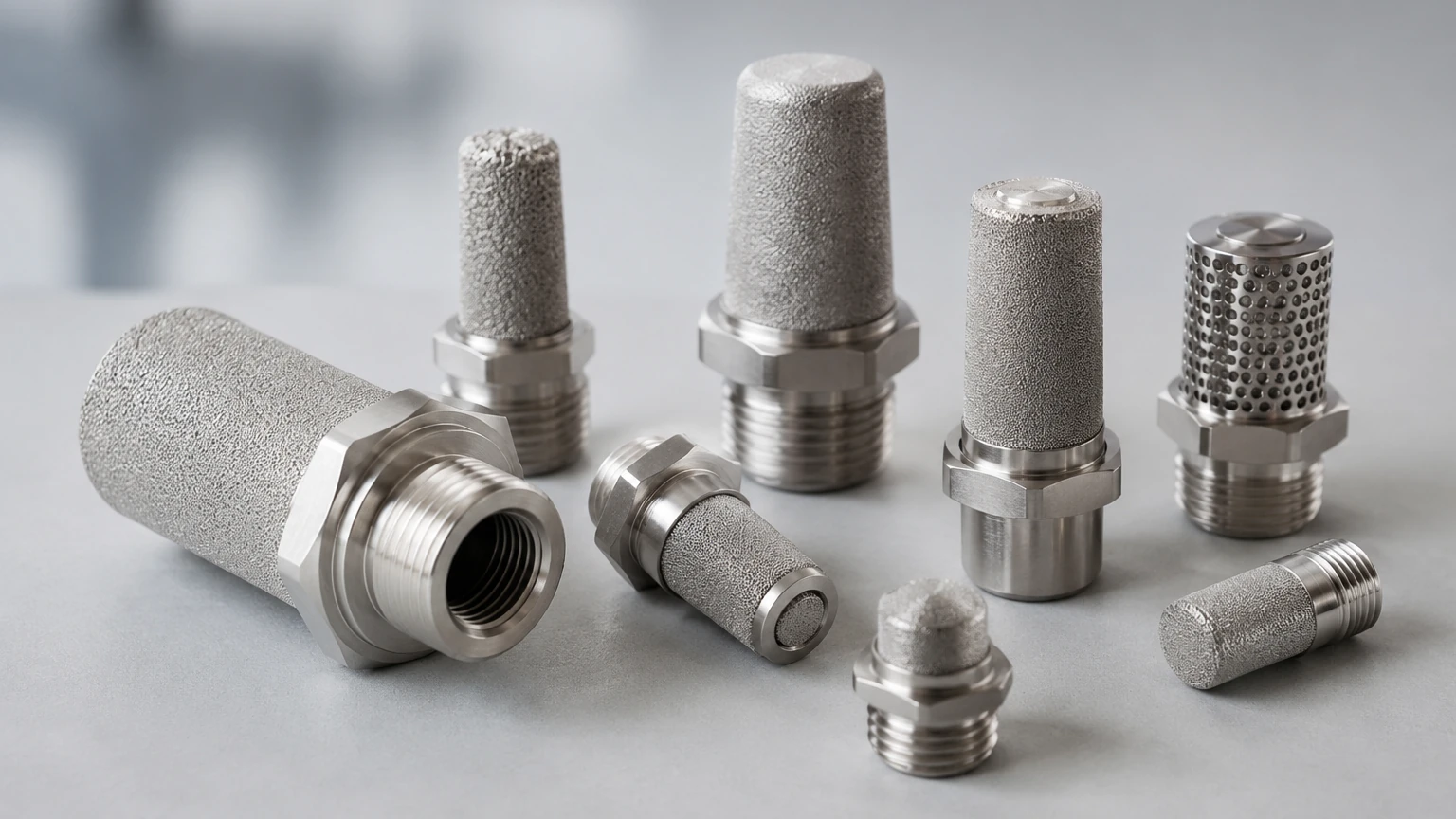
In industrial automation and pneumatic systems, the management of compressed air exhaust is a critical engineering consideration that impacts both personnel safety and equipment longevity. A pneumatic exhaust silencer, often referred to as a pneumatic muffler, is a component designed to reduce the noise levels generated by the rapid expansion of compressed air as it exits an exhaust port. Beyond noise attenuation, these components serve as vital protection for the pneumatic system, preventing the ingress of contaminants into valves and cylinders.
For engineers and maintenance professionals, selecting the appropriate pneumatic exhaust silencer requires a deep understanding of fluid dynamics, material compatibility, and the specific operational requirements of the machinery. This guide explores the technical nuances of silencer design, material selection, and performance evaluation to support informed procurement and system optimization.
The Engineering Principles of Noise Reduction and Flow Control
When compressed air is released from a pneumatic valve into the atmosphere, it undergoes a rapid drop in pressure and a significant increase in velocity. This transition creates turbulent airflow, which is the primary source of high-frequency noise in industrial environments. A pneumatic exhaust silencer functions by diffusing the air through a porous medium, which breaks up the large, high-velocity air stream into multiple smaller, lower-velocity streams.
Diffusion and Expansion
The internal geometry of a silencer allows the exhaust air to expand into a larger volume before it reaches the atmosphere. This expansion reduces the kinetic energy of the air. By utilizing sintered metal media or layered wire mesh, the silencer creates a tortuous path for the air. As the air navigates this path, the sound waves are reflected and absorbed, significantly lowering the decibel (dB) output.
The Backpressure Trade-off
A critical engineering consideration is the relationship between noise reduction and backpressure. While a denser filtration medium provides superior noise attenuation, it also restricts airflow. Excessive backpressure can lead to several system inefficiencies:
* Reduced Actuator Speed: High resistance at the exhaust port slows down the stroke of pneumatic cylinders.
* Inconsistent Cycling: Variations in exhaust flow can lead to erratic timing in automated sequences.
* Increased Energy Consumption: The system may require higher operating pressures to overcome the resistance at the exhaust.
Engineers must evaluate the flow coefficient (Cv) of the silencer to ensure it matches the requirements of the valve and the desired cycle time of the application.
Material Engineering: Stainless Steel vs. Alternative Media
The choice of material for a pneumatic exhaust silencer is dictated by the operating environment, the purity of the compressed air, and the required service life. While plastic and brass silencers are common in light-duty applications, stainless steel remains the industrial standard for demanding environments.
Sintered Stainless Steel
Sintered stainless steel is manufactured by fusing metallic powders under heat and pressure without melting them. This process creates a porous structure with precisely controlled pore sizes. In the context of a pneumatic exhaust silencer, sintered stainless steel offers several advantages:
* Structural Integrity: Unlike plastic silencers, sintered metal can withstand high-pressure spikes and mechanical impacts without fracturing.
* Thermal Resistance: Stainless steel maintains its properties at extreme temperatures, making it suitable for applications near heat sources or in cryogenic environments.
* Corrosion Resistance: In industries such as chemical processing or marine environments, 304 or 316L stainless steel provides essential protection against oxidative and chemical degradation.
Stainless Steel Wire Mesh
For applications requiring high flow rates with moderate noise reduction, multi-layered stainless steel wire mesh is often employed. These silencers offer lower backpressure than sintered versions and are highly resistant to clogging by oil or particulate matter found in the air lines. Kaifil specializes in these custom metal filtration components, ensuring that the mesh density and configuration are optimized for specific industrial loads.
Critical Selection Criteria for Industrial Applications
When specifying a pneumatic exhaust silencer, purchasing teams and engineers should move beyond basic thread sizing and consider the following technical parameters:
1. Noise Reduction Rating (NRR)
Most industrial silencers aim to reduce noise levels to below 85 dB(A) to comply with OSHA and other international occupational health standards. It is important to review the dB reduction data across different frequency ranges, as some materials are more effective at dampening high-frequency "hissing" than low-frequency vibrations.
2. Filtration Efficiency
In many pneumatic systems, the exhaust port is also a potential entry point for dust, moisture, and debris when the valve is in a neutral position. A silencer with a specific micron rating acts as a secondary filter, protecting the internal seals and precision-machined surfaces of the pneumatic valves from environmental contamination.
3. Connection Type and Thread Standard
Ensuring a leak-proof connection is vital. Silencers are typically available in NPT (National Pipe Thread), BSPP (British Standard Pipe Parallel), or BSPT (British Standard Pipe Taper). Using the incorrect thread type can lead to vibration-induced loosening or thread stripping, which compromises the safety of the exhaust system.
4. Environmental Compatibility
In food and beverage or pharmaceutical sectors, the silencer must be made of non-leaching, FDA-compliant materials. Stainless steel is preferred here because it can be subjected to rigorous cleaning protocols, including high-pressure washdowns and chemical sterilization, without losing its functional integrity.
Customization and OEM Integration
Standard off-the-shelf silencers may not always meet the spatial or performance constraints of specialized machinery. Customization is a key factor for original equipment manufacturers (OEMs) who need to integrate filtration and noise control into compact footprints.
Custom design options often include:
* Low-Profile Geometries: For use in tight manifold configurations where standard "beehive" or cylindrical shapes will not fit.
* Integrated High-Flow Designs: Combining the silencer with a flow control valve (speed controller) to allow for manual adjustment of cylinder speeds directly at the exhaust port.
* Specialized Micron Ratings: Tailoring the porosity of the sintered media to handle specific types of exhaust debris, such as carbon dust in heavy-duty industrial braking systems.
As a professional manufacturer, Kaifil provides extensive expertise in developing these tailored solutions. To explore technical specifications or discuss custom requirements, engineers can visit the Main Page for a comprehensive overview of available filtration and silencer technologies.
Maintenance, Clogging, and Replacement Cycles
A pneumatic exhaust silencer is a consumable component, though its lifespan varies greatly depending on the quality of the compressed air. Air that is heavily laden with oil from compressors or particulate matter from aging piping will eventually clog the porous media of the silencer.
Identifying a Clogged Silencer
The most common symptom of a clogged silencer is a gradual increase in machine cycle time. If a pneumatic cylinder that previously took one second to extend now takes two seconds, the exhaust silencer is likely restricted. Other signs include:
* Visible Oil Saturation: In lubricated systems, oil can accumulate in the silencer, attracting dust and creating a thick sludge that blocks airflow.
* Increased Noise: Paradoxically, if the media fractures due to extreme clogging and pressure buildup, the noise level may suddenly increase.
Cleaning vs. Replacement
While plastic silencers must be replaced once clogged, stainless steel silencers can often be cleaned and reused. Ultrasonic cleaning or back-flushing with compatible solvents can remove many types of industrial contaminants. However, if the sintered structure is saturated with baked-on carbon or metallic particles, replacement is the more cost-effective and reliable option to ensure system performance.
Industry-Specific Considerations
Food and Beverage Processing
In these environments, exhaust air must be managed carefully to prevent the aerosolization of lubricants or the accumulation of bacteria in the silencer media. Stainless steel silencers are essential here due to their ability to withstand caustic cleaning agents (CIP – Clean-in-Place processes).
Chemical and Petrochemical
Corrosive atmospheres can quickly degrade brass or aluminum components. Using 316L stainless steel pneumatic exhaust silencers ensures that the exhaust port remains functional even when exposed to acidic or alkaline vapors.
Precision Manufacturing and Electronics
In cleanroom environments, the exhaust from pneumatic systems must be filtered to prevent sub-micron particles from contaminating the production area. Specialized silencers with high-efficiency particulate air (HEPA) equivalent media are often required in these scenarios.
Conclusion
The pneumatic exhaust silencer is a small but indispensable component of the modern industrial landscape. By effectively managing noise and protecting system integrity, these devices contribute to a safer, more efficient, and more durable manufacturing environment. When selecting a silencer, engineers should prioritize material quality—specifically stainless steel for high-demand applications—and ensure that the flow characteristics align with the pneumatic system's design. Through proper selection and regular maintenance, the total cost of ownership is reduced, and the operational reliability of the entire pneumatic circuit is enhanced.
