


Foam Fish Filter
In the realm of industrial aquaculture, commercial hatcheries, and large-scale aquatic research facilities, the selection of filtration media is a critical engineering decision that directly impacts water quality, livestock health, and operational overhead. The term "foam fish filter" typically refers to sponge-based filtration systems that utilize open-cell foam to provide both mechanical straining and a substrate for biological processing. While often associated with small-scale hobbyist applications, foam filtration plays a specialized role in industrial water treatment loops, particularly when integrated with robust components like stainless steel housings and precision wire mesh pre-filters.
Understanding the technical specifications, limitations, and engineering trade-offs of foam media is essential for technical professionals tasked with designing or maintaining high-volume aquatic systems. This guide explores the mechanical principles of foam filtration, its application in industrial settings, and how it interfaces with advanced Main Page solutions to ensure long-term system stability.
The Mechanics of Foam Filtration in Industrial Contexts
Foam filtration operates on two primary levels: mechanical interception and biological colonization. In an industrial aquaculture setting, these functions must be quantified to ensure the system can handle specific biological loads and flow requirements.
Mechanical Interception
Mechanical filtration involves the physical removal of suspended solids, such as uneaten feed, metabolic waste, and organic debris. Foam media is characterized by its "Pores Per Inch" (PPI) rating. A lower PPI (e.g., 10–20 PPI) indicates larger pores, which allow for higher flow rates and lower resistance but capture only larger particles. Conversely, a high PPI (e.g., 30–50 PPI) provides finer mechanical filtration but is prone to rapid clogging, which can lead to significant head loss in a pumped system.
Engineers must calculate the expected solids loading to determine the appropriate PPI. In many industrial configurations, foam is not the primary mechanical filter; instead, it follows a coarse stainless steel wire mesh screen that removes the bulk of the debris, allowing the foam to focus on finer particles and biological activity.
Biological Filtration and Surface Area
The defining characteristic of a foam fish filter in a commercial environment is its massive internal surface area. The open-cell structure of the foam provides an ideal environment for nitrifying bacteria (*Nitrosomonas* and *Nitrobacter*) to colonize. These bacteria are responsible for the nitrogen cycle, converting toxic ammonia into nitrite and then into relatively harmless nitrate.
For industrial applications, the "Specific Surface Area" (SSA) of the foam is the key metric. High-quality reticulated polyurethane foam can offer thousands of square meters of surface area per cubic meter of media. This high SSA allows for compact bio-reactor designs, which is a critical consideration for facilities with limited floor space.
Engineering Considerations for Foam Media Selection
When specifying foam for an industrial-grade fish filter, several engineering factors must be evaluated to ensure the component meets the demands of continuous operation.
Material Compatibility and Durability
Not all foam is suitable for industrial filtration. Polyether-based foams are generally preferred over polyester-based foams in aquatic environments because they exhibit superior resistance to hydrolysis (breakdown in water). In salt-water or brackish applications, the chemical stability of the foam is even more critical. Engineers must ensure that the foam does not leach volatile organic compounds (VOCs) or other toxins that could compromise sensitive aquatic species.
Flow Dynamics and Head Loss
In a recirculating aquaculture system (RAS), energy efficiency is paramount. Every Pascal of pressure drop across a filter translates to increased pump energy consumption. Foam media, as it accumulates trapped solids, experiences a non-linear increase in resistance. System designers must incorporate pressure sensors to monitor this head loss and establish maintenance protocols before the flow rate drops below the critical threshold for oxygenation and waste removal.
Integration with Stainless Steel Components
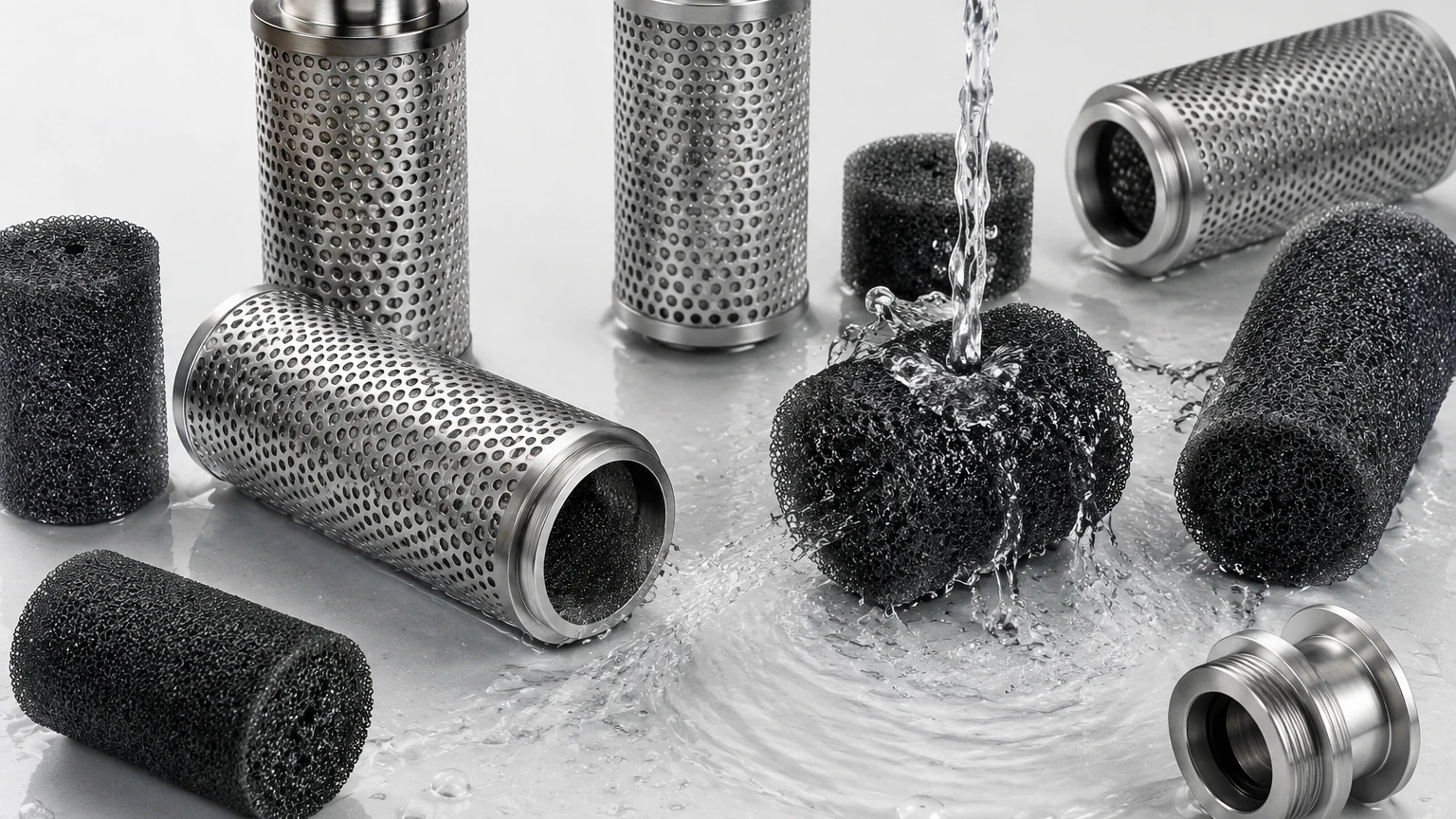
In professional installations, foam media is rarely used in isolation. To maintain structural integrity and ease of maintenance, foam inserts are typically housed within stainless steel cartridges or frames. Using AISI 304 or 316L stainless steel for these housings ensures that the filtration unit can withstand the corrosive nature of the water and the physical stresses of high-pressure cleaning cycles. This hybrid approach—combining the biological efficiency of foam with the structural reliability of metal—is a hallmark of well-engineered industrial filtration systems.
Common Risks and Performance Limitations
While foam is an effective biological medium, it presents several risks that must be managed in a B2B or industrial context.
1. Channeling: Over time, if the foam is not properly seated or if it becomes unevenly clogged, water will follow the path of least resistance. This "channeling" bypasses the bulk of the media, leading to a sudden drop in filtration efficiency and potential ammonia spikes.
2. Compaction: Under high flow rates or high pressure, soft foam media can compress. Compaction reduces the available surface area and increases resistance, further exacerbating flow issues. This is why many industrial designs utilize rigid or semi-rigid foam structures or support the foam with internal stainless steel mesh cores.
3. Oxygen Depletion: Because foam filters are often densely colonized by bacteria, they have a high biological oxygen demand (BOD). If the water flow slows down significantly, the interior of the foam can become anaerobic, leading to the production of toxic hydrogen sulfide gas.
Transitioning from Foam to Precision Metal Filtration
As aquaculture operations scale, the limitations of foam—specifically the labor-intensive cleaning process and the finite lifespan of the material—often lead engineers to look for more permanent solutions. This is where the expertise of a professional manufacturer becomes invaluable.
For high-load mechanical filtration, replacing or augmenting foam with stainless steel wire mesh filters offers several advantages:
* Precision: Wire mesh provides an absolute filtration rating, unlike the nominal rating of foam. If a process requires the removal of particles larger than 50 microns, a precision-woven mesh can guarantee that performance.
* Cleanability: Stainless steel filters can be backwashed or ultrasonically cleaned, significantly reducing the downtime and manual labor associated with squeezing out large foam blocks.
* Longevity: While foam may need replacement every 6–12 months in a heavy-duty environment, a well-maintained stainless steel filter can last for years, lowering the total cost of ownership.
For facilities requiring customized solutions, Main Page provides the engineering support needed to design filtration components that bridge the gap between biological foam needs and mechanical durability requirements.
Maintenance and Total Cost of Ownership (TCO)
From a procurement perspective, the initial cost of a foam fish filter is low, but the TCO can be high due to maintenance requirements. In a commercial hatchery, the labor cost involved in cleaning foam media can quickly exceed the cost of the media itself.
Cleaning Protocols
In industrial settings, foam is typically cleaned using a "squeeze and rinse" method with dechlorinated water to preserve the bacterial colony. However, this process is difficult to automate. Facilities looking to optimize their operations often implement a multi-stage approach:
1. Stage 1: Automatic backwashing drum filters or stainless steel mesh screens for primary solids removal.
2. Stage 2: Fixed-bed or moving-bed bio-reactors using foam or plastic media for biological processing.
3. Stage 3: UV sterilization or ozone treatment for pathogen control.
By reducing the mechanical load on the foam, the cleaning interval can be extended from daily to monthly, drastically improving operational efficiency.
Information to Confirm Before Purchasing
Before selecting a foam-based filtration solution or the components to house it, engineers and purchasing teams should confirm the following technical details with their supplier:
* Pore Consistency: Ensure the PPI rating is consistent throughout the material to prevent premature clogging or channeling.
* Chemical Resistance: Confirm the foam is resistant to any cleaning agents or treatments (such as formalin or potassium permanganate) used in the facility.
* Custom Dimensions: For OEM applications, confirm that the manufacturer can provide custom-cut foam or custom-fabricated stainless steel housings that fit the specific geometry of the existing system.
* Filtration Efficiency vs. Flow Rate: Request data sheets that show the pressure drop across the media at various flow velocities.
Conclusion
The foam fish filter remains a staple in aquatic management due to its unparalleled biological filtration capabilities. However, in an industrial context, its success depends on proper engineering, material selection, and integration with robust mechanical filtration components. By understanding the balance between PPI, surface area, and flow resistance, and by leveraging the durability of stainless steel filtration hardware, facilities can achieve a stable and cost-effective aquatic environment.
For organizations seeking to optimize their filtration infrastructure, working with a manufacturer that understands both the biological requirements of aquaculture and the mechanical rigors of industrial processing is essential. Whether you are designing a new hatchery or upgrading an existing water treatment loop, focusing on precision-engineered components will ensure the long-term viability of your filtration system. For more information on custom filtration components and engineering support, visit the Main Page to explore professional solutions tailored to your specific application.
