


Woven Wire Mesh: Engineering Standards for High-Performance Containment and Industrial Applications
In the realm of industrial infrastructure and specialized containment, the selection of materials is a critical engineering decision that impacts safety, longevity, and operational efficiency. One of the most versatile materials utilized across diverse sectors—from chemical processing to high-end equine facilities—is Woven Wire Mesh. While often discussed in the context of filtration and separation, the mechanical properties of high-quality woven mesh make it an essential component for robust containment solutions, including the specialized requirements of a woven wire fence horse owners and facility managers rely on for safety.
For engineers and procurement professionals, understanding the technical specifications of woven wire mesh is paramount. This guide explores the intersection of industrial-grade mesh manufacturing and its application in demanding environments, focusing on material selection, weave types, and the structural integrity required for both filtration and containment.
Understanding Woven Wire Mesh in High-Performance Containment
Woven wire mesh is produced by weaving individual metallic wires over and under one another to create a stable, uniform grid. In industrial settings, this process is governed by strict tolerances to ensure consistent aperture sizes and mechanical strength. When applied to containment, such as a woven wire fence horse enclosure, these same manufacturing standards ensure that the mesh can withstand significant impact without deforming or failing.
The primary advantage of woven construction over welded alternatives lies in its flexibility and energy absorption. In a woven structure, the wires have a degree of independent movement within the weave, allowing the mesh to distribute stress across a larger surface area. For high-value assets or livestock, this characteristic reduces the risk of injury upon impact, as the mesh provides a "spring" effect rather than a rigid, unforgiving barrier.
Material Engineering: Why Stainless Steel Dominates Specialized Mesh Applications
The performance of any woven wire mesh is fundamentally tied to its metallurgy. While galvanized steel is common in general agricultural use, industrial and high-end containment applications often demand the superior properties of stainless steel, specifically grades 304 and 316L.
Corrosion Resistance and Longevity
Stainless steel contains chromium, which forms a passive layer of chromium oxide on the surface, protecting the underlying metal from oxidation. In outdoor or chemically aggressive environments, this prevents the structural degradation common in carbon steel. For a woven wire fence horse application located in coastal regions or areas with high humidity, SS316L offers enhanced resistance to pitting and crevice corrosion, ensuring the mesh maintains its integrity for decades.
Tensile Strength and Ductility
Industrial-grade stainless steel wires provide high tensile strength, allowing for thinner wire diameters without sacrificing security. This is particularly beneficial for visibility and airflow. A mesh with high ductility can undergo significant deformation before breaking, a critical safety feature in containment where sudden loads (such as a horse leaning or kicking) are expected.
The Technical Nuances of Woven Wire Mesh for Horse Safety and Containment
When specifying mesh for equine environments, the "horse-safe" designation refers to specific engineering criteria that prevent entrapment and injury. A woven wire fence horse specification typically requires a mesh opening small enough to prevent a hoof from passing through—generally 2 inches by 4 inches or smaller in traditional fencing, or even tighter apertures in specialized industrial mesh panels.
From a manufacturing perspective, the smoothness of the wire and the security of the junctions are vital. Unlike welded wire, which can have sharp burrs at the weld points, high-quality woven wire mesh features smooth intersections. This minimizes the risk of abrasions or lacerations. Furthermore, the use of a "S-knot" or "Square Deal" knot in agricultural weaving, or a precise plain weave in industrial panels, ensures that the vertical and horizontal wires remain locked in place, preventing the openings from widening over time.
Structural Integrity: Tensile Strength and Impact Resistance
For B2B applications, the mechanical performance of the mesh is often quantified through tensile testing and burst strength analysis. In filtration, the mesh must withstand high pressure differentials; in containment, it must withstand kinetic energy.
Engineers must consider the following factors when selecting Plain, twill and dutch woven wire mesh in SS304/316L — rolls, cut mesh and framed panels. Send mesh count or micron target for a technical quote.:
1. Wire Diameter: The gauge of the wire directly correlates to the breaking strength. Heavier gauges are used for perimeter security and large animal containment, while finer wires are reserved for precision filtration.
2. Aperture Size: The clear opening between wires. Consistency in aperture size is critical for maintaining a uniform barrier and ensuring predictable airflow and visibility.
3. Mesh Count: The number of wires per linear inch. A higher mesh count typically indicates a finer, more dense material used for specialized screening or reinforced containment layers.
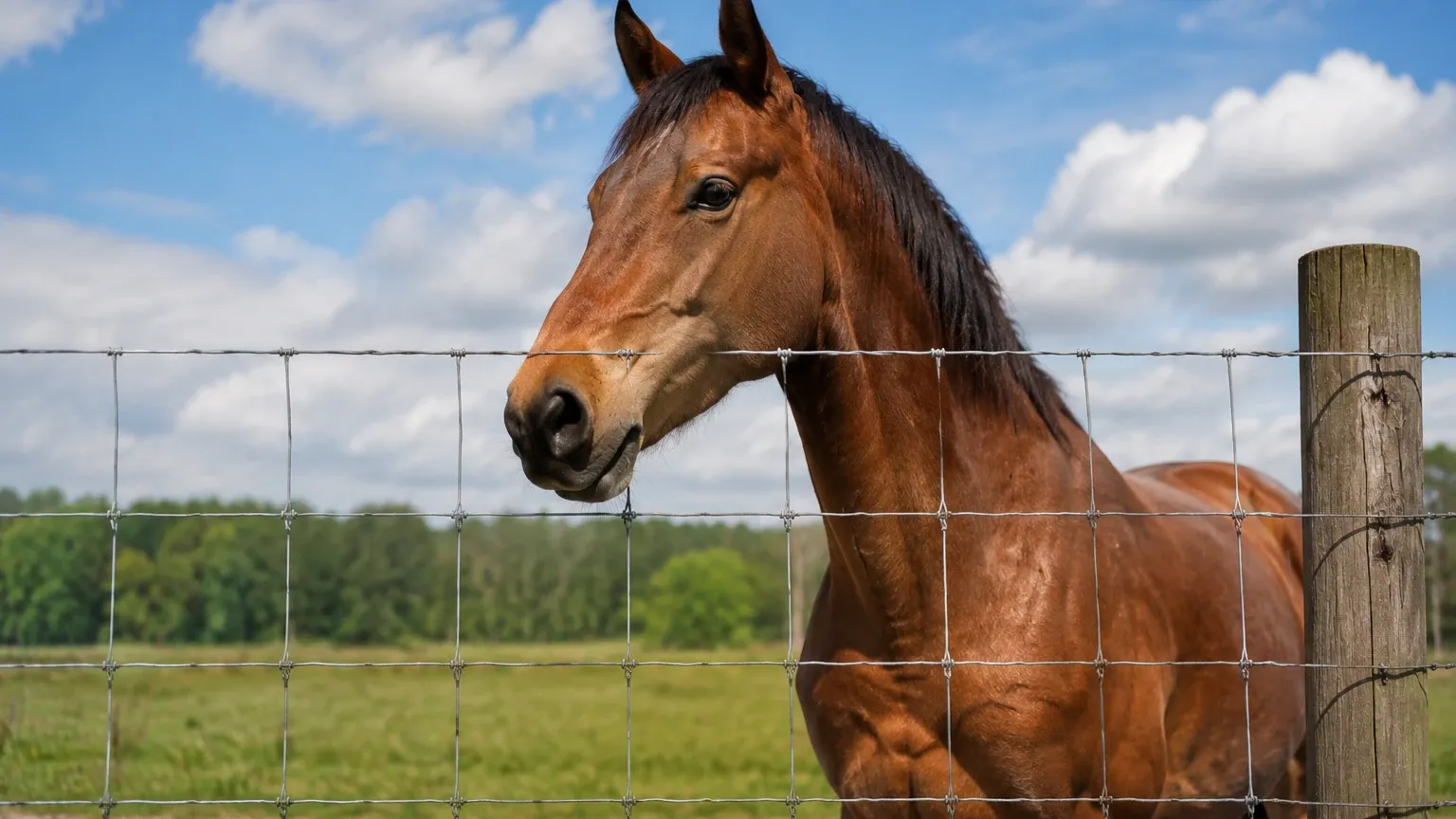
Comparing Weave Patterns: From Industrial Filtration to Protective Barriers
The method of weaving significantly influences the mesh's physical properties. While there are dozens of specialized weaves, three are most common in high-performance applications:
* Plain Weave: The most straightforward pattern where each warp wire crosses alternately over and under each weft wire. This provides the highest level of transparency and is ideal for both industrial sieving and high-visibility woven wire fence horse panels.
* Twill Weave: Each weft wire passes over and under two warp wires. This allows for a heavier wire diameter to be used for a given mesh count, increasing the overall strength and durability of the panel.
* Dutch Weave: Utilizes different wire diameters for the warp and weft, resulting in a dense, strong mesh with very fine filtration capabilities. While rarely used for fencing, it is the standard for high-pressure hydraulic and chemical filtration components produced by manufacturers like Kaifil.
Maintenance and Lifecycle Costs of Industrial-Grade Mesh
One of the primary considerations for purchasing teams is the total cost of ownership (TCO). While the initial investment in a high-quality stainless steel woven wire fence horse or industrial mesh partition may be higher than galvanized or plastic alternatives, the long-term savings are substantial.
* Reduced Replacement Frequency: Stainless steel does not rust, peel, or become brittle under UV exposure. This eliminates the need for periodic replacement cycles common with coated or lower-grade materials.
* Low Maintenance: Unlike wood or painted steel, woven stainless mesh requires minimal upkeep. It does not need painting, staining, or chemical treatments to maintain its structural properties.
* Cleaning and Hygiene: In pharmaceutical or food-grade environments, and even in high-end stables, the ability to pressure wash and sanitize the mesh without risking corrosion is a significant operational advantage.
Customization and OEM Solutions for Precision Mesh Components
In many industrial applications, off-the-shelf mesh products do not meet the specific requirements of a project. Customization is often necessary to achieve the desired balance of strength, weight, and filtration accuracy. As a professional manufacturer, Kaifil specializes in providing tailored solutions that go beyond standard rolls of mesh.
Customization options include:
* Specific Alloy Selection: Tailoring the material to the specific chemical or environmental stresses of the application.
* Edge Finishing: Providing mesh with finished edges, frames, or custom cut-to-size panels to facilitate easy installation and improve safety.
* Layering and Sintering: For extreme environments, multiple layers of Woven Wire Mesh can be sintered together to create a composite material with exceptional mechanical strength and precise pore distribution.
Conclusion: Selecting the Right Mesh for Your Requirements
Whether you are designing a high-security enclosure, a specialized woven wire fence horse system, or a complex industrial filtration unit, the quality of the woven wire mesh is the foundation of the project's success. By focusing on technical specifications—such as material grade, wire diameter, and weave type—engineers can ensure that their containment and filtration solutions provide the necessary safety and durability.
For organizations seeking reliable, high-performance filtration and mesh components, partnering with a manufacturer that understands the nuances of metal weaving is essential. From material selection to final production, the focus should always remain on precision, durability, and meeting the specific demands of the industrial environment.
