


Understanding Industrial Woven Wire Mesh: Beyond Retail Fencing Solutions
In the procurement process for industrial components, the distinction between retail-grade materials and engineering-grade specifications is critical. While a search for "woven wire fence home depot" might lead to solutions suitable for residential perimeters or basic agricultural enclosures, industrial applications—ranging from chemical processing to high-precision filtration—demand a significantly higher level of material integrity and manufacturing precision.
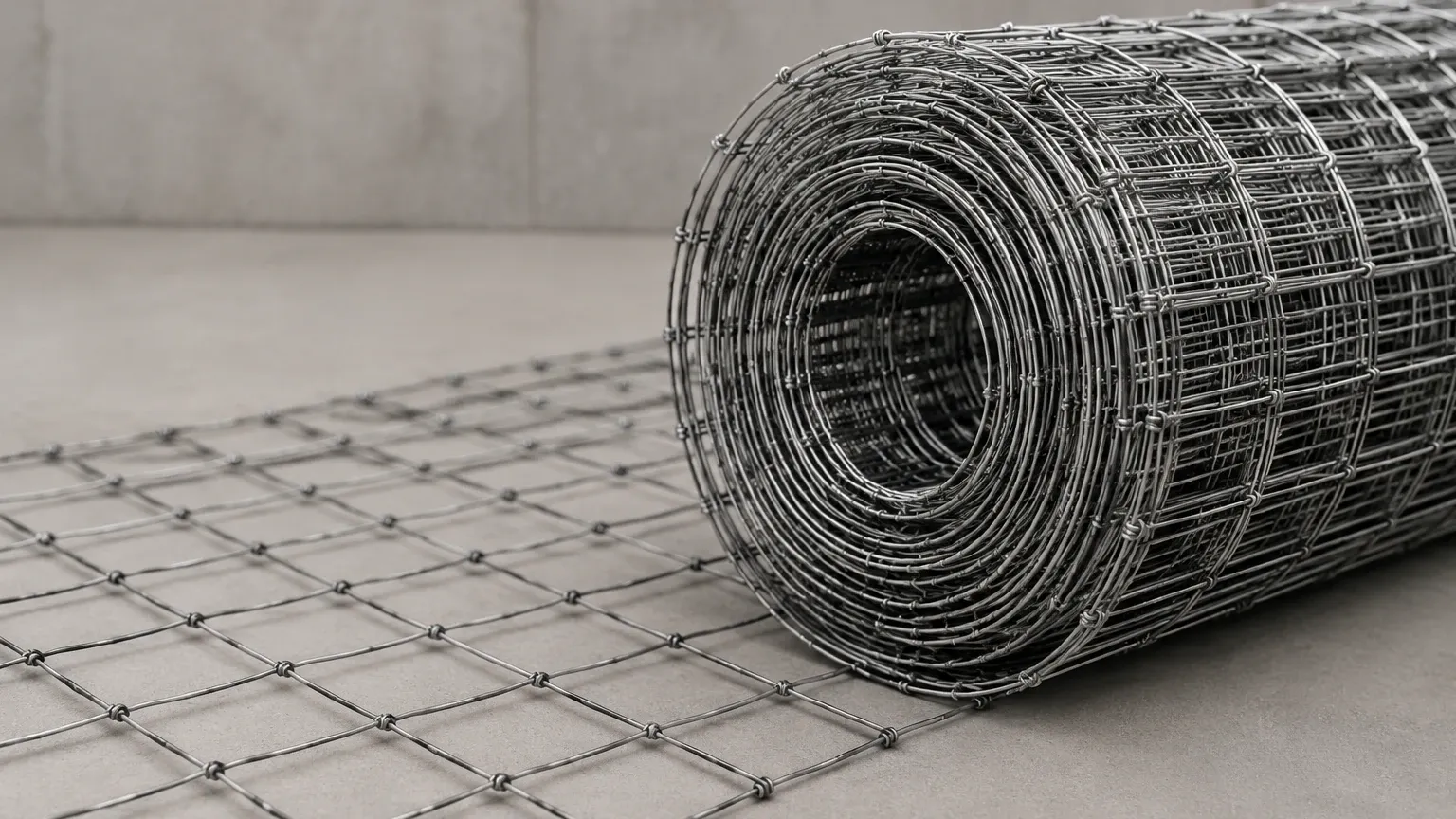
For engineers and technical buyers, Woven Wire Mesh represents a versatile category of industrial fabric produced by weaving metallic wires on large looms. Unlike standard retail fencing, which often prioritizes cost and basic containment, industrial woven mesh is defined by its aperture size, wire diameter, and alloy composition to meet specific performance benchmarks in demanding environments.
The Technical Gap: Retail Fencing vs. Industrial Mesh
When evaluating a "woven wire fence home depot" option, the primary focus is typically on galvanized steel or low-carbon steel with large openings, often referred to as "field fence" or "hog wire." These products are designed for outdoor durability against weather but lack the precision required for industrial processing.
In contrast, industrial woven wire mesh is manufactured to strict tolerances. The differences are found in three primary areas:
1. Material Composition: Industrial mesh predominantly utilizes Stainless Steel 304 or 316L. These alloys provide superior resistance to corrosion, high temperatures, and chemical exposure, which are standard requirements in pharmaceutical and food processing industries.
2. Aperture Precision: While a retail fence may have variances of several millimeters, industrial mesh is measured in microns. For filtration purposes, the consistency of the opening size is paramount to ensure the exclusion of specific particle sizes.
3. Mechanical Strength: Industrial weaving techniques, such as twill or dutch weaves, provide structural stability that retail-grade fencing cannot achieve, allowing the mesh to withstand high-pressure differentials in hydraulic or water treatment systems.
Engineering Specifications of Woven Wire Mesh
Selecting the correct mesh requires an understanding of the relationship between wire diameter, mesh count, and open area. These factors dictate the mechanical strength and the flow characteristics of the material.
Mesh Count and Micron Rating
The mesh count refers to the number of openings per linear inch. As the mesh count increases, the aperture size (the space between wires) decreases. For B2B applications, this is often translated into a micron rating, which defines the largest particle that can pass through the mesh. Plain, twill and dutch woven wire mesh in SS304/316L — rolls, cut mesh and framed panels. Send mesh count or micron target for a technical quote. helps engineers match these specifications to their specific filtration or separation needs.
Weave Types and Their Applications
The method by which wires are interlaced determines the mesh's performance characteristics:
* Plain Weave: The most common industrial weave where each warp wire crosses alternately over and under each shute wire. It offers a high open area and is ideal for standard sieving and separation.
* Twill Weave: Each shute wire passes successively over and under two warp wires. This allows for a heavier wire diameter to be used for a given mesh count, increasing the strength and durability of the mesh for high-load applications.
* Dutch Weave: This utilizes a limited number of warp wires interlaced with a maximum number of shute wires. This creates a dense, strong mesh with very fine openings, making it the standard for high-pressure filtration components.
Material Selection: SS304 vs. SS316L
One of the most significant limitations of standard retail products like those found under the category of "woven wire fence home depot" is the reliance on galvanized coatings. In industrial settings, these coatings can flake or react with processed fluids.
Stainless Steel 304
SS304 is the industrial standard for general-purpose mesh. It offers excellent resistance to atmospheric corrosion and is widely used in food processing and industrial sieving where extreme chemical resistance is not required.
Stainless Steel 316L
For marine environments, chemical processing plants, or pharmaceutical manufacturing, SS316L is preferred. The addition of molybdenum provides enhanced resistance to pitting and crevice corrosion, particularly in chloride-rich environments. Furthermore, the "L" (Low Carbon) designation ensures that the mesh remains resistant to intergranular corrosion after welding, which is essential when fabricating custom filter cartridges or framed panels.
Industrial Applications and Performance Expectations
Industrial woven wire mesh serves functions far beyond simple containment. Its role in modern manufacturing is foundational to product quality and equipment longevity.
1. Filtration and Separation
In hydraulic systems and water treatment plants, woven mesh acts as a precise barrier. Unlike disposable filters, stainless steel mesh can be cleaned and reused, providing a lower total cost of ownership (TCO) over the life of the equipment. Engineers must calculate the pressure drop across the mesh to ensure that flow rates remain within operational parameters.
2. Heat Treatment and Drying
Because stainless steel can withstand extreme temperatures, woven mesh is often used for conveyor belts in industrial ovens or as trays for drying chemical catalysts. The open area of the mesh allows for uniform airflow, which is critical for consistent thermal processing.
3. EMI/RFI Shielding
In electronics and aerospace, fine woven wire mesh is utilized to shield sensitive components from electromagnetic interference (EMI). The conductivity of the stainless steel or specialized alloys ensures that signals are contained or excluded as required by the design specifications.
Customization and OEM Considerations
For many B2B purchasers, the standard rolls available at retail outlets are insufficient. Customization is often a requirement for seamless integration into existing machinery. Industrial manufacturers like Kaifil provide several value-added services that are not available through traditional retail channels:
* Slitting and Cutting: Precision cutting to specific widths or shapes (discs, rectangles) to fit filter housings.
* Framing and Edging: Adding U-binders or specialized frames to provide structural support for panels used in vibrating screens or architectural inserts.
* Multi-Layer Sintering: For extreme pressure environments, multiple layers of woven wire mesh can be sintered together to create a composite material that combines fine filtration with high mechanical strength.
* Custom Alloys: Beyond stainless steel, mesh can be produced in Monel, Inconel, or Hastelloy for specialized chemical resistance.
Total Cost Considerations for Purchasing Teams
When comparing a specialized industrial supplier to a general retailer for "woven wire fence home depot," the initial price point of retail products may seem attractive. However, for industrial operations, the total cost of ownership must be evaluated.
Retail-grade fencing often fails prematurely in industrial environments due to corrosion or mechanical fatigue, leading to unplanned downtime and replacement labor costs. Furthermore, the lack of certification and material traceability in retail products can pose significant risks in regulated industries like food and beverage or pharmaceuticals.
Investing in engineering-grade woven wire mesh ensures:
* Compliance: Meeting industry standards (such as FDA requirements for food contact).
* Longevity: Reduced frequency of replacement in corrosive or high-wear environments.
* Process Efficiency: Consistent aperture sizes ensure that filtration and separation processes remain within specification, reducing waste and improving product yield.
Conclusion: Making an Informed Selection
While retail options serve a vital purpose for residential and light agricultural use, the complexities of industrial filtration and processing require a more technical approach. When selecting woven wire mesh, engineers should prioritize material grade, weave type, and precise aperture requirements over the convenience of local retail availability.
By understanding the engineering principles behind wire mesh—from the nuances of SS316L to the structural benefits of a twill weave—purchasing teams can secure components that enhance the reliability and efficiency of their industrial systems. For those requiring specific filtration performance or custom-fabricated components, partnering with a manufacturer that understands these technical boundaries is the most effective path to operational success.
