


Porösem
In the field of industrial separation and fluid dynamics, the term "porösem"—referring to the porous nature of filtration media—defines the functional capability of a filter element. For engineers and technical procurement teams, selecting a porous metal filter is not merely a matter of choosing a component; it is an exercise in balancing mechanical strength, chemical compatibility, and precise particle retention. Stainless steel porous media, particularly those developed through sintering and advanced wire mesh weaving, provide the structural integrity required for the most demanding industrial environments.
At Kaifil, the focus remains on engineering custom stainless steel filtration solutions that leverage these porous characteristics to solve complex separation challenges. Understanding the technical nuances of porous structures allows operators to optimize flow rates, minimize pressure drops, and extend the service life of critical equipment.
The Engineering Fundamentals of Porous Metal Media
A material is described as having a porösem structure when it contains a network of interconnected voids that allow the passage of fluids while trapping solid contaminants. In industrial filtration, the geometry, size, and distribution of these pores determine the filter’s efficiency.
Unlike polymer or paper filters, porous metal filters are engineered to withstand extreme conditions. The porosity of a sintered metal component typically ranges from 30% to 50%, though custom designs can vary based on the specific requirements of the application. The primary advantage of using stainless steel in a porous state is its ability to maintain a rigid structure under high differential pressures. This prevents "media migration," a common failure in softer materials where the filter medium itself sheds particles into the filtrate.
For technical professionals, the distinction between open and closed porosity is vital. Open porosity refers to the interconnected channels that extend from one surface of the filter to the other, facilitating fluid flow. Closed porosity, while contributing to the overall density of the material, does not assist in filtration. High-quality manufacturing processes ensure that the porösem structure is predominantly open and uniform, ensuring predictable performance across the entire surface area of the Main Page.
Material Selection for Demanding Environments
The performance of a porous filter is inseparable from the metallurgy of the material used. In most industrial applications, stainless steel is the preferred choice due to its inherent resistance to oxidation and corrosion.
316L Stainless Steel
316L is the industry standard for porous filtration. The "L" denotes low carbon content, which is essential for components that undergo welding or sintering, as it prevents carbide precipitation and maintains corrosion resistance at the grain boundaries. This material is particularly effective in chemical processing and marine environments where chloride exposure is a concern.
304 Stainless Steel
For applications where extreme corrosion resistance is less critical but mechanical durability is paramount, 304 stainless steel offers a cost-effective alternative. It is widely used in food and beverage processing and general industrial hydraulics.
Specialized Alloys
In cases involving highly aggressive acids or extreme temperatures exceeding 800°C, engineers may specify porous structures made from Inconel, Monel, or Hastelloy. These materials maintain their porösem characteristics and structural stability where standard steels would fail. Selecting the correct alloy requires a thorough analysis of the fluid chemistry, operating temperature, and potential for galvanic corrosion.
Manufacturing Techniques: From Sintering to Wire Mesh
Creating a porösem structure in metal requires specialized manufacturing techniques that allow for precise control over pore size and distribution. There are two primary methods used in the production of high-performance industrial filters.
Sintered Metal Powder
In this process, spherical or irregular metal powders are placed into a mold and heated to a temperature just below their melting point. Through molecular diffusion, the particles bond at their contact points. The resulting structure is a rigid, porous block or tube. The pore size is controlled by the diameter of the powder particles used. This method is ideal for creating depth filters that can capture a high volume of contaminants within the matrix of the material.
Sintered Wire Mesh
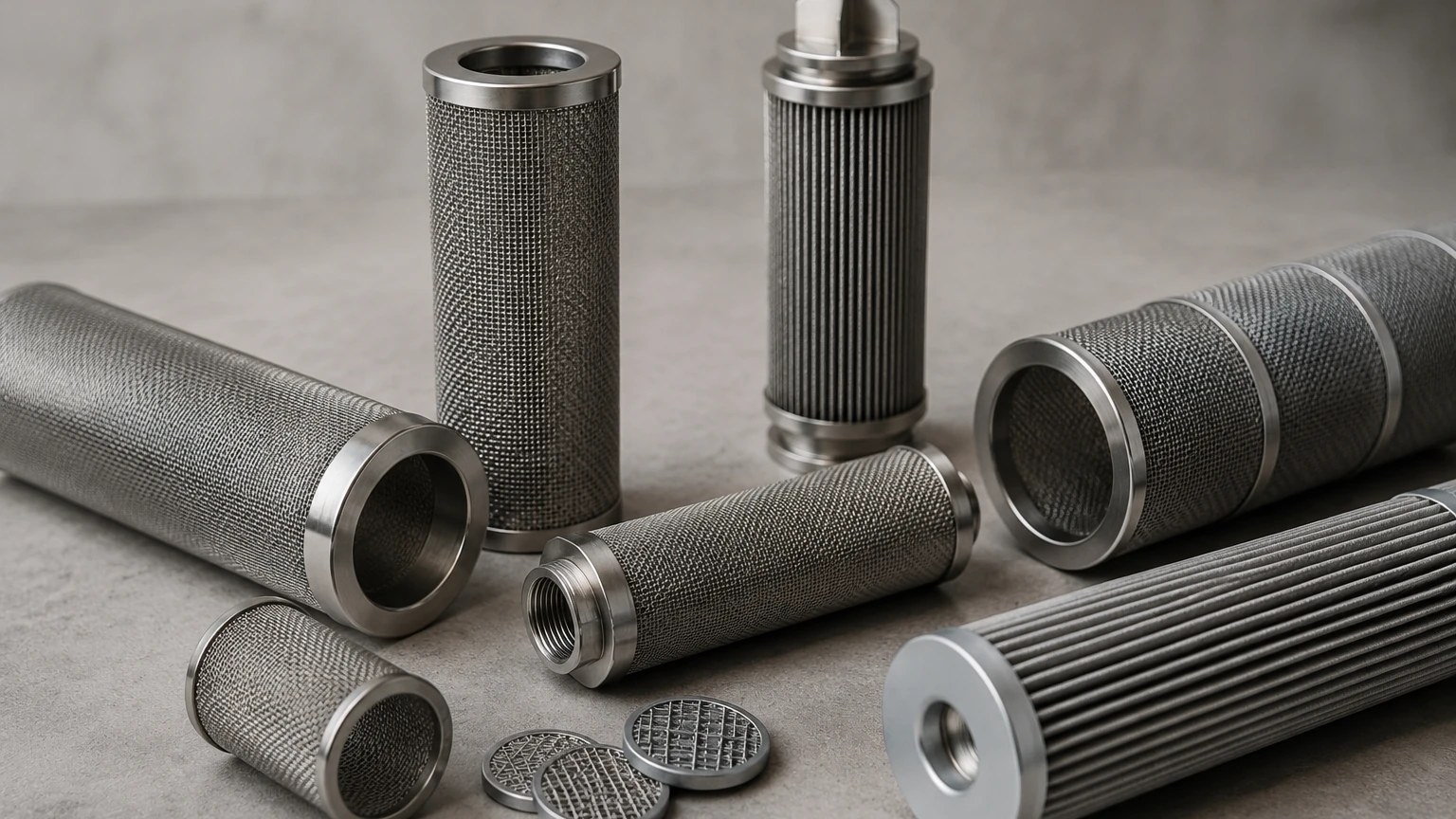
Sintered wire mesh involves layering multiple sheets of woven stainless steel wire cloth and bonding them together through heat and pressure. This creates a porösem medium that combines the precise filtration rating of fine mesh with the mechanical strength of heavier support layers. This structure is highly resistant to pleat deformation and is often used in high-pressure hydraulic and polymer filtration applications.
By utilizing these manufacturing methods, Kaifil provides customized filtration solutions that meet exact micron ratings, ensuring that the porösem media performs reliably under the specific stresses of the client's system.
Filtration Performance Metrics and Evaluation
When evaluating a porösem filter, engineers must look beyond the simple micron rating. Several key metrics define the real-world performance of the component:
1. Absolute vs. Nominal Rating: An absolute rating indicates the pore size at which 99.9% of particles are retained. A nominal rating is a more generalized measure, often representing the average pore size. For critical pharmaceutical or chemical processes, absolute-rated porous media are required to ensure safety and purity.
2. Permeability: This measures how easily a fluid can pass through the porösem structure. Higher permeability results in lower energy consumption for pumps and longer intervals between cleaning cycles.
3. Bubble Point Pressure: This is a standard test used to verify the integrity of a porous filter. By submerging the filter in a liquid and increasing air pressure until the first bubble appears, engineers can calculate the maximum pore size present in the media.
4. Dirt Holding Capacity: This refers to the amount of contaminant a filter can retain before the pressure drop reaches a critical limit. A well-designed porösem structure maximizes this capacity by utilizing the full depth of the material.
Industrial Applications and Engineering Compatibility
The versatility of porösem metal filters makes them indispensable across various sectors. Each industry presents unique challenges that dictate the design of the filtration component.
Chemical and Petrochemical Processing
In these environments, filters must withstand aggressive solvents and high-temperature catalysts. Porous stainless steel filters are used for catalyst recovery, gas-solid separation, and protecting sensitive downstream instrumentation from particulate damage.
Food and Beverage Industry
Filtration in this sector requires materials that are biologically inert and easy to sterilize. Sintered porous filters are used for steam filtration (to ensure "culinary grade" steam), carbonation, and the removal of yeast or bacteria from liquids. The smooth surface finish and uniform porösem structure allow for effective Clean-in-Place (CIP) procedures.
Pharmaceutical Manufacturing
Precision is the priority in pharmaceutical applications. Porous metal components are utilized in sparging (introducing gases into liquids), solvent filtration, and laboratory-scale separation. The ability to manufacture these components to strict tolerances ensures compliance with regulatory standards.
Hydraulic and Aerospace Systems
High-pressure hydraulic systems rely on porösem wire mesh filters to protect valves and actuators from wear-inducing particles. These filters must handle rapid pressure fluctuations without bypass or structural failure.
Maintenance, Cleaning, and Total Cost of Ownership
One of the most significant advantages of stainless steel porösem media is that they are cleanable and reusable. Unlike disposable cartridges, which represent a recurring cost and environmental waste, metal filters can be restored to near-original performance levels through various cleaning methods.
* Backwashing: Reversing the flow of fluid through the filter to dislodge accumulated particles from the surface of the porösem media.
* Ultrasonic Cleaning: Using high-frequency sound waves in a cleaning solution to create cavitation bubbles that reach deep into the porous matrix, removing fine contaminants that backwashing cannot reach.
* Chemical Cleaning: Using specialized solvents or acids to dissolve organic or mineral deposits that have adhered to the stainless steel.
* Burn-off/Pyrolysis: For filters used in polymer or resin processing, heating the filter in a controlled environment can burn off organic residues, leaving the porösem metal structure intact.
When calculating the Total Cost of Ownership (TCO), the higher initial investment in a custom porous metal filter is often offset by the elimination of frequent replacement costs, reduced downtime, and lower disposal fees. Engineers should evaluate the expected number of cleaning cycles and the ease of integration into existing maintenance workflows when selecting a filter supplier.
Confirming Specifications for Custom Solutions
Before proceeding with a purchase, it is essential for technical teams to confirm specific parameters with the manufacturer. Because porösem media are highly customizable, providing accurate data ensures the final product meets the application's needs. Key information to confirm includes:
* Fluid Properties: Viscosity, density, and chemical composition.
* Operating Conditions: Maximum and normal operating temperature, flow rate, and system pressure.
* Target Contaminant: Particle size distribution, concentration, and the nature of the solids (deformable vs. hard).
* Mechanical Constraints: Connection types (NPT, Flange, DOE), housing dimensions, and allowable pressure drop.
Kaifil works closely with global customers to develop high-performance filter products that address these specific variables. By focusing on the material science and engineering principles of porösem structures, Kaifil delivers dependable filtration components for the most demanding industrial environments. For further technical details or to explore specific product configurations, professionals are encouraged to visit the Main Page to review product options and application support.
