


Protein Skimmer What Does It Do
In the realm of industrial water treatment and large-scale aquaculture, maintaining water quality is a multifaceted challenge that requires a combination of mechanical, biological, and chemical processes. One of the most critical yet often misunderstood components in these systems is the protein skimmer. For engineers and facility managers, understanding the technical nuances of a protein skimmer what does it do is essential for optimizing Recirculating Aquaculture Systems (RAS) and high-load wastewater treatment plants.
At its core, a protein skimmer—also known as a foam fractionator—is a device designed to remove dissolved organic compounds (DOC) from water before they have the chance to break down into nitrogenous waste, such as ammonia and nitrite. Unlike traditional mechanical filters that trap particulate matter using physical barriers like stainless steel wire mesh, a protein skimmer utilizes the physical properties of bubbles and surface tension to extract microscopic pollutants.
Understanding the Fundamentals: Protein Skimmer What Does It Do?
To answer the question of a protein skimmer what does it do, one must look at the molecular level of water contamination. In any biological system, organic waste is constantly produced. This includes uneaten food, metabolic byproducts, and decaying organic matter. While mechanical filtration is excellent at removing large debris, it often fails to capture dissolved proteins and lipids that are too small for standard mesh sizes.
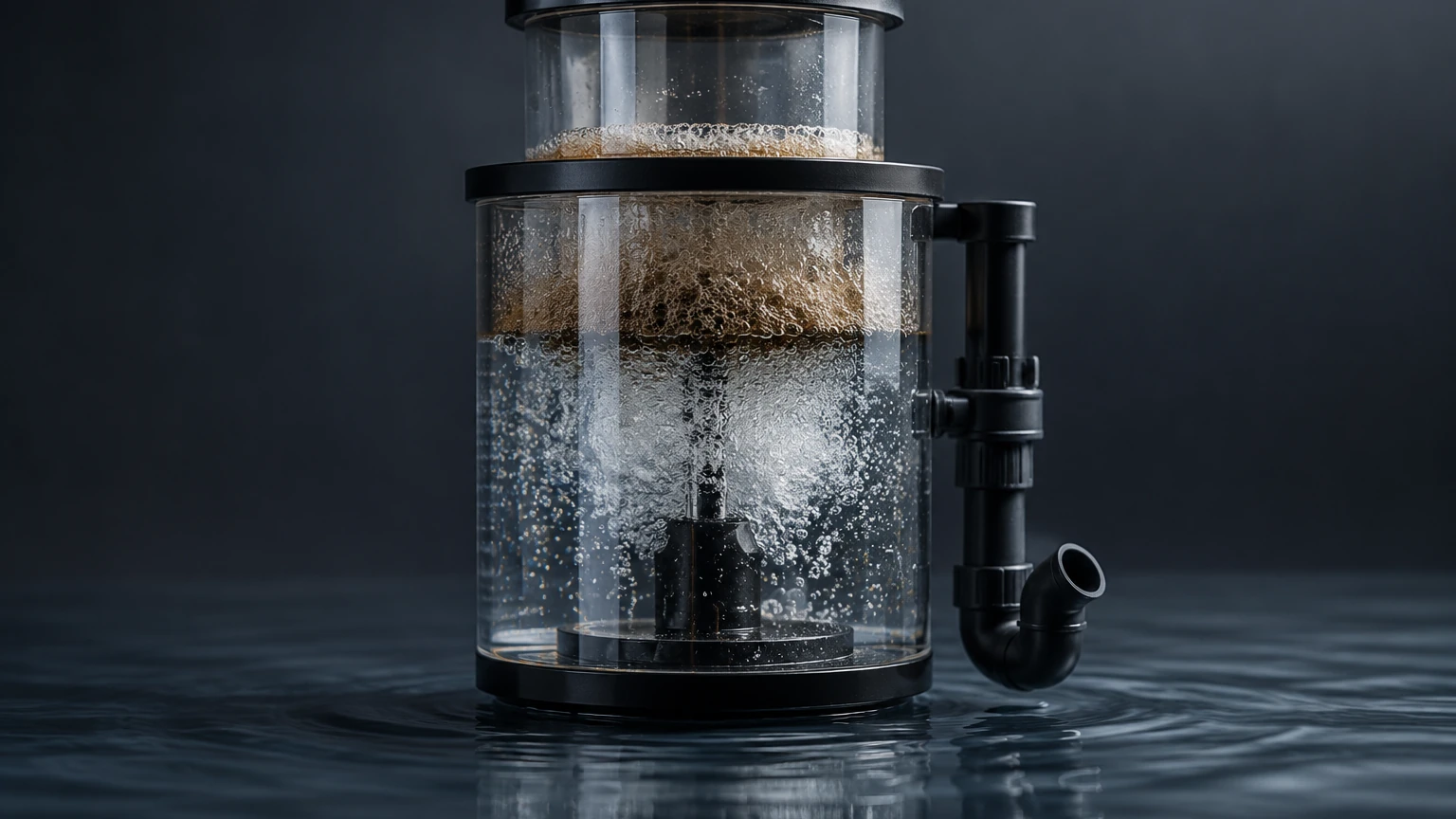
A protein skimmer addresses this by creating a massive amount of air-water interface within a reaction chamber. Because many organic molecules are "amphipathic"—meaning they have one end that is attracted to water (hydrophilic) and one end that is repelled by water (hydrophobic)—they naturally gravitate toward the surface of air bubbles. As these bubbles rise through the skimmer’s column, they collect these organic molecules, forming a concentrated foam at the top of the unit. This foam is then pushed into a collection cup and removed from the system entirely.
By removing these precursors to the nitrogen cycle, the skimmer significantly reduces the biological load on the biofilter. This leads to higher dissolved oxygen levels, more stable pH values, and overall clearer water. For industrial operations, this means lower maintenance costs and a more resilient aquatic environment.
The Science of Foam Fractionation and Surfactants
The efficiency of a protein skimmer is dictated by the principles of foam fractionation. The process relies on the fact that surfactants (surface-active agents) concentrate at the interface between liquid and gas. In seawater or high-salinity industrial fluids, the surface tension allows for the creation of much smaller, more stable bubbles than in freshwater. This is why protein skimming is predominantly a saltwater technology, though specialized industrial designs can be adapted for specific freshwater applications.
Several factors influence the effectiveness of this process:
1. Bubble Size: Smaller bubbles provide a higher surface-area-to-volume ratio. This increases the available "real estate" for organic molecules to attach to. Engineering a venturi or an aspiration pump that produces a consistent, fine mist of micro-bubbles is a primary design goal.
2. Contact Time: The longer a bubble stays in the water column, the more organic material it can collect. This is why many industrial skimmers are designed as tall columns or utilize counter-current flow patterns, where water moves downward against a rising wall of air.
3. Turbulence vs. Laminar Flow: While some agitation is necessary to mix air and water, excessive turbulence can strip the organic molecules back off the bubbles. A well-engineered skimmer maintains a stable, "dry" foam at the top of the reaction chamber.
Critical Components: From Venturi Pumps to Precision Mesh
An industrial-grade protein skimmer is a complex assembly of several sub-systems. Each component must be selected for durability and precision to ensure long-term operational stability.
* The Reaction Chamber: Usually a cylindrical or conical vessel made from UV-resistant materials. The shape is designed to transition the turbulent air-water mix into a stable foam neck.
* The Air Injection System: This typically involves a venturi injector or a needle-wheel pump. These components are susceptible to clogging from environmental debris and calcium deposits.
* Pre-filtration Modules: Before water enters the skimmer, it must be stripped of large particulates that could damage the pump or clog the venturi. This is where high-quality mechanical filtration becomes indispensable. Using durable stainless steel filter cartridges or wire mesh components ensures that the skimmer operates at peak efficiency without frequent downtime for pump repairs.
For those designing comprehensive filtration skids, sourcing reliable components is vital. You can Review product options and application support at the Kaifil Main Page to see how custom stainless steel filtration solutions can protect sensitive equipment like protein skimmers in demanding industrial environments.
Performance Metrics and Selection for Industrial Applications
When evaluating a protein skimmer what does it do for a specific project, engineers must look beyond simple flow rates. Selection should be based on the total organic load of the system and the specific water chemistry involved.
Total Organic Carbon (TOC) Removal
In B2B applications, the primary metric is often the rate of TOC removal. A skimmer that is undersized for the bioload will fail to prevent the accumulation of dissolved organics, leading to yellowing water and increased nitrate levels. Conversely, an oversized skimmer may "over-skim," removing beneficial trace elements or failing to produce a stable foam because the organic concentration is too low.
Turn-over Rate
For aquaculture, the skimmer should ideally process the entire volume of the system several times per day. However, the exact ratio depends on the density of the livestock and the efficiency of the mechanical pre-filtration. If the pre-filtration is highly efficient—using precision-engineered metal mesh—the burden on the protein skimmer is reduced, allowing for a more compact and energy-efficient installation.
Air-to-Water Ratio
A technical specification often cited by manufacturers is the air-to-water ratio. A higher ratio generally indicates a more powerful skimmer, provided the bubbles are small enough and the contact time is sufficient. Industrial users should look for units that allow for fine-tuning of both air intake and water flow to adapt to changing environmental conditions.
Integration with Mechanical Filtration Systems
A protein skimmer is not a standalone solution. To understand the full scope of a protein skimmer what does it do, one must see it as part of a multi-stage filtration train.
1. Stage 1: Mechanical Filtration: This is the first line of defense. Using stainless steel wire mesh or wedge wire screens, the system removes large solids, feces, and uneaten food. This prevents the protein skimmer from becoming a "trash collector," which would quickly lead to foul odors and mechanical failure.
2. Stage 2: Protein Skimming: Once the large solids are removed, the skimmer targets the dissolved organics. This stage is crucial for maintaining low levels of dissolved organic nitrogen.
3. Stage 3: Biological Filtration: The remaining ammonia and nitrite are processed by nitrifying bacteria. Because the skimmer has removed a large portion of the organic load, the biofilter can operate more efficiently, with less risk of clogging from biofilm overgrowth.
4. Stage 4: Chemical/Polishing: Finally, carbon filtration or UV sterilization may be used to remove any remaining discolorations or pathogens.
By integrating these stages, facilities can achieve a high degree of water clarity and safety. The use of stainless steel components in the pre-filtration and polishing stages is particularly beneficial in industrial settings due to their resistance to corrosion and ease of cleaning.
Operational Challenges and Maintenance Protocols
Despite their effectiveness, protein skimmers require regular maintenance to remain functional. In an industrial context, downtime can lead to rapid water quality degradation.
* Biofouling and Scaling: In saltwater systems, calcium carbonate and biological films can build up on the venturi and the air-injection nozzles. This reduces air intake and decreases the skimmer's efficiency. Regular inspection and acid-washing of these components are necessary.
* Collection Cup Cleaning: The concentrated waste in the collection cup is highly concentrated and can become a source of secondary pollution if not removed. Many industrial units feature automated neck-washers that use high-pressure water to keep the transition area clean.
* Pump Maintenance: The pumps used in skimmers are often high-speed and precision-balanced. Protecting these pumps with fine-mesh stainless steel strainers is a cost-effective way to extend their lifespan and prevent catastrophic failure caused by ingested debris.
Engineers should also be aware of "skimmer surge" or "overflowing." This can happen when the water chemistry changes rapidly—for example, during the introduction of certain chemicals, water conditioners, or even during heavy feeding. Modern industrial skimmers often include sensors to shut down the air pump if the collection cup reaches capacity, preventing the waste from being dumped back into the system.
Conclusion: The Strategic Value of Protein Skimming
Understanding protein skimmer what does it do allows technical professionals to design more robust and efficient water treatment systems. By removing dissolved organic compounds at the molecular level, these devices provide a level of water purity that mechanical filters alone cannot achieve. However, the success of a protein skimmer is heavily dependent on the quality of the surrounding filtration infrastructure.
Investing in high-quality, durable components—such as those manufactured from 316L stainless steel—ensures that the entire filtration system can withstand the rigors of continuous industrial operation. Whether you are managing a public aquarium, a commercial shrimp farm, or an industrial wastewater process, the synergy between precision mechanical filtration and efficient foam fractionation is the key to maintaining optimal water quality and operational longevity.
