


Steam Sparging
Steam sparging is a fundamental process in industrial engineering, utilized extensively for direct steam injection into liquids to facilitate rapid heating, agitation, and chemical reactions. Unlike indirect heating methods, such as heat exchangers or steam jackets, sparging involves the introduction of steam directly into the process fluid through a submerged distribution device. This method is prized for its high thermal efficiency, as the latent heat of the steam is transferred directly to the liquid, minimizing energy loss.
For engineers and plant managers, selecting the correct sparging technology is critical to process stability. The effectiveness of steam sparging depends heavily on the interface between the steam and the liquid. Achieving the desired temperature rise or reaction rate requires a deep understanding of bubble dynamics, material science, and fluid mechanics. As a manufacturer of precision stainless steel filtration and distribution components, Kaifil provides the technical foundation for optimizing these systems through advanced porous metal technology.
Fundamental Principles of Steam Sparging
The core objective of steam sparging is to maximize the contact surface area between the steam and the liquid. When steam is injected into a cooler liquid, it undergoes a phase change, collapsing from a gas to a liquid. This condensation process releases a significant amount of energy—the latent heat of vaporization.
The efficiency of this heat transfer is governed by the size of the steam bubbles. Large bubbles have a low surface-area-to-volume ratio, leading to uneven heating and potential "steam hammer"—a phenomenon where large steam pockets collapse violently, causing mechanical vibration and noise. Conversely, smaller bubbles, often referred to as micro-bubbles, provide a vastly larger surface area for a given volume of steam. This results in nearly instantaneous condensation and a much smoother, quieter transfer of energy.
In addition to heating, steam sparging serves as a powerful tool for agitation. The rising bubbles create a gas-lift effect, promoting bulk mixing within a vessel without the need for mechanical stirrers in some applications. This is particularly useful in large storage tanks or reactors where mechanical agitation may be difficult to implement or maintain.
Comparison of Sparger Technologies: Drilled Pipe vs. Porous Metal
When designing a steam sparging system, engineers typically choose between traditional drilled pipe spargers and advanced porous metal (sintered) spargers.
Drilled Pipe Spargers
Drilled pipe spargers are simple in design, consisting of a pipe with a series of machined holes. While cost-effective and easy to fabricate, they have significant limitations. The hole sizes are usually relatively large (often several millimeters), which produces large bubbles. This leads to inefficient heat transfer and high levels of noise and vibration. Furthermore, the distribution of steam is often uneven, as the pressure drop across the holes is low, potentially leading to localized overheating or "hot spots."
Porous Sintered Metal Spargers
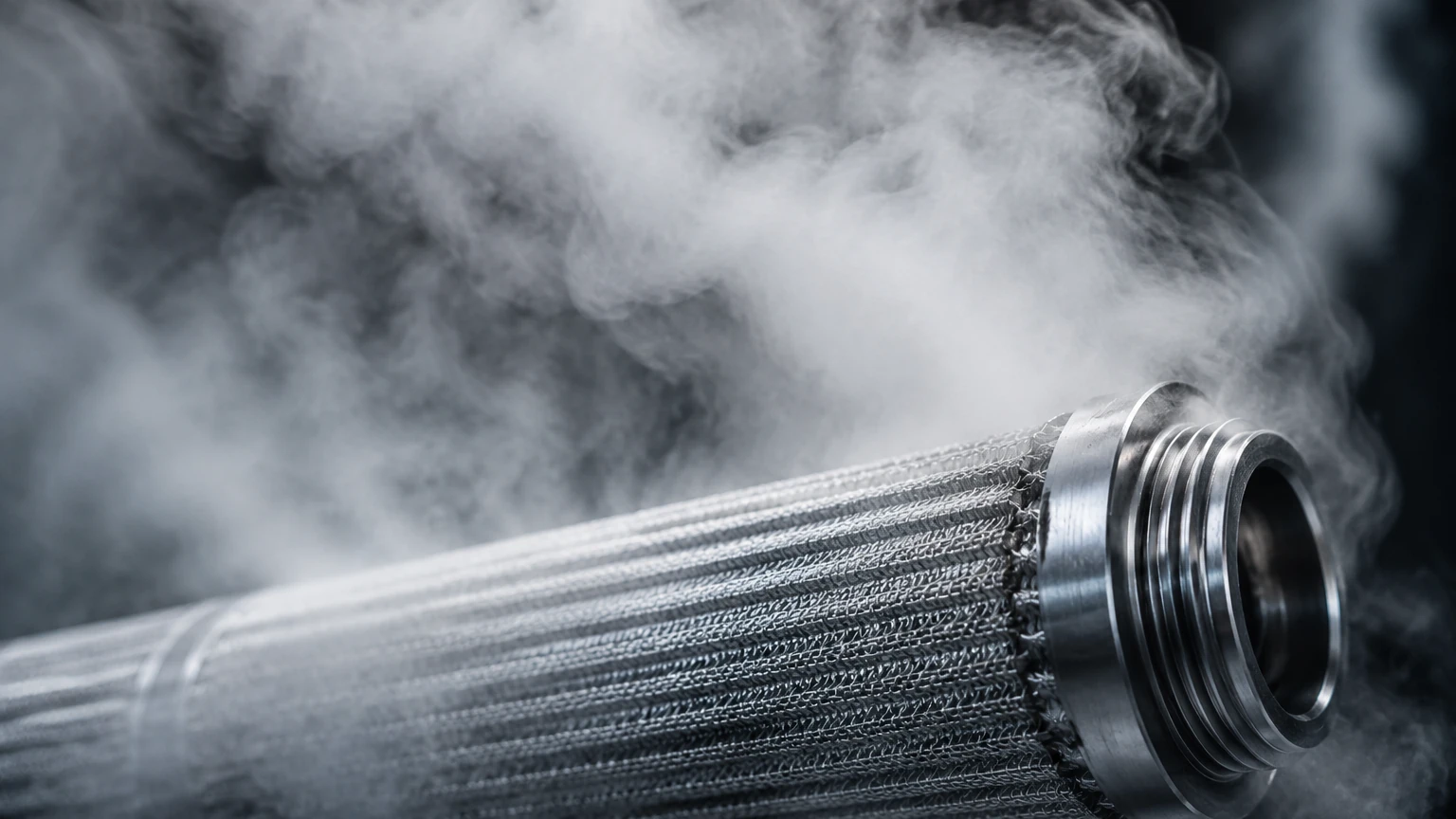
Porous metal spargers, manufactured from sintered stainless steel wire mesh or metal powders, offer a superior technical alternative. These components feature thousands of microscopic pores, typically ranging from 0.5 to 100 microns. When steam passes through these pores, it is broken into a dense cloud of micro-bubbles.
The advantages of using porous stainless steel for steam sparging include:
- Enhanced Heat Transfer: The massive surface area of micro-bubbles ensures rapid and complete condensation.
- Noise and Vibration Reduction: By preventing the formation of large steam pockets, sintered spargers eliminate the primary cause of steam hammer, protecting the structural integrity of the vessel.
- Uniform Distribution: The controlled porosity of the sintered material creates a uniform pressure drop across the entire surface of the sparger, ensuring even steam distribution throughout the liquid volume.
- Energy Efficiency: Higher transfer efficiency means less steam is required to reach the target temperature, reducing overall utility costs.
Material Selection and Engineering Specifications
In industrial environments, the durability of a sparging component is as important as its performance. Steam sparging systems are subject to high temperatures, pressure fluctuations, and often corrosive process fluids.
Stainless Steel Grades
Stainless steel is the industry standard for sparging components due to its mechanical strength and corrosion resistance.
- 304 Stainless Steel: Suitable for general-purpose applications where corrosion risks are low.
- 316L Stainless Steel: The preferred choice for most industrial steam sparging applications. The "L" denotes low carbon content, which improves weldability and resistance to intergranular corrosion. 316L offers excellent resistance to chlorides and organic acids, making it ideal for the food, beverage, and chemical sectors.
Porosity and Micron Ratings
Selecting the correct micron rating is a balance between bubble size and pressure drop. A lower micron rating (e.g., 5-10 microns) produces smaller bubbles but requires a higher steam supply pressure to overcome the resistance of the porous media. Engineers must calculate the required steam flow rate (kg/hr) and ensure the sparger surface area is sufficient to handle the load without exceeding the material's mechanical limits.
Mechanical Integrity
Sintered metal components are known for their structural rigidity. Unlike ceramic or plastic alternatives, stainless steel spargers can withstand significant thermal shock and mechanical stress. This is vital during the initial startup phase of a sparging cycle when the temperature differential between the steam and the liquid is at its peak.
Key Industrial Applications and Performance Requirements
Steam sparging is utilized across a diverse range of industries, each with specific technical requirements.
Food and Beverage Industry
In the food industry, steam sparging is used for cooking sauces, heating water for clean-in-place (CIP) systems, and blanching vegetables. Here, the sparging equipment must meet strict sanitary standards. Sintered stainless steel is ideal because it can be polished and is resistant to the aggressive chemicals used in sterilization. The use of micro-bubbles ensures that delicate food products are heated uniformly without localized scorching.
Chemical Processing
In chemical reactors, steam sparging is often used to maintain precise reaction temperatures or to strip volatile organic compounds (VOCs) from a liquid. The ability of sintered spargers to provide fine agitation is a significant benefit here, as it enhances the mass transfer between the steam and the chemical reactants.
Pharmaceutical and Biotech
Sterilization-in-place (SIP) processes frequently rely on steam sparging to ensure that vessels and piping are heated to the required sterilization temperature. In these high-purity environments, the sparger must be free of contaminants and capable of withstanding repeated sterilization cycles without degrading. Precision-engineered porous metal components ensure that the steam is distributed effectively to every corner of the vessel.
Pulp and Paper
Large-scale heating of water and pulp slurries requires robust sparging solutions. The mechanical strength of stainless steel wire mesh filters and spargers is essential in these heavy-duty environments, where the equipment may be exposed to abrasive particles and high flow rates.
Operational Challenges: Steam Hammer and Thermal Stress
While steam sparging is efficient, it is not without operational risks. Engineers must design systems to mitigate the following issues:
Steam Hammer
Steam hammer occurs when steam enters a cold liquid and condenses so rapidly that it creates a vacuum, causing the surrounding liquid to rush in and collide. This creates shockwaves that can damage piping, valves, and the sparger itself. Using a porous metal sparger is the most effective way to prevent this, as the micro-bubbles condense more predictably and quietly than the large bubbles produced by drilled pipes.
Thermal Fatigue
Repeated heating and cooling cycles can lead to thermal fatigue in metal components. This is particularly true at the connection points between the sparger and the steam supply line. Proper engineering involves selecting materials with compatible thermal expansion coefficients and ensuring that welds are of the highest quality to prevent cracking over time.
Scaling and Clogging
In water treatment or chemical applications, dissolved solids in the liquid may precipitate onto the surface of the sparger as it heats up, leading to scaling. Over time, this can clog the pores of a sintered sparger. To counter this, systems should be designed for easy removal and cleaning, or equipped with back-pulsing capabilities where feasible.
Maintenance, Cleaning, and Longevity
To ensure the longevity of a steam sparging system, a regular maintenance schedule is required. Stainless steel spargers are highly durable, but their performance can be affected by the quality of the steam and the cleanliness of the process fluid.
Steam Quality
Using "clean steam" or filtered steam is essential. Particulates in the steam supply, such as rust from carbon steel piping, can clog the pores of the sparger from the inside out. Installing a high-quality stainless steel filter upstream of the sparger is a recommended best practice.
Cleaning Procedures
Sintered metal spargers can be cleaned using several methods:
- Chemical Cleaning: Soaking in mild acids or bases to dissolve scale and organic deposits.
- Ultrasonic Cleaning: Using high-frequency sound waves in a cleaning solvent to dislodge particles from deep within the porous structure.
- Back-flushing: Reversing the flow of fluid through the sparger to push out contaminants.
Because Kaifil specializes in custom stainless steel filtration solutions, our components are designed to withstand these rigorous cleaning processes, ensuring a long service life even in demanding industrial environments.
Technical Evaluation for Procurement
When specifying a steam sparger for a new project or as a replacement component, purchasing teams and engineers should confirm several key data points with the manufacturer:
1. Process Fluid Characteristics: Viscosity, density, and chemical compatibility with 316L stainless steel.
2. Steam Parameters: Operating pressure, temperature, and maximum mass flow rate.
3. Vessel Dimensions: The size and shape of the tank will dictate the geometry of the sparger (e.g., ring sparger, pipe sparger, or flange-mounted probe).
4. Target Temperature Rise: The required rate of heating will determine the total surface area needed for the porous media.
5. Connection Standards: Ensure the sparger interface matches existing piping (e.g., NPT, BSP, or Flanged connections).
By focusing on these technical boundaries, engineers can ensure they receive a component that is optimized for their specific application. For those seeking to explore the full range of custom filtration and sparging hardware, reviewing product options and application support on the Main Page is an excellent starting point for technical procurement.
Conclusion
Steam sparging remains one of the most effective methods for direct liquid heating and agitation in the industrial world. However, the transition from a basic drilled pipe to a precision-engineered porous metal sparger represents a significant leap in process efficiency, noise reduction, and mechanical reliability. By understanding the underlying principles of bubble formation and material performance, technical professionals can select sparging solutions that minimize energy waste and maximize equipment lifespan. As industrial requirements for precision and sustainability continue to grow, the role of high-quality stainless steel filtration and distribution components becomes increasingly vital to successful plant operations.
