


Pulse Jet Fabric Filter
In the landscape of industrial air pollution control and particulate recovery, the pulse jet fabric filter, commonly referred to as a pulse jet baghouse, stands as the most prevalent technology for high-efficiency dust collection. For engineers and facility managers, selecting and maintaining these systems requires a deep understanding of fluid dynamics, material science, and mechanical design. While the fabric media performs the primary separation, the structural integrity of the internal components—specifically the support cages and auxiliary metal filtration stages—determines the system's operational lifespan and total cost of ownership.
As a specialized manufacturer of stainless steel filtration solutions, Kaifil provides the precision-engineered metal components that enable these systems to function in demanding environments. This guide explores the technical nuances of pulse jet fabric filters, focusing on engineering considerations that drive performance and reliability.
Understanding the Pulse Jet Fabric Filter Mechanism
The pulse jet fabric filter operates on a continuous filtration cycle, utilizing a high-pressure burst of compressed air to remove accumulated dust from the filter media. Unlike shaker-type or reverse-air baghouses, pulse jet systems allow for cleaning while the system remains online, ensuring consistent airflow and process stability.
The Filtration Phase
In a typical pulse jet configuration, dust-laden gas enters the baghouse housing. The gas is drawn through the filter bags from the outside in. As the gas passes through the fabric, particulate matter is trapped on the exterior surface, forming what is known as a "dust cake." This dust cake actually enhances filtration efficiency by acting as a secondary filter medium, capable of capturing sub-micron particles that might otherwise pass through the fabric pores.
The Cleaning Phase
As the dust cake thickens, the differential pressure across the bags increases. Once a predetermined pressure setpoint is reached, a pulse of compressed air (typically 70 to 100 psi) is released from a header pipe through a solenoid valve. This air travels through a blowpipe and is directed into the top of the filter bag, often through a Venturi nozzle. The rapid expansion of air creates a shockwave that travels down the length of the bag, causing it to flex outward and shed the accumulated dust into a hopper below.
The Critical Role of Support Cages
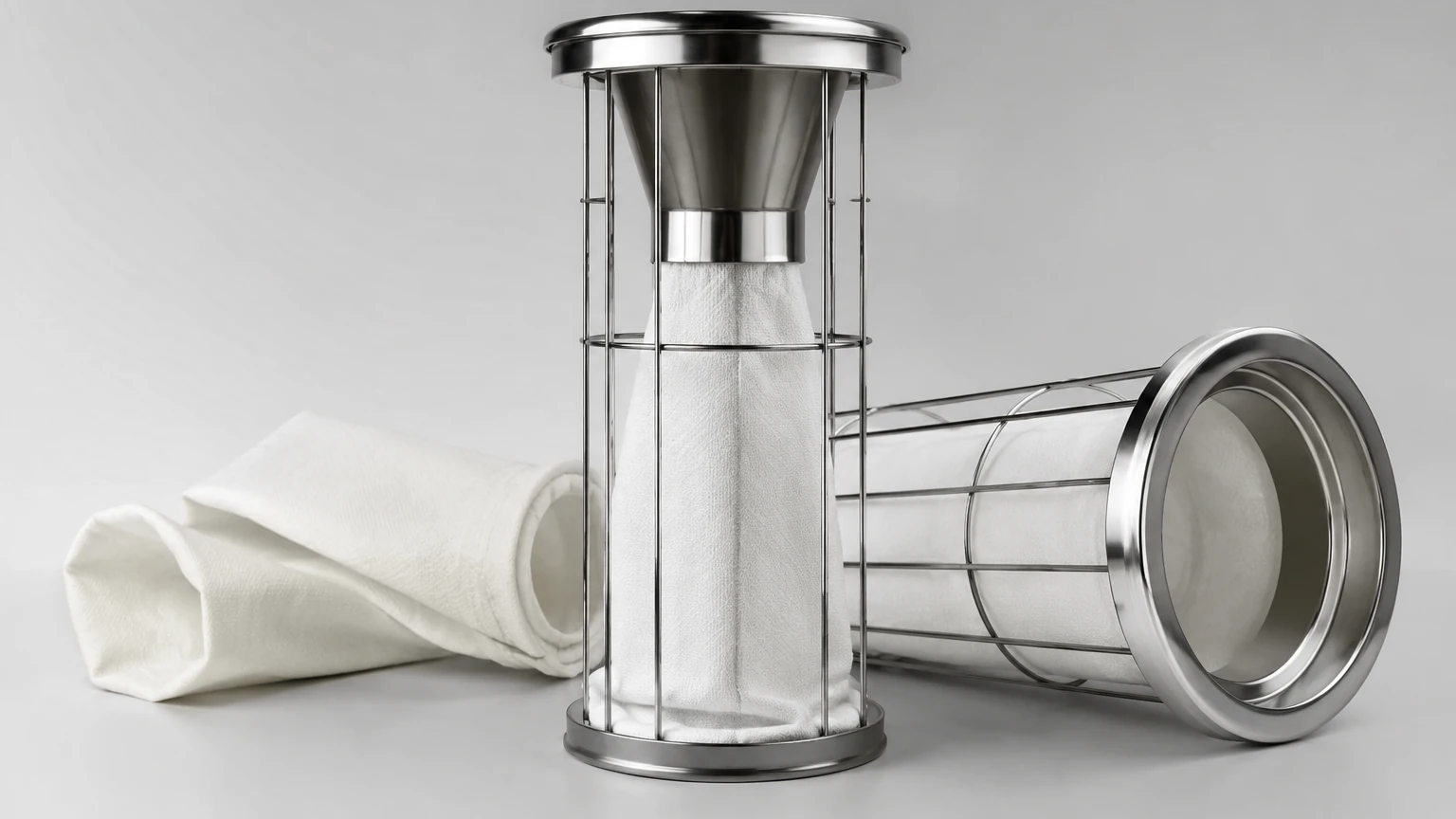
Because pulse jet filters operate with "outside-in" flow, the fabric bags require a rigid internal structure to prevent collapse. This is the role of the filter cage. The design and material of the cage are perhaps the most overlooked factors in baghouse performance.
Wire Count and Spacing
A standard cage may consist of 10, 12, or 20 vertical wires. Increasing the wire count provides better support for the fabric, reducing the amount of "flexing" the fabric undergoes during the cleaning pulse. Excessive flexing leads to mechanical fatigue and premature bag failure, particularly at the points where the fabric contacts the vertical wires. For high-temperature or high-pressure applications, precision-welded cages with higher wire densities are essential to maintain the geometric integrity of the filter element.
Surface Finish and Friction
The interface between the metal cage and the fabric bag is a primary site for wear. Any burrs, sharp edges, or weld spatters on the cage can cause abrasive holes in the fabric. High-quality manufacturing processes, such as those employed by Kaifil, ensure that cages are burr-free and finished to a high standard. In many chemical processing and pharmaceutical applications, stainless steel cages are preferred not only for corrosion resistance but also for their ability to maintain a smooth, non-reactive surface over years of service.
Material Selection for Corrosive and High-Temperature Environments
Standard pulse jet fabric filters often utilize carbon steel cages with galvanized or epoxy coatings. However, in many industrial B2B sectors, these materials are insufficient. Engineers must evaluate the chemical composition of the gas stream and the operating temperature before finalizing material specifications.
Stainless Steel 304 and 316L
In industries such as food processing, pharmaceuticals, and chemical manufacturing, the presence of moisture, acidic gases, or caustic cleaning agents necessitates the use of stainless steel.
- 304 Stainless Steel: Provides excellent resistance to a wide range of atmospheric environments and many corrosive media. It is the standard choice for food-grade applications.
- 316L Stainless Steel: Contains molybdenum, which provides superior resistance to chlorides and pitting. This is the material of choice for marine environments or processes involving highly corrosive chemical vapors.
By utilizing stainless steel components from the Main Page of a specialist manufacturer, procurement teams can ensure that the internal structure of their pulse jet fabric filter does not become the weak link in the system. Corrosion of a cage leads to rust scales, which can snag and tear the filter bags, leading to immediate emission leaks and system downtime.
Engineering Parameters: Air-to-Cloth Ratio and Pressure Drop
The performance of a pulse jet fabric filter is quantified by several key engineering metrics. Understanding these allows for the optimization of the system and the selection of appropriate replacement components.
Air-to-Cloth (A/C) Ratio
The A/C ratio, also known as the filtration velocity, is the ratio of the gas flow rate to the total active filtration area. It is expressed in units of feet per minute (fpm) or meters per minute (m/min).
- Low A/C Ratios: Lead to larger, more expensive baghouses but result in lower pressure drops and longer bag life.
- High A/C Ratios: Allow for a smaller footprint but increase the risk of "blinding" the bags, where dust is driven so deep into the fabric that the cleaning pulse cannot remove it.
Typical A/C ratios for pulse jet systems range from 3:1 to 6:1, depending on the dust type and concentration. When customizing filtration components, engineers must ensure that the cage and bag assembly does not restrict the effective filtration area.
Differential Pressure (ΔP)
Differential pressure is the measurement of resistance to airflow across the filter media. A stable ΔP indicates a healthy system. If the ΔP rises uncontrollably, it may indicate that the pulse jet cleaning system is failing, the bags are blinded, or the cages have corroded and are obstructing the pulse energy. Monitoring ΔP is the primary method for determining the replacement cycle of the filter elements.
Integration with Metal Mesh Pre-Filtration
In many complex industrial processes, a pulse jet fabric filter is part of a multi-stage filtration strategy. Fabric filters are excellent for dry dust, but they struggle with oily, sticky, or extremely high-temperature particulates that can cause fires or permanent bag damage.
In these scenarios, stainless steel wire mesh filters or precision metal filter cartridges are often used as pre-filters. These metal components can:
1. Act as Spark Arrestors: Capturing hot embers before they reach the flammable fabric bags.
2. Remove Heavy Loading: Reducing the dust concentration reaching the baghouse, thereby allowing for a more stable A/C ratio.
3. Condensate Management: Capturing liquid droplets in the gas stream that would otherwise cause fabric "mudding."
Kaifil’s expertise in manufacturing custom stainless steel wire mesh filters allows for the seamless integration of these protective stages into existing pulse jet systems.
Common Risks and Troubleshooting
Even a well-designed pulse jet fabric filter can encounter operational hurdles. Identifying these early through technical evaluation can prevent catastrophic system failure.
Pulse Valve Failure
The solenoid and diaphragm valves responsible for the air pulse are mechanical components with finite lifecycles. If a valve sticks open, it wastes compressed air and can damage the bag. If it fails to open, the bags in that row will not be cleaned, leading to a localized rise in differential pressure and eventual blinding.
Improper Tensioning and Fit
The connection between the bag, the cage, and the tubesheet must be airtight. Most pulse jet systems use a "snap-band" fit. If the cage is not manufactured to precise tolerances, the fit may be too loose, leading to dust bypass (leakage), or too tight, making installation difficult and potentially damaging the bag's gasket. Precision manufacturing of the cage top (the flange or header) is critical for maintaining this seal.
Compressed Air Quality
The "pulse" in a pulse jet fabric filter must be dry and oil-free. Moisture in the compressed air can lead to corrosion of the internal metal components and causes the dust cake to turn into a slurry, which permanently ruins the fabric media.
Selecting a Manufacturing Partner for Custom Components
For B2B purchasing teams and plant engineers, the choice of a component supplier is a decision that impacts the long-term efficiency of the facility. When sourcing cages, mesh supports, or custom stainless steel filter cartridges for pulse jet systems, several factors should be confirmed:
1. Material Traceability: Ensure that the stainless steel used (304, 316L, etc.) is verified and meets industrial standards to prevent premature corrosion.
2. Customization Capabilities: Every baghouse is slightly different. A manufacturer should be able to provide custom lengths, wire diameters, and header designs to match the original equipment manufacturer (OEM) specifications or improve upon them.
3. Welding Integrity: In pulse jet systems, the cages are subjected to repeated mechanical stress. High-frequency longitudinal welding and circular ring welding must be flawless to prevent the cage from breaking apart inside the bag.
4. Technical Support: A supplier should understand the filtration application, providing guidance on whether a specific mesh or cage design will improve the cleaning efficiency of the pulse jet cycle.
Kaifil specializes in these high-performance filtration components, working closely with global customers to develop reliable OEM and customized solutions. Whether the application involves chemical processing, pharmaceuticals, or high-temperature industrial exhaust, the use of precision-engineered metal internals is a prerequisite for success.
Conclusion
The pulse jet fabric filter remains a cornerstone of industrial environmental compliance and process efficiency. While the fabric bag is the visible face of the filtration process, the internal stainless steel cages and auxiliary metal filters are the backbone that ensures operational continuity. By focusing on material quality, precision engineering, and proper system parameters like the A/C ratio and pulse pressure, industrial operators can achieve a lower total cost of ownership and superior filtration performance. For those seeking to optimize their systems or develop custom filtration hardware, reviewing professional manufacturing options at the Main Page is the first step toward engineering a more durable and efficient filtration solution.
