


3a Sanitary Fittings
In the landscape of industrial processing, particularly within the food, beverage, dairy, and pharmaceutical sectors, the integrity of the fluid handling system is paramount. Central to these systems are 3a sanitary fittings, components designed to meet the rigorous hygienic standards set by 3-A Sanitary Standards, Inc. (3-A SSI). These standards are not merely guidelines but are critical engineering benchmarks that ensure equipment can be cleaned effectively, preventing microbial growth and cross-contamination. For engineers and procurement specialists, understanding the technical nuances of these fittings is essential for maintaining system performance and regulatory compliance.
At Kaifil, our focus on precision stainless steel filtration solutions often intersects with the requirement for high-standard sanitary interfaces. Whether integrating a wire mesh filter or a stainless steel filter cartridge into a production line, the choice of fittings dictates the overall hygienic safety and operational efficiency of the system.
Understanding the 3-A Standard in Industrial Filtration
The 3-A Sanitary Standards were established to protect public health by ensuring that equipment used in the production of food and other consumables is designed for maximum cleanability. When a component is described as meeting 3-A standards, it implies that every aspect of its design—from the metallurgy to the geometry of the joints—has been scrutinized for sanitary performance.
For 3a sanitary fittings, the primary focus is on the elimination of "dead legs" or areas where product can stagnate and bacteria can proliferate. In filtration applications, where fluids are often under pressure and subject to varying temperatures, the fitting must maintain a leak-proof seal while remaining accessible for inspection and cleaning. This is particularly relevant when mounting custom filtration housings that must be disconnected frequently for element replacement or deep cleaning.
Material Specifications and Surface Integrity
The performance of 3a sanitary fittings begins with material selection. In most industrial applications, stainless steel is the standard due to its corrosion resistance and durability. However, not all stainless steel grades are suitable for sanitary environments.
Grade 304 vs. 316L Stainless Steel
Most 3-A compliant fittings are manufactured from AISI 304 or 316L stainless steel. While 304 stainless steel is sufficient for many food-grade applications, 316L (low carbon) is preferred for environments involving high salt concentrations, acidic cleaners, or pharmaceutical ingredients. The addition of molybdenum in 316L provides superior resistance to pitting and crevice corrosion, which is vital for long-term system integrity.
Surface Roughness (Ra)
A defining characteristic of 3a sanitary fittings is the surface finish. The 3-A standards typically require a surface roughness (Ra) of 32 micro-inches (0.8 micrometers) or smoother on all product-contact surfaces. This smooth finish is achieved through mechanical polishing or electropolishing. A lower Ra value reduces the ability of microorganisms to adhere to the metal surface and ensures that Clean-in-Place (CIP) cycles are effective. When Kaifil manufactures custom filter components, we adhere to these same stringent finish requirements to ensure the filter media and its housing do not become a point of contamination.
Integrating 3a Sanitary Fittings with Stainless Steel Filter Cartridges
In a complex processing line, the filter is often the most critical point of intervention. To maintain a sanitary environment, the connection between the filter housing and the rest of the piping must be seamless. This is where 3a sanitary fittings play a vital role.
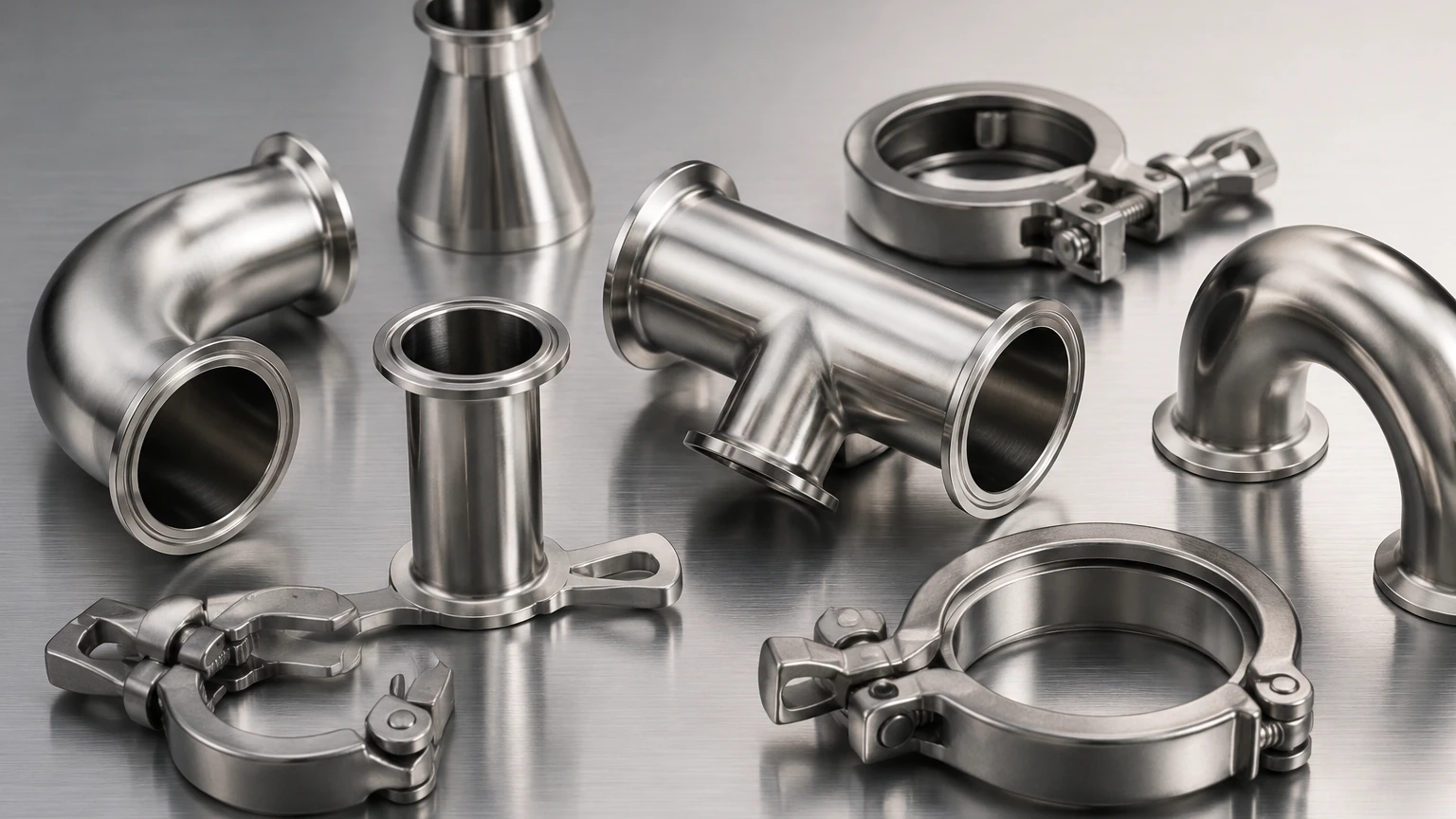
Commonly, Tri-Clamp (also known as Tri-Clover) fittings are used to secure filter housings. These fittings consist of two flanged ends, a gasket, and a clamp. This design is favored because it allows for rapid assembly and disassembly without the need for specialized tools, facilitating the frequent inspection and replacement of filter cartridges.
For engineers designing these systems, it is important to consider the pressure drop across the filter and how the fittings might influence flow dynamics. A poorly selected fitting or an abrupt change in pipe diameter can create turbulence, which may affect the efficiency of the filtration process. By visiting our Main Page, technical teams can review how our custom filtration solutions are engineered to interface perfectly with standard sanitary piping systems, ensuring minimal flow restriction and maximum hygiene.
Selection Criteria for High-Performance Sanitary Systems
When specifying 3a sanitary fittings for a project, several engineering considerations must be addressed to ensure the longevity and safety of the installation.
1. Gasket Compatibility: The gasket is the only non-metallic component in a standard sanitary joint. It must be compatible with the process fluid and the chemicals used in CIP cycles. Common materials include EPDM, Silicone, FKM (Viton), and PTFE. Engineers must verify that the gasket material will not degrade or leach into the product stream.
2. Pressure and Temperature Ratings: Sanitary systems often operate under high pressure, especially in hydraulic or high-viscosity food processing. It is crucial to ensure that the clamp and gasket combination can withstand the maximum operating pressure of the system, including potential pressure spikes.
3. Connection Geometry: Beyond standard straight connectors, systems often require elbows, tees, and reducers. 3-A standards dictate specific radii for elbows to ensure that no sharp corners exist where solids could accumulate.
4. Traceability: In regulated industries like pharmaceuticals, material traceability is a requirement. High-quality 3a sanitary fittings should come with Mill Test Reports (MTRs) that confirm the chemical composition of the steel.
Operational Maintenance and Clean-in-Place (CIP) Efficiency
The primary advantage of using 3a sanitary fittings is their compatibility with CIP systems. CIP allows for the internal surfaces of pipes, fittings, and filters to be cleaned without disassembling the entire system. However, the effectiveness of CIP depends on the correct installation of the fittings.
If a gasket is over-compressed, it can intrude into the flow path, creating a dam where debris collects. Conversely, under-compression can leave a gap (crevice) between the flanges. Both scenarios compromise the sanitary nature of the system. Regular inspection of seals and gaskets is a necessary part of the maintenance cycle. In filtration applications, the seals on the filter housing should be inspected every time the filter element is changed.
For systems utilizing Kaifil’s stainless steel wire mesh filters, the durability of the metal media allows for aggressive cleaning cycles, but the surrounding 3a sanitary fittings must be equally robust to handle the thermal expansion and chemical exposure inherent in these processes.
Custom OEM Solutions for Sanitary Filtration Applications
Many industrial applications require more than off-the-shelf components. Unique space constraints, specific flow requirements, or specialized filtration needs often necessitate custom-engineered solutions. Kaifil specializes in providing OEM services that bridge the gap between standard 3a sanitary fittings and high-performance filtration hardware.
Our engineering team works closely with global customers to develop filtration components that meet specific application requirements. This includes:
* Custom Filter Housings: Designed with sanitary inlet and outlet ports that match existing 3-A piping.
* Precision Metal Components: Manufacturing filter supports and internal structures that adhere to 3-A surface finish standards.
* Material Selection Support: Assisting engineers in choosing the right grade of stainless steel for specific chemical environments.
By focusing on the intersection of filtration performance and sanitary design, we help our clients achieve a lower total cost of ownership through reduced downtime and improved product quality.
Common Risks and Engineering Prohibitions
In the pursuit of cost-savings, some facilities may attempt to mix sanitary and non-sanitary components. This is a significant risk. Using NPT (National Pipe Thread) fittings in a sanitary line, for example, is a violation of 3-A principles because the threads provide a haven for bacterial growth that cannot be reached by CIP fluids.
Another common risk is the use of non-certified fittings that claim to be "sanitary" but do not meet the Ra 32 finish or the specific metallurgical requirements of the 3-A standard. These components may appear identical to the naked eye but can fail prematurely under the stress of industrial cleaning agents, leading to contamination events and costly recalls.
Engineers should also be wary of "dead legs"—sections of piping that are longer than two times the pipe diameter where there is no flow. 3a sanitary fittings and valves must be positioned to ensure that the cleaning solution reaches every surface at the required velocity and temperature.
Conclusion: Selecting the Right Partner for Sanitary Filtration
The selection of 3a sanitary fittings is a critical decision that impacts the safety, efficiency, and regulatory standing of an industrial processing facility. By adhering to 3-A standards, engineers ensure that their systems are capable of meeting the highest levels of hygiene.
At Kaifil, we understand that filtration is only one part of a larger, complex system. Our commitment to quality and precision in manufacturing stainless steel filter cartridges and wire mesh filters is matched by our understanding of the sanitary environments in which our products operate. Whether you are designing a new chemical processing line or upgrading a food production facility, choosing components that respect the boundaries of sanitary engineering is the most effective way to ensure long-term success.
For more information on how our filtration expertise can support your sanitary application, please explore the technical resources available on our Main Page. Our team is ready to assist with material selection, filtration accuracy specifications, and customized designs to meet your most demanding industrial requirements.
