


Dry Filtration
In industrial processing, dry filtration refers to the separation of solid particulate matter from a gas or air stream. Unlike liquid filtration, which manages viscosity and fluid dynamics, dry filtration focuses on the behavior of aerosols, dust, and fine powders suspended in gases. For engineers and procurement teams, selecting the appropriate media for dry filtration is a critical decision that impacts equipment longevity, product purity, and operational safety.
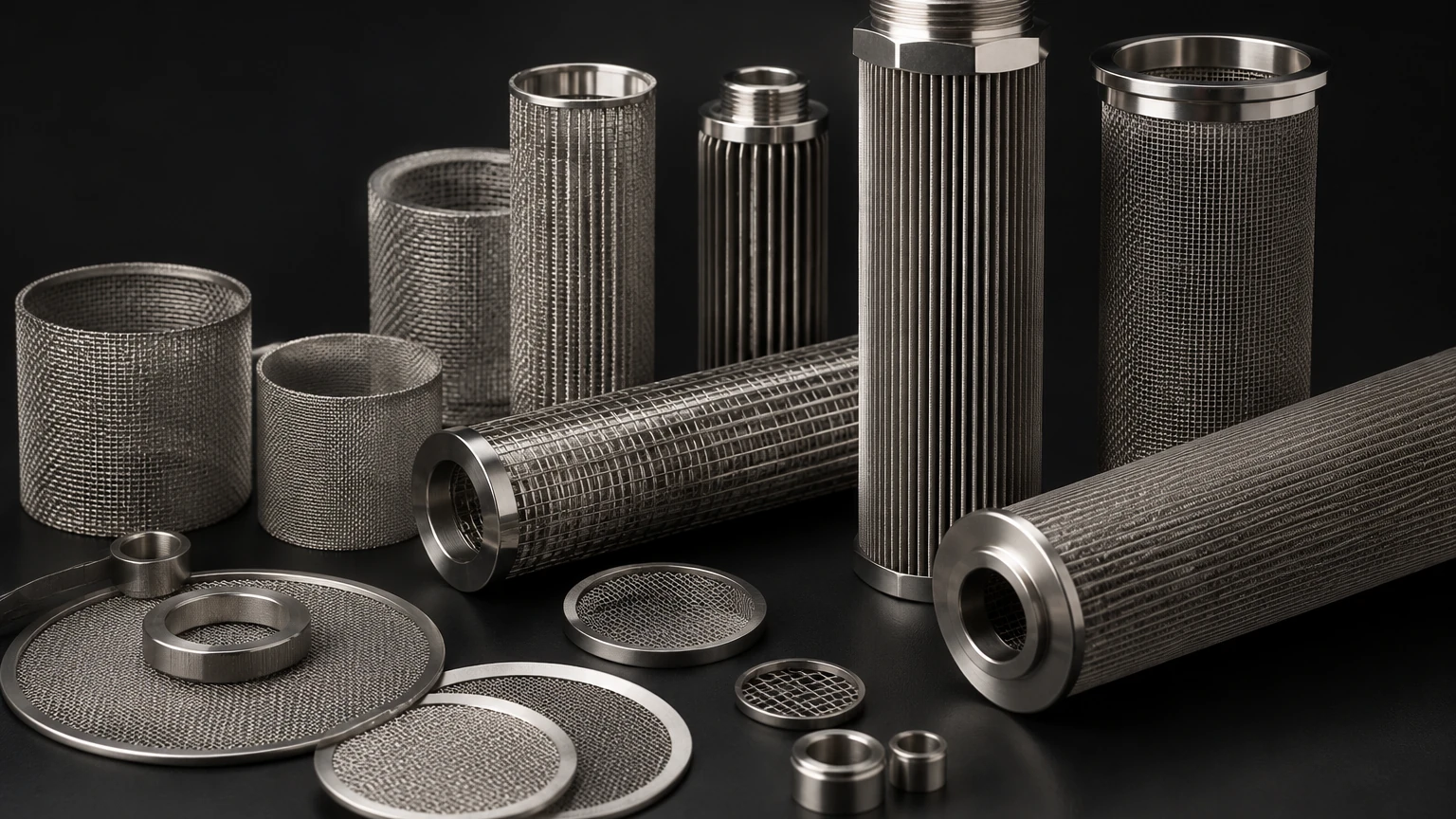
Stainless steel filtration components have become the standard for demanding dry filtration applications due to their thermal stability, mechanical strength, and resistance to corrosive gas environments. As a professional manufacturer, Kaifil provides customized stainless steel filtration solutions designed to meet the rigorous requirements of chemical, pharmaceutical, and food processing industries. Understanding the technical nuances of dry filtration is essential for optimizing system performance and achieving a lower total cost of ownership.
The Mechanics of Dry Filtration in Industrial Systems
Dry filtration operates through several distinct physical mechanisms. The effectiveness of a filter is determined by how well its structure utilizes these mechanisms to capture particles of varying sizes. In industrial gas streams, four primary principles govern particle capture:
1. Inertial Impaction: This occurs when larger particles, due to their mass and velocity, cannot follow the gas streamlines as they curve around the filter fibers or mesh wires. Instead, the particles strike the media directly and become trapped. This is the dominant mechanism for particles larger than 1 micron.
2. Interception: Smaller particles that follow the gas streamlines may still come within one particle radius of the filter media surface. When they touch the media, they are captured. Interception is critical for mid-range particulates.
3. Diffusion (Brownian Motion): For extremely fine particles (typically sub-micron), the random motion caused by gas molecule collisions increases the likelihood that the particle will contact the filter media. This mechanism is more effective at lower gas velocities.
4. Sieving: This is the most straightforward mechanism, where the particle is physically larger than the pore opening of the filter media. In stainless steel wire mesh filters, sieving provides a precise absolute filtration rating, ensuring no particles above a specific size pass through the system.
When designing a system for dry filtration, engineers must balance these mechanisms against the required flow rate and the allowable pressure drop. High-performance metal filters, such as those found on the Kaifil Main Page, are engineered to maximize capture efficiency while maintaining structural integrity under high-velocity gas flows.
Material Selection: Why Stainless Steel Excels
In many dry filtration applications, environmental conditions preclude the use of polymer or paper-based media. High temperatures, abrasive dust, and chemically aggressive gases require robust materials. Stainless steel, specifically grades 304 and 316L, offers several technical advantages:
Thermal Resistance
Industrial gas streams in chemical processing or power generation often exceed the melting points of synthetic fibers. Stainless steel filter cartridges can operate continuously at temperatures up to 500°C (932°F) or higher, depending on the alloy and structural design. This allows for hot gas filtration without the need for energy-intensive cooling stages.
Mechanical Strength and Pressure Stability
Dry filtration often involves high differential pressures, especially as the filter cake builds up. Stainless steel wire mesh and sintered metal components possess the inherent stiffness to resist deformation. This prevents "media migration"—a common failure in fabric filters where the media itself sheds fibers into the clean gas stream.
Corrosion Resistance
Many dry filtration tasks involve acidic or alkaline gases. 316L stainless steel, with its molybdenum content, provides superior resistance to pitting and crevice corrosion, ensuring that the filter media does not degrade and contaminate the process.
Comparing Filter Media Structures for Dry Gases
Not all stainless steel filters are created equal. The choice of media structure significantly influences the performance of dry filtration systems.
* Woven Wire Mesh: Ideal for surface filtration and precise sieving. It is easy to clean and offers a predictable, uniform pore size. It is often used in applications where the goal is to recover valuable powders or catalysts from a gas stream.
* Sintered Metal Mesh: Created by bonding multiple layers of wire mesh through a high-temperature diffusion process. This results in a rigid, highly durable media that can withstand extreme mechanical stress and back-pulsing (a common cleaning method in dry filtration).
* Sintered Metal Fiber Felt: For applications requiring high dirt-holding capacity and high efficiency for fine particles, metal fiber felt provides a three-dimensional depth filtration structure. It offers high porosity (up to 80%), which translates to a lower initial pressure drop and longer service intervals.
Engineering Considerations: Pressure Drop and Face Velocity
One of the most critical parameters in dry filtration is the pressure drop (Delta P). As gas passes through the filter, resistance causes a loss in pressure. In dry systems, the pressure drop is a function of both the clean media resistance and the resistance of the accumulated dust cake.
Face Velocity
Face velocity is the speed of the gas as it approaches the filter surface. In dry filtration, maintaining an optimal face velocity is vital. If the velocity is too high, particles may be forced through the media (penetration) or the dust cake may become overly compressed, leading to a rapid increase in pressure drop. Conversely, if the velocity is too low, the system may become unnecessarily large and expensive. Engineering teams must calculate the Effective Filtration Area (EFA) to ensure the face velocity stays within the recommended range for the specific particulate type.
Dust Cake Management
In many industrial dry filtration systems, the "filter cake"—the layer of dust that builds up on the surface—actually performs a significant portion of the filtration. However, this cake must be managed. Stainless steel cartridges are often designed for "clean-in-place" (CIP) operations, using reverse gas pulses to dislodge the cake and restore flow. The ability of stainless steel to withstand these repetitive pressure shocks is a primary reason for its selection over more fragile materials.
Applications of Dry Filtration Across Industries
Dry filtration is a cornerstone of modern industrial safety and efficiency. Different sectors have unique requirements for their filtration components:
* Pharmaceutical Industry: In tablet manufacturing and powder handling, dry filtration prevents cross-contamination and protects workers from inhaling potent active pharmaceutical ingredients (APIs). Stainless steel filters are preferred here for their ability to be sterilized and their compliance with stringent hygiene standards.
* Food and Beverage: During the pneumatic conveying of ingredients like flour, sugar, or spices, dry filtration ensures that no contaminants enter the product stream. Furthermore, it prevents the release of combustible dust into the factory environment, reducing the risk of dust explosions.
* Chemical Processing: Catalyst recovery is a major application. High-value catalysts used in gas-phase reactions are captured using sintered metal filters, allowing them to be returned to the reactor, which significantly reduces operational costs.
* Hydraulic and Pneumatic Systems: Protecting sensitive valves and actuators from airborne contaminants is essential for system reliability. Precision metal filter components provide the necessary micron ratings to keep these systems operational.
Customization and OEM Integration
Every industrial environment presents a unique set of challenges, from unconventional housing dimensions to specific gas chemistries. Off-the-shelf solutions often fail to provide the necessary efficiency or durability. This is where customized filtration solutions become essential.
When sourcing components for dry filtration, engineers should confirm several factors with their manufacturer:
1. Micron Rating Requirements: Is an absolute or nominal rating required for the specific particle size distribution?
2. Flow Characteristics: What is the maximum and minimum gas flow rate the filter must accommodate?
3. Connection Types: Does the filter need to integrate into existing piping via NPT, flange, or custom fittings?
4. Cleaning Protocols: Will the filter be cleaned via ultrasonic bath, chemical solvent, or reverse pulse?
Kaifil specializes in working closely with global customers to develop these high-performance, customized filter products. By focusing on material selection and filtration accuracy, Kaifil delivers dependable components that meet specific application requirements. For more information on available configurations and technical support, visit the Main Page.
Total Cost of Ownership in Dry Filtration
While the initial purchase price of a stainless steel filter may be higher than that of a disposable polymer or glass-fiber element, the Total Cost of Ownership (TCO) is often significantly lower. The longevity of metal media—often lasting years rather than weeks—reduces the frequency of replacement and the associated downtime.
Furthermore, the cleanability of stainless steel means that the "waste" associated with filtration is minimized. Instead of disposing of contaminated filter bags or cartridges, the metal elements are cleaned and returned to service. This not only reduces material costs but also aligns with corporate sustainability goals by reducing industrial waste.
Conclusion
Dry filtration is a sophisticated engineering discipline that requires a deep understanding of particle dynamics, material science, and system design. For industrial applications where failure is not an option, stainless steel filtration solutions provide the necessary durability and precision. By selecting the right media structure and accounting for critical parameters like pressure drop and face velocity, engineers can ensure efficient, safe, and cost-effective gas-solid separation.
Whether you are designing a new chemical reactor, upgrading a dust collection system, or seeking reliable OEM components for hydraulic machinery, choosing a partner with manufacturing expertise in custom metal filtration is vital. For a comprehensive look at how stainless steel can optimize your filtration processes, explore the resources and product options available at https://www.kaifil.com/.
