


Cloud Breather
In the landscape of industrial fluid management, the integrity of a system is often determined by its weakest point of entry. For hydraulic reservoirs, bulk storage tanks, and gearboxes, that entry point is frequently the air breather. A cloud breather—a specialized atmospheric filtration device—serves as the primary defense mechanism against the ingression of moisture and particulate matter. As industrial processes become more complex and tolerances for fluid cleanliness tighten, understanding the engineering principles behind these components is essential for maintaining system reliability and extending the service life of expensive machinery.
Industrial systems "breathe" as fluid levels fluctuate and temperatures change. When fluid is pumped out of a reservoir, air must be drawn in to equalize pressure. Conversely, as fluid returns or temperatures rise, air is expelled. Without a high-performance cloud breather, this exchange introduces atmospheric contaminants directly into the system, leading to oil oxidation, component wear, and eventual mechanical failure. This article explores the technical nuances of cloud breathers, focusing on material selection, engineering specifications, and the critical role of stainless steel filtration media in ensuring long-term performance.
Understanding the Role of Cloud Breathers in Contamination Control
Contamination is the leading cause of failure in hydraulic and lubrication systems. While much focus is placed on high-pressure line filters, the air breather is the first line of defense. A cloud breather is designed to handle high-volume airflow while stripping away contaminants that could compromise the fluid's chemical and physical properties.
There are two primary types of contamination that a cloud breather must address: particulates and moisture. Particulates, such as silica dust or metallic soot, act as abrasives within the system, causing accelerated wear on pumps, valves, and cylinders. Moisture, on the other hand, is equally destructive. It promotes the formation of sludge, leads to the depletion of additives, and causes corrosion on internal metal surfaces.
In environments characterized by high humidity or significant temperature swings, the "cloud" of moisture surrounding a reservoir can be particularly aggressive. A standard cap or a basic foam filter is insufficient in these scenarios. Advanced cloud breathers often incorporate multi-stage filtration, combining particulate removal with desiccant or specialized mesh technology to ensure that the air entering the system meets stringent ISO 4406 cleanliness standards. For many engineering teams, the transition to a high-capacity breather is a strategic move to reduce the Total Cost of Ownership (TCO) by minimizing oil changes and component replacements.
Engineering Specifications: Airflow and Micron Efficiency
When selecting or designing a cloud breather, engineers must balance two competing factors: filtration efficiency and airflow capacity. If a breather is too restrictive, it can create a vacuum within the reservoir, leading to pump cavitation or structural damage to the tank. If it is too porous, it allows harmful contaminants to pass through.
Airflow Capacity (CFM)
The airflow rating of a breather must exceed the maximum rate of fluid displacement in the system. For example, if a hydraulic pump pulls fluid at a rate of 100 gallons per minute, the breather must be able to supply at least 13.37 cubic feet of air per minute (CFM) without exceeding a specified pressure drop (Delta P). Engineers typically look for breathers that offer a safety margin, ensuring that even as the filter media becomes partially loaded with dust, the system can still breathe freely.
Micron Rating and Beta Ratio
The efficiency of a cloud breather is measured by its micron rating and its Beta ratio. A 3-micron absolute breather is significantly more effective than a 10-micron nominal breather. In critical applications, such as those involving sensitive servo valves, a high Beta ratio (e.g., β3 ≥ 200) is required to ensure that 99.5% of particles 3 microns or larger are captured. For heavy industrial environments, the use of stainless steel wire mesh as a pre-filter can significantly extend the life of the primary filter element by capturing larger debris before it reaches the high-efficiency media.
The Importance of Stainless Steel Filtration Media in Breather Systems
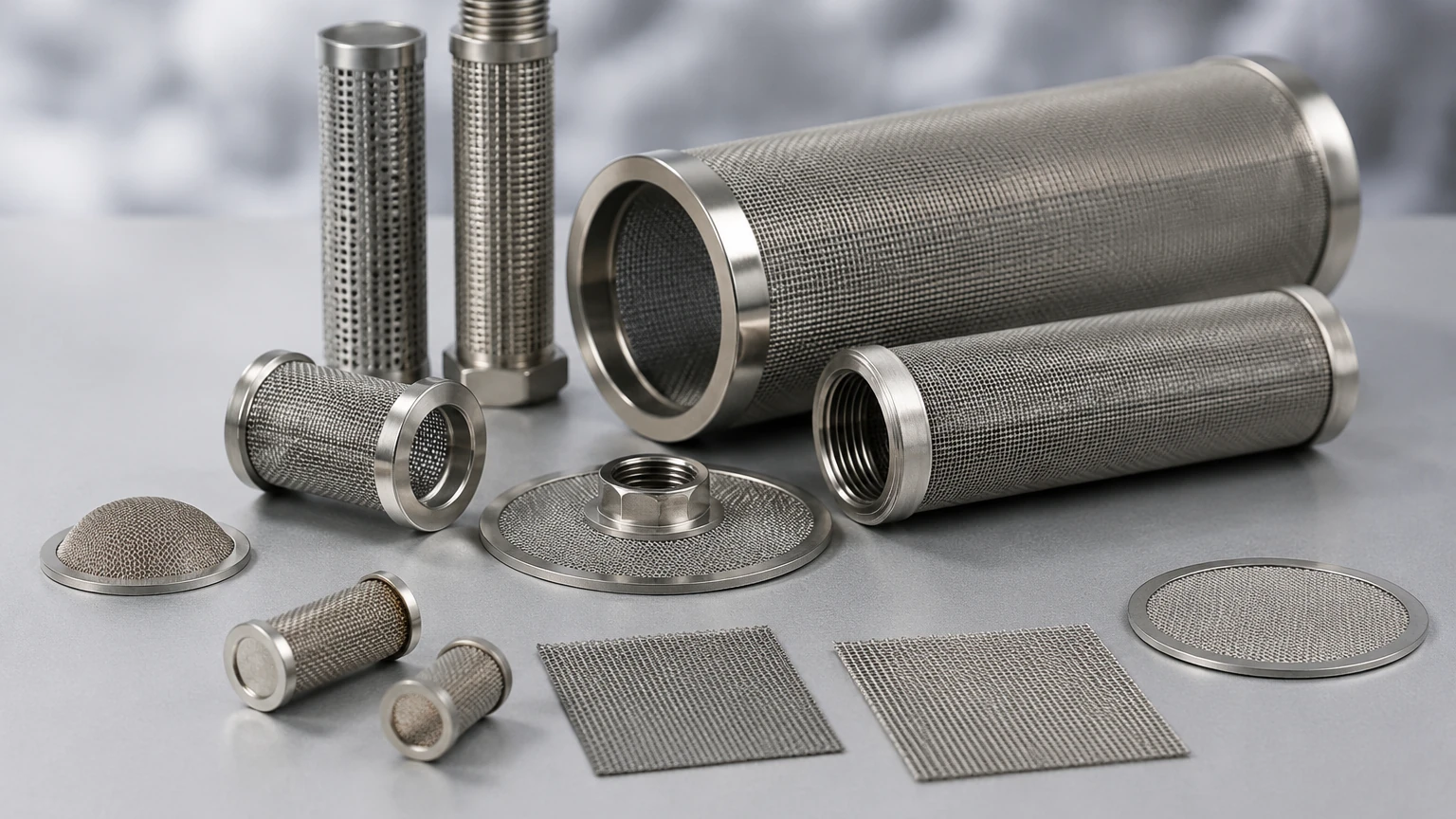
While many commercial breathers utilize plastic housings and paper or synthetic media, demanding industrial applications often require the durability and precision of metal components. This is where the expertise of a specialized manufacturer like Kaifil becomes invaluable. Stainless steel filtration media, including woven wire mesh and sintered metal fibers, offers several distinct advantages for cloud breather applications.
Chemical and Thermal Stability
Industrial reservoirs are often located in environments where they are exposed to chemical vapors, high temperatures, or UV radiation. Plastic components can become brittle and crack over time, leading to bypass leakage. Stainless steel (typically Grade 304 or 316L) remains structurally sound across a wide temperature range and is resistant to a vast array of industrial chemicals. This makes it the preferred choice for chemical processing plants, refineries, and offshore platforms.
Structural Integrity and Cleanability
Unlike paper media, which can collapse under high differential pressure or when saturated with moisture, stainless steel mesh maintains its geometry. This ensures consistent pore size and filtration performance throughout the component's life. Furthermore, in certain designs, stainless steel filter elements can be cleaned and reused, providing a more sustainable and cost-effective solution compared to disposable cartridges. For engineers seeking high-performance components, visiting the Main Page provides a comprehensive overview of available filtration technologies that can be integrated into breather assemblies.
Evaluating Breather Performance in Demanding Environments
In sectors such as mining, cement production, and primary metals, the atmosphere is heavily laden with abrasive dust. In these "cloud" environments, a standard breather will clog rapidly, leading to frequent maintenance intervals. To combat this, engineering teams often specify breathers with larger surface areas or multi-stage filtration structures.
Depth vs. Surface Filtration
Surface filtration, provided by fine wire mesh, is excellent for capturing large volumes of particulates without significant pressure buildup. Depth filtration, often utilized in the secondary stage of a cloud breather, uses a thicker bed of material to trap smaller particles throughout its volume. By combining these two methods, a cloud breather can achieve high efficiency while maintaining a long service interval.
Moisture Management
In applications where moisture is the primary concern, such as in water treatment or food and beverage processing, the breather may incorporate a hygroscopic agent or a specialized hydrophobic stainless steel mesh. These materials prevent water droplets from entering the reservoir while allowing dry air to pass. The choice between a desiccant-based breather and a purely mechanical breather depends on the specific moisture levels of the environment and the sensitivity of the fluid being protected.
Maintenance Cycles and Total Cost of Ownership (TCO)
The true cost of a cloud breather is not its purchase price, but the cost of the damage it prevents—or fails to prevent. A proactive maintenance strategy is essential for ensuring that breathers continue to protect the system.
Indicators for Replacement
Many modern cloud breathers are equipped with visual indicators. For desiccant breathers, this is typically a color change in the silica gel (e.g., from blue to pink or orange to green). For mechanical breathers, a vacuum gauge or a pop-up indicator can signal when the differential pressure has reached a critical limit. In high-stakes environments, sensors can be integrated to provide real-time data to a central monitoring system, allowing for predictive maintenance.
Impact on Fluid Life
By effectively excluding moisture and particulates, a high-quality cloud breather can extend the life of hydraulic oil by up to three times. This reduces the frequency of oil changes, lowers disposal costs, and minimizes the risk of oxidation-related sludge. When calculating TCO, engineers must account for these savings alongside the reduced wear on pumps and actuators. A robust stainless steel breather assembly, while potentially requiring a higher initial investment, often pays for itself within the first year of operation through reduced downtime and fluid savings.
Customization Options for OEM Integration
Every industrial system has unique requirements based on its footprint, operating environment, and fluid type. Off-the-shelf breathers may not always provide the optimal fit or performance. This is where custom OEM solutions become critical.
Manufacturers like Kaifil specialize in developing custom stainless steel filtration components that can be integrated into proprietary cloud breather designs. Customization options include:
* Threaded and Flanged Connections: Ensuring a secure, leak-proof fit to any reservoir or gearbox port.
* Custom Micron Ratings: Tailoring the mesh size to the specific cleanliness requirements of the system.
* Material Upgrades: Utilizing 316L stainless steel or Hastelloy for extreme corrosive environments.
* Integrated Check Valves: Designing breathers with internal valves that only open during the breathing cycle, further reducing the exposure of the fluid to the atmosphere.
By working closely with a manufacturer that understands the nuances of precision metal filtration, OEM engineers can develop cloud breathers that are perfectly matched to their equipment's performance profile. This collaborative approach ensures that the filtration solution is not an afterthought, but a core component of the system's reliability strategy.
Conclusion: Prioritizing Atmospheric Filtration
The cloud breather is a small but vital component in the quest for industrial efficiency. By preventing the ingression of atmospheric contaminants, it protects the heart of hydraulic and lubrication systems. For engineers and purchasing teams, the selection process should go beyond basic dimensions to include a rigorous evaluation of airflow capacity, filtration efficiency, and material durability.
Stainless steel components offer the resilience needed for the most demanding industrial sectors, providing a level of protection that plastic alternatives cannot match. As the industry moves toward more automated and sensitive machinery, the role of specialized filtration—supported by technical expertise and customized manufacturing—will only continue to grow. Investing in a high-quality cloud breather is a fundamental step in ensuring the longevity, safety, and productivity of modern industrial infrastructure.
