


Heavy Woven Wire Mesh: An Engineering Guide to Selection and Application
In industrial environments where structural integrity and high-volume throughput are non-negotiable, heavy woven wire mesh serves as a critical component. Unlike standard light-duty meshes used for fine laboratory sieving, heavy woven wire mesh is engineered to withstand significant mechanical stress, abrasive materials, and high-pressure differentials. For engineers and procurement specialists in sectors such as mining, chemical processing, and hydraulic filtration, selecting the correct mesh involves a complex balance of material science, mechanical properties, and fluid dynamics.
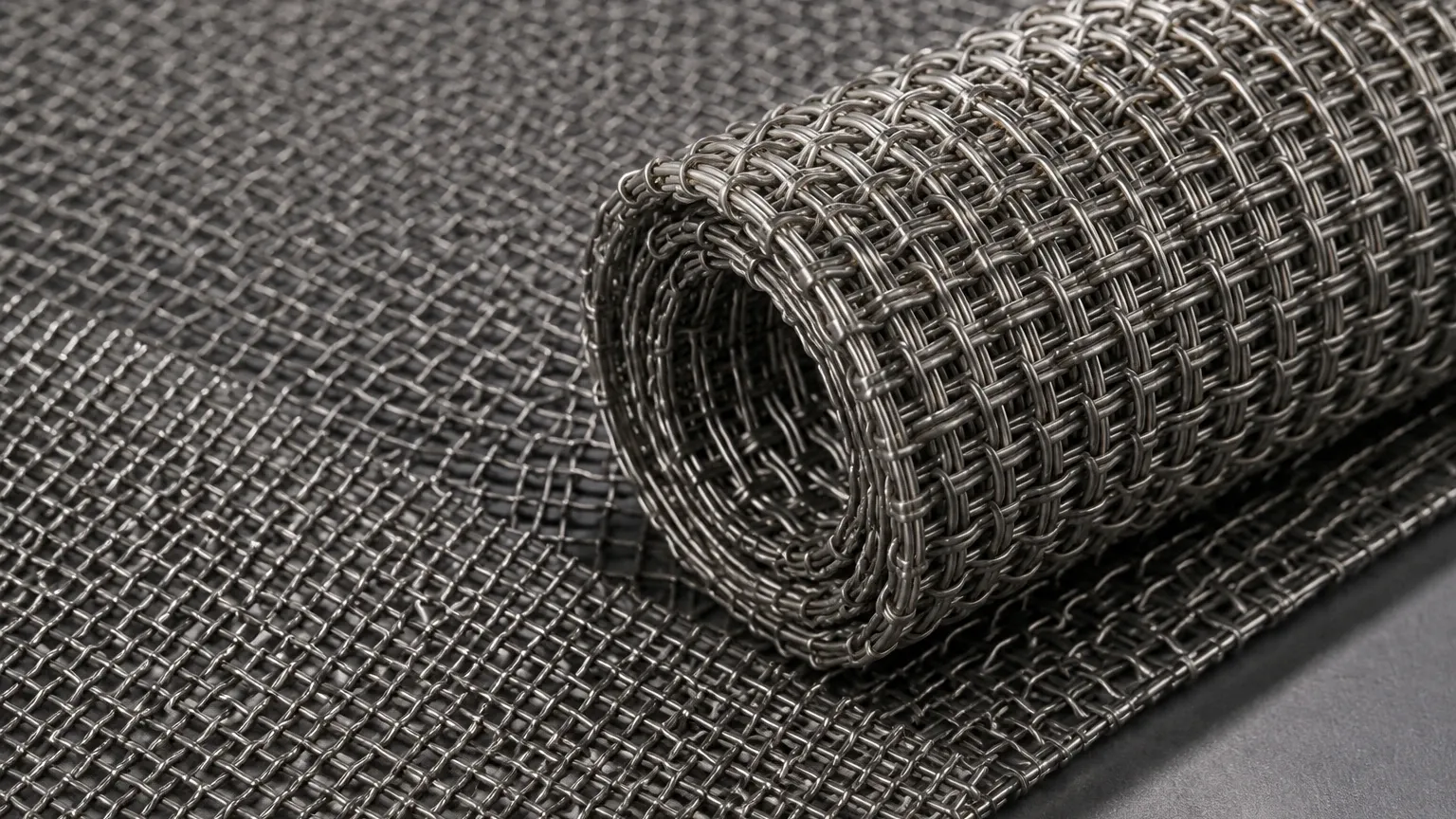
At Kaifil, we specialize in providing Plain, twill and dutch woven wire mesh in SS304/316L — rolls, cut mesh and framed panels. Send mesh count or micron target for a technical quote. to meet these demanding specifications. Understanding the nuances of wire diameter, weave patterns, and alloy performance is essential for optimizing the service life and efficiency of industrial filtration systems.
Understanding Heavy Woven Wire Mesh Specifications
The term "heavy" in the context of woven wire mesh typically refers to the ratio between the wire diameter and the aperture (opening) size. While standard meshes may use wire diameters measured in microns, heavy-duty variants often utilize wire gauges that provide high tensile strength and resistance to deformation.
Wire Diameter and Aperture Relationship
In a heavy-duty configuration, the wire diameter is often significantly larger relative to the opening size compared to standard decorative or light-industrial meshes. This ratio directly impacts two critical factors: the structural rigidity of the mesh and the percentage of open area.
* Structural Rigidity: Larger wire diameters provide the necessary support for high-pressure applications, such as those found in hydraulic systems or heavy-duty chemical strainers.
* Open Area Percentage: As wire diameter increases for a fixed mesh count, the open area decreases. Engineers must calculate the required flow rate against the mechanical strength needed. The formula for open area is generally expressed as:
*Open Area % = (Aperture / (Aperture + Wire Diameter))² × 100*
Weave Styles for Heavy Mesh
While plain weave is common, heavy woven wire mesh often utilizes specific weave styles to enhance stability:
1. Plain Weave: The simplest over-under pattern, suitable for most general filtration needs where the wire diameter is flexible enough to be woven tightly.
2. Twill Weave: Used when the wire-to-aperture ratio is high, making the wire too stiff for a plain weave. The wire passes over two and under two wires, allowing for a heavier wire gauge in a given mesh count.
3. Dutch Weave (and Reverse Dutch): These weaves utilize different diameters for the warp and shute wires. This creates a tortuous path for the media, providing excellent pressure resistance and fine filtration levels even in heavy-duty constructions.
Material Selection for Durability and Performance
The environment in which the heavy woven wire mesh will operate dictates the material choice. Stainless steel is the industry standard due to its balance of cost, availability, and mechanical properties.
SS304 vs. SS316L
* SS304: The most common grade, offering excellent strength and basic corrosion resistance. It is suitable for aggregate screening, food processing (where chloride exposure is low), and general industrial filtration.
* SS316L: Containing molybdenum, SS316L provides superior resistance to pitting and crevice corrosion in chloride-rich environments. For chemical processing, pharmaceutical manufacturing, and marine applications, SS316L is the preferred choice for heavy woven wire mesh to prevent premature failure due to chemical attack.
High-Performance Alloys
In extreme cases involving high temperatures or highly acidic/alkaline media, specialized alloys such as Monel, Inconel, or Hastelloy may be required. These materials maintain their tensile strength at elevated temperatures where standard stainless steels might undergo creep or rapid oxidation.
Engineering Considerations for High-Load Applications
When integrating heavy woven wire mesh into an industrial system, engineers must look beyond the basic dimensions. The performance of the mesh under load is the primary determinant of its utility.
Mechanical Stress and Fatigue
Heavy-duty meshes are often subjected to cyclic loading, such as in vibrating screens or high-pressure pulse-jet cleaning systems. Fatigue resistance is governed by the quality of the wire and the precision of the weave. A loose weave allows for wire movement, which leads to frictional wear (fretting) and eventual breakage. Kaifil ensures that the tensioning during the weaving process is optimized to minimize internal movement within the mesh structure.
Pressure Drop and Flow Characteristics
In filtration applications, heavy woven wire mesh must facilitate efficient flow while capturing particles. A common mistake is over-specifying the wire diameter for "safety," which leads to an excessive pressure drop (delta P). This forces pumps to work harder, increasing energy costs and the risk of mesh deformation. Computational Fluid Dynamics (CFD) or empirical testing is often necessary to find the "sweet spot" between structural safety factors and hydraulic efficiency.
Abrasion Resistance
For industries like mining or aggregate processing, the mesh is constantly bombarded by hard, sharp particles. In these scenarios, the hardness of the wire material and the smoothness of the weave surface are vital. Heavy woven wire mesh can be manufactured with specific "crimping" styles—such as lock crimp or intermediate crimp—to provide a flatter surface that distributes wear more evenly across the mesh.
Key Evaluation Criteria for Procurement
When sourcing heavy woven wire mesh, procurement teams should evaluate suppliers based on technical precision rather than just price per square foot. The following criteria are essential for ensuring long-term performance:
1. Mesh Consistency: Variations in aperture size across a roll can lead to "bypass," where larger-than-intended particles pass through the filter. High-quality manufacturers use automated optical inspection to ensure every opening meets the specified tolerance.
2. Edge Finishing: In heavy-duty applications, the edges of the mesh are often the first point of failure. Options such as welded edges, hemmed edges, or integrated frames should be discussed during the design phase to ensure the mesh can be securely mounted without fraying.
3. Certification and Traceability: For pharmaceutical and food-grade applications, material traceability (MTRs) is mandatory. Ensure the supplier can provide mill test reports confirming the chemical composition of the alloy.
4. Flatness and Tension: Heavy wire can retain "coil memory," making it difficult to install. Precision leveling processes are required to ensure the mesh panels are flat and ready for fabrication into filter cartridges or screen frames.
Common Risks and Mitigation in Heavy Mesh Usage
Even the highest quality heavy woven wire mesh can fail if misapplied or poorly maintained. Understanding these risks allows engineers to build more resilient systems.
Blinding and Plugging
Blinding occurs when particles near the size of the aperture become wedged in the mesh, reducing the open area. This is particularly common in heavy meshes with thick wires. Mitigation strategies include selecting a different weave pattern (like a rectangular slot) or utilizing ultrasonic cleaning systems to dislodge trapped particles.
Galvanic Corrosion
If a stainless steel heavy woven wire mesh is installed in a carbon steel frame without proper insulation, galvanic corrosion can occur in the presence of an electrolyte. This leads to rapid degradation of the mesh at the contact points. Using compatible materials or non-conductive gaskets is a critical design step.
Improper Support
Heavy mesh is strong, but it is not infinitely rigid. Over large spans, the weight of the media being filtered—combined with the pressure of the fluid—can cause the mesh to sag. This sagging changes the aperture geometry and can lead to mechanical failure. Engineers should specify support grids or perforated metal backing for heavy-duty filter elements to ensure the mesh remains within its elastic deformation limits.
Customization and OEM Solutions
Standard off-the-shelf mesh rarely meets the exact needs of specialized industrial equipment. Customization is often the key to optimizing performance. At Kaifil, we work closely with OEM partners to develop bespoke Woven Wire Mesh solutions that are tailored to specific housing dimensions and performance targets.
Tailored Micron Ratings
By adjusting the wire diameter and the density of the weave, we can achieve precise micron ratings while maintaining the "heavy" characteristics required for the application. This is particularly useful in high-viscosity fluid filtration where both high strength and fine filtration are required simultaneously.
Secondary Fabrication
Heavy woven wire mesh often requires secondary processing before it can be used. This includes:
* Precision Cutting: Using laser or waterjet cutting to ensure dimensional accuracy for circular filters or complex shapes.
* Forming: Rolling or bending heavy mesh into cylinders for filter cartridges.
* Welding: Utilizing TIG or resistance welding to join mesh to solid metal end caps or flanges without compromising the integrity of the weave.
Conclusion: Technical Confirmation Checklist
Before finalizing a purchase of heavy woven wire mesh, engineers and purchasing teams should confirm the following technical details to ensure the product is fit for purpose:
* Aperture vs. Mesh Count: Have you confirmed the actual opening size required, or are you relying solely on mesh count? (Wire diameter significantly affects the aperture for a given count).
* Environmental Compatibility: Does the selected alloy (e.g., 316L) account for the maximum temperature and chemical concentration of the process fluid?
* Mechanical Load: Has the maximum pressure differential (clean and dirty) been calculated to ensure the wire gauge can handle the stress?
* Installation Method: How will the mesh be secured? Does it require a frame, a hook strip, or a specific edge treatment to prevent bypass or mechanical failure?
By addressing these factors, industrial professionals can ensure that their investment in heavy woven wire mesh results in a durable, efficient, and cost-effective filtration solution. For more information on selecting the right specifications for your project, explore our Stainless Steel Woven Wire Mesh Selection Guide or contact our engineering team for a technical consultation.
