


Woven Wire Mesh HSN Code: A Technical and Regulatory Guide for Industrial Procurement
In the landscape of industrial filtration and material processing, the precision of components is matched only by the precision of the documentation required to move them across borders and through supply chains. For engineers and procurement specialists, identifying the correct woven wire mesh hsn code is a fundamental step in ensuring regulatory compliance, accurate tax assessment, and streamlined logistics.
Woven Wire Mesh serves as a critical medium in applications ranging from fine chemical filtration to heavy-duty industrial screening. Understanding how these products are classified under the Harmonized System of Nomenclature (HSN) is essential for technical professionals who must balance engineering requirements with the administrative realities of international trade.
Understanding the Woven Wire Mesh HSN Code and its Importance
The Harmonized System of Nomenclature (HSN) is an internationally standardized system of names and numbers to classify traded products. Developed by the World Customs Organization (WCO), it allows for a uniform classification of goods globally. For industrial filters and wire products, the HSN code determines the applicable customs duties, Import/Export (EXIM) policies, and domestic taxes like the Goods and Services Tax (GST).
When sourcing stainless steel filtration solutions, the woven wire mesh hsn code typically falls under Chapter 73 of the HSN system, which covers "Articles of iron or steel." Specifically, heading 7314 is dedicated to cloth (including endless bands), grill, netting, and fencing of iron or steel wire.
Why Accurate Classification Matters
1. Tax Compliance: Incorrectly identifying the HSN code can lead to underpayment or overpayment of taxes, resulting in legal complications or unnecessary costs.
2. Customs Clearance: Accurate codes prevent delays at international borders, ensuring that critical filtration components reach the production line on schedule.
3. Technical Clarity: The HSN structure often differentiates between materials and manufacturing methods, which helps in verifying that the product being shipped matches the technical specifications ordered.
Classification of Woven Wire Mesh under Chapter 73
For most industrial applications involving stainless steel wire mesh, the classification is highly specific. The 7314 heading is subdivided based on the material type, the weave structure, and the intended use.
HSN Code 7314 Breakdown
* 7314 12 00: This sub-code specifically refers to "Endless bands for machinery, of stainless steel." These are often used in continuous filtration systems or conveyor belts within the food processing or chemical industries.
* 7314 14 00: This is the most common code for standard industrial procurement, covering "Other woven cloth, of stainless steel." If you are purchasing rolls or cut pieces of SS304 or SS316L mesh for general filtration, this is likely the applicable code.
* 7314 19: This category covers other woven products of iron or steel that do not fall into the stainless steel or endless band categories.
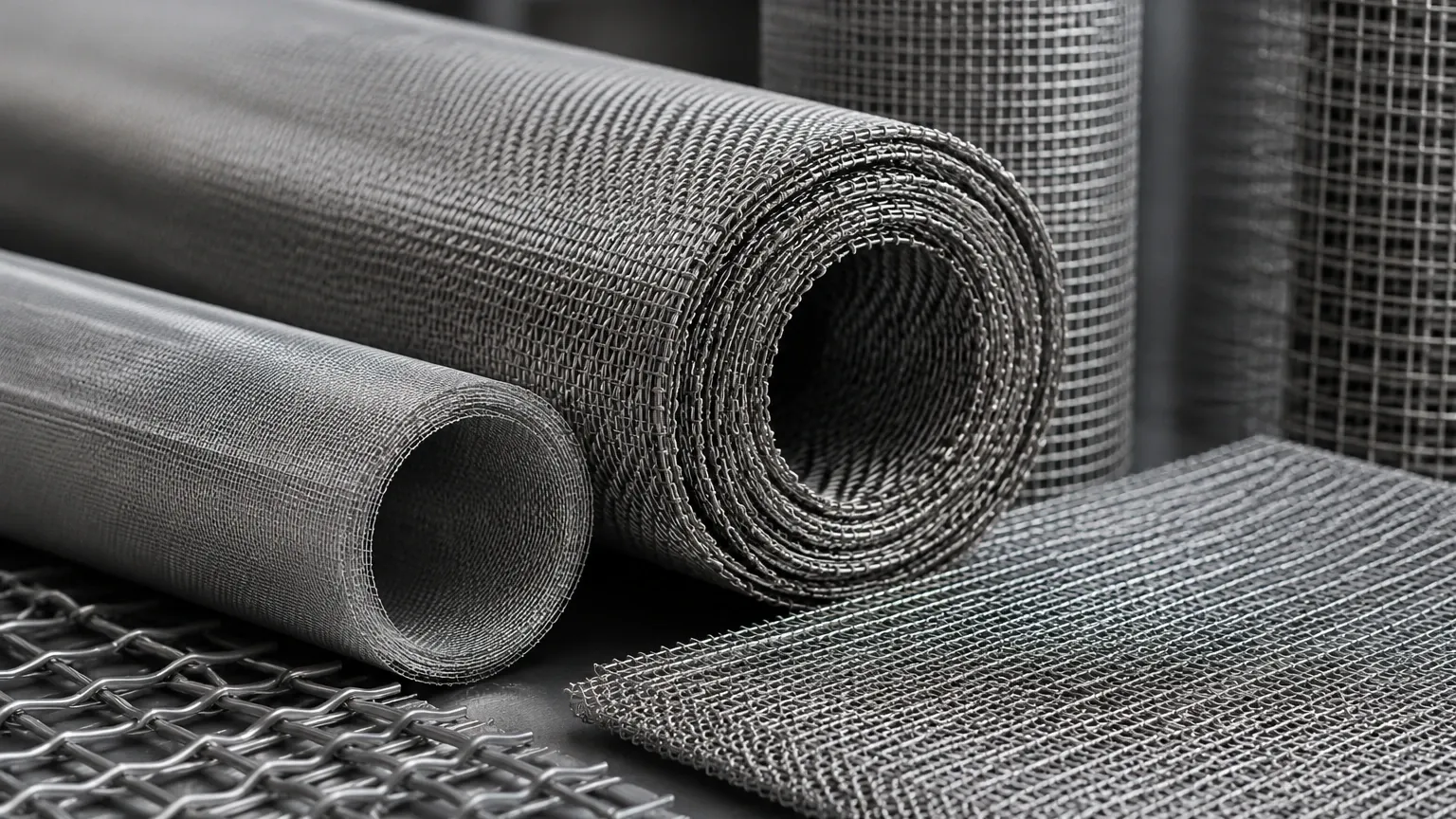
At Kaifil, we provide Plain, twill and dutch woven wire mesh in SS304/316L — rolls, cut mesh and framed panels. Send mesh count or micron target for a technical quote. Ensuring that these products are shipped under the correct woven wire mesh hsn code is part of our commitment to professional OEM service.
Technical Specifications Influencing Selection and Classification
While the HSN code provides a regulatory framework, the engineering performance of woven wire mesh is determined by its physical characteristics. When selecting mesh for an industrial application, engineers must look beyond the code to the specific technical parameters that define filtration efficiency and structural integrity.
Mesh Count and Micron Rating
The mesh count refers to the number of openings per linear inch. A higher mesh count indicates a finer opening size. However, for precision filtration, the micron rating (the diameter of the largest spherical particle that can pass through the mesh) is often the more critical metric. In hydraulic and pharmaceutical applications, where absolute filtration is required, Dutch weave patterns are often preferred because they offer much finer micron ratings than standard square weaves.
Wire Diameter
The diameter of the wire used in the weaving process affects both the opening size and the overall strength of the mesh. A thicker wire increases the durability and pressure resistance of the filter but reduces the percentage of open area, which can impact flow rates. Engineers must calculate the "Open Area Percentage" to ensure the filter does not create an excessive pressure drop in the system.
Weave Patterns and Their Functional Impact on Filtration
The method by which the wires are interlaced significantly alters the performance of the Woven Wire Mesh. Different weave patterns are chosen based on the required filtration accuracy and the mechanical stresses of the application.
1. Plain Weave
This is the most common and simplest weave, where each warp wire crosses over and under each weft wire. It provides a high percentage of open area and is ideal for general screening and low-pressure filtration. It is the standard choice for many industrial sieves.
2. Twill Weave
In a twill weave, each warp wire passes alternately over and under two weft wires. This allows for the use of heavier wires for a given mesh count, resulting in a stronger and more flexible mesh. Twill weaves are often used when the mesh count is too high for the wire diameter to allow a plain weave.
3. Plain Dutch Weave
Dutch weaves use different wire diameters for the warp and weft. The warp wires are heavier and spaced further apart, while the weft wires are thinner and driven closely together. This creates a dense, strong mesh with very fine triangular openings, making it excellent for high-pressure filtration in hydraulic systems and fuel filters.
4. Twilled Dutch Weave
Combining the principles of twill and Dutch weaves, this pattern allows for the finest filtration levels, often down to 5-10 microns. The overlapping wires create a tortuous path for particles, ensuring high retention efficiency even in demanding chemical processing environments.
Material Selection: SS304 vs. SS316L in Industrial Environments
The choice of alloy is as important as the weave pattern. The woven wire mesh hsn code remains the same for most stainless steel alloys, but the performance in the field varies drastically.
* Stainless Steel 304: The standard "18-8" stainless steel. It offers excellent corrosion resistance in most atmospheric conditions and is widely used in food processing and general industrial applications. It is cost-effective but may struggle in highly acidic or saline environments.
* Stainless Steel 316L: The "L" stands for low carbon, which improves weldability and prevents sensitization. 316L contains molybdenum, which significantly enhances resistance to chloride pitting and crevice corrosion. This is the preferred material for pharmaceutical, marine, and aggressive chemical filtration applications.
Procurement Considerations: Beyond the HSN Code
When contacting a manufacturer like Kaifil for a quote, providing the woven wire mesh hsn code is helpful for the logistics team, but the engineering team will require more granular data to ensure the product meets your application's needs.
Key Information for Technical Quotes:
* Material Grade: Specify SS304, SS316, or specialty alloys like Monel or Inconel if required.
* Mesh Count or Micron Rating: Define the particle size you need to retain.
* Wire Diameter: Essential for calculating mechanical strength and flow rates.
* Dimensions: Specify roll width and length, or provide drawings for custom-cut panels and framed components.
* Application Environment: Mention temperature, pressure, and chemical exposure to ensure material compatibility.
By focusing on these details, purchasing teams can avoid the common risk of procuring a mesh that meets the HSN classification but fails in the actual industrial environment due to improper material selection or weave choice.
Maintenance and Durability of Stainless Steel Mesh
One of the primary advantages of using stainless steel Woven Wire Mesh is its longevity. Unlike synthetic filters, metal mesh can often be cleaned and reused, which lowers the total cost of ownership (TCO) over the life of the equipment.
Cleaning Methods
* Backwashing: Reversing the flow of fluid to dislodge particles trapped on the surface of the mesh.
* Ultrasonic Cleaning: Using high-frequency sound waves in a liquid bath to remove fine particles from deep within the weave, especially effective for Dutch weaves.
* Chemical Cleaning: Using compatible solvents to dissolve accumulated resins or organic matter without damaging the stainless steel substrate.
Regular inspection for "blinding" (permanent clogging of the mesh) or mechanical damage such as fraying or punctures is vital. In high-pressure systems, the structural integrity of the mesh is paramount to prevent downstream contamination.
Conclusion
Navigating the technical and regulatory requirements of industrial filtration requires a dual focus. On one hand, the woven wire mesh hsn code (typically 7314.14.00 for stainless steel) ensures that your procurement process remains compliant and efficient. On the other hand, a deep understanding of weave patterns, material grades, and micron ratings ensures that the filtration solution performs reliably under demanding industrial conditions.
Kaifil specializes in bridging this gap, providing high-quality, customized stainless steel filtration components that meet both your engineering specifications and your logistical requirements. Whether you are designing a new chemical processing line or replacing filters in a hydraulic system, selecting the right mesh is the first step toward optimized performance and long-term durability.
