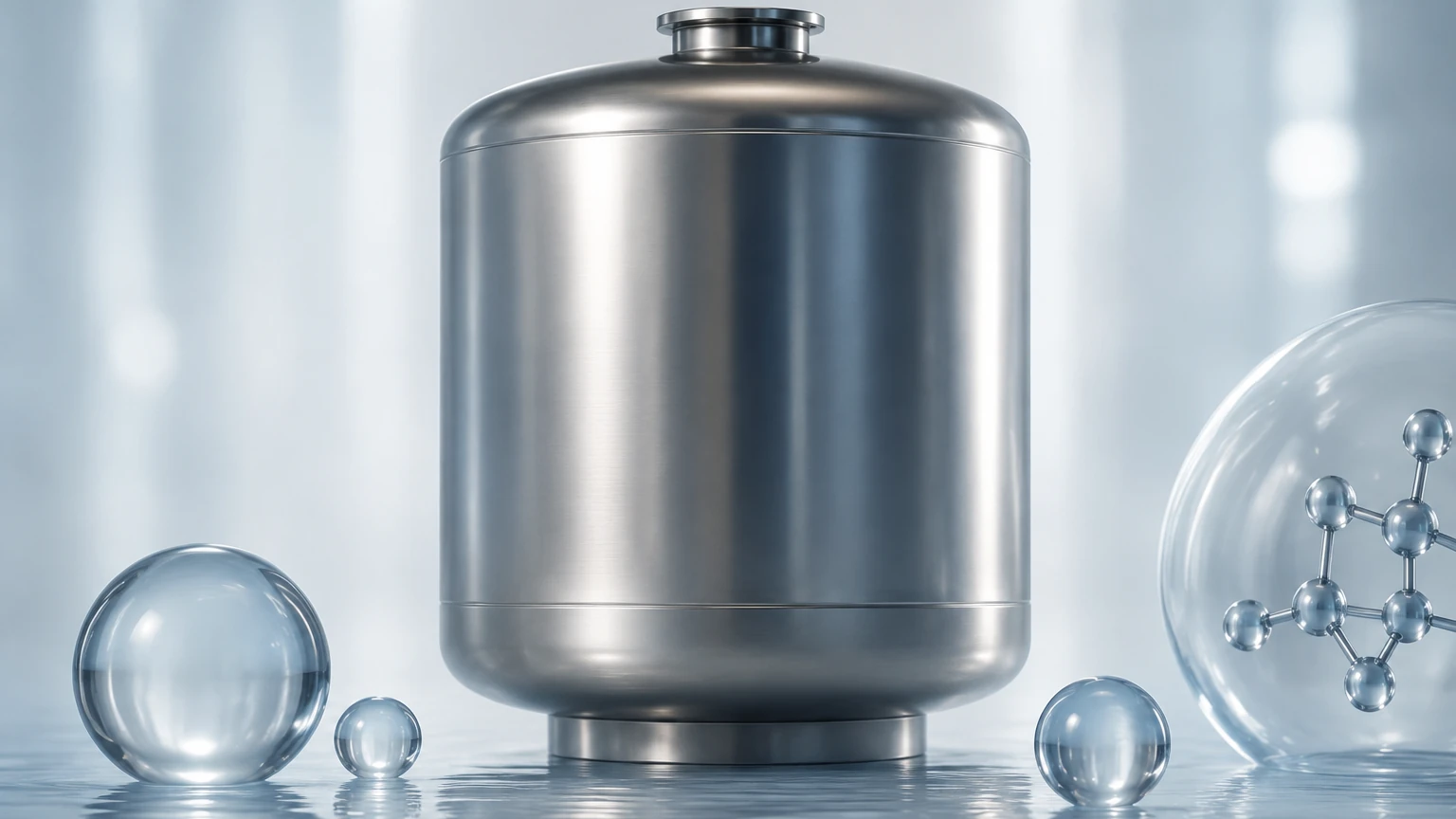
Advantages of Chemical Storage Tanks
In industrial processing, the storage of raw materials, intermediates, and finished chemical products is a critical link in the production chain. Chemical storage tanks are engineered vessels designed to hold various substances, ranging from benign fluids to highly corrosive or volatile reagents. For engineers and facility managers, selecting the right storage solution is not merely a matter of volume; it is a complex decision involving material science, safety protocols, and long-term operational efficiency. Understanding the technical advantages of chemical storage tanks, particularly those constructed from high-grade stainless steel and integrated with precision filtration, is essential for maintaining process integrity.
Material Selection: The Foundation of Chemical Compatibility
One of the primary advantages of modern chemical storage tanks is the ability to tailor material composition to the specific chemical profile of the stored substance. While various materials like polyethylene or fiberglass-reinforced plastic (FRP) are used in lighter applications, stainless steel remains the industry standard for demanding industrial environments.
Stainless steel tanks, particularly those utilizing 304 or 316L grades, offer superior corrosion resistance. This is vital when handling acids, alkalis, or solvents that would degrade lesser materials. The chromium content in stainless steel forms a passive oxide layer that protects the bulk of the metal from chemical attack. In pharmaceutical and food-grade applications, the smooth, non-porous surface of stainless steel prevents bacterial growth and cross-contamination, a benefit that is further enhanced by electropolishing to achieve specific Ra (roughness average) values.
Furthermore, stainless steel provides exceptional structural integrity across a wide temperature range. Unlike plastics, which may become brittle in extreme cold or lose structural rigidity in high-heat environments, metal tanks maintain their mechanical properties, ensuring the safety of the facility and the surrounding environment.
Operational Safety and Regulatory Compliance
Safety is the most significant advantage offered by professionally engineered chemical storage tanks. These vessels are designed to meet stringent international standards, such as ASME (American Society of Mechanical Engineers) or API (American Petroleum Institute) codes, which dictate wall thickness, welding techniques, and pressure ratings.
Pressure and Vacuum Management
Many chemical processes involve volatile substances that generate vapor pressure. Modern tanks are equipped with sophisticated venting systems and pressure-relief valves. These components prevent catastrophic failures such as tank implosion or rupture during filling and emptying cycles. By managing internal pressure effectively, these tanks allow for the safe handling of hazardous materials that would otherwise pose a significant risk to personnel.
Secondary Containment and Leak Detection
Environmental regulations often require secondary containment systems to prevent soil and groundwater contamination in the event of a primary vessel failure. Many advanced chemical storage tanks are designed as double-walled vessels or are integrated into specialized containment dikes. Integrated leak detection sensors provide real-time monitoring, allowing operators to intervene before a minor leak becomes an environmental disaster. This proactive safety approach not only protects the ecosystem but also shields the organization from the massive legal and financial liabilities associated with chemical spills.
Preserving Product Purity through Integrated Filtration
The utility of a storage tank is often defined by its ability to maintain the purity of its contents over time. This is where the synergy between storage and filtration becomes apparent. A storage tank is not an isolated system; it must breathe. As liquid is pumped out, air is drawn in, and this air can introduce moisture, dust, and microbial contaminants.
To mitigate this, high-performance vent filters are employed. These filters often utilize stainless steel wire mesh or specialized cartridges to strip particulates from incoming air. For engineers looking to optimize their systems, it is beneficial to Review product options and application support to ensure that the filtration components are compatible with the specific vapors generated by the stored chemicals.
In addition to vent filtration, the inlet and outlet points of the tank are critical zones for quality control. Precision metal filter components, such as those manufactured by Kaifil, are used to ensure that no contaminants enter the process stream during transfer. By integrating these filtration solutions directly into the tank's piping and venting architecture, manufacturers can guarantee a high level of product consistency, reducing the risk of batch rejection in downstream processing.
Customization Options for Complex Industrial Workflows
Every chemical plant has unique spatial and process requirements. The inherent flexibility in the design of metal chemical storage tanks allows for extensive customization, which is a major advantage for facility engineers.
* Orientation and Geometry: Depending on the footprint of the facility, tanks can be designed in vertical or horizontal configurations. Vertical tanks are often preferred for their smaller footprint and ease of drainage, while horizontal tanks may be used in height-restricted areas or for specific mixing requirements.
* Thermal Management: Many chemicals must be stored at precise temperatures to maintain their viscosity or prevent crystallization. Custom tanks can be equipped with heating or cooling jackets (such as dimple jackets or half-pipe coils) and high-density insulation to provide rigorous thermal control.
* Agitation and Mixing: For chemicals that are prone to settling or require constant homogenization, tanks can be fitted with internal baffles and top-mounted or side-entry agitators. The engineering of these internal components must be precise to ensure there are no "dead zones" where material can stagnate.
* Instrumentation Integration: Modern tanks serve as data hubs. They are frequently customized with ports for level sensors, temperature probes, pH meters, and pressure transducers. These instruments feed data back to a centralized SCADA (Supervisory Control and Data Acquisition) system, allowing for automated inventory management and process monitoring.
Analyzing the Total Cost of Ownership and Long-term ROI
While the initial capital expenditure for a high-quality stainless steel chemical storage tank and its associated filtration system may be higher than lower-grade alternatives, the total cost of ownership (TCO) is significantly lower over the equipment's lifecycle.
The durability of stainless steel means that these tanks can remain in service for decades with minimal maintenance. Unlike plastic tanks that may require replacement every 5 to 10 years due to UV degradation or chemical embrittlement, a well-maintained metal tank is a long-term asset.
Maintenance cycles are also more predictable. Stainless steel is easy to clean and can withstand rigorous CIP (Clean-in-Place) and SIP (Steam-in-Place) protocols. This reduces downtime and labor costs. Furthermore, the high resale value of stainless steel scrap provides a residual value at the end of the tank's functional life, which is not an option with composite or plastic materials. When engineers calculate the ROI, they must factor in the avoided costs of contamination, the reduced frequency of replacement, and the enhanced safety profile that prevents costly industrial accidents.
Technical Specifications to Confirm Before Procurement
Before finalizing the procurement of a chemical storage tank, engineering teams should conduct a thorough technical review. This ensures that the vessel will perform as expected under the specific conditions of the application. Key areas for confirmation include:
1. Chemical Compatibility Matrix: Verify that the tank material, gaskets, and seals are fully compatible with the stored substance at its maximum operating temperature. This should include an assessment of potential trace elements or impurities in the chemical that could accelerate corrosion.
2. Filtration Requirements: Determine the micron rating required for vent and process filters. For high-purity applications, such as pharmaceutical precursors, ultra-fine stainless steel wire mesh may be necessary to prevent particulate ingress.
3. Structural Loadings: Ensure the tank design accounts for seismic activity, wind loads (for outdoor installations), and the specific gravity of the stored liquid. A tank designed for water may fail if filled with a high-density acid.
4. Nozzle and Manway Placement: Confirm that all access points and instrument ports are positioned for ease of maintenance and operation. This includes ensuring there is sufficient clearance for filter replacement and internal inspections.
5. Surface Finish Requirements: Specify the required internal surface finish. For many industrial chemicals, a standard 2B mill finish is sufficient, but for high-purity or sticky substances, a mechanical polish or electropolish may be required to facilitate cleaning.
Conclusion
The advantages of chemical storage tanks extend far beyond simple containment. When properly engineered and integrated with precision filtration components, these vessels become critical assets that protect product quality, ensure worker safety, and optimize operational efficiency. By prioritizing high-grade materials like stainless steel and focusing on customized engineering solutions, industrial professionals can build robust systems that stand up to the rigors of modern chemical processing. For those seeking to enhance their filtration and storage capabilities, consulting with experts in metal filtration and vessel components is the first step toward achieving a reliable and cost-effective infrastructure.