


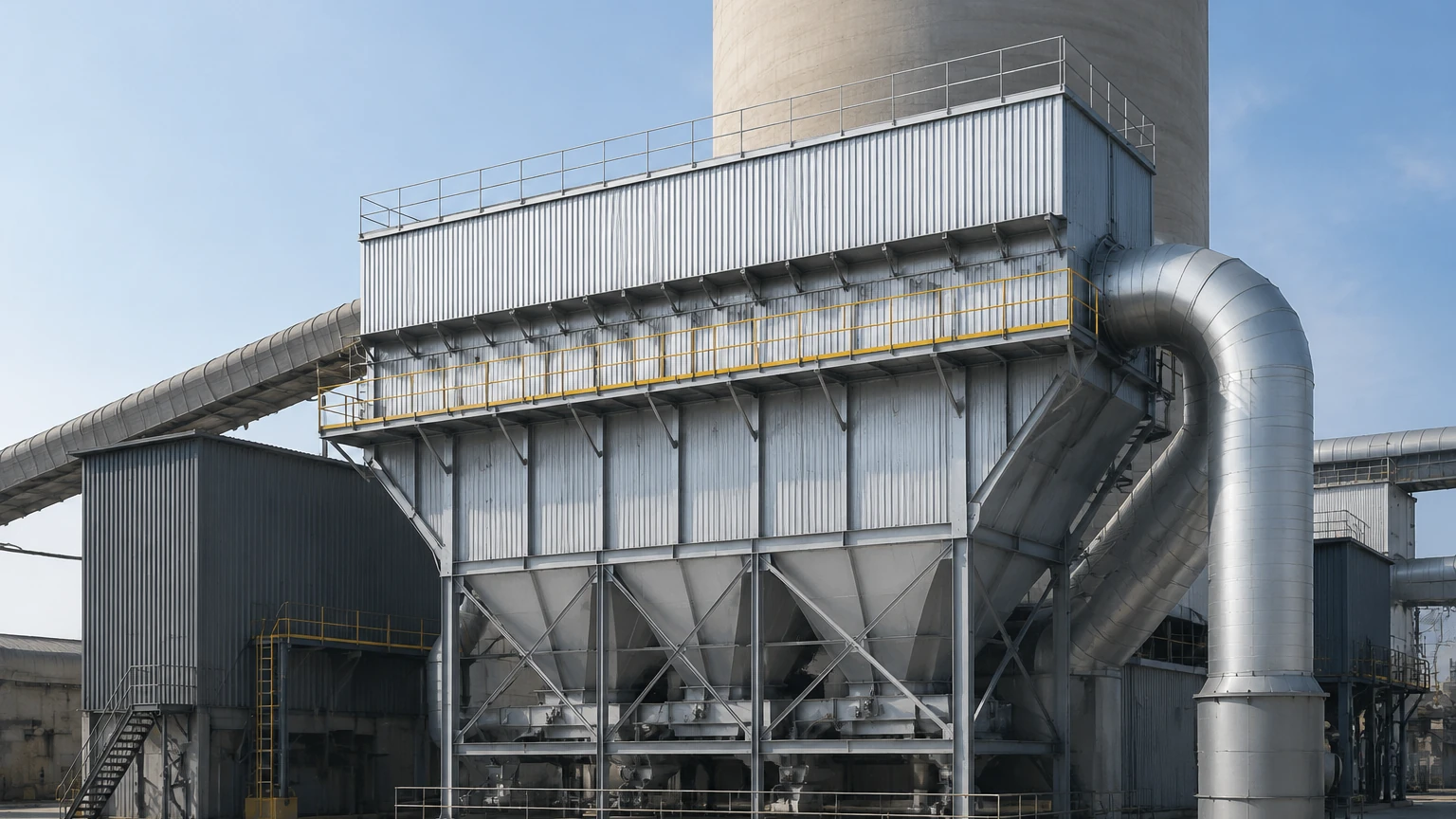
Cement Plant Dust Collector
In the heavy industrial landscape of cement manufacturing, dust collection is not merely an environmental compliance requirement but a critical component of operational efficiency and equipment longevity. A cement plant dust collector system must handle some of the most demanding conditions in the filtration industry, including extreme temperatures, highly abrasive particulate matter, and chemically aggressive gas streams. For engineers and procurement teams, selecting the correct filtration media and structural components is essential to minimize downtime and maintain stable pressure differentials across the system.
Cement production involves several distinct stages—from raw material crushing and grinding to pyroprocessing in the kiln and final cement milling. Each stage presents unique challenges for a cement plant dust collector. Effective filtration ensures that valuable material is recovered and that emissions meet stringent local and international air quality standards.
The Role of Dust Collection in Cement Production
Dust collection systems are integrated into multiple points of the cement manufacturing process. The primary objective is to capture particulate matter (PM) before it is released into the atmosphere or to recover processed material to be fed back into the production line.
In the raw mill and kiln sections, gas temperatures can exceed 400°C, requiring filtration solutions that can withstand thermal shock and continuous high-heat exposure. In the clinker cooler area, the dust is exceptionally abrasive, which can lead to rapid wear of standard filter media. Finally, in the finish mill, the fine nature of the cement powder requires high-precision filtration to prevent "blinding"—a condition where particles become lodged in the filter pores, significantly increasing pressure drop and reducing energy efficiency.
Technical Challenges of Cement Dust Filtration
Engineers must account for several variables when designing or maintaining a cement plant dust collector. The efficiency of the system is often dictated by the interaction between the dust characteristics and the filter media properties.
Abrasiveness and Particle Morphology
Cement dust, particularly clinker dust, is highly abrasive. Continuous impact from these particles can erode filter cages, housings, and the filtration media itself. Using reinforced stainless steel components or specialized wire mesh structures can mitigate this wear, extending the service life of the internal components.
Temperature Fluctuations
The kiln exhaust gas is notoriously hot. While cooling towers and air-to-air heat exchangers are often used to reduce temperatures before the gas reaches the dust collector, surges are common. Standard fabric filters may fail under these conditions, leading to costly emergency shutdowns. This is where metal filtration components, such as those engineered from high-grade stainless steel, provide a necessary safety margin due to their inherent thermal stability.
Chemical Corrosion
Depending on the fuel source used in the kiln (such as coal, petcoke, or alternative fuels), the exhaust gas may contain sulfur oxides (SOx) and nitrogen oxides (NOx). When temperatures drop below the acid dew point, condensation can occur, leading to sulfuric acid formation. Filtration components must be selected based on their chemical compatibility to prevent premature corrosion and structural failure.
Comparing Filtration Technologies for Cement Plants
Historically, cement plants relied heavily on Electrostatic Precipitators (ESPs). However, the industry has seen a significant shift toward baghouses and hybrid systems due to stricter emission limits and the need for higher collection efficiency of fine particulate matter.
Baghouse Filters (Fabric Filters)
Baghouses are the most common type of cement plant dust collector today. They utilize fabric bags (often made of PTFE, fiberglass, or aramid) to trap dust. While effective, they are limited by temperature and chemical sensitivity. In specialized sub-processes or high-pressure applications, engineers often look to integrate metal filter elements or sintered mesh supports to improve the mechanical integrity of the system.
Metal and Wire Mesh Filtration
For specific zones within the plant, such as hydraulic systems for heavy machinery or high-temperature gas bypass lines, stainless steel wire mesh filters are preferred. These components offer superior mechanical strength and can be cleaned and reused, providing a lower total cost of ownership compared to disposable elements. Stainless steel filter cartridges are also essential in the lubrication systems of large rotating equipment like the kiln and mills, where maintaining oil purity is vital for bearing life.
Engineering Criteria for Selecting Filter Components
When specifying components for a cement plant dust collector, engineers should focus on several key performance indicators (KPIs) to ensure the system operates within its design parameters.
1. Filtration Accuracy (Micron Rating): The media must be capable of capturing the target particle size distribution. For cement applications, this often involves capturing sub-micron particles to meet environmental standards.
2. Permeability and Pressure Drop: High permeability allows for a lower initial pressure drop, which translates directly to reduced fan power consumption. A well-designed filter should maintain a stable pressure drop over its cleaning cycle.
3. Mechanical Strength: In pulse-jet cleaning systems, the filter media and its support structure are subjected to repeated mechanical stress. Components must be able to withstand these pulses without deforming or tearing.
4. Material Selection: The choice between Stainless Steel 304, 316L, or specialized alloys depends on the specific moisture and chemical profile of the gas stream. 316L is generally preferred in environments where acid corrosion is a risk.
Custom Stainless Steel Solutions for Demanding Zones
Standard off-the-shelf filtration products often fall short in the specialized environments found within a cement facility. Customization is key to optimizing the performance of a cement plant dust collector.
Custom stainless steel wire mesh filters can be engineered with specific weave patterns to balance filtration efficiency with flow rates. For instance, Dutch weave or twilled weave patterns provide high strength and precise pore sizes. These are often used in the filtration of process liquids or as protective screens in pneumatic conveying systems within the plant. By working with a manufacturer that offers OEM capabilities, cement plants can obtain filter cartridges and mesh components that fit perfectly into existing housings, eliminating the need for expensive system modifications.
Optimizing Performance and Total Cost of Ownership
The total cost of ownership (TCO) for a cement plant dust collector includes the initial purchase price, energy consumption, maintenance labor, and the cost of downtime.
Pulse-Jet Cleaning Efficiency
Most modern dust collectors use a pulse-jet cleaning mechanism, where a burst of compressed air dislodges the dust cake from the filter media. The effectiveness of this pulse depends on the rigidity of the filter support. If the support (such as a filter cage or internal mesh) is too flexible, the pulse energy is absorbed, leading to incomplete cleaning and a rapid rise in differential pressure.
Extending Service Life
Durability is the primary driver of TCO. While stainless steel components may have a higher upfront cost than carbon steel or plastic alternatives, their resistance to abrasion and corrosion significantly extends the interval between replacements. In a 24/7 cement production environment, reducing the frequency of maintenance shutdowns provides a substantial return on investment.
Key Considerations for Purchasing and OEM Customization
Before finalizing a purchase for cement plant dust collector components, technical teams should confirm several critical details with their supplier:
* Dimensional Accuracy: Ensure that custom-made filter cartridges or wire mesh screens match the exact specifications of the OEM housing to prevent bypass leakage.
* Material Certification: Request material test reports (MTRs) to verify that the stainless steel grade meets the required standards for corrosion resistance.
* Operating Limits: Confirm the maximum operating temperature and differential pressure the component can handle without structural failure.
* Cleaning Compatibility: Verify that the filter media can withstand the intended cleaning method, whether it is pulse-jet, reverse air, or ultrasonic cleaning for removable metal elements.
For organizations looking to optimize their industrial filtration systems, it is essential to partner with a manufacturer that understands the complexities of material science and mechanical engineering. You can Main Page to review product options and application support tailored to high-performance industrial environments.
Conclusion
The cement plant dust collector is a vital asset that impacts both the environmental footprint and the bottom line of a manufacturing facility. By focusing on high-quality materials, precise engineering, and customized filtration solutions, cement producers can achieve more reliable operations and lower long-term costs. Whether addressing the extreme heat of the kiln or the abrasive nature of clinker dust, selecting the right stainless steel filtration components is a strategic decision that supports the continuous, efficient production of cement.
