


Hastelloy Reactor
In the landscape of modern chemical processing, the Hastelloy reactor stands as a critical piece of equipment for handling highly corrosive media and high-temperature reactions. These vessels are engineered to withstand environments that would rapidly degrade standard stainless steel alloys. However, the performance of a reactor is not solely dependent on the vessel shell; it is equally reliant on the internal components, particularly the filtration systems that manage catalyst recovery, product purification, and debris removal. For engineers and procurement specialists, understanding the synergy between the reactor vessel and its filtration architecture is essential for maintaining process integrity and operational longevity.
Engineering Properties of Hastelloy in Reactor Environments
A Hastelloy reactor is typically constructed from nickel-based alloys, such as Hastelloy C-276, C-22, or B-3. These materials are selected for their exceptional resistance to a wide array of chemical challenges, including wet chlorine gas, hypochlorite, and strong oxidizing salts. In many industrial applications, the reactor must operate under significant pressure and varying thermal cycles, necessitating a material that maintains its mechanical strength and corrosion resistance across a broad spectrum.
The choice of specific Hastelloy grades depends on the chemical nature of the process. For instance, Hastelloy C-276 is often the default choice for its versatility in both oxidizing and reducing environments. In contrast, Hastelloy B-3 is specifically tailored for handling hydrochloric acid at various concentrations and temperatures. When integrating filtration components into these reactors, engineers must ensure that the filter media—whether it be wire mesh or sintered metal—possesses a compatible level of corrosion resistance to prevent galvanic corrosion or premature failure of the filtration interface.
The Critical Role of Filtration in Hastelloy Reactors
Filtration within a Hastelloy reactor serves several high-stakes functions. In many chemical syntheses, expensive catalysts are utilized to drive reactions. A robust filtration system is required to retain these catalysts within the reactor or recover them from the product stream. Without precise filtration, catalyst loss not only increases operational costs but can also contaminate downstream equipment and final products.
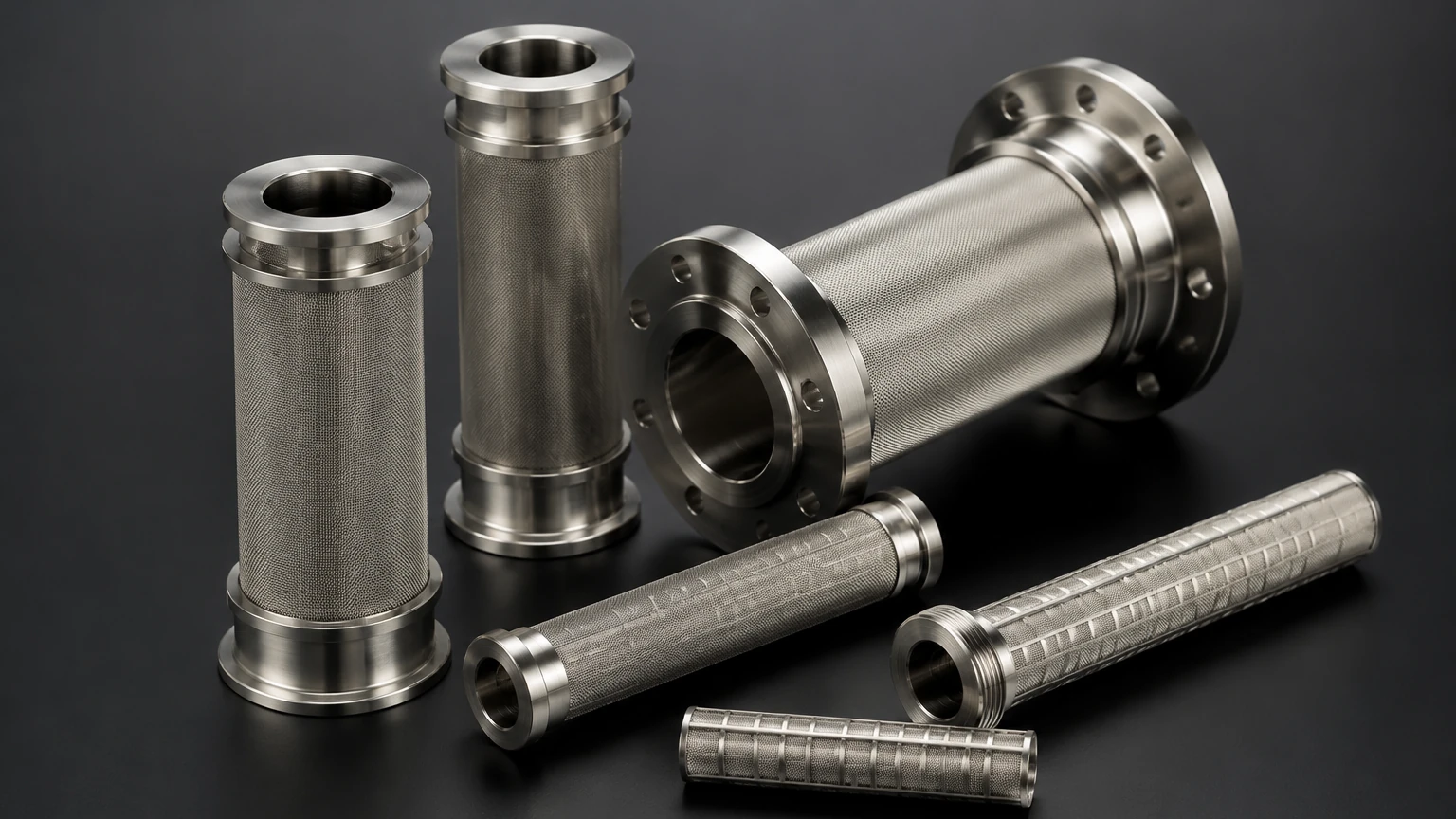
Furthermore, the filtration process ensures product purity by removing undissolved solids, precipitates, or impurities that may form during the reaction. In pharmaceutical or fine chemical production, the requirement for purity is absolute. The filtration components must be capable of operating at the same temperature and pressure as the reactor itself, often requiring specialized designs like sintered metal cartridges or multi-layer wire mesh filters that offer both high permeability and structural rigidity.
For those evaluating the technical specifications of filtration components for such demanding environments, the Main Page of specialized manufacturers offers a comprehensive look at the available alloy options and custom configurations that can be integrated into reactor systems.
Selecting Filtration Media for High-Corrosive Systems
When a process requires a Hastelloy reactor, the filtration media must be selected with equal rigor. While the reactor vessel may be Hastelloy, the internal filters are sometimes made from the same alloy or high-grade stainless steels like 316L or 904L, depending on the specific chemical exposure and cost-benefit analysis. There are three primary types of metal filtration media used in these applications:
1. Sintered Metal Fiber: This media provides high porosity and excellent dirt-holding capacity. It is ideal for fine filtration where low differential pressure is required despite high flow rates.
2. Sintered Wire Mesh: By bonding multiple layers of wire mesh through a vacuum sintering process, manufacturers create a filter medium that is exceptionally strong and easy to clean. This is often preferred for applications involving high-pressure backwashing.
3. Wedge Wire: For coarser filtration or as a support structure for finer media, wedge wire offers high mechanical strength and a non-clogging surface, which is particularly useful in agitated reactor environments.
Engineering teams must calculate the required micron rating based on the particle size distribution of the solids being filtered. Over-specifying (choosing a micron rating that is too fine) can lead to rapid clogging and increased maintenance, while under-specifying can compromise product quality.
Technical Evaluation Criteria for Reactor Filtration
Selecting the right filtration component for a Hastelloy reactor involves more than just matching the alloy. Engineers must consider several technical parameters to ensure the filter performs reliably over its intended service life.
Differential Pressure (Delta P)
As solids accumulate on the filter surface, the pressure drop across the media increases. The filtration system must be designed to withstand the maximum expected differential pressure without deforming or collapsing. In high-viscosity reactions, managing Delta P is critical to maintaining throughput.
Thermal Stability
Chemical reactions in a Hastelloy reactor often occur at elevated temperatures. The filtration media and its housing must account for thermal expansion. Sintered metal components are particularly well-suited for this, as they maintain their pore structure and mechanical integrity even under significant thermal cycling.
Cleaning and Regenerability
In many B2B industrial settings, the total cost of ownership is heavily influenced by how many times a filter can be cleaned and reused. Filters used in reactor systems are often subjected to Clean-in-Place (CIP) or Steam-in-Place (SIP) protocols. The ability of the filter to withstand aggressive cleaning agents and high-pressure backpulsing is a key evaluation criterion for procurement teams.
Common Operational Risks and Mitigation Strategies
Operating a filtration system within a Hastelloy reactor environment carries inherent risks that must be managed through careful engineering and material selection.
* Corrosion Fatigue: Even with high-performance alloys, the combination of cyclic loading (from agitation or pressure pulses) and a corrosive environment can lead to fatigue. Regular inspection intervals and the use of high-quality, precision-manufactured components are the primary defenses against this risk.
* Media Blinding: This occurs when particles become permanently lodged within the pores of the filter media. Mitigation involves selecting the correct pore geometry and ensuring that the backwashing or cleaning cycle is optimized for the specific type of particulate matter involved.
* Bypass and Seal Failure: In a reactor, any bypass of unfiltered fluid can be catastrophic for downstream processes. Ensuring that filter cartridges are installed with compatible high-temperature gaskets or metal-to-metal seals is essential for maintaining a leak-proof system.
By addressing these risks during the design phase, manufacturers can significantly extend the interval between maintenance shutdowns, thereby improving the overall efficiency of the chemical plant.
Customization and OEM Integration
Standard off-the-shelf filtration solutions rarely suffice for the complex requirements of a Hastelloy reactor. Most applications require customized filtration components tailored to the specific dimensions of the reactor, the flow dynamics of the agitator, and the chemical specifics of the process.
Customization options often include:
* Variable Micron Ratings: Tailoring the filtration layers to handle a specific range of particle sizes.
* Custom End Fittings: Ensuring the filter cartridge integrates seamlessly with existing reactor internals, whether through threaded connections, flange mounts, or specialized bayonet fittings.
* Reinforced Structures: Adding internal or external support cores to handle extreme pressure differentials or high-velocity fluid impingement.
Working with an OEM manufacturer that specializes in precision metal filtration allows engineering teams to develop components that are optimized for the unique stresses of their specific reactor environment. This collaborative approach ensures that the filtration system does not become a bottleneck in the production process.
Procurement and Total Cost Considerations
When purchasing filtration components for a Hastelloy reactor, the initial capital expenditure is only one part of the equation. Procurement professionals must also weigh the costs of replacement cycles, cleaning downtime, and the potential impact of filtration failure on the final product.
High-quality stainless steel or alloy filters may have a higher upfront cost than disposable alternatives, but their ability to be cleaned and reused hundreds of times typically results in a much lower total cost of ownership over the life of the reactor. Furthermore, the reliability of precision-engineered components reduces the risk of unplanned outages, which can cost industrial facilities thousands of dollars per hour in lost production.
Before finalizing a purchase, it is recommended that technical teams confirm the chemical compatibility of all wetted parts, verify the pressure ratings under operating temperatures, and review the manufacturer’s quality control documentation, such as material test reports (MTRs) and bubble point test results.
For detailed information on custom filtration solutions and technical support for industrial applications, engineers are encouraged to review product options and application support on the Main Page of the manufacturer’s site. This resource provides the necessary data to align filtration performance with the demanding requirements of a Hastelloy reactor system, ensuring efficient, durable, and cost-effective operation in the most challenging industrial environments.
