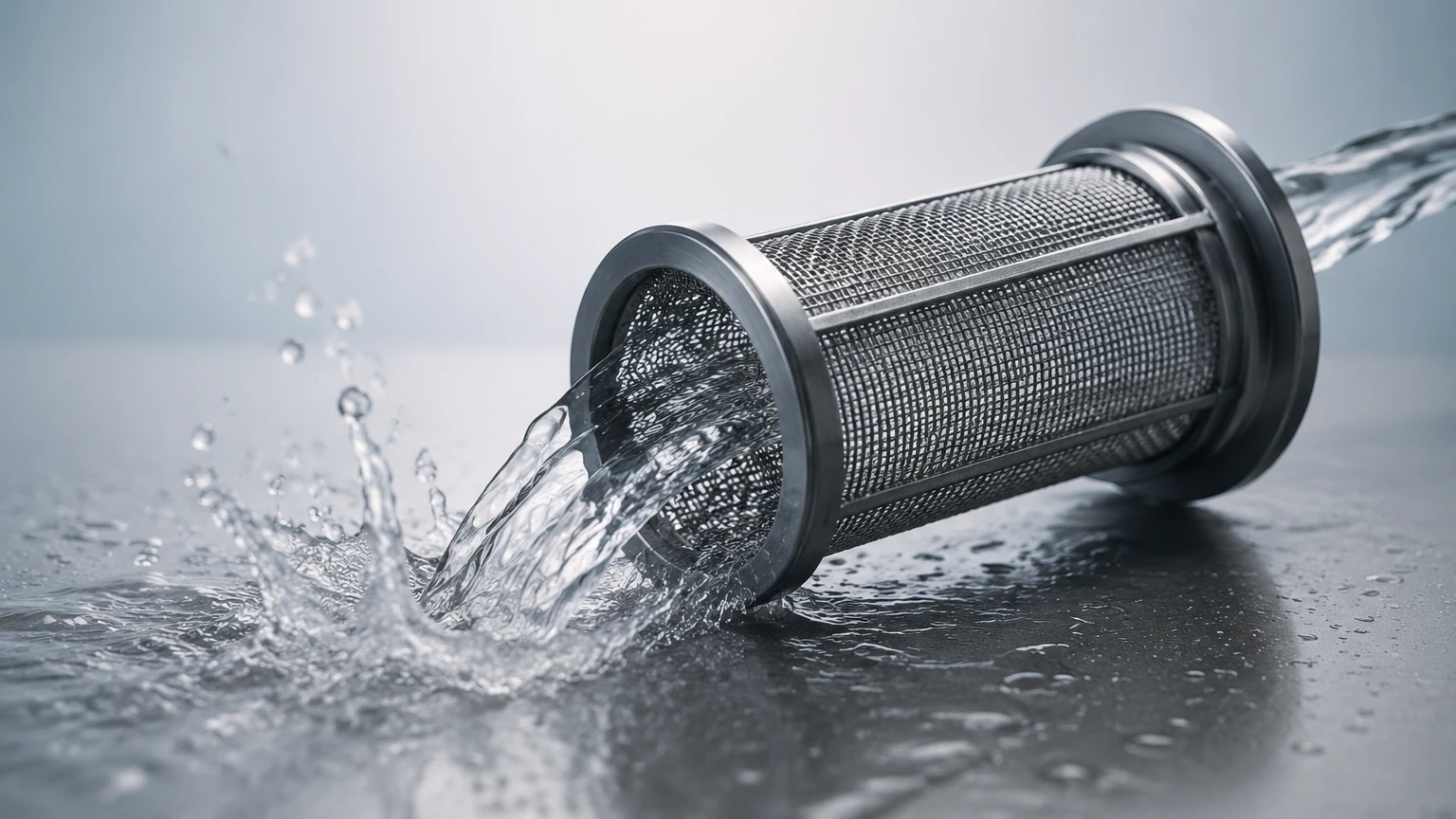
Backwash Effect
In industrial filtration, the ability to maintain continuous operation without frequent manual intervention is a primary engineering objective. For systems utilizing stainless steel wire mesh or sintered metal cartridges, the efficiency of the cleaning cycle is defined by the backwash effect. This phenomenon refers to the effectiveness of reversing fluid flow through a filter medium to dislodge accumulated solids and restore the initial pressure differential. Understanding the technical nuances of the backwash effect is essential for engineers designing systems for chemical processing, water treatment, and hydraulic applications where downtime is costly.
The Mechanics of the Backwash Effect in Metal Filters
The backwash effect is fundamentally a hydrodynamic process. During normal filtration, particles are captured on the surface or within the pores of the filter media, forming what is known as a filter cake. As this cake thickens, the resistance to flow increases, leading to a rise in transmembrane pressure (TMP). When the TMP reaches a predetermined threshold, the backwash cycle is initiated.
In a successful backwash operation, the flow direction is reversed. The fluid—either the filtrate itself or a separate cleaning agent—is forced from the clean side of the media to the dirty side. The backwash effect relies on the sudden application of pressure and high velocity to overcome the adhesive forces between the particles and the filter surface. For stainless steel wire mesh, which functions primarily as a surface filter, the backwash effect is typically more pronounced and efficient than in depth-style filters. The rigid structure of the metal prevents pore expansion or compression during flow reversal, ensuring that the pore geometry remains consistent and the particles are effectively purged.
Engineering Factors Influencing Backwash Efficiency
Achieving an optimal backwash effect requires a precise balance of several engineering variables. If these factors are not correctly calibrated, the filter may suffer from "blinding," where particles become permanently lodged within the media, leading to a permanent increase in the clean pressure drop.
1. Backwash Pressure and Velocity: The pressure applied during the reverse flow must be significantly higher than the operating filtration pressure to dislodge the cake. However, it must not exceed the structural limits of the filter element. Velocity is equally critical; high-velocity fluid creates the necessary shear forces to strip particles away from the wire mesh intersections.
2. Fluid Viscosity and Temperature: The physical properties of the backwash fluid impact its ability to penetrate the filter cake. In chemical processing, higher temperatures may be used during backwashing to reduce fluid viscosity, thereby enhancing the backwash effect and improving the recovery of the filter’s permeability.
3. Pulse Duration and Frequency: Modern automated systems often use a "pulsed" backwash technique. Short, high-intensity bursts of reverse flow are often more effective at breaking up a compacted filter cake than a steady, low-pressure stream. The frequency of these cycles must be optimized to balance cleaning efficiency with the consumption of backwash fluid.
4. Particle Characteristics: The size, shape, and deformability of the contaminants play a major role. Rigid, spherical particles are generally easier to remove, while fibrous or gelatinous materials may require specialized mesh designs or chemical cleaning aids to achieve a satisfactory backwash effect.
Evaluating the Backwash Effect: Key Performance Criteria
For procurement and maintenance teams, evaluating the backwash effect involves monitoring specific performance metrics over time. A filter that demonstrates a high-quality backwash effect will exhibit the following characteristics:
* Permeability Recovery: After a backwash cycle, the pressure drop across the filter should return to a level near its original "clean" state. A gradual increase in the post-backwash pressure drop indicates cumulative fouling and a diminishing backwash effect.
* Solids Discharge Concentration: The volume of solids removed during the backwash cycle compared to the volume of backwash fluid used is a measure of efficiency. A high concentration of solids in the waste stream indicates an effective cleaning pulse.
* Cycle Consistency: In a stable industrial process, the time interval between backwash cycles should remain relatively constant. Rapidly shortening cycles suggest that the backwash effect is insufficient to clear the media, leading to premature filter replacement.
Engineers looking to optimize these metrics often consult technical documentation and performance charts. For detailed specifications on how different mesh structures respond to flow reversal, professionals can refer to the Main Page of industrial filtration manufacturers to compare recovery rates across various product lines.
Material Selection and its Impact on Backwashing
The material of construction is perhaps the most significant factor in determining the long-term viability of the backwash effect. While polymer-based filters are common, they often lack the mechanical strength to withstand repeated high-pressure backwash cycles without deforming. Stainless steel, particularly grades 304 and 316L, is the industry standard for backwashable systems.
Stainless steel wire mesh offers a smooth surface finish that minimizes particle adhesion. Furthermore, when the mesh is sintered—a process that thermally bonds the wire contact points—the resulting media is exceptionally rigid. This rigidity ensures that the backwash effect is uniform across the entire surface area of the filter cartridge. Without sintering, the high pressure of a backwash pulse could cause the wires to shift, altering the micron rating and creating paths of least resistance that bypass the cleaning action.
In highly corrosive environments, such as seawater filtration or acidic chemical processing, specialized alloys like Hastelloy or Monel may be required. These materials ensure that the backwash effect is not compromised by pitting or surface degradation, which would otherwise provide anchor points for contaminants.
Common Risks and Challenges in Backwash Operations
Despite its advantages, the backwash process introduces specific mechanical stresses that must be managed. Failure to account for these can lead to catastrophic filter failure or degraded product quality.
* Mechanical Fatigue: Repeatedly reversing the flow creates cyclic loading on the filter media. Over thousands of cycles, this can lead to metal fatigue and cracking, especially at the weld points or where the mesh is pleating. Choosing a manufacturer that utilizes advanced welding and pleating techniques is vital for ensuring the filter can withstand the backwash effect over its intended service life.
* Hydraulic Shock: A sudden surge in reverse pressure, often called water hammer, can burst a filter cartridge if the system is not equipped with proper control valves. The backwash system must be designed to ramp up pressure in a controlled manner.
* Incomplete Cleaning (Shadowing): In complex filter geometries, such as multi-layered sintered mesh, some areas may receive less backwash flow than others. This "shadowing" effect leads to localized fouling, which eventually spreads across the entire element.
Customization for Optimized Backwash Performance
Every industrial application has unique requirements based on the fluid chemistry and the nature of the solids being removed. Standard off-the-shelf filters may not provide the necessary backwash effect for specialized processes. Customization options often include:
* Variable Mesh Layering: Combining different mesh counts (e.g., a fine filtration layer supported by coarser drainage and support layers) can optimize the flow distribution during backwashing.
* Surface Treatments: Electropolishing the stainless steel surface can further reduce particle adhesion, significantly enhancing the backwash effect for sticky or organic contaminants.
* Structural Reinforcement: For high-pressure applications, adding internal perforated cores or external cages ensures the filter maintains its shape during the most intense backwash pulses.
Total Cost of Ownership and Maintenance Cycles
When calculating the total cost of ownership (TCO) for a filtration system, the efficiency of the backwash effect is a primary driver. While stainless steel filters have a higher initial capital expenditure (CAPEX) than disposable cartridges, their ability to be cleaned and reused hundreds or thousands of times drastically reduces operating expenditure (OPEX).
A highly effective backwash effect reduces the volume of backwash water or fluid required, which in turn lowers waste disposal costs. Furthermore, it extends the time between intensive chemical cleanings or manual filter replacements. For engineers, the goal is to select a filter that provides the highest possible backwash effect while maintaining the required filtration accuracy (micron rating).
Before finalizing a purchase, technical teams should confirm the maximum allowable backwash pressure, the expected number of cycles before fatigue becomes a risk, and the compatibility of the filter media with the cleaning fluids used. By focusing on the technical parameters of the backwash effect, industrial facilities can achieve a more reliable, cost-effective, and sustainable filtration process. For more information on custom-engineered solutions and material compatibility, visiting the Main Page of a specialized manufacturer like Kaifil provides the necessary technical foundation for informed decision-making.