


Rack Manifold
In high-capacity industrial filtration systems, the efficiency of fluid processing is rarely determined by a single filter element alone. Instead, it depends on the structural integrity and hydraulic design of the distribution system. A rack manifold serves as the central nervous system for multi-stage or parallel filtration arrays, providing the necessary framework to manage high flow rates, maintain consistent pressure, and allow for seamless maintenance without halting production. For engineers and procurement specialists, understanding the technical nuances of a rack manifold is essential for optimizing the performance of stainless steel filtration components in demanding environments.
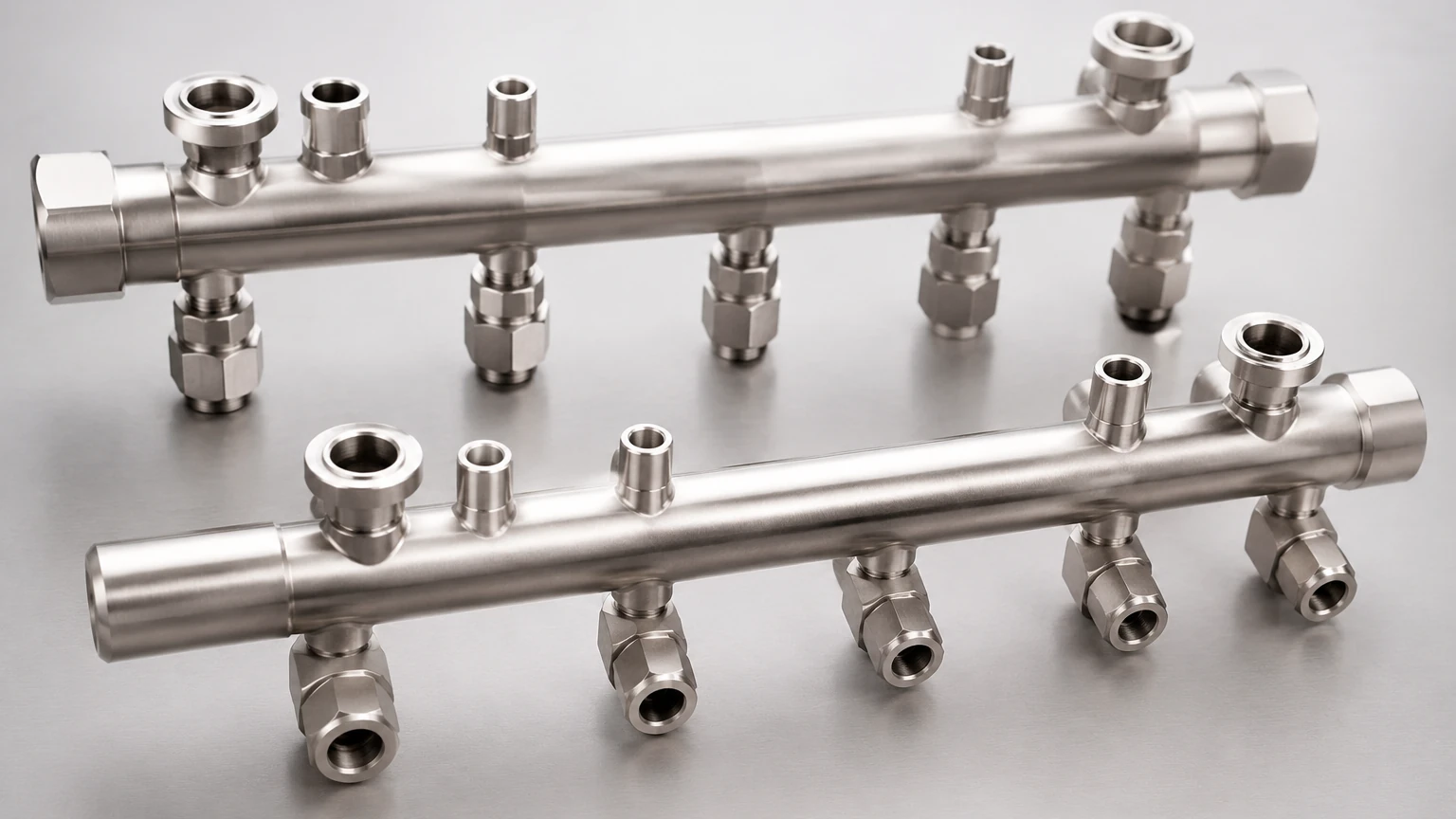
A rack manifold is a specialized piping assembly designed to distribute or collect fluid from multiple filter housings arranged in a rack or skid configuration. By integrating several filtration units into a unified system, operators can achieve higher throughput and finer filtration accuracy than a single-vessel system would allow. This guide examines the engineering principles, material requirements, and operational considerations necessary to select and implement an effective rack manifold system.
Engineering Principles of Rack Manifold Design
The primary function of a rack manifold is to ensure uniform fluid distribution across all connected filter cartridges or wire mesh elements. If the manifold is poorly designed, fluid will follow the path of least resistance, leading to uneven loading. This results in some filters reaching their dirt-holding capacity prematurely while others remain underutilized, ultimately increasing operational costs and downtime.
Flow Dynamics and Header Sizing
To maintain balanced flow, engineers must carefully calculate the diameter of the main header relative to the individual branch lines. A common rule of thumb in industrial piping is that the cross-sectional area of the main header should be equal to or greater than the sum of the cross-sectional areas of the branch lines. This reduces fluid velocity within the header, minimizing turbulence and ensuring that the static pressure remains relatively constant across all ports. Lower velocity also reduces the risk of erosion-corrosion at the T-junctions of the rack manifold.
Parallel vs. Series Configurations
Rack manifolds are typically configured in one of two ways:
1. Parallel Configuration: Fluid is distributed across multiple identical filters simultaneously. This is used to handle high flow volumes or to allow for "duplexing," where one bank of filters can be isolated for cleaning while the others remain in operation.
2. Series (Graduated) Configuration: Fluid passes through a sequence of filters with increasing levels of fineness. The manifold manages the transition between stages, such as moving from a 100-micron coarse mesh to a 5-micron precision cartridge. This protects expensive fine filters from premature clogging.
Material Selection and Structural Integrity
Because rack manifolds often operate in corrosive or high-pressure environments, the choice of material is non-negotiable. Stainless steel is the industry standard due to its mechanical strength and chemical resistance. At Kaifil, the focus remains on high-grade alloys that can withstand the rigors of chemical processing and pharmaceutical production.
Grade 304 vs. 316L Stainless Steel
While Grade 304 stainless steel is suitable for many water treatment and general industrial applications, Grade 316L is preferred for environments involving chlorides, acids, or high-purity requirements. The "L" denotes low carbon content, which is critical for the welding processes used to construct the rack manifold. Low carbon prevents carbide precipitation during welding, ensuring that the joints remain as corrosion-resistant as the base metal. This is particularly important for the longevity of the manifold under continuous thermal cycling.
Surface Finish and Sanitary Requirements
In the food, beverage, and pharmaceutical sectors, the internal surface finish of the rack manifold is a critical performance metric. Rough surfaces can harbor bacteria or trap particulates, leading to cross-contamination. Precision manufacturing involves electropolishing or mechanical polishing to achieve specific Ra (Roughness Average) values. A smooth internal bore ensures that the manifold is compatible with Clean-in-Place (CIP) protocols, allowing for thorough sterilization without disassembling the entire rack.
Integrating Precision Filtration Components
A rack manifold is only as effective as the filter elements it houses. The synergy between the manifold structure and the internal filtration media—such as stainless steel wire mesh or pleated cartridges—determines the system's overall efficiency. When sourcing components from the Main Page, engineers must confirm that the manifold ports are compatible with the specific end-cap configurations of the filters.
Customization for OEM Applications
Standardized manifolds often fail to meet the spatial constraints of specialized machinery. Custom rack manifold design allows for the optimization of port spacing, mounting bracket locations, and connection types (such as NPT, BSP, or Flanged). For OEM applications, providing precise specifications for filtration accuracy and flow rate allows manufacturers to tailor the internal wire mesh or sintered metal components to the exact needs of the system. This level of customization ensures that the manifold does not become a bottleneck in the fluid circuit.
Sealing and Gasket Compatibility
The connection points between the rack manifold and the filter housings require robust sealing to prevent bypass. Depending on the fluid being processed, gaskets may be made from EPDM, Viton, or PTFE. Engineers must verify that both the stainless steel manifold and the sealing materials are chemically compatible with the process fluid to prevent leaks or contamination.
Operational Reliability and Maintenance
One of the greatest advantages of a rack manifold system is the ability to perform maintenance with minimal impact on production. However, this requires the inclusion of specific hardware during the design phase.
Isolation and Bypass Valves
A well-designed rack manifold includes isolation valves for each individual filter housing. This allows operators to take a single unit offline for a filter change-out while the rest of the manifold continues to process fluid. Furthermore, a system-wide bypass valve is often installed to allow the entire rack to be diverted during emergency repairs or system flushes.
Pressure Monitoring and Differential Pressure ($ΔP$)
To maximize the lifespan of stainless steel filter elements, the rack manifold should be equipped with pressure gauges at the inlet and outlet headers. Monitoring the differential pressure is the most reliable way to determine when filter elements are loaded. Replacing filters based on $ΔP$ rather than a fixed time interval prevents the risk of element collapse due to over-pressurization and ensures that the system operates at peak energy efficiency. High $ΔP$ increases the load on pumps, leading to higher electricity consumption and potential mechanical wear.
Industry-Specific Applications for Rack Manifolds
The requirements for a rack manifold vary significantly depending on the industry served. Understanding these specific needs helps in selecting the right configuration.
* Chemical Processing: Manifolds must handle aggressive solvents and varying temperatures. The focus is on chemical compatibility and leak-proof construction to ensure operator safety.
* Food and Beverage: The emphasis is on sanitary design. Manifolds must be free of "dead legs" (areas where fluid can stagnate) and must support high-temperature steam sterilization.
* Hydraulic Systems: In high-pressure hydraulic circuits, the rack manifold must be rated for extreme PSI. It often serves to filter return-line oil before it reaches the reservoir, requiring heavy-duty stainless steel construction to handle pressure spikes.
* Water Treatment: For large-scale desalination or municipal pre-filtration, rack manifolds manage massive volumes of water. Here, the focus is on minimizing footprint while maximizing the number of parallel filter vessels.
Evaluating Total Cost of Ownership (TCO)
When purchasing a rack manifold, it is a mistake to focus solely on the initial capital expenditure (CAPEX). The Total Cost of Ownership includes the long-term costs of energy, replacement filters, and labor. A precision-engineered manifold from a specialized manufacturer like Kaifil may have a higher upfront cost but offers significant savings through:
* Reduced Energy Costs: Optimized flow paths lower the pressure drop across the system.
* Extended Filter Life: Uniform distribution ensures that all wire mesh or cartridge elements are used to their full capacity.
* Minimized Downtime: Features like easy-access ports and isolation valves speed up the maintenance process.
Before proceeding with a purchase, technical teams should confirm the maximum operating pressure, the required flow rate per branch, and the specific filtration micron rating needed for their application. By aligning these parameters with a high-quality stainless steel rack manifold, facilities can ensure a reliable and durable filtration solution.
For more information on custom filtration components and engineering support, visit the Main Page to review product options and application support.
