


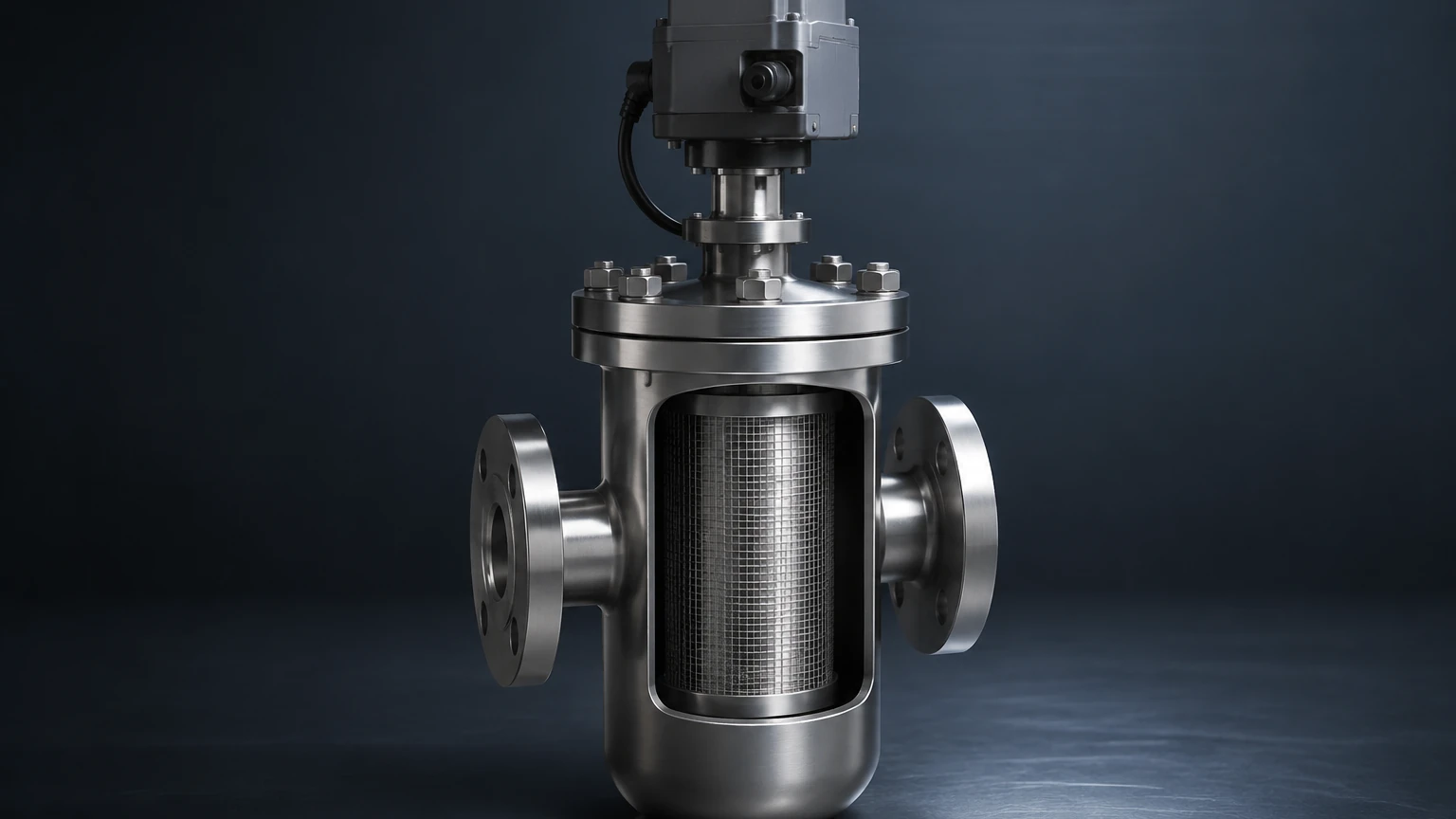
Auto Backwash Sediment Filter
In industrial fluid processing, the management of suspended solids is a critical factor in maintaining system efficiency and protecting downstream equipment. While manual filtration systems are suitable for low-load applications, high-volume industrial environments require a more robust and autonomous solution. The auto backwash sediment filter represents an engineering standard for continuous operation, utilizing automated cleaning cycles to remove accumulated debris without interrupting the flow of the process fluid. For engineers and facility managers, understanding the technical nuances of these systems—from the mechanics of the backwash cycle to the material properties of the filter media—is essential for optimizing filtration performance and reducing total cost of ownership.
Industrial sediment filtration typically targets particles such as sand, scale, rust, and other suspended solids that can cause abrasion in pumps, clog spray nozzles, or contaminate final products. By integrating an automated self-cleaning mechanism, these filters eliminate the labor-intensive requirement of manual element replacement or cleaning, ensuring that the system maintains a consistent pressure differential and flow rate. As a specialized manufacturer of stainless steel filtration components, Kaifil provides the precision-engineered elements that form the core of these advanced systems.
The Engineering Principles of Auto Backwash Mechanisms
The fundamental advantage of an auto backwash sediment filter is its ability to self-regenerate. This process is typically governed by a control system that monitors the pressure differential ($ΔP$) between the inlet and the outlet of the filter housing. As sediment accumulates on the surface of the filter element, the effective open area decreases, causing the upstream pressure to rise and the downstream pressure to fall.
When the $ΔP$ reaches a pre-set threshold—usually between 0.5 to 1.0 bar depending on the application—the controller initiates the backwash cycle. There are several mechanical methods to achieve this, but the most common involve flow reversal or internal scanning nozzles. In a flow-reversal system, a secondary stream of clean fluid (or a portion of the filtered process fluid) is forced through the filter media in the opposite direction of the normal flow. This reverse flow dislodges the particles trapped on the surface or within the mesh pores and flushes them out through a dedicated drain or discharge valve.
Modern systems often utilize a "no-stop" design, where filtration continues even during the cleaning cycle. This is achieved by cleaning only a portion of the filter area at a time or by using a multi-chamber configuration. For high-demand industrial sectors, the reliability of this mechanism is paramount, as any failure in the backwash cycle can lead to rapid blinding of the media and subsequent system shutdown.
Material Selection: The Role of Stainless Steel Filter Media
The performance of an auto backwash sediment filter is largely determined by the quality and design of the internal filter element. While plastic or disposable media may suffice for domestic use, industrial applications demand the durability of metal. Stainless steel, particularly AISI 304 and 316L, is the material of choice due to its mechanical strength, thermal stability, and resistance to corrosion.
At the Main Page of professional filtration manufacturing, the focus is often on the structural integrity of the wire mesh or sintered metal components. Stainless steel wire mesh offers a precise pore size distribution, which is critical for achieving specific micron ratings. Unlike fabric or depth filters, stainless steel mesh provides a "surface filtration" effect, where particles are captured on a single plane. This makes the backwashing process significantly more effective, as particles do not become deeply embedded in the media structure.
Furthermore, 316L stainless steel is preferred in environments involving corrosive chemicals or high-salinity water, such as in marine or chemical processing plants. The material's ability to withstand high pressure differentials without deforming ensures that the filter maintains its accuracy over thousands of backwash cycles. When selecting a filter, engineers must confirm that the alloy used is compatible with the chemical profile of the process fluid and the expected operating temperatures.
Key Performance Metrics and Selection Criteria
Selecting the correct auto backwash sediment filter requires a detailed analysis of the process parameters. Over-specifying a filter can lead to unnecessary costs, while under-specifying can result in frequent clogging and equipment wear. The following criteria are essential for technical evaluation:
Micron Rating and Filtration Efficiency
The micron rating defines the size of the smallest particle the filter is designed to capture. In sediment filtration, this typically ranges from 10 microns to 500 microns. It is important to distinguish between nominal and absolute ratings. An absolute rating indicates that 99.9% of particles at that size will be captured, which is vital for protecting sensitive downstream components like high-pressure pumps or membranes.
Flow Rate and Flux
The flow rate (usually measured in $m^3/h$ or GPM) must be matched to the filter's surface area. If the flux—the flow rate per unit of filter area—is too high, the velocity of the fluid can force particles deeper into the mesh, making them harder to remove during backwashing. A lower flux generally leads to longer intervals between cleaning cycles and a longer overall lifespan for the filter element.
Solids Loading and Particle Type
The concentration of suspended solids (measured in mg/L or PPM) dictates how often the filter will need to backwash. Additionally, the nature of the sediment matters; hard, granular particles like sand are easier to backwash than soft, organic, or "sticky" materials that may require specialized mesh coatings or modified backwash pressures.
Integration into Industrial Control Systems
An auto backwash sediment filter is rarely a standalone unit; it must be integrated into the broader plant automation architecture. Most industrial filters utilize a PLC (Programmable Logic Controller) to manage the cleaning cycles. This allows for three primary triggering methods:
1. Differential Pressure Trigger: The most efficient method, ensuring cleaning only happens when necessary.
2. Timer-Based Trigger: Acts as a failsafe, ensuring the filter is cleaned at regular intervals even if the $ΔP$ sensor fails or if the solids loading is very low.
3. Manual Override: Allows operators to initiate a cycle during maintenance or if they observe an unusual process condition.
Integration also involves the physical layout of the piping. A bypass line is often recommended to allow for manual maintenance of the filter housing without stopping the entire production line. Furthermore, the disposal of the backwash waste (the "reject stream") must be planned, as this concentrated slurry may require further treatment or specialized drainage.
Maintenance, Durability, and Total Cost of Ownership
While the initial capital expenditure (CAPEX) for an auto backwash sediment filter is higher than that of a manual bag or cartridge filter, the total cost of ownership (TCO) is significantly lower in high-flow applications. The primary cost drivers in filtration are labor, replacement media, and downtime.
By utilizing a self-cleaning stainless steel element, the cost of replacement cartridges is eliminated. Stainless steel elements produced by specialized manufacturers like Kaifil are designed for years of service. Maintenance is generally limited to periodic inspection of the seals, O-rings, and the mechanical drive of the backwash arm.
To maximize the lifespan of the filter, it is important to monitor the "clean pressure drop." If the pressure drop after a backwash cycle does not return to its original baseline, it indicates that the media is experiencing gradual fouling or scaling. In such cases, a scheduled chemical cleaning (CIP – Clean In Place) may be necessary to restore the mesh to its original condition. This is particularly common in water treatment applications where calcium carbonate or iron deposits can build up on the metal surfaces.
Customization and OEM Solutions for Specific Applications
Every industrial environment presents unique challenges, and a standard off-the-shelf filter may not always provide the optimal solution. Customization is a core part of the manufacturing process at Kaifil, where filter elements can be tailored to meet specific engineering requirements.
For example, in the food and beverage industry, filters must meet strict hygienic standards, requiring smooth surface finishes (Ra < 0.8 µm) and the absence of dead spaces where bacteria could proliferate. In the oil and gas sector, filters may need to be housed in ASME-certified pressure vessels capable of withstanding extreme pressures.
When working with an OEM partner, engineers should provide detailed specifications regarding:
* Connection types (Flanged, NPT, Tri-clamp).
* Housing materials (304, 316L, or Duplex steel).
* Specific mesh weaves (Plain, Twill, or Dutch weave) to balance flow and strength.
* Integration of specialized sensors for temperature or flow monitoring.
By focusing on these technical details, purchasing teams can ensure that the auto backwash sediment filter they procure is not just a component, but a reliable asset that enhances the overall efficiency of their industrial process. For more information on custom filtration components and engineering support, professionals can consult the resources available through Kaifil's technical department to find the right configuration for their specific hydraulic or chemical processing needs.
