


Filter Foam for Fish Tank
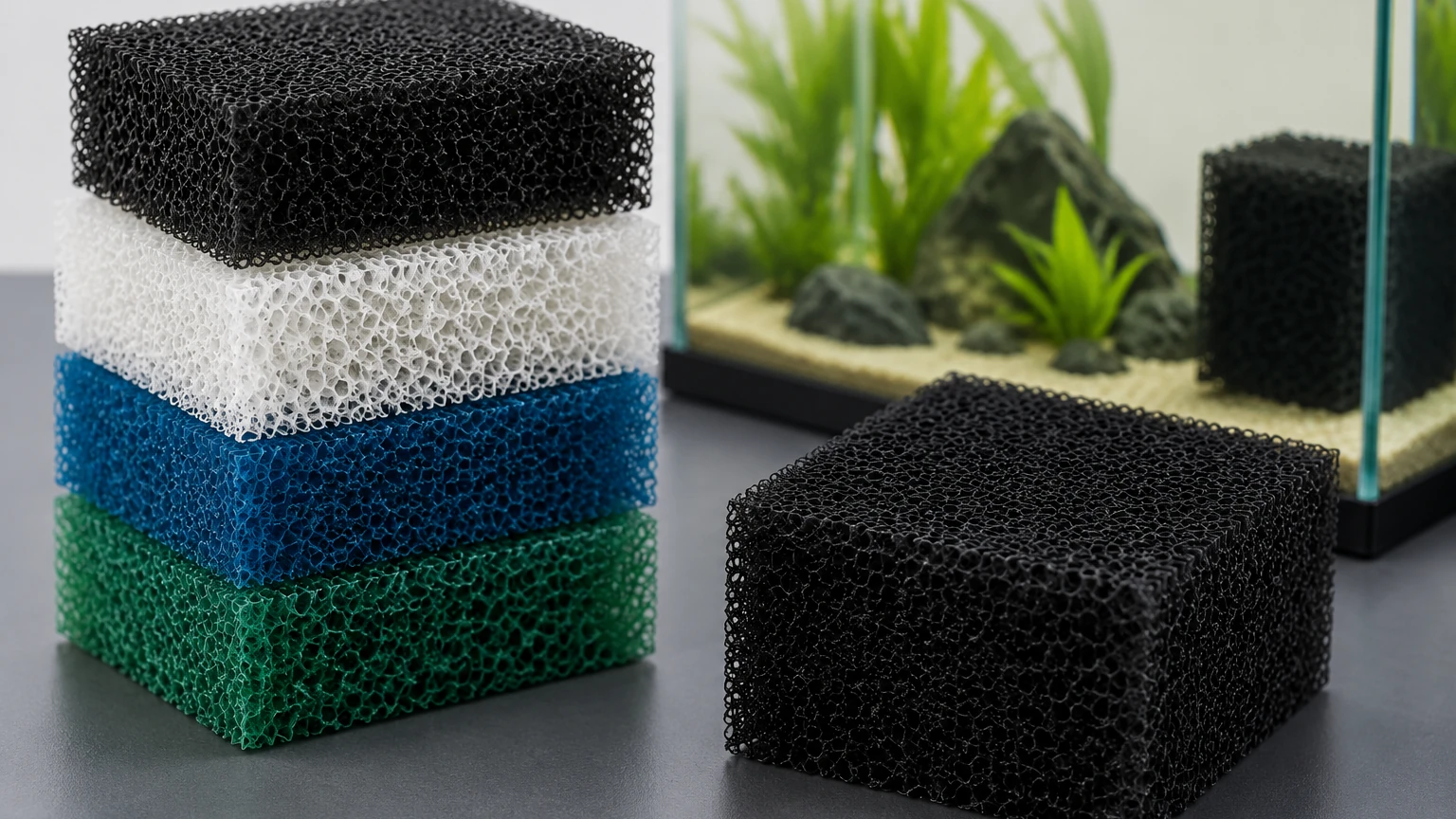
In the realm of aquatic life support systems, filtration is the primary mechanism for maintaining water quality and ensuring the health of the ecosystem. Whether for a small-scale hobbyist setup or a large-scale industrial aquaculture facility, the choice of filtration media is a critical engineering decision. Among the various types of mechanical and biological media, filter foam for fish tank applications remains a staple due to its versatility, cost-effectiveness, and dual-function capabilities.
For engineers and facility managers overseeing water treatment or recirculating aquaculture systems (RAS), understanding the technical specifications of foam media—such as porosity, material composition, and flow dynamics—is essential. While Kaifil specializes in high-performance stainless steel filtration, the principles of fluid dynamics and particle separation remain consistent across different media types. This guide examines the technical nuances of filter foam and how it integrates into broader industrial filtration strategies.
Understanding Porosity and PPI in Filter Foam
The performance of filter foam is primarily defined by its porosity, measured in Pores Per Inch (PPI). This metric determines both the particle size the foam can trap and the resistance it offers to water flow. Selecting the correct PPI is a balance between filtration efficiency and maintenance frequency.
Coarse Foam (10–20 PPI)
Coarse foam features large, open pores. In an industrial or large-scale aquatic context, this serves as the primary mechanical stage. Its primary function is to capture large debris, such as uneaten food, plant matter, and large organic solids. The high void volume of coarse foam allows for high flow rates with minimal pressure drop, making it ideal for high-turnover systems where clogging must be avoided.
Medium Foam (20–30 PPI)
Medium-density foam acts as a secondary mechanical filter. It captures smaller particulates that pass through the coarse stage. Because the surface area is greater than that of coarse foam, it also begins to provide significant surface area for nitrifying bacteria, bridging the gap between mechanical and biological filtration.
Fine Foam (30–50+ PPI)
Fine foam is designed for water polishing. It traps minute particles, resulting in high clarity. However, the dense structure of fine foam makes it prone to rapid clogging. In professional systems, fine foam is always placed after coarser stages to prevent premature saturation. Engineers must account for the increased head pressure required to move water through fine-pore media as it accumulates debris.
Mechanical vs. Biological Filtration Roles
One of the unique characteristics of filter foam for fish tank environments is its ability to perform two functions simultaneously.
Mechanical Filtration
As water passes through the reticulated structure of the foam, suspended solids are physically intercepted by the polymer strands. The efficiency of this process depends on the velocity of the water and the tortuosity of the path within the foam. In industrial applications, mechanical filtration is the first line of defense, protecting downstream components like UV sterilizers or fine chemical resins from fouling.
Biological Filtration
The internal structure of reticulated foam provides a massive surface area relative to its volume. This surface area is colonized by aerobic bacteria (such as *Nitrosomonas* and *Nitrobacter*) which convert toxic ammonia into nitrite and then into less harmful nitrate. For biological filtration to be effective, the foam must receive a steady supply of oxygenated water. If the foam becomes overly clogged with mechanical waste, water may bypass the internal pores, leading to anaerobic zones and a localized failure of the biological filter.
Material Selection: Reticulated Polyether vs. Polyester
Not all foams are suitable for long-term aquatic use. Industrial-grade filter foam is typically "reticulated," meaning the cell membranes have been removed through a thermal or chemical process, leaving only the skeletal structure. This creates a highly permeable material.
1. Polyether Foam: This is the preferred material for aquatic environments. Polyether is highly resistant to hydrolysis (breakdown by water) and maintains its structural integrity over years of submersion. It is chemically inert and does not leach toxins into the water column.
2. Polyester Foam: While often cheaper, polyester-based foams are susceptible to hydrolytic degradation. Over time, the foam may become brittle or begin to crumble, potentially releasing microplastics or chemical byproducts into the system. For professional and industrial applications, polyether is the standard specification.
When evaluating materials, engineers should also confirm that the foam is "flame retardant-free" and does not contain anti-fungal agents, as these chemicals can be lethal to aquatic life and beneficial bacterial colonies.
Engineering Considerations for Flow and Pressure Drop
In any filtration system, the relationship between flow rate and pressure drop (head loss) is a critical design parameter. As filter foam for fish tank systems accumulates waste, the effective pore size decreases, leading to an increase in resistance.
Calculating Surface Velocity
To optimize foam performance, the surface velocity—the speed at which water hits the face of the foam—must be controlled. If the velocity is too high, particles may be forced through the foam rather than being trapped. Conversely, if it is too low, the system may require excessively large filter housings. A common engineering target for aquatic mechanical filtration is a velocity that allows for adequate contact time without causing rapid surface blinding.
Managing Bypass
In many filter designs, as the foam clogs, water will take the path of least resistance. If the foam is not precisely fitted to the housing, water will bypass the media entirely. Custom-cut foam components are often necessary to ensure a tight seal against the filter walls, forcing 100% of the influent through the media.
Maintenance and Replacement Cycles
Unlike many industrial filter cartridges that are single-use, filter foam is generally reusable. However, its lifespan and effectiveness depend on proper maintenance protocols.
* Cleaning Procedures: To preserve the biological colony, foam should be rinsed using system water rather than chlorinated tap water. Aggressive cleaning or the use of hot water can sterilize the media, leading to a spike in ammonia levels.
* Structural Fatigue: Over time, the repeated compression and expansion during cleaning will break down the cellular structure of the foam. Once the foam loses its "spring" or begins to sag, its ability to maintain a seal and provide consistent pore spacing is compromised.
* Replacement Strategy: In multi-stage systems, it is best practice to replace foam layers staggered over time rather than all at once. This ensures that a robust biological colony is always present in the remaining older foam while the new foam begins to be colonized.
Beyond Foam: When to Transition to Metal Filtration
While foam is excellent for many aquatic applications, certain industrial environments or high-pressure systems require more robust solutions. In large-scale water treatment or chemical processing where durability and high-temperature resistance are required, stainless steel filtration components offer significant advantages.
Stainless steel wire mesh and sintered metal filters provide precise micron ratings that do not shift under pressure, unlike flexible foam. For those seeking the highest levels of durability and precision in their filtration systems, exploring the Main Page of a professional manufacturer like Kaifil can provide insights into advanced metal filtration alternatives that complement or replace traditional media in demanding applications.
Confirming Specifications Before Purchase
For procurement teams and engineers, purchasing filter foam for fish tank applications at scale requires confirming several key data points with the supplier:
* PPI Accuracy: Ensure the supplier provides consistent pore density across batches to maintain predictable flow rates.
* Chemical Inertness: Verify the material is 100% polyether and free from additives that could impact water chemistry.
* Dimensional Stability: For custom-built sumps or pressurized canisters, the foam must be cut to precise tolerances to prevent bypass.
* Total Cost of Ownership: While foam is inexpensive, the labor costs associated with frequent cleaning should be weighed against more automated filtration solutions like rotary drum filters or backwashing metal filters.
Conclusion
Filter foam remains a cornerstone of aquatic filtration due to its unique ability to provide both mechanical clearance and biological support. By understanding the technical properties of PPI, material chemistry, and the physics of flow through reticulated structures, engineers can design more efficient and stable aquatic environments. Whether you are optimizing a commercial aquarium, a research lab, or an industrial aquaculture site, the selection of high-quality foam media—and knowing when to upgrade to precision metal components—is vital for long-term system success. For more information on professional-grade filtration components and custom engineering support, visit the Kaifil Main Page to review product options and application support.
