


Screening Water Treatment
In the hierarchy of industrial process engineering, screening water treatment serves as the primary mechanical barrier and the most critical initial stage of any water management system. Whether the application involves municipal wastewater, chemical processing, food and beverage production, or high-pressure hydraulic systems, the effectiveness of the screening phase dictates the performance and longevity of all subsequent treatment steps. For engineers and technical procurement teams, understanding the nuances of screening technology is essential for protecting expensive downstream equipment—such as membranes, high-pressure pumps, and sensitive instrumentation—from damage caused by suspended solids and debris.
Industrial screening is more than a simple filtration task; it is an exercise in fluid dynamics and material science. By effectively removing macro-contaminants at the intake or the start of the process loop, facilities can significantly reduce chemical consumption, minimize unplanned downtime, and optimize the total cost of ownership (TCO). This guide explores the technical considerations, material requirements, and engineering principles that define high-performance screening water treatment.
The Engineering Principles of Screening Water Treatment
At its core, screening water treatment is a physical separation process that utilizes a medium with specific openings to retain particles larger than the aperture size while allowing the fluid to pass through. However, the engineering reality is far more complex. The process must account for the nature of the solids, the velocity of the fluid, and the mechanical stresses placed upon the screening media.
Screening is typically categorized into three stages based on the size of the target contaminants:
1. Coarse Screening: Targeted at large debris (typically >6mm), such as branches, plastics, or large industrial waste. This stage prevents catastrophic mechanical blockages in pumps and intake pipes.
2. Fine Screening: Designed for particles between 0.5mm and 6mm. This stage is crucial for protecting heat exchangers and preventing the buildup of solids in reaction tanks.
3. Micro-Screening: Utilizing precision stainless steel wire mesh, this stage targets particles at the micron level. It is often used as a pre-filtration step for membrane systems (like Reverse Osmosis) to prevent rapid fouling.
Engineers must also consider the "open area" of the screen. A higher percentage of open area reduces the approach velocity and the associated pressure drop, which is vital for maintaining high flow rates without requiring excessive pumping power. However, increasing the open area often requires thinner wires or larger apertures, which may compromise the structural integrity of the filter element. Balancing these factors is a primary challenge in screening design.
Material Selection and Durability in Industrial Environments
The environment in which screening water treatment occurs is often aggressive. Screens are frequently exposed to corrosive chemicals, varying pH levels, high temperatures, and abrasive particulates. Consequently, the choice of material is the most significant factor in determining the service life of the filtration component.
Stainless steel is the industry standard for high-performance screening due to its exceptional strength-to-weight ratio and corrosion resistance. Within the stainless steel family, different grades offer varying levels of protection:
* Grade 304/304L: The most common grade used in general industrial water applications. It provides excellent durability and resistance to oxidation in fresh water and mildly corrosive environments.
* Grade 316/316L: Containing molybdenum, this grade offers superior resistance to pitting and crevice corrosion, particularly in environments with high chloride concentrations (such as brackish water or chemical processing).
* Duplex and Super Duplex Alloys: Used in extreme conditions, such as seawater desalination or highly acidic chemical streams, where standard austenitic steels might fail.
For engineers looking to specify the correct materials for their specific application, reviewing technical data on the Main Page can provide insights into how different alloys and mesh configurations perform under industrial stress. Choosing the right material prevents premature failure and ensures that the screening water treatment system remains operational for years rather than months.
Types of Screening Media and Their Applications
The geometry of the screening media determines its filtration efficiency and its tendency to "blind" or clog. In industrial water treatment, three primary types of media are utilized:
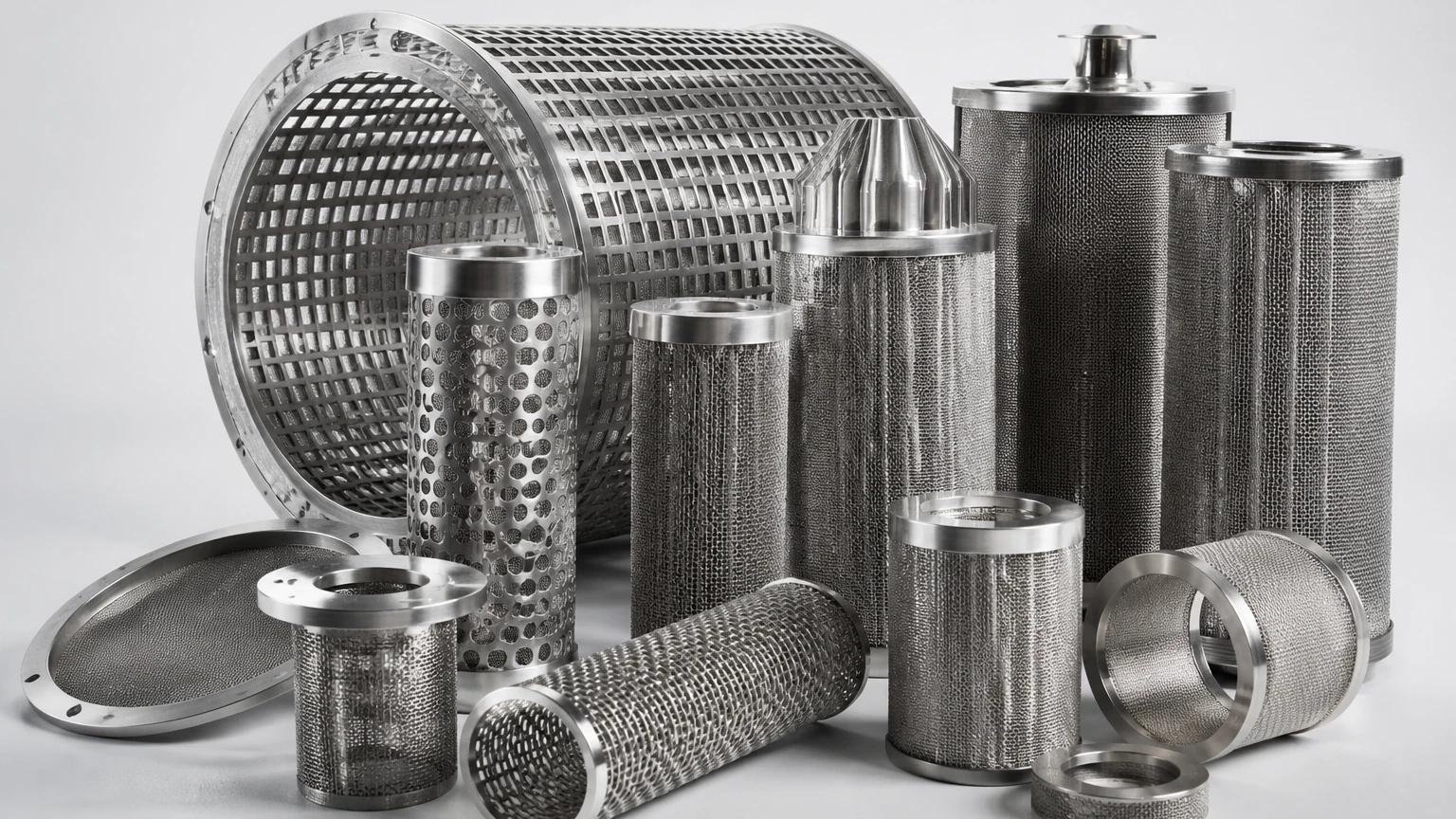
1. Sintered Wire Mesh
Sintered mesh is created by diffusion-bonding multiple layers of stainless steel wire mesh together. This process creates a porous material that is incredibly strong and dimensionally stable. Sintered screens are ideal for micro-screening water treatment because they can provide very fine filtration (down to 1 micron) while withstanding high differential pressures that would deform a single layer of mesh.
2. Wedge Wire (V-Wire) Screens
Wedge wire is a specialized screening medium consisting of V-shaped profile wires that are resistance-welded onto support rods. This design is inherently non-clogging. Because the aperture widens inwardly, any particle that passes through the initial opening will continue through the screen without getting stuck. Wedge wire is the preferred choice for high-solids applications and intake screens.
3. Perforated Plate
Perforated metal screens are manufactured by punching holes into a solid sheet of metal. While they offer the highest mechanical strength, they generally have a lower percentage of open area compared to wire mesh. They are most commonly used in the coarse screening stage to remove heavy debris before the water reaches finer filtration elements.
Hydraulic Performance and Pressure Drop Calculations
One of the most critical metrics in screening water treatment is the pressure drop ($ΔP$) across the filter element. As water flows through the screen, the resistance of the media and the accumulation of captured solids create a pressure differential. If this differential becomes too high, it can lead to several negative outcomes:
* Reduced Flow Rates: The system cannot maintain the required throughput, potentially starving downstream processes.
* Structural Failure: Excessive pressure can cause the screening media to buckle, tear, or collapse, leading to unfiltered water bypassing the system.
* Energy Inefficiency: Pumps must work harder to overcome the resistance, leading to significantly higher electricity costs.
Engineers calculate the "clean pressure drop" using the fluid's viscosity, the flow velocity, and the screen's permeability. To manage this in practice, automated screening systems are often equipped with differential pressure sensors. When the $ΔP$ reaches a predetermined setpoint, the system triggers a cleaning cycle—either through backwashing or mechanical scraping—to restore the screen's permeability. Proper sizing of the screen surface area is the most effective way to keep the pressure drop within acceptable limits during the screening water treatment process.
Maintenance, Cleaning, and Total Cost of Ownership (TCO)
While the initial purchase price of a screening element is a factor, the long-term costs associated with maintenance and replacement are often much higher. A high-quality stainless steel filter cartridge from a reputable manufacturer like Kaifil is designed to be cleaned and reused, rather than discarded after a single cycle.
Cleaning Strategies
* Manual Cleaning: In applications with low solids loading, filters can be removed and cleaned using ultrasonic baths or high-pressure water jets. This is common in pharmaceutical or food-grade applications where hygiene is paramount.
* Automatic Backwashing: In continuous industrial processes, the system reverses the flow of a portion of the filtered water (or uses compressed air) to blow the accumulated solids off the screen surface. This allows for uninterrupted screening water treatment.
Evaluating TCO
When calculating the TCO of a screening system, technical teams must account for:
1. Replacement Frequency: How often does the screen fail due to corrosion or fatigue?
2. Downtime Costs: What is the hourly cost of a production halt if the screening system fails?
3. Energy Costs: How much energy is wasted due to high pressure drops across poorly designed or clogged screens?
4. Downstream Impact: Are downstream membranes or pumps being replaced prematurely because the primary screening stage is ineffective?
Investing in precision-engineered filtration components may have a higher upfront cost but results in a significantly lower TCO over the equipment's lifecycle. For a detailed look at how customized filtration solutions can optimize these costs, visit the Main Page to explore engineering support options.
Customization and OEM Solutions for Specific Industrial Needs
Standard off-the-shelf filters rarely meet the precise requirements of complex industrial water systems. Customization is often necessary to ensure the screening water treatment system integrates perfectly with existing piping, fits within space constraints, and meets specific filtration accuracy targets.
OEM (Original Equipment Manufacturer) capabilities allow for the development of bespoke filtration components. This includes:
* Custom Dimensions: Manufacturing filter cartridges to specific lengths and diameters to fit proprietary housings.
* Specific Micron Ratings: Tailoring the mesh weave to capture exactly the size of particles that are problematic for a specific process.
* Structural Reinforcements: Adding internal perforated cores or external support cages for filters used in high-pressure hydraulic systems.
* Specialized End Fittings: Incorporating specific flanges, threads, or O-ring grooves to ensure a leak-proof seal.
By working closely with a manufacturer that has extensive experience in stainless steel filtration, engineers can develop solutions that are optimized for their specific flow rates, chemical environments, and particulate characteristics. This collaborative approach ensures that the screening water treatment system is not a bottleneck but a reliable asset in the production chain.
Conclusion: Selecting the Right Partner for Screening Solutions
Screening water treatment is a foundational process that requires a deep understanding of mechanical engineering, fluid dynamics, and metallurgy. From the initial selection of the stainless steel grade to the calculation of the hydraulic pressure drop and the implementation of a cleaning strategy, every decision impacts the efficiency and reliability of the entire facility.
For technical professionals, the goal is to find a balance between filtration precision and system throughput. By focusing on high-quality materials and customized designs, industrial operators can protect their equipment, reduce maintenance costs, and ensure consistent water quality. Whether you are designing a new treatment plant or upgrading an existing industrial loop, the quality of your screening components is the primary determinant of success. For further technical specifications, product comparisons, and to see how advanced manufacturing can support your filtration goals, please refer to the Main Page for comprehensive resources and application guidance.
