


What Is a Sintered Filter
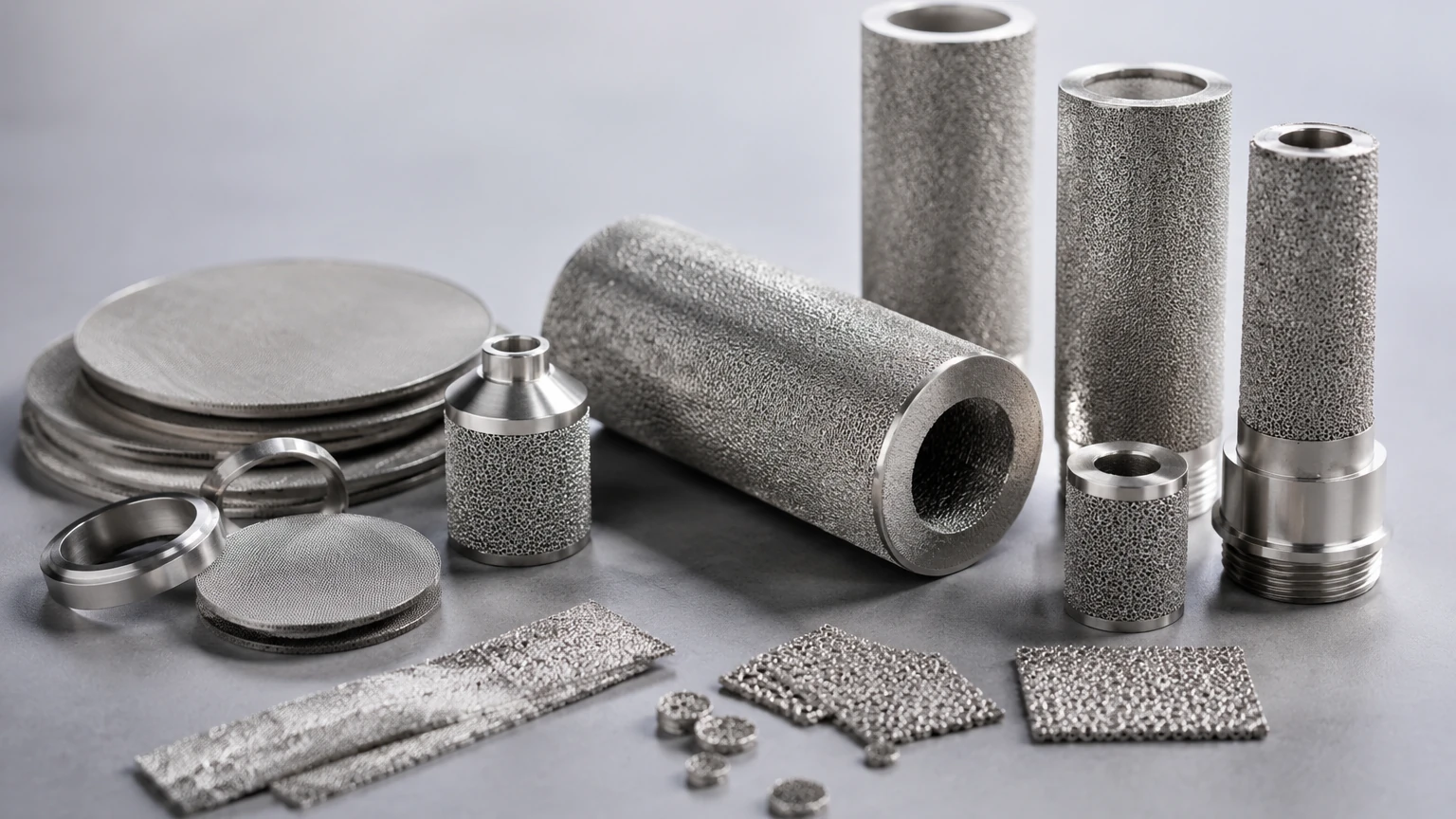
In industrial filtration, the demand for components that can withstand extreme temperatures, high pressures, and corrosive environments has led to the widespread adoption of sintered metal media. When engineers ask, "what is a sintered filter?" they are typically looking for a solution that transcends the limitations of polymer or paper-based media. A sintered filter is a porous metallic structure created through a thermal process called sintering, which fuses metal particles or wire mesh layers together without melting them to the point of liquefaction. This results in a rigid, durable, and highly precise filtration element capable of operating in conditions that would destroy conventional filters.
For technical professionals and procurement teams, understanding the nuances of sintered media is essential for optimizing process efficiency and reducing long-term operational costs. For a broader look at the technical specifications and custom manufacturing capabilities available, you may refer to our Main Page for detailed product overviews.
Understanding the Sintering Process in Filtration
To fully answer the question of what is a sintered filter, one must understand the metallurgical process behind its creation. Sintering is a form of powder metallurgy where metal powder or woven wire mesh is placed in a high-temperature furnace. The temperature is carefully controlled to remain below the melting point of the base metal but high enough to trigger solid-state diffusion.
During this process, the atoms in the metal particles or wire strands diffuse across the boundaries of the particles, fusing them together at their contact points. This creates "necks" between the particles, forming a mechanically robust and integrated structure. Because the metal does not reach a liquid state, the original shape and porosity of the media are maintained, but the resulting component gains significant structural integrity. The result is a filter that behaves like a single piece of solid metal while maintaining a controlled network of pores for fluid or gas passage.
Types of Sintered Filters: Powder vs. Mesh
Sintered filters are generally categorized into two primary types based on the raw material used: sintered metal powder and sintered wire mesh. Each serves distinct engineering requirements.
Sintered Metal Powder Filters
These are produced by compacting spherical or irregular metal powders into a mold before sintering. They are characterized by their depth filtration capabilities. The tortuous path created by the fused powder particles allows for the capture of contaminants throughout the thickness of the filter wall, rather than just on the surface. These are ideal for high-precision applications where fine particle retention is critical.
Sintered Wire Mesh Filters
These filters are constructed by layering multiple sheets of woven stainless steel wire mesh and sintering them together. A common configuration is the 5-layer sintered mesh, which typically includes a fine filtration layer, a distribution layer, and several support layers. This structure provides excellent permeability and mechanical strength, making it suitable for high-flow applications and surface filtration where cake discharge and cleaning are necessary.
Key Technical Advantages of Sintered Metal Media
When evaluating what is a sintered filter compared to other media, several performance characteristics stand out as decisive factors for industrial applications:
1. Mechanical Stability: Unlike fabric or paper filters, sintered metal does not deform under high differential pressure. The rigid structure ensures that pore sizes remain constant even during pressure surges.
2. Thermal Resistance: Sintered filters made from stainless steel (such as 316L) or nickel alloys can operate in temperatures exceeding 450°C (842°F) in oxidizing environments and even higher in reducing environments.
3. Corrosion Resistance: By selecting specific alloys like Hastelloy, Monel, or 316L stainless steel, these filters can withstand aggressive chemical solvents, acidic gases, and caustic cleaning agents.
4. Cleanability: One of the most significant B2B advantages is that sintered filters are not disposable. They can be cleaned using backpulsing, ultrasonic baths, or chemical solvents and reused multiple times, which significantly lowers the total cost of ownership.
5. Precision Porosity: The manufacturing process allows for tight control over pore size distribution, ranging from 0.5 microns to 200 microns, ensuring predictable and repeatable filtration performance.
Engineering Considerations for Filter Selection
Selecting the right sintered filter involves more than just identifying the required micron rating. Engineers must consider the fluid dynamics and the physical properties of the process stream.
Micron Rating and Efficiency
It is important to distinguish between nominal and absolute micron ratings. A sintered filter often provides an absolute rating, meaning it will capture 99.9% of particles at the specified size. In high-purity pharmaceutical or semiconductor applications, this distinction is critical for process validation.
Pressure Drop (Delta P)
The porosity of the filter directly impacts the pressure drop across the system. While finer pores provide better filtration, they also increase resistance to flow. Engineers must balance the required filtration fineness with the available pump head or system pressure to ensure efficient throughput.
Material Compatibility
While 304 and 316L stainless steel are the industry standards, certain applications require specialized alloys. For example, in marine environments or high-chloride chemical processing, 316L is preferred for its resistance to pitting corrosion. For extreme high-temperature oxidation, Inconel may be the necessary choice.
Industrial Applications and Compatibility
Sintered filters are utilized across a wide spectrum of industries where reliability is non-negotiable. Understanding what is a sintered filter in the context of specific applications helps in determining the necessary design modifications.
* Chemical Processing: Used for catalyst recovery, where expensive catalyst particles must be filtered from a product stream and returned to the reactor. The high strength of sintered mesh allows for frequent backwashing to recover these solids.
* Food and Beverage: In steam filtration for sterilization (Culinary Steam), sintered filters remove pipe scale and rust, ensuring that the steam used in direct contact with food products is contaminant-free.
* Pharmaceuticals: Sintered powder filters are often used in gas sparging, where oxygen or other gases are introduced into a bioreactor. The precise pore size ensures uniform bubble distribution, which is vital for cell culture growth.
* Hydraulics and Aerospace: High-pressure hydraulic systems utilize sintered elements to protect sensitive valves and actuators from particulate wear, often operating at pressures that would collapse standard filter cartridges.
Maintenance, Cleaning, and Total Cost of Ownership
For procurement managers, the initial capital expenditure of a sintered filter is often higher than that of a polymer-based alternative. However, the long-term value is found in the filter's lifespan. A well-maintained sintered stainless steel filter can last for years.
Cleaning methods vary depending on the contaminant:
* Backpulsing/Backwashing: Effective for removing surface-loaded particles in liquid or gas systems without removing the filter from the housing.
* Ultrasonic Cleaning: Uses high-frequency sound waves in a cleaning solution to dislodge fine particles trapped deep within the porous structure.
* Chemical Cleaning: Involves soaking the filter in solvents, acids, or caustics to dissolve organic or inorganic deposits.
* Burn-off/Pyrolysis: Used for polymer removal, where the filter is heated in a controlled oven to carbonize and remove organic binders.
By implementing a regular cleaning cycle, facilities can maintain low pressure drops and extend the service life of the media, eventually achieving a much lower cost-per-liter of filtered fluid compared to disposable options.
Customization and OEM Procurement
Because industrial systems vary greatly in their mechanical design, "off-the-shelf" solutions are not always viable. Customization is a core component of what a sintered filter provider offers. This includes specific end-fitting configurations (such as 222, 226, or NPT threaded connections), custom diameters, and specialized pleating to increase the effective filtration area.
When working with a manufacturer like Kaifil, engineers can specify the exact mechanical requirements, from the choice of alloy to the specific permeability needed for a unique gas-solid separation task. OEM integration often requires a deep understanding of the housing dimensions and the flow characteristics of the equipment to ensure the filter performs as expected under operational loads.
Conclusion
In summary, a sintered filter is a high-performance, porous metal component designed for the most demanding industrial environments. By fusing metal powders or mesh through a controlled thermal process, manufacturers create a media that offers unparalleled durability, precision, and thermal stability. Whether the goal is protecting downstream equipment, recovering valuable catalysts, or ensuring product purity in a pharmaceutical line, sintered filters provide a robust and cleanable solution that meets the rigorous standards of modern engineering.
For those seeking to integrate these components into their systems, reviewing technical data and exploring customization options on the Main Page is the recommended next step to ensure the selected filtration solution aligns with both performance requirements and budgetary goals.
