


Reaktor Chemie
In the field of industrial processing, the term reaktor chemie refers to the complex engineering environment where chemical reactions are initiated, controlled, and optimized. Whether dealing with polymerization, hydrogenation, or fine chemical synthesis, the performance of a chemical reactor is intrinsically linked to the quality of its filtration and separation components. For engineers and technical procurement teams, selecting the right filtration media is not merely a matter of maintenance but a critical factor in process safety, product purity, and catalyst recovery.
Industrial chemical reactors operate under demanding conditions, often involving extreme temperatures, high pressures, and aggressive corrosive agents. Within these systems, stainless steel filtration solutions play a pivotal role in ensuring that the reaction mass remains free of contaminants and that valuable catalysts are retained for reuse. This guide explores the technical considerations, material requirements, and engineering standards necessary for optimizing filtration within a reaktor chemie framework.
The Role of Filtration in Chemical Reactor Systems
Filtration in a chemical reactor serves several distinct functions depending on the specific process architecture. In many liquid-phase reactions, the filter is responsible for removing solid impurities from raw materials before they enter the vessel. In other cases, the filter is integrated into the reactor itself to facilitate the separation of products from reactants or to protect downstream equipment from particulate carryover.
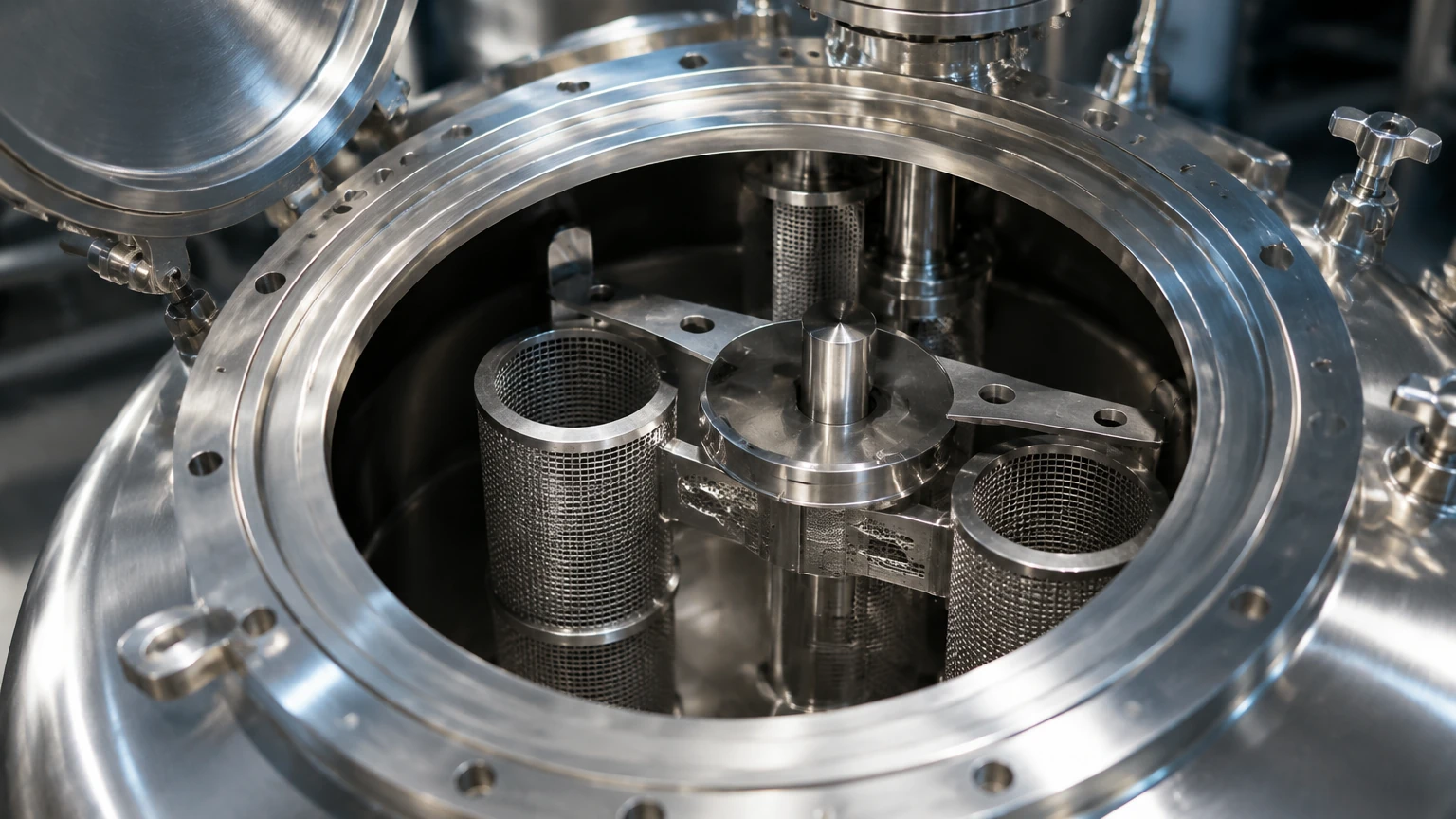
One of the most critical applications in reaktor chemie is catalyst recovery. Many chemical processes rely on heterogeneous catalysts—often expensive noble metals or specialized compounds—that must be separated from the final product. High-precision stainless steel wire mesh and sintered filter cartridges are essential for capturing these particles without restricting flow or causing significant pressure drops. Efficient recovery directly impacts the economic viability of the process by reducing catalyst loss and minimizing the need for frequent replenishment.
Furthermore, filtration components must withstand the mechanical stresses of the reactor environment. Agitation, thermal cycling, and pressure fluctuations can cause inferior filter media to fatigue or fail. Therefore, the structural integrity of the filter element is as important as its filtration accuracy.
Material Selection for Corrosive Environments
When designing filtration for a reaktor chemie application, material compatibility is the first priority. Standard carbon steels are rarely sufficient due to the risk of oxidation and chemical attack. Instead, stainless steel and high-performance alloys are the industry standard.
Stainless Steel 304 and 316L
Stainless steel 316L is the most common choice for industrial filtration in chemical processing. The addition of molybdenum provides enhanced resistance to pitting and crevice corrosion, particularly in chloride-rich environments. Its low carbon content (the "L" in 316L) also improves weldability and reduces the risk of intergranular corrosion after welding, which is vital for custom-fabricated filter cartridges.
Specialty Alloys
In cases involving highly aggressive acids or extreme temperatures exceeding the limits of 316L, engineers may specify specialty alloys such as Hastelloy, Monel, or Inconel. These materials offer superior resistance to specific chemical stressors, ensuring that the filtration system does not become a point of failure in the reactor's lifecycle.
Selecting the correct material involves a thorough analysis of the pH levels, temperature ranges, and chemical concentrations present in the reaktor chemie process. Using a material that is over-engineered increases costs unnecessarily, while under-engineering leads to premature failure and potential process contamination.
Technical Specifications: Micron Rating and Flow Dynamics
Filtration efficiency in a chemical reactor is defined by its micron rating and its ability to handle specific flow rates. Engineers must balance the need for fine particle retention with the operational requirement for low resistance to flow.
Absolute vs. Nominal Filtration
In critical reaktor chemie applications, absolute filtration ratings are preferred. An absolute rating indicates that the filter will capture 99.9% of particles at the specified micron size. Nominal ratings, while useful for pre-filtration, allow a percentage of particles to pass through, which may be unacceptable for sensitive downstream processes or high-value product streams.
Pore Structure and Permeability
The geometry of the filter media—whether it is a plain weave, twilled weave, or sintered metal powder—determines its permeability. A high-porosity structure allows for higher flow rates and lower pressure drops, which reduces the energy consumption of pumps and prevents the buildup of backpressure within the reactor vessel. For slurry-based reactions, surface filtration using precision wire mesh is often more effective than depth filtration, as it allows for easier cleaning and backpulsing to remove accumulated filter cake.
Customization and OEM Integration
No two chemical reactors are identical. Variations in vessel size, piping configurations, and process parameters require customized filtration solutions. OEM (Original Equipment Manufacturer) capabilities are essential for developing filter components that fit seamlessly into existing reaktor chemie infrastructure.
Customization options often include:
- Tailored Dimensions: Designing filter cartridges or discs to fit specific housing diameters and lengths.
- End Cap Configurations: Providing various attachment methods such as threaded connections, flanges, or bayonet fittings to ensure a leak-proof seal.
- Reinforced Structures: Adding internal support cores or external cages to help the filter withstand high differential pressures during the reaction cycle.
- Multi-layer Sintering: Combining different layers of wire mesh to achieve a specific balance of filtration fineness and mechanical strength.
By working with a manufacturer that understands these engineering nuances, purchasing teams can ensure that the filtration components they acquire are optimized for their specific application rather than relying on off-the-shelf products that may not meet all performance criteria.
Maintenance, Cleaning, and Total Cost of Ownership
In the context of reaktor chemie, the total cost of ownership (TCO) is a more accurate metric than the initial purchase price. Stainless steel filters are often favored over disposable alternatives because they are cleanable and reusable, which significantly reduces long-term operational costs and waste.
Cleaning Protocols
Depending on the nature of the contaminants, stainless steel filters can be cleaned using ultrasonic baths, chemical solvents, or high-temperature burnout. The ability to regenerate the filter media is particularly valuable in continuous processes where downtime must be minimized. A well-maintained stainless steel filter can last for years, whereas disposable cartridges would require frequent replacement and disposal of hazardous chemical-soaked waste.
Monitoring Performance
Engineers should monitor the differential pressure across the filter as a primary indicator of its condition. A sudden increase in pressure drop usually indicates that the filter is blinded by particles and requires cleaning. Conversely, a sudden drop in pressure could signal a breach in the filter media. Establishing a regular maintenance and inspection schedule ensures that the reaktor chemie system operates at peak efficiency and prevents unplanned shutdowns.
Engineering Considerations for High-Pressure Reactors
High-pressure chemical reactors pose unique challenges for filtration. When the internal pressure of a vessel reaches several hundred bars, the filter elements must be designed to resist collapse or bursting. This is achieved through the use of heavy-duty perforated metal cores and precision welding techniques that ensure the structural integrity of the entire assembly.
Furthermore, the seals and gaskets used in conjunction with the filters must be compatible with both the chemical environment and the pressure requirements. Common materials include PTFE or metallic O-rings, which provide a reliable seal under extreme conditions. Failure to account for these mechanical stresses can lead to bypass, where unfiltered fluid bypasses the media, potentially ruining an entire batch of product.
Ensuring Quality and Compliance
In industries such as pharmaceuticals and food processing, the reaktor chemie process must comply with strict regulatory standards. Filtration components must be manufactured in environments that prevent cross-contamination and ensure that no metallic fragments or oils are introduced into the process stream. Documentation, including material mill certificates and certificates of conformity, is essential for maintaining the traceability required by regulatory bodies.
Quality control processes, such as bubble point testing and dimensional inspection, verify that each filter meets the specified micron rating and structural requirements before it is deployed in the field. For technical professionals, choosing a supplier with a robust quality management system is non-negotiable.
Conclusion
Optimizing a reaktor chemie process requires a deep understanding of how filtration affects the entire system. From selecting the appropriate stainless steel grade to engineering a filter that can withstand high pressures and deliver precise micron retention, every detail contributes to the success of the chemical reaction. By prioritizing durability, cleanability, and technical precision, industrial operators can achieve higher yields, protect their equipment, and reduce overall operational costs.
For those seeking to enhance their filtration performance or develop custom solutions for demanding industrial environments, exploring specialized manufacturing capabilities is the next step. To learn more about high-performance stainless steel filtration components and how they can be integrated into your chemical processing systems, visit the Main Page for detailed product specifications and technical support. Understanding the intersection of material science and fluid dynamics is the key to mastering the complexities of modern chemical reactor engineering.
