


Bioreactor Stirred Tank
In the landscape of modern bioprocessing, the bioreactor stirred tank (STR) remains the most widely utilized vessel for the cultivation of microorganisms and mammalian cells. Its dominance in the industry is due to its proven scalability, efficient mixing capabilities, and the relative ease with which environmental parameters can be controlled. For engineers and procurement teams, understanding the technical nuances of these systems—particularly the integration of high-precision filtration and material integrity—is essential for ensuring batch consistency and maximizing yield.
A bioreactor stirred tank is essentially a controlled environment designed to support biological reactions. Whether used for the production of vaccines, monoclonal antibodies, or fermented food products, the performance of the reactor is dictated by its ability to provide a sterile, homogeneous environment where nutrients and oxygen are evenly distributed. This article serves as a technical guide to the engineering considerations, filtration requirements, and selection criteria for industrial-grade stirred tank bioreactors.
Engineering Principles of the Bioreactor Stirred Tank
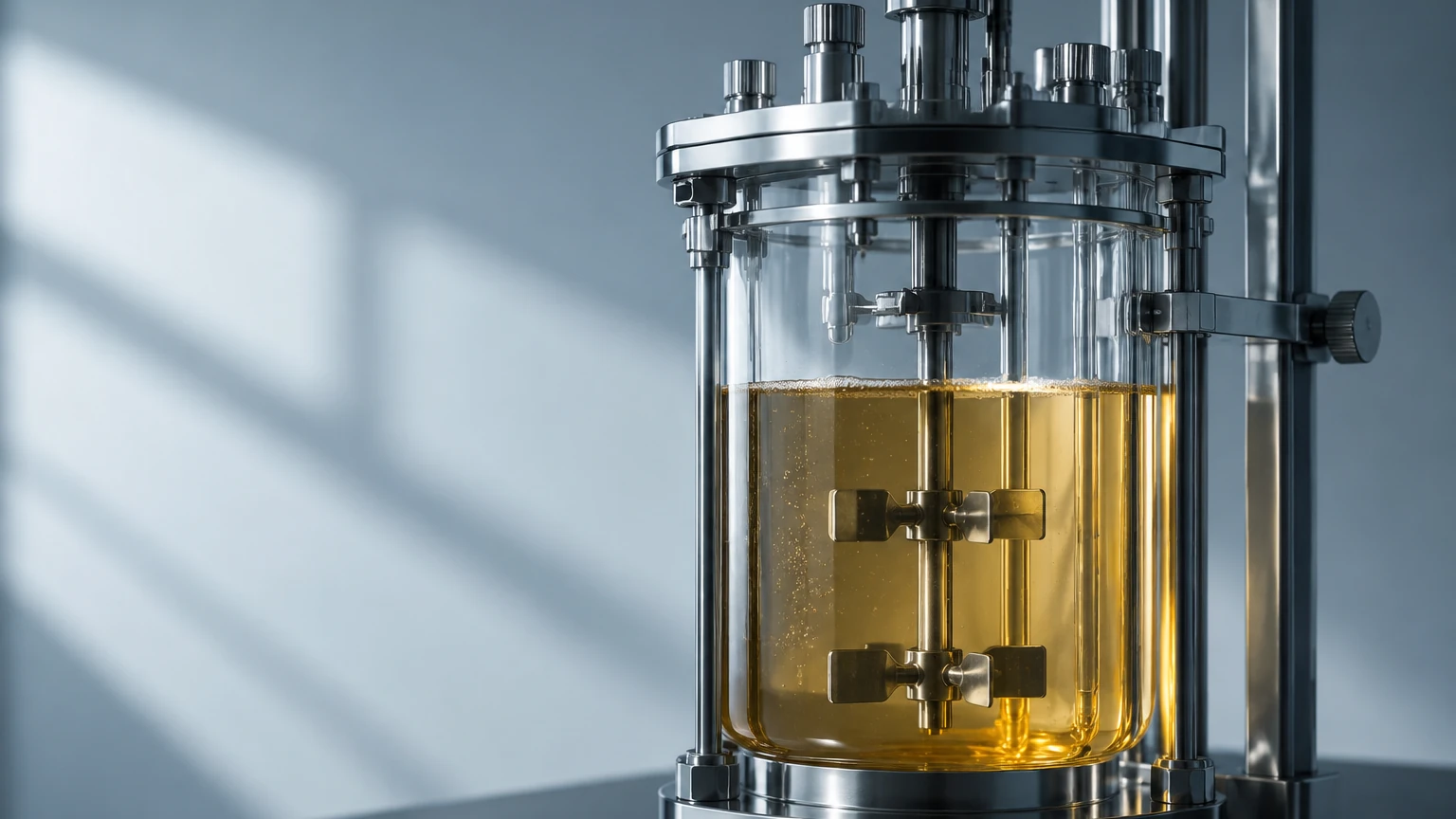
The fundamental design of a stirred tank bioreactor revolves around achieving optimal mass transfer and heat transfer while minimizing shear stress on delicate biological entities. The core components include the vessel shell, an agitation system, a sparging system, and various sensors for monitoring pH, dissolved oxygen (DO), and temperature.
Agitation and Mixing Dynamics
The agitation system, comprising the motor, shaft, and impellers, is responsible for homogenization. In industrial applications, the choice of impeller is critical. Rushton turbines (radial flow) are often used for microbial fermentations where high gas dispersion is required. Conversely, pitched-blade or hydrofoil impellers (axial flow) are preferred for shear-sensitive mammalian cell cultures. The goal is to maintain a uniform distribution of cells and nutrients without causing mechanical damage to the cell membranes.
Oxygen Transfer and Aeration
Aeration is achieved through a sparger located at the bottom of the tank. The efficiency of oxygen transfer is measured by the volumetric mass transfer coefficient (KLa). A higher KLa is generally desirable, but it must be balanced against the potential for foaming and the shear forces generated by rising bubbles. This is where precision metal components become vital; the pore size and distribution of the sparger directly influence bubble size and, consequently, the interfacial area for gas exchange.
Critical Filtration Points in Stirred Tank Systems
Filtration is not merely an auxiliary process in a bioreactor stirred tank; it is a fundamental requirement for maintaining sterility and process efficiency. High-performance stainless steel filtration solutions, such as those found on the Kaifil Main Page, play a decisive role in several stages of the bioreactor lifecycle.
Inlet Gas Sparging
To maintain aerobic conditions, sterile air or oxygen must be continuously pumped into the reactor. This gas must be free of contaminants, including bacteria and viruses. Sintered metal spargers or fine wire mesh assemblies are often used to create micro-bubbles. Unlike simple drilled pipes, these precision-engineered components provide a much larger surface area for gas transfer, which is essential for high-density cell cultures.
Exhaust Gas Venting
As gas is pumped into the reactor, it must also be vented. Exhaust gas filtration prevents the release of the culture into the environment and protects the reactor from back-contamination. These vent filters must handle high moisture levels and potential foaming. Stainless steel filter cartridges are frequently selected for this application due to their ability to be sterilized repeatedly and their resistance to pressure drops caused by moisture accumulation.
Sterile Feed and Media Filtration
Nutrient media and pH-adjusting agents must be filtered before entering the bioreactor stirred tank. While polymeric membranes are common for heat-sensitive liquids, stainless steel mesh filters are often used as pre-filters to remove larger particulates, protecting the more expensive downstream membranes and ensuring the longevity of the entire filtration train.
Material Selection and Surface Integrity
In B2B industrial environments, the durability and cleanability of the bioreactor are non-negotiable. The industry standard for the construction of a bioreactor stirred tank is 316L stainless steel. This material offers superior corrosion resistance, particularly against the salts and organic acids found in culture media.
Surface Finish and Ra Values
The internal surface of the tank and all internal components (impellers, baffles, spargers) must be polished to a specific roughness average (Ra), typically less than 0.4 μm. This level of smoothness, often achieved through electropolishing, is necessary to prevent microbial attachment and the formation of biofilms. Any microscopic pits or scratches can harbor contaminants that survive standard Cleaning-in-Place (CIP) cycles, leading to batch failure.
Sealing and Mechanical Integrity
The point where the agitator shaft enters the vessel is a potential site for contamination. High-quality mechanical seals, often double-mechanical seals with a sterile condensate barrier, are required. Furthermore, all ports and connections should follow hygienic design principles (such as Tri-Clamp fittings) to ensure there are no "dead legs" where stagnant fluid can accumulate.
Performance Metrics: KLa and Shear Management
When evaluating a bioreactor stirred tank for a specific process, engineers must focus on the relationship between power input, mixing time, and oxygen transfer.
1. Volumetric Mass Transfer (KLa): This is influenced by the agitation speed and the gas flow rate. In large-scale reactors, achieving a high KLa is challenging because the hydrostatic pressure at the bottom of the tank increases oxygen solubility but can also lead to carbon dioxide toxicity.
2. Shear Stress: For mammalian cells, the energy dissipated at the impeller tip must be carefully monitored. Excessive shear can lead to cell lysis. Engineers often use Computational Fluid Dynamics (Dynamics) to model the flow patterns within the tank to identify zones of high shear before the physical build begins.
3. Heat Removal: Biological reactions are exothermic. The bioreactor must have an effective cooling jacket or internal coils to maintain the temperature within a narrow range (typically +/- 0.1°C). The ratio of surface area to volume decreases as the tank size increases, making heat removal a primary constraint in scale-up.
Addressing Common Operational Risks
Operating a bioreactor stirred tank involves managing several technical risks that can impact the total cost of ownership and product quality.
* Contamination: This is the most significant risk in bioprocessing. It is often traced back to faulty seals, inadequate sterilization of air filters, or poor hygienic design of the sparger. Using robust, cleanable stainless steel filtration components reduces the likelihood of structural failure during Steaming-in-Place (SIP) cycles.
* Foaming: High agitation and aeration rates can lead to foam formation, which can clog exhaust filters and lead to pressure build-up. While chemical anti-foams are used, they can interfere with downstream processing. Mechanical foam breakers and optimized sparger designs are preferred engineering solutions.
* Sparger Fouling: Over time, media components or cellular debris can block the fine pores of a sparger. This increases the pressure required for aeration and uneven gas distribution. Selecting spargers made from high-grade wire mesh or sintered metal allows for more aggressive cleaning protocols, extending the component's service life.
Customization for Scale-Up and Specialized Processes
Every bioprocess has unique requirements, meaning a "one-size-fits-all" bioreactor stirred tank is rarely sufficient for optimized production. Customization is often required in the following areas:
* Impeller Geometry: Custom-designed impellers can be fabricated to provide the exact balance of axial and radial flow required for a specific cell line.
* Filtration Integration: Custom filter housings and manifolds can be engineered to fit within the specific spatial constraints of a skid-mounted bioreactor system.
* Sensor Integration: Modern reactors require multiple redundant ports for PAT (Process Analytical Technology) tools, allowing for real-time monitoring of metabolites.
Manufacturers like Kaifil specialize in providing these customized stainless steel components, ensuring that the filtration and internal hardware of the bioreactor are tailored to the specific pressures, temperatures, and chemical environments of the application.
Technical Checklist for Procurement and Engineering
Before finalizing the specifications for a bioreactor stirred tank or its internal filtration components, engineering teams should confirm the following:
1. Material Certification: Ensure all wetted parts are 316L stainless steel with full heat trace documentation.
2. Filtration Efficiency: Define the required beta rating for gas and liquid filters to ensure they meet the sterility requirements of the process.
3. CIP/SIP Compatibility: Confirm that all components, especially the spargers and filter cartridges, can withstand repeated exposure to high-pressure steam (typically 121°C or 134°C) and caustic cleaning agents.
4. Scalability Data: Request data on how the KLa and mixing times translate from laboratory-scale models to the intended production volume.
5. Maintenance Cycles: Evaluate the ease of replacing filter elements and seals. High-quality metal filters often offer a lower total cost of ownership due to their cleanability and durability compared to disposable options.
By focusing on these technical details, B2B buyers can ensure that their bioreactor stirred tank investment provides reliable, long-term performance in demanding industrial environments. The synergy between robust vessel design and precision filtration is the foundation of successful bioprocessing.
