


Fuel Gas Coalescers
In industrial gas processing and power generation, the purity of fuel gas is a critical factor in determining the longevity and efficiency of downstream equipment. Fuel gas coalescers serve as the primary line of defense against liquid and solid contaminants that can cause catastrophic failure in gas turbines, reciprocating engines, and compressors. Unlike standard particulate filters, fuel gas coalescers are engineered to remove sub-micron liquid aerosols and fine droplets that are often suspended in high-velocity gas streams.
For engineers and procurement teams, selecting the right coalescing technology requires a deep understanding of fluid dynamics, material science, and the specific environmental conditions of the application. High-performance filtration components, such as those found on the Main Page of specialized manufacturers, are essential for maintaining system integrity in demanding industrial sectors.
Understanding the Role of Fuel Gas Coalescers in Industrial Systems
Fuel gas coalescers are specialized filtration vessels designed to separate liquid phases—such as water, hydrocarbons, and lubricating oils—from a continuous gas phase. In many industrial environments, gas is transported via pipelines where pressure changes and temperature fluctuations lead to the condensation of liquids. If these liquids reach a gas turbine or a high-pressure compressor, they can cause blade erosion, combustion instability, and valve fouling.
Protecting Downstream Infrastructure
The primary objective of fuel gas coalescers is to ensure that the gas entering the combustion or compression chamber meets the stringent "dry gas" requirements specified by equipment manufacturers. Even trace amounts of liquid aerosols can carry dissolved solids or corrosive chemicals that accelerate the degradation of metal surfaces. By implementing robust coalescing solutions, facilities can significantly reduce unplanned downtime and extend the mean time between failures (MTBF) for critical assets.
Particulate vs. Coalescing Filtration
It is important to distinguish between standard particulate filtration and coalescence. While a particulate filter captures solid debris through mechanical straining, fuel gas coalescers utilize a multi-stage process to merge small droplets into larger ones that can be drained away. Most modern systems utilize a combination of both: a pre-filter stage to remove bulk solids and a secondary coalescing stage to address the aerosolized liquids.
The Mechanics of Coalescence: From Aerosols to Bulk Liquids
The efficiency of fuel gas coalescers is rooted in the physics of droplet growth. As the contaminated gas passes through the filter media, three primary mechanisms occur: direct impaction, interception, and Brownian diffusion.
Direct Impaction and Interception
Larger liquid droplets (typically those greater than 1 micron) possess enough inertia that they cannot follow the gas streamlines as they curve around the filter fibers. These droplets collide with the fibers—a process known as direct impaction. Smaller droplets that follow the streamlines may still come into contact with the fibers if they pass within one-half of a droplet's diameter, leading to interception. Once a droplet touches a fiber, it attaches due to surface tension.
Brownian Diffusion and Droplet Growth
For extremely fine aerosols (sub-micron range), the movement of gas molecules causes the droplets to vibrate and move randomly. This Brownian motion increases the probability that these tiny particles will collide with the filter media. As more droplets collect on the fibers, they merge (coalesce) into larger drops. These larger drops are then pushed through the media by the gas flow until they reach the outer surface, where they become heavy enough to fall into a collection sump under the influence of gravity.
Engineering Considerations for Filter Media and Housing
The choice of material for fuel gas coalescers is paramount, especially when dealing with corrosive gases or high-temperature environments. Stainless steel is often the preferred material for both the filter housing and the internal components due to its superior mechanical properties.
The Advantages of Stainless Steel in Coalescing Applications
Stainless steel wire mesh and sintered metal fibers offer distinct advantages over synthetic or fiberglass media. In many fuel gas applications, the presence of hydrogen sulfide (H2S) or high CO2 concentrations can cause rapid degradation of polymer-based filters. Stainless steel provides excellent resistance to chemical attack and can withstand the high differential pressures common in high-pressure gas streams. Furthermore, metal media can be cleaned and reused in certain configurations, offering a lower total cost of ownership compared to disposable elements.
Structural Integrity and Pressure Resistance
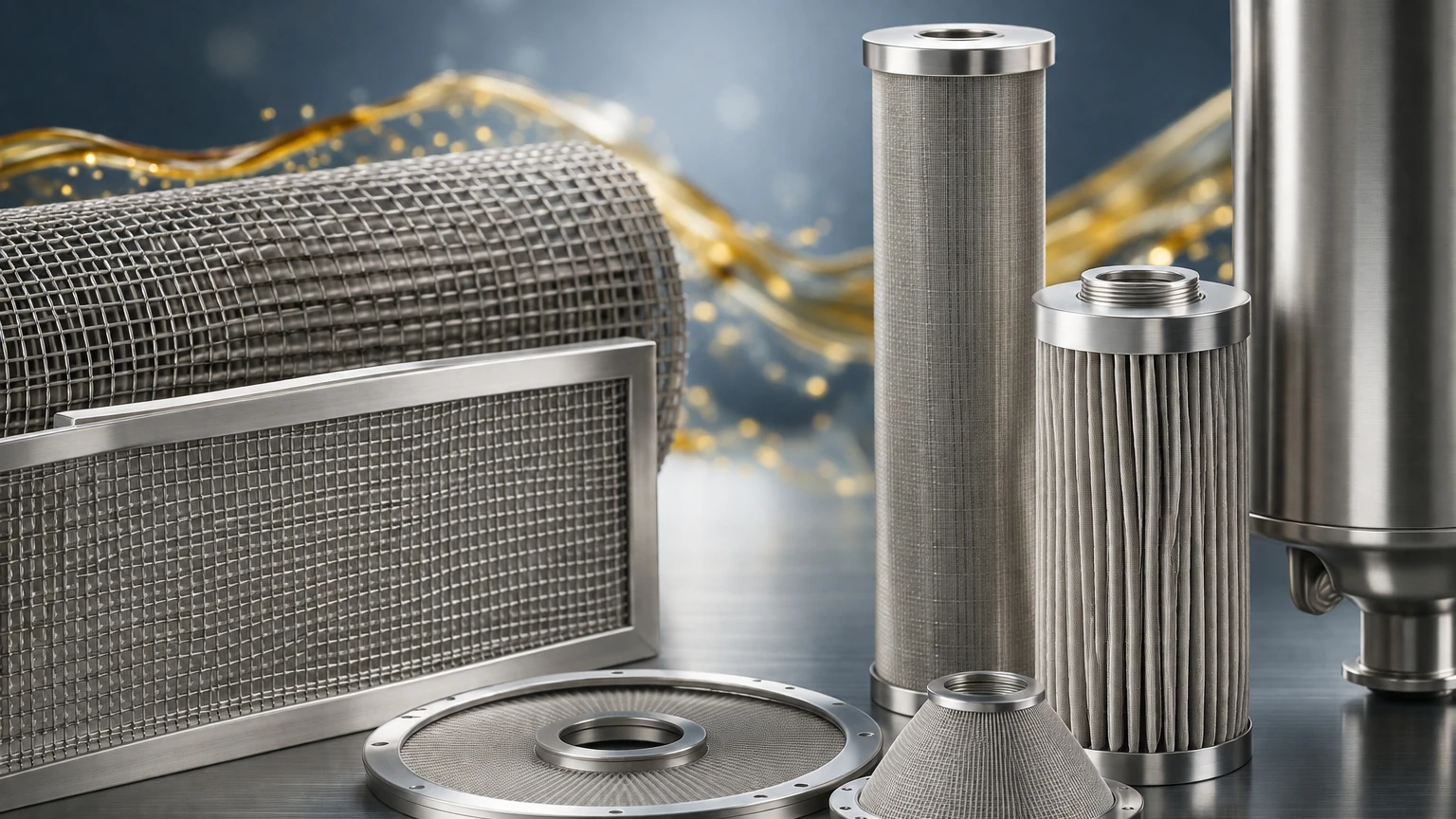
Fuel gas coalescers must be designed to withstand the operating pressure of the pipeline, which can exceed several hundred PSI. The internal filter elements must have high collapse strength to prevent structural failure during pressure surges. Engineering teams often specify pleated stainless steel designs to maximize the surface area within a compact footprint, which reduces the gas velocity through the media and improves the efficiency of the coalescing process.
Critical Performance Metrics for Selection
When evaluating fuel gas coalescers, engineers must look beyond simple micron ratings. Several key metrics define the real-world performance of a filtration system.
Efficiency and Micron Ratings
In coalescing applications, efficiency is typically measured by the "beta ratio" or the percentage of liquid removal at a specific droplet size. A high-quality coalescer should be capable of removing 99.9% or more of droplets larger than 0.3 microns. It is vital to confirm whether the efficiency rating is based on laboratory conditions or representative field conditions with actual fuel gas compositions.
Managing Differential Pressure (Delta P)
Differential pressure is the difference in pressure between the inlet and the outlet of the filter. As the filter media captures contaminants, the Delta P increases. A high initial Delta P indicates an undersized filter or restrictive media, which forces the system to work harder and consumes more energy. Engineers strive for a balance: a media fine enough to capture aerosols but open enough to maintain a low pressure drop. Monitoring the rate of Delta P increase is the most effective way to determine when a filter element requires maintenance or replacement.
Common Risks and Mitigation Strategies in Gas Filtration
Even the best-designed fuel gas coalescers can fail if they are not correctly matched to the application or if operational parameters shift. Understanding these risks is essential for maintaining system reliability.
Liquid Re-entrainment Challenges
Re-entrainment occurs when the gas velocity through the filter is too high, causing the coalesced liquid droplets on the outer surface of the element to be stripped off and carried back into the gas stream. This effectively bypasses the filtration process. To mitigate this, coalescers must be sized correctly based on the maximum expected flow rate and gas density. Some designs incorporate a specialized drainage layer or "sock" on the outside of the element to help channel liquids to the sump and prevent them from being picked up by the gas flow.
Chemical Compatibility and Contaminant Loading
Unexpected contaminants, such as compressor lube oils with aggressive additive packages, can sometimes interfere with the surface tension required for effective coalescence. If the filter media becomes "blinded" by solid particulates or heavy waxes, the coalescing performance will drop sharply. Implementing a high-quality pre-filter can protect the more expensive coalescing stage from heavy solid loading, ensuring it can focus on liquid separation.
Customization and OEM Integration for Specialized Applications
Standard off-the-shelf fuel gas coalescers may not meet the requirements of every facility. Customization is often necessary to address unique flow rates, space constraints, or specific chemical exposures. Manufacturers like Kaifil specialize in providing tailored filtration solutions that integrate seamlessly into existing OEM equipment.
Tailoring Filtration Geometry
Customized stainless steel filter cartridges can be engineered with specific pleat depths and densities to optimize the balance between filtration efficiency and service life. For OEM manufacturers of gas turbines or compressors, having a bespoke filtration component ensures that their equipment is protected by a part designed specifically for its flow characteristics. This level of precision is often found when reviewing the technical capabilities on a manufacturer's Main Page.
Maintenance, Lifecycle Management, and Total Cost of Ownership
The total cost of ownership (TCO) for fuel gas coalescers includes the initial purchase price, the cost of replacement elements, energy costs associated with pressure drop, and the labor required for maintenance.
Establishing Replacement Cycles
While some stainless steel filters can be cleaned, many high-efficiency coalescing elements are designed to be replaced once the differential pressure reaches a pre-set limit (typically 10-15 PSID). Operating beyond this limit risks element collapse or a significant drop in filtration efficiency. A proactive maintenance schedule, supported by real-time Delta P monitoring, is the best way to ensure that the fuel gas remains clean without incurring unnecessary replacement costs.
Evaluating Long-term Durability
Investing in high-quality materials like 304 or 316L stainless steel may have a higher upfront cost but often results in a lower TCO. These materials are less likely to suffer from pitting, stress corrosion cracking, or mechanical fatigue, especially in offshore or coastal environments where salt air is a factor. When reliability is the priority, the structural integrity of the filter element is just as important as its micron rating.
Conclusion
Fuel gas coalescers are indispensable components in the modern industrial landscape, providing the necessary protection for high-value power generation and gas processing equipment. By understanding the mechanics of coalescence, prioritizing high-quality materials like stainless steel, and carefully monitoring performance metrics, engineers can ensure their systems operate at peak efficiency with minimal risk of liquid-induced damage. For those seeking specialized engineering support or customized filtration components, it is recommended to Review product options and application support to find a solution tailored to specific industrial requirements.
