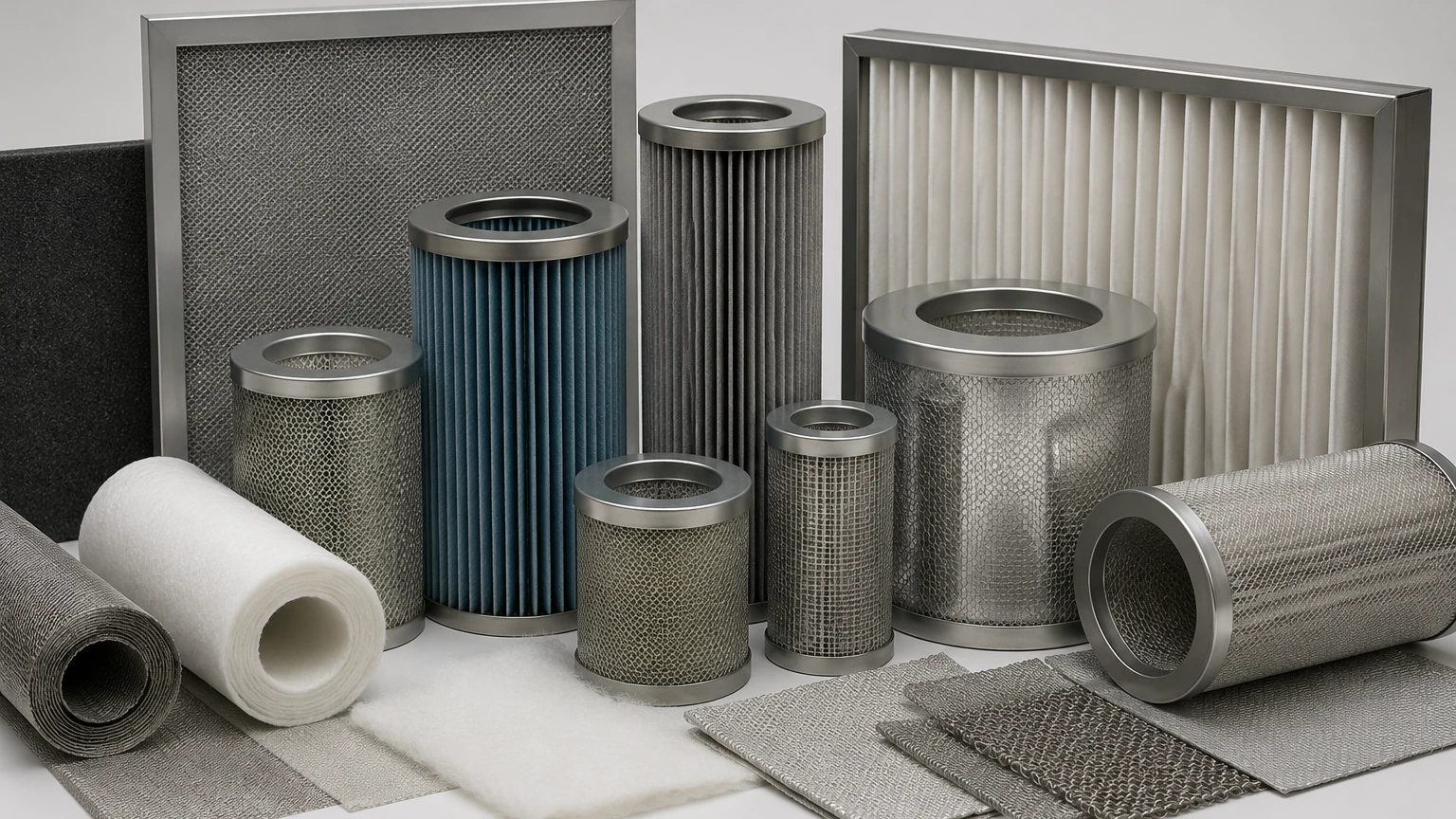
Air Cleaner Filter Material
In industrial filtration, the selection of air cleaner filter material is a critical engineering decision that directly impacts the efficiency, longevity, and operational cost of a system. Unlike residential air purifiers that often rely on disposable synthetic or paper media, industrial air cleaning systems frequently require robust, high-performance materials capable of withstanding extreme temperatures, corrosive environments, and high-pressure differentials. Selecting the appropriate material involves a deep understanding of the physical and chemical properties of the media, as well as the specific requirements of the application, such as micron rating, airflow volume, and cleanability.
The Role of Material Science in Industrial Air Filtration
Air cleaner filter material serves as the physical barrier that captures contaminants from a gas stream. In industrial contexts, these contaminants can range from large particulate matter and dust to fine aerosols and corrosive chemical vapors. The material must not only capture these particles with high precision but also maintain structural integrity under mechanical stress.
For many high-demand applications, stainless steel has become the standard for air cleaner filter material. This is due to its exceptional mechanical strength and resistance to oxidation. Engineering teams often prioritize stainless steel wire mesh or sintered metal components when the filtration system must operate in environments where polymer-based media would melt, degrade, or fail due to chemical exposure.
Common Types of Air Cleaner Filter Material
Industrial filtration utilizes several categories of media, each offering distinct advantages depending on the filtration mechanism required—be it surface filtration or depth filtration.
1. Stainless Steel Wire Mesh
Stainless steel wire mesh is a primary air cleaner filter material used in pre-filtration and heavy-duty industrial air intake systems. It is characterized by a precise geometric structure. The weave patterns, such as plain weave, twill weave, or Dutch weave, determine the filtration accuracy.
- Plain Weave: Offers high flow rates and is generally used for coarse filtration.
- Dutch Weave: Provides a much tighter mesh structure, allowing for finer filtration while maintaining high mechanical strength. This is often used in high-pressure air systems where fine particulate removal is essential.
2. Sintered Metal Fiber Felt
Sintered metal fiber felt is a non-woven medium produced by sintering stainless steel fibers. This material creates a porous, three-dimensional depth filtration structure. It is highly valued for its high porosity, which results in a lower initial pressure drop and a higher dirt-holding capacity compared to standard wire mesh. This material is ideal for applications requiring high efficiency in a compact footprint.
3. Sintered Wire Mesh
Sintered wire mesh consists of multiple layers of stainless steel wire mesh that are bonded together through a vacuum sintering process. This creates a rigid, stable air cleaner filter material that does not migrate or deform under high pressure. It combines the precise filtration of thin mesh layers with the mechanical strength of heavier support layers.
Engineering Criteria for Material Selection
When specifying an air cleaner filter material, engineers must evaluate several technical parameters to ensure the component meets the performance requirements of the Main Page and the specific industrial equipment it serves.
Filtration Efficiency and Micron Rating
The micron rating defines the size of particles the material can effectively trap. For air cleaning, this can range from coarse filtration (100+ microns) for protecting large fans and blowers to fine filtration (sub-5 microns) for protecting sensitive pneumatic components or cleanroom environments. It is important to distinguish between "absolute" and "nominal" ratings. An absolute rating indicates that 99.9% of particles of a certain size will be captured, whereas a nominal rating is an average figure that may allow some bypass.
Pressure Drop (Delta P)
Pressure drop is the difference in total pressure between the upstream and downstream sides of the filter. Every air cleaner filter material introduces some resistance to airflow. A material with a high initial pressure drop will require more energy from the system’s blowers to move the air, increasing operational costs. Engineers seek a balance between high filtration efficiency and low resistance to maintain system energy efficiency.
Temperature and Chemical Compatibility
In chemical processing or exhaust gas treatment, the air cleaner filter material may be exposed to temperatures exceeding 500°C or to highly acidic/alkaline vapors. Stainless steel grades like 304, 316, and 316L are selected based on these factors. 316L, for instance, contains molybdenum, which provides superior resistance to pitting and corrosion in chloride-heavy environments.
Performance Expectations and Durability
The durability of an air cleaner filter material is often measured by its resistance to fatigue and its ability to undergo repeated cleaning cycles. In many industrial B2B applications, the total cost of ownership (TCO) is a more important metric than the initial purchase price.
Disposable materials, while cheaper upfront, require frequent replacement, leading to downtime and waste disposal costs. In contrast, stainless steel filter materials are designed for longevity. They can be cleaned using ultrasonic baths, backwashing, or chemical solvents, restoring the material to near-original pressure drop levels. This makes them a more sustainable and cost-effective choice for long-term industrial operations.
Customization and OEM Considerations
Industrial air cleaners are rarely "one size fits all." Most applications require customized filtration components tailored to specific housing dimensions and flow characteristics. When selecting a manufacturer for air cleaner filter material, engineering teams should confirm the following customization capabilities:
1. Structural Integrity: Can the material be pleated to increase surface area without compromising the mesh structure?
2. End Fittings: Are the materials compatible with standard or custom end caps (e.g., 222, 226, or threaded connections)?
3. Reinforcement: Does the application require internal support cores or external cages to prevent collapse under high vacuum or pressure?
Working with a specialized manufacturer like Kaifil allows for the development of bespoke solutions where the wire diameter, weave type, and alloy are optimized for the specific air quality goals of the project.
Common Risks in Material Selection
Failure to properly vet the air cleaner filter material can lead to significant operational risks. One common issue is "media migration," where fibers from a low-quality filter break off and enter the downstream air, potentially damaging sensitive machinery or contaminating products. This is why high-quality sintered or woven metal materials are preferred in pharmaceutical and food-grade applications.
Another risk is premature blinding or clogging. If the pore size is too small for the dust load, the filter will clog rapidly, necessitating frequent maintenance. Conversely, if the pore size is too large, it will fail to protect downstream components. A thorough analysis of the particle size distribution (PSD) in the air stream is necessary before finalizing the material specification.
Application-Specific Requirements
Different industries impose different demands on air cleaner filter material:
- Food and Beverage: Requires materials that are FDA-compliant and capable of withstanding Clean-in-Place (CIP) procedures. Stainless steel mesh is often the only viable option due to its non-leaching properties.
- Pharmaceuticals: Demands high-precision filtration to ensure sterile air environments. Sintered metal fibers are frequently used here for their high efficiency and ability to be autoclaved.
- Hydraulic and Pneumatic Systems: Air breathers on hydraulic reservoirs require materials that can handle rapid changes in airflow and prevent moisture and particulate ingress.
- Chemical Processing: Requires high resistance to solvent vapors and aggressive gases, making 316L or even exotic alloys necessary.
Conclusion for Purchasing and Engineering Teams
Before finalizing a purchase or design specification for air cleaner filter material, it is essential to conduct a technical review of the operating environment. Engineers should confirm the maximum operating temperature, the nature of the contaminants, the required flow rate, and the available space for the filter housing.
By choosing high-quality metal filtration media, industrial facilities can ensure reliable performance, minimize downtime, and achieve a lower total cost of ownership. For those seeking specialized guidance on material selection or custom-engineered filtration components, consulting with a manufacturer that understands the nuances of stainless steel and precision metal filtration is the most effective path forward. For more information on custom filtration solutions, visit the Main Page to explore technical specifications and application support.