


Manufacturing Dust Collection
In modern industrial environments, manufacturing dust collection is not merely a matter of housekeeping; it is a critical engineering requirement for operational safety, regulatory compliance, and equipment longevity. Effective dust collection systems capture airborne particulates generated during processes such as grinding, sanding, chemical mixing, and thermal spraying. For engineers and facility managers, selecting the right filtration components is the most decisive factor in determining the efficiency and reliability of these systems.
As a specialized manufacturer of stainless steel filtration solutions, Kaifil understands that the performance of a dust collection system depends heavily on the physical and chemical properties of the filter media. While fabric bags and paper cartridges are common in light-duty applications, demanding industrial processes require the durability and precision of metal filtration components. This guide explores the technical considerations, material selections, and engineering criteria essential for optimizing dust collection in a manufacturing context.
Understanding the Mechanics of Manufacturing Dust Collection
The primary objective of manufacturing dust collection is to separate solid particulates from a gas stream, typically air. This process involves three main stages: capture, conveyance, and separation. Capture occurs at the source of dust generation using hoods or enclosures. Conveyance moves the dust-laden air through ductwork to the collector. Separation is where the filtration media—such as wire mesh filters or sintered metal cartridges—removes the particles before the cleaned air is exhausted or recirculated.
From an engineering perspective, the efficiency of this separation is governed by several physical mechanisms:
1. Inertial Impaction: Larger, heavier particles traveling in the airflow cannot follow the streamlines as they curve around a filter fiber. Instead, they strike the fiber and are captured.
2. Interception: Mid-sized particles that follow the air streamline come within one particle radius of the filter media surface and adhere to it.
3. Diffusion: Very fine particles (typically sub-micron) are influenced by Brownian motion, causing them to move erratically and eventually collide with the filter fibers.
In high-temperature or corrosive manufacturing environments, traditional media often fail due to thermal degradation or chemical attack. This is where stainless steel filtration components become indispensable, offering the structural integrity needed to maintain consistent pore sizes and flow rates under stress.
Material Selection: Why Metal Filters Excel in Demanding Environments
When designing or upgrading a manufacturing dust collection system, material compatibility is paramount. Stainless steel, particularly grades 304 and 316L, offers distinct advantages over synthetic media in specific industrial scenarios.
Thermal Stability
Many manufacturing processes, such as metal smelting, glass production, or high-speed machining, generate hot exhaust gases. Synthetic filters often have a maximum operating temperature of 250°F (121°C) to 500°F (260°C). In contrast, stainless steel filter cartridges can operate at temperatures exceeding 800°F (427°C) without losing structural integrity or filtration accuracy. This eliminates the need for expensive air-cooling equipment upstream of the dust collector.
Chemical Resistance
In chemical processing and pharmaceutical manufacturing, the dust being collected may be acidic, alkaline, or solvent-heavy. Stainless steel provides superior resistance to corrosion, preventing the premature failure of the filter media. For highly aggressive environments, specialized alloys like Hastelloy or Monel can be utilized in the construction of wire mesh filters to ensure long-term performance.
Mechanical Strength and Cleanability
Unlike disposable paper or fabric filters, metal filters are designed for longevity. They can withstand high differential pressures without collapsing. Furthermore, stainless steel filters are highly cleanable. Whether through pulse-jet cleaning, ultrasonic baths, or chemical backwashing, these components can be restored to near-original pressure drop levels, significantly reducing the total cost of ownership over the life of the equipment.
Technical Parameters for Filter Selection
To ensure a manufacturing dust collection system meets its performance targets, engineers must evaluate several technical specifications during the procurement phase. These parameters dictate how the filter will behave under real-world operating conditions.
Micron Rating and Filtration Efficiency
The micron rating defines the size of particles the filter is capable of capturing. In industrial dust collection, it is important to distinguish between "nominal" and "absolute" ratings. A nominal rating indicates the filter can trap a large percentage of particles of a certain size, whereas an absolute rating (often achieved through sintered wire mesh) indicates that 99.9% or more of particles above that size are retained. For hazardous dusts, such as those found in pharmaceutical or lead-processing plants, high-efficiency absolute filtration is a safety requirement.
Air-to-Cloth Ratio (Filtering Velocity)
This is the ratio of the volume of air entering the dust collector (CFM) to the total square footage of the filter media. A lower air-to-cloth ratio generally leads to higher filtration efficiency and longer filter life, as it reduces the velocity at which particles strike the media. When using pleated stainless steel cartridges, the available surface area is greatly increased within a compact footprint, allowing for higher flow rates without compromising the system's integrity.
Differential Pressure (ΔP)
Differential pressure is the difference in pressure between the upstream and downstream sides of the filter. As dust accumulates on the media, ΔP increases. Monitoring this value is essential for determining when cleaning or replacement is necessary. High-quality metal filters are engineered to maintain a low initial pressure drop, which reduces the energy consumption of the system's fan or blower.
Mitigating Risks: Combustible Dust and Chemical Hazards
Safety is a primary driver in the design of manufacturing dust collection systems. Two of the most significant risks in industrial filtration are combustible dust explosions and chemical exposure.
Combustible Dust Management
Many materials, including aluminum, wood, flour, and certain plastics, can become explosive when finely divided and suspended in air. Organizations like NFPA (National Fire Protection Association) and ATEX provide strict guidelines for managing these risks. Stainless steel filters contribute to safety in these environments because they are inherently conductive. When properly grounded, metal filter cartridges prevent the buildup of static electricity, which is a common ignition source for dust explosions.
Hazardous Particulate Containment
In industries dealing with toxic substances, the filtration system must act as a primary containment barrier. Precision-engineered metal filters with welded seams and high-integrity seals ensure that no bypass occurs. This protects both the workforce and the surrounding environment from exposure to harmful particulates. When evaluating a supplier on their Main Page, it is vital to confirm their ability to provide custom configurations that meet these stringent containment standards.
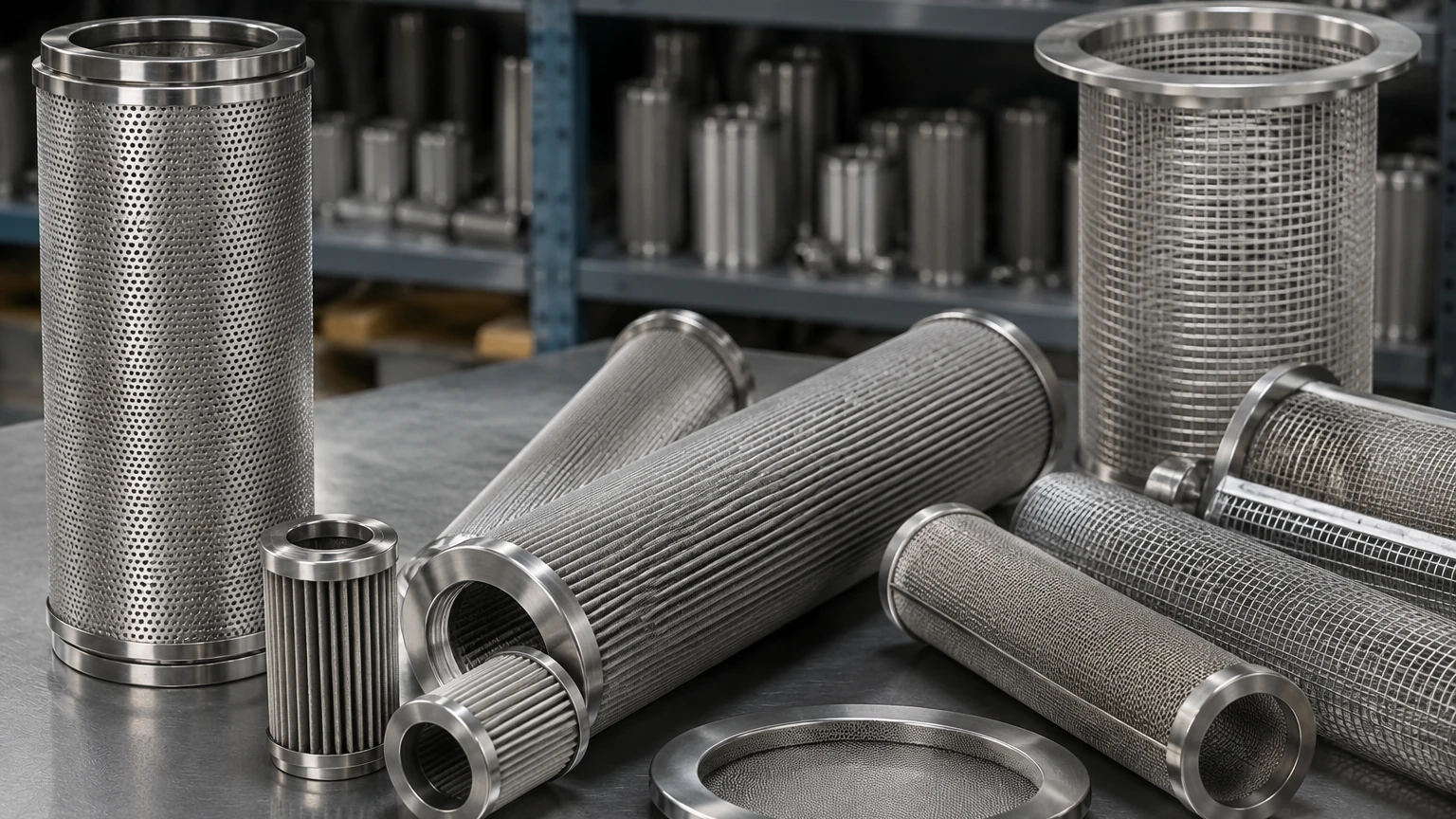
Customization and OEM Integration
Every manufacturing facility has unique spatial and operational constraints. Off-the-shelf filtration solutions often require compromises in airflow or maintenance access. Custom-manufactured stainless steel filters allow for a "perfect fit" approach.
Engineers should look for manufacturers capable of providing:
* Custom Dimensions: Tailoring the length, diameter, and mounting style of filter cartridges to fit existing collector housings.
* Variable Mesh Layers: Combining different layers of wire mesh (e.g., a fine filtration layer protected by coarser support layers) to optimize both strength and efficiency.
* Specialized End Caps: Utilizing flange, threaded, or bayonet-style connections to ensure leak-proof installation.
By working closely with a manufacturer like Kaifil, purchasing teams can develop OEM components that are specifically tuned to the particle size distribution and flow characteristics of their unique manufacturing dust collection application.
Optimizing Maintenance and Total Cost of Ownership (TCO)
While the initial purchase price of stainless steel filtration components is higher than that of disposable alternatives, the Total Cost of Ownership is often significantly lower. This is due to several factors:
1. Extended Service Life: A well-maintained stainless steel filter can last for years, whereas fabric bags may need replacement every few months in abrasive or high-temperature settings.
2. Reduced Downtime: Fewer filter changes mean less downtime for the production line. In high-volume manufacturing, the cost of an hour of lost production can far exceed the cost of the filter itself.
3. Lower Disposal Costs: Disposable filters that have captured hazardous dust must be treated as hazardous waste, leading to high disposal fees. Permanent metal filters reduce the volume of waste generated.
4. Energy Efficiency: By maintaining a more stable and lower average differential pressure, metal filters allow the system's fan to operate more efficiently, leading to measurable savings in electricity costs.
To maximize these benefits, facility managers should establish a rigorous maintenance schedule that includes regular differential pressure monitoring and a validated cleaning protocol. Understanding the specific cleaning requirements of a sintered or mesh filter is essential before purchase to ensure the facility has the necessary equipment (such as ultrasonic cleaners) to maintain the media.
Conclusion: Selecting a Partner for Industrial Filtration
Effective manufacturing dust collection is a multi-faceted engineering challenge that requires a deep understanding of fluid dynamics, material science, and safety regulations. Choosing the right filtration media is the foundation of a successful system. Stainless steel wire mesh and sintered metal cartridges offer the thermal, chemical, and mechanical resilience required for the most demanding industrial applications.
When evaluating filtration solutions, engineers should prioritize suppliers who offer technical transparency, customization capabilities, and a proven track record in industrial environments. By focusing on long-term performance and total cost of ownership rather than just initial expenditure, manufacturing facilities can achieve cleaner air, safer work environments, and more efficient operations.
For more technical specifications and to explore custom filtration options for your specific application, visit the Kaifil Main Page to review product options and application support.
