


Sand Dust Collector
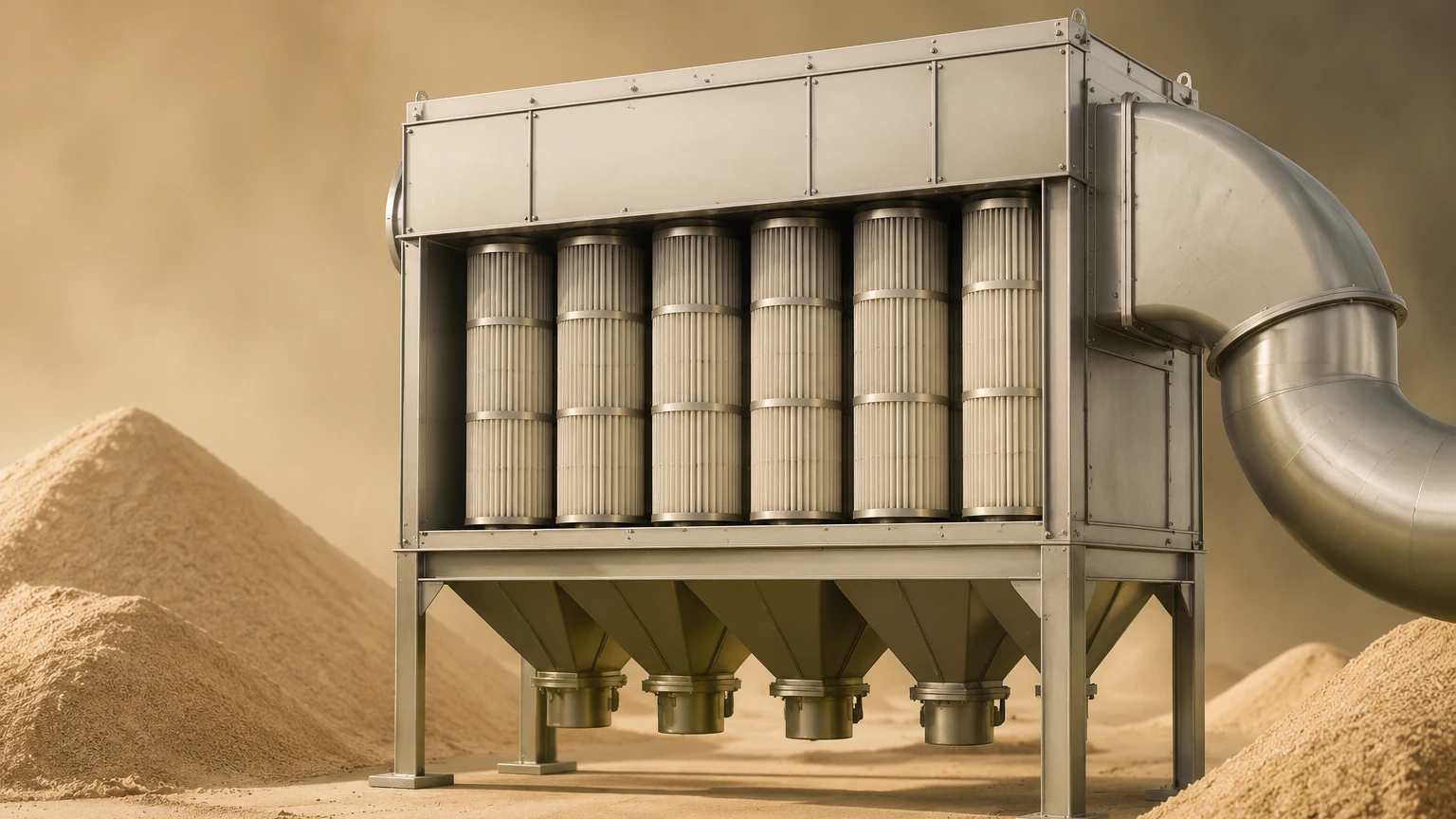
In industrial manufacturing and processing environments, the management of airborne particulates is a critical requirement for both operational efficiency and regulatory compliance. A sand dust collector is a specialized filtration system designed to capture and remove abrasive sand particles and associated dust from the air stream. These systems are indispensable in sectors such as metal casting, sandblasting, construction material production, and chemical processing, where high-velocity abrasive particles can damage equipment, contaminate products, and pose health risks to personnel.
From an engineering perspective, the efficacy of a sand dust collector is not merely a function of its motor power or housing size, but rather the precision and durability of its internal filtration components. As a manufacturer specializing in stainless steel filtration solutions, Kaifil provides the high-performance wire mesh and cartridge elements that serve as the heart of these industrial systems. Understanding the technical nuances of these components is essential for procurement teams and engineers tasked with optimizing dust extraction performance.
The Fundamentals of Industrial Sand Dust Collection
A sand dust collector operates on the principle of separating solid matter from a gas stream. Unlike general-purpose air purifiers, these units must handle "heavy" dust—particles that are dense, abrasive, and often present in high concentrations. The process typically involves a multi-stage approach to ensure that the air returned to the facility or exhausted to the atmosphere meets environmental standards.
In most industrial configurations, the air-sand mixture is drawn into the collector via a high-pressure blower. The first stage often utilizes inertial separation or cyclonic action to drop the heaviest sand particles into a collection hopper. However, the fine dust particles—those that are most likely to bypass basic mechanical separators—require high-precision barrier filtration. This is where the selection of filter media becomes paramount. For demanding applications, stainless steel filter cartridges and wire mesh components are preferred over traditional fabric bags due to their superior structural integrity and resistance to the abrasive nature of sand.
Types of Sand Dust Collector Technologies
Industrial facilities deploy various types of collectors depending on the volume of air, the nature of the sand, and the specific process requirements. Choosing the right technology requires an evaluation of the particle size distribution and the temperature of the air stream.
1. Cartridge Dust Collectors
Cartridge collectors are favored for their compact footprint and high filtration efficiency. They utilize pleated filter media to maximize the surface area within a small volume. In environments where sand dust is particularly abrasive or where high temperatures are present, standard polyester or paper cartridges may fail prematurely. Engineering teams often specify stainless steel pleated cartridges to ensure long-term reliability and the ability to withstand rigorous pulse-jet cleaning cycles.
2. Cyclonic Separators
Often used as a pre-filter, the cyclone sand dust collector uses centrifugal force to move particles to the outer wall of the device, where they lose velocity and fall into a bin. While effective for large grains of sand, cyclones are generally insufficient for fine dust (below 10 microns). They are frequently paired with secondary stainless steel mesh filters to capture the remaining fine particulates.
3. Baghouse Collectors
Baghouses are large-scale systems used for high-volume air streams. They utilize long fabric bags to filter dust. In specific chemical or high-heat sand processing applications, these bags may be reinforced or replaced with metal fiber felt or wire mesh structures to prevent chemical degradation or thermal melting.
The Critical Role of Stainless Steel Filtration Components
In the context of a sand dust collector, the filter media is subjected to constant mechanical stress. Sand particles act as micro-projectiles that can quickly erode soft materials. This is why stainless steel (specifically grades 304 and 316L) is the material of choice for high-end industrial filtration.
Abrasion Resistance
Stainless steel wire mesh is inherently resistant to the scouring action of sand. Unlike synthetic fibers that can fray or tear under the impact of sharp silica particles, metal mesh maintains its pore geometry and structural thickness. This ensures that the filtration accuracy remains consistent throughout the service life of the component.
Thermal and Chemical Stability
Many sand-related processes, such as foundry sand reclamation or chemical sand drying, involve elevated temperatures or corrosive vapors. Stainless steel filter elements can operate in environments exceeding 500°F (260°C) without losing mechanical strength. Furthermore, they are resistant to the oxidation and chemical attacks that would degrade standard filter media.
Cleanability and Reusability
A significant advantage of utilizing metal components in a sand dust collector is the ability to clean and reuse the filters. Whether through back-pulsing, ultrasonic cleaning, or chemical washing, stainless steel cartridges can be restored to near-original pressure drop levels, significantly reducing the total cost of ownership compared to disposable filters.
Engineering Parameters for Filter Element Selection
When specifying components for a sand dust collector, engineers must look beyond basic dimensions. Several technical parameters dictate the performance of the filtration system:
* Micron Rating: This defines the size of the smallest particle the filter can reliably capture. For sand dust, a range of 5 to 50 microns is common, though finer dust may require sub-micron capabilities. Kaifil provides customized wire mesh with precise apertures to meet these specific requirements.
* Air-to-Cloth Ratio: This is the ratio of the air volume entering the collector to the total square footage of the filter media. A lower ratio generally leads to higher efficiency and longer filter life. Utilizing pleated stainless steel designs allows for a higher surface area within the same housing footprint.
* Pressure Drop (ΔP): This represents the resistance to airflow. A high pressure drop indicates a clogged filter or an undersized system, which increases energy consumption. Precision-engineered mesh ensures optimal airflow while maintaining high capture rates.
* Permeability: The ability of the filter media to allow air to pass through while stopping solids. Balancing permeability with filtration accuracy is the primary challenge in filter design.
For technical professionals looking to optimize these parameters, reviewing product options and application support on the Main Page can provide the necessary data for informed decision-making.
Operational Challenges and Maintenance Strategies
Even the most robust sand dust collector requires a proactive maintenance strategy to prevent downtime. The abrasive nature of sand means that the internal components are under constant wear.
Monitoring Pressure Differential
The most effective way to monitor a dust collector's health is by tracking the pressure differential across the filter bank. A sudden drop in pressure may indicate a ruptured filter (leaking sand into the clean air plenum), while a steady, unrecoverable increase indicates that the filters are "blinded" or permanently clogged.
Pulse-Jet Cleaning Optimization
Most modern sand dust collectors use compressed air pulses to knock dust off the filters. If the pulse pressure is too high, it can damage the filter media; if it is too low, it will not effectively clean the filters. Stainless steel cartridges are particularly well-suited for pulse cleaning because they do not flex or deform as much as fabric bags, allowing the shockwave to more effectively dislodge the dust cake.
Inspection of Seals and Gaskets
In a sand dust collector, the smallest gap in a seal can lead to "dust bypass." Because sand is highly abrasive, bypass can lead to rapid erosion of downstream components, including the blower fan and the clean air ducting. High-temperature gaskets and precision-machined end caps on stainless steel filters are essential for maintaining a leak-proof system.
Custom OEM Solutions for Specialized Dust Extraction
Standard off-the-shelf filtration products often fail to meet the unique demands of specialized industrial processes. For example, a sand dust collector used in a pharmaceutical cleanroom has vastly different requirements than one used in a heavy-duty shipyard sandblasting operation.
Kaifil specializes in OEM and customized filtration solutions, working closely with equipment manufacturers to develop filter elements that fit specific housing geometries and performance profiles. This includes:
* Custom Weave Patterns: Selecting between plain, twilled, or Dutch weaves to balance strength and filtration precision.
* Sintered Mesh Structures: For applications involving extremely high pressures or fine particulates, multiple layers of wire mesh can be sintered together to create a monolithic, high-strength filter plate or tube.
* Custom End Fittings: Ensuring that the filter element integrates perfectly with the existing dust collector hardware, whether through threaded connections, flange mounts, or bayonet-style fittings.
By focusing on the specific challenges of the application—be it high moisture, extreme heat, or ultra-fine silica dust—customized metal filtration components ensure that the sand dust collector operates at peak efficiency with minimal maintenance intervention.
Conclusion
The selection of a sand dust collector and its associated filtration components is a critical decision that impacts the safety, efficiency, and longevity of industrial operations. While the external housing provides the structure, the internal filter media—specifically high-quality stainless steel wire mesh and cartridges—determines the actual performance of the system. By understanding the engineering principles of filtration accuracy, abrasion resistance, and cleanability, purchasing teams can select solutions that offer the best total cost of ownership. For those in the process of designing or upgrading their filtration systems, Kaifil offers the technical expertise and manufacturing capability to deliver reliable, high-performance components tailored to the most demanding industrial environments.
