


Filter Press Supplier
In industrial solid-liquid separation, the selection of a filter press supplier is a critical decision that impacts operational efficiency, product purity, and long-term maintenance costs. A filter press is a highly versatile piece of equipment used across chemical processing, wastewater treatment, mining, and food production. However, the effectiveness of the press is fundamentally tied to the precision of its filtration media and the engineering of its internal components. For technical teams and procurement professionals, understanding the nuances of material science and mechanical design is essential when evaluating potential partners.
While the frame of a filter press provides the necessary structural support and hydraulic pressure, the actual separation occurs at the interface of the filter media. This is where specialized manufacturers of stainless steel filtration solutions play a vital role. By integrating high-quality wire mesh and precision-engineered cartridges, a filter press supplier can ensure that the equipment meets the specific micron ratings and flow rates required for demanding industrial applications.
Engineering Standards in Filter Press Selection
When evaluating a filter press supplier, engineers must first look at the structural and mechanical standards employed during manufacturing. A filter press operates under significant hydraulic pressure to squeeze liquid out of a slurry, leaving behind a solid cake. This process requires a frame that can withstand repetitive cycling without deformation.
Key engineering considerations include:
* Closing Force and Pressure Ratings: The supplier must provide clear data on the maximum operating pressure. For high-solids slurries, higher pressures are often required to achieve the desired cake dryness.
* Plate Design: Whether using recessed chamber plates, plate and frame, or membrane squeeze plates, the geometry must facilitate even distribution of the slurry and efficient drainage of the filtrate.
* Automation Levels: Modern industrial environments often require automated plate shifting, cloth washing systems, and integrated control logic to reduce labor costs and improve cycle times.
Beyond the machine itself, the technical expertise of the supplier in configuring these parameters for specific slurries is what differentiates a standard vendor from a true engineering partner.
Evaluating Material Compatibility and Durability
Material selection is perhaps the most critical factor in ensuring the longevity of filtration equipment, especially in corrosive or high-temperature environments. A reliable supplier should offer a range of materials, with a particular focus on stainless steel for applications involving aggressive chemicals or food-grade requirements.
Stainless steel 304 and 316L are the industry standards for corrosion resistance. In chemical processing, where the pH levels may fluctuate, 316L is often preferred due to its molybdenum content, which provides superior resistance to pitting and crevice corrosion. For those looking to explore specialized component options, the Main Page of a dedicated manufacturer like Kaifil offers insights into how custom stainless steel solutions are developed for these rigorous environments.
Durability also extends to the filtration media. While traditional filter cloths are common, many high-precision industrial processes utilize stainless steel wire mesh or sintered metal components. These materials offer fixed pore structures that do not stretch or blind as easily as synthetic fabrics, providing more consistent filtration performance over thousands of cycles.
Customization and OEM Integration
No two industrial slurries are identical. Variations in particle size distribution, viscosity, and chemical composition mean that a "one-size-fits-all" approach to filter presses rarely succeeds. A competent filter press supplier must demonstrate strong OEM and customization capabilities.
Customization often involves:
1. Tailored Micron Ratings: Engineering the filtration media to capture specific particle sizes while maintaining optimal flow rates.
2. Specialized Manifold Configurations: Designing the inlet and outlet ports to match existing plant piping and to minimize turbulence within the press.
3. Component Integration: Incorporating precision metal filter components or specialized cartridges into the pre-filtration or post-filtration stages to protect downstream equipment.
By working with a supplier that understands the intricacies of custom manufacturing, engineers can ensure that the filter press is an optimized component of the larger process flow rather than a bottleneck.
Performance Metrics: Filtration Accuracy and Cake Dryness
The primary goal of any filter press is to achieve a specific level of separation. This is measured through two main KPIs: filtration accuracy (filtrate clarity) and cake dryness (moisture content of the solids).
Filtration accuracy is determined by the pore size of the media. In applications like pharmaceutical manufacturing or fine chemical production, even a small amount of bypass can compromise the entire batch. Here, the use of precision-woven wire mesh is advantageous. Unlike needle-felt or woven cloths, stainless steel mesh allows for absolute micron ratings, ensuring that every particle above a certain size is retained.
Cake dryness, on the other hand, is a function of the drainage efficiency and the pressure applied during the squeeze cycle. A supplier should be able to conduct pilot testing or provide laboratory analysis of a slurry sample to predict the moisture content of the resulting cake. This data is vital for calculating the ROI of the equipment, as drier cakes typically result in lower disposal costs or more efficient downstream drying processes.
Maintenance and Longevity of Filtration Media
Total cost of ownership (TCO) is a major concern for purchasing teams. While the initial capital expenditure for a filter press is significant, the ongoing costs of replacement parts and downtime can quickly exceed the purchase price if the system is poorly designed.
The filtration media is the most frequently replaced component. To maximize the replacement cycle, engineers should consider the following:
* Cleaning Compatibility: Can the media be backwashed or cleaned with aggressive chemicals without degrading?
* Mechanical Strength: Is the mesh or cloth resistant to the abrasive nature of the solids being filtered?
* Ease of Replacement: How long does it take to change a set of filter plates or cloths? A well-designed press minimizes downtime during these routine maintenance tasks.
Using high-performance stainless steel filter cartridges or reinforced wire mesh can significantly extend the intervals between maintenance, particularly in high-load industrial applications where synthetic materials would fail prematurely.
Navigating the Procurement Process
When initiating a project with a filter press supplier, the technical team should be prepared to confirm several key data points. This ensures that the quoted solution is technically viable and commercially sound.
1. Slurry Characteristics: Provide the supplier with the percentage of solids by weight, particle size analysis, temperature, and chemical composition.
2. Required Throughput: Define the volume of slurry to be processed per hour or per shift. This determines the total filtration area required.
3. Compliance and Certification: In industries like food and beverage or pharmaceuticals, components must meet FDA or equivalent standards. Ensure the supplier can provide material traceability and certificates of conformity.
4. Support and Spare Parts: Confirm the availability of critical spares. A supplier with a robust manufacturing base can often provide faster turnaround times for custom components than a pure distributor.
The Role of Precision Components in Filtration Excellence
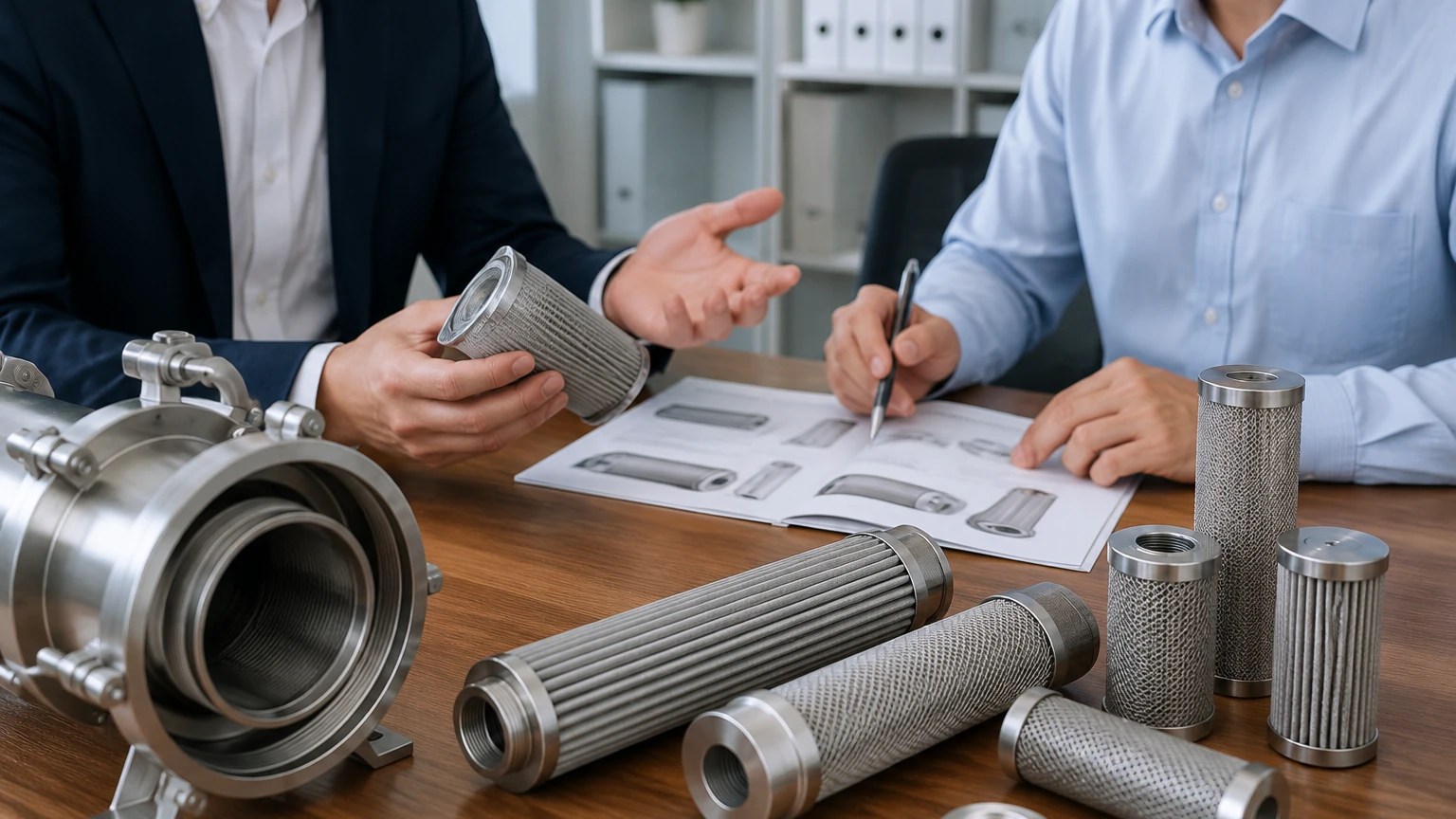
While the filter press is the workhorse of the separation process, its success is often dependent on the smaller, precision-engineered components that reside within the system. From the wire mesh that serves as the primary barrier to the internal support structures that prevent media collapse under pressure, every element must be designed for reliability.
Manufacturers like Kaifil specialize in these high-performance components, providing the stainless steel cartridges and custom wire mesh filters that allow industrial systems to operate at peak efficiency. By focusing on material quality and engineering precision, these components help overcome the common challenges of blinding, corrosion, and mechanical failure.
In conclusion, choosing a filter press supplier requires a balanced evaluation of mechanical design, material expertise, and customization capability. By focusing on technical specifications and long-term performance metrics, engineers can select a filtration solution that not only meets their current needs but also provides a durable and cost-effective foundation for their industrial processes. For those seeking to optimize their filtration systems with high-quality metal components, exploring the technical resources available on the Main Page of a specialized manufacturer is a recommended next step in the procurement journey.
