


Temporary Inline Stainless Steel Strainer
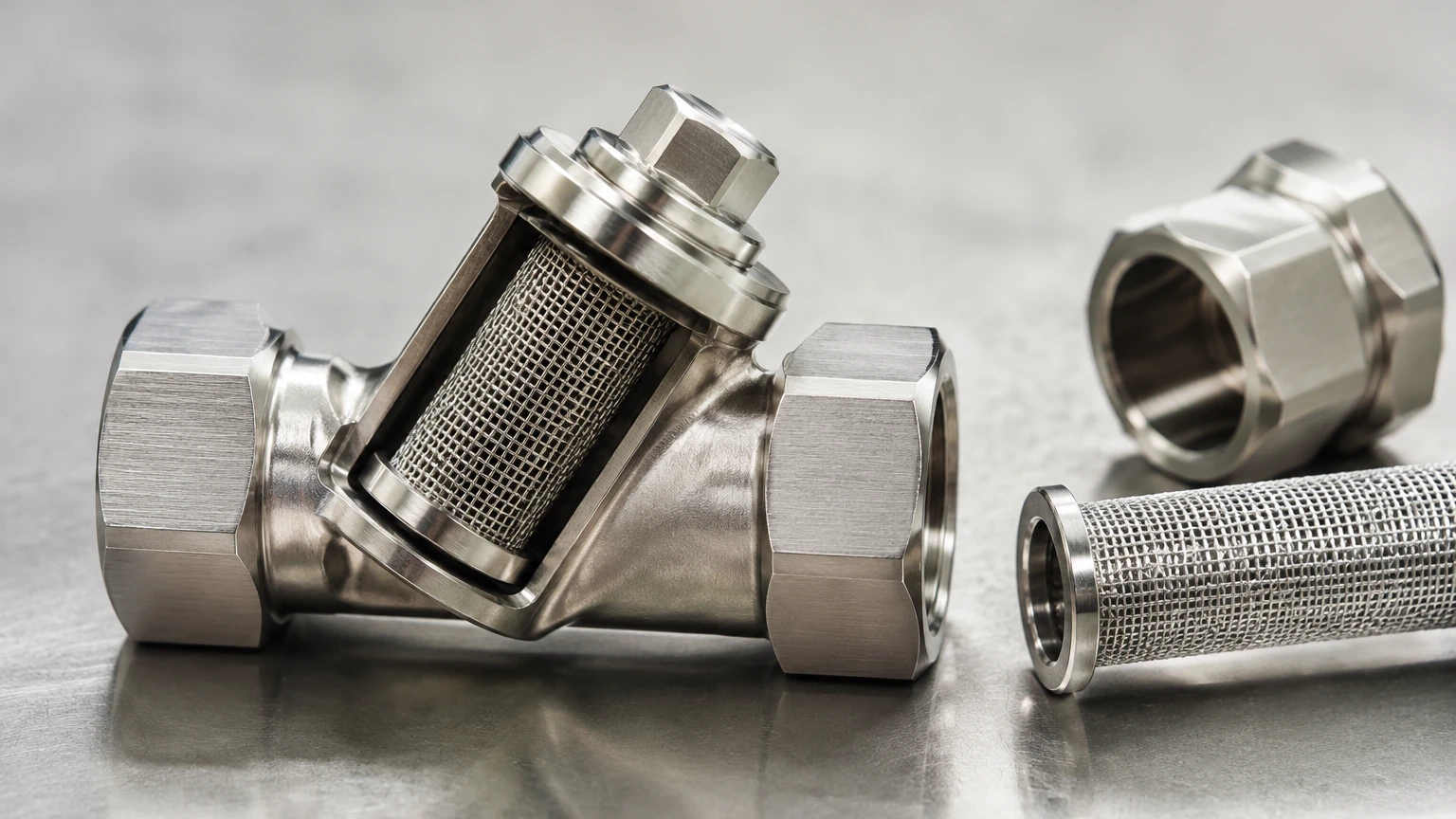
In the commissioning and startup phases of industrial piping systems, the presence of construction debris—such as welding slag, scale, and tools—poses a significant risk to downstream equipment. A temporary inline stainless steel strainer serves as a critical, short-term filtration solution designed to capture these contaminants before they can damage sensitive components like pumps, valves, meters, and heat exchangers. While often viewed as a simple sacrificial component, the engineering behind these strainers determines the safety and efficiency of the entire system startup.
Industrial facilities in chemical processing, oil and gas, and water treatment rely on these components to ensure that the initial flow of media does not lead to catastrophic mechanical failure. Selecting the correct temporary inline stainless steel strainer requires an understanding of fluid dynamics, material compatibility, and the specific mechanical stresses present during the early stages of plant operation.
The Role of Temporary Inline Filtration in System Commissioning
The primary function of a temporary inline stainless steel strainer is protection during the "run-in" period. During construction, piping internals are inevitably exposed to the environment and mechanical processes. Even with rigorous cleaning protocols, residual solids often remain.
When the system is first pressurized and flow begins, these solids become projectiles. A high-quality strainer acts as a mechanical barrier. Unlike permanent filtration systems, which are designed for continuous operation and ease of cleaning, temporary strainers are typically installed between flanges for a specific duration. Once the system is deemed clean—usually indicated by a stable differential pressure over a set period—the strainer is removed, and a spacer ring or a permanent filtration housing is installed.
Material Selection: The Advantages of Stainless Steel
Material integrity is paramount when selecting a temporary inline stainless steel strainer. Because these components are often subjected to high-velocity flows and unpredictable debris loads, the material must offer both high tensile strength and corrosion resistance.
1. Grade 304 Stainless Steel: This is the standard choice for most general industrial applications. It provides excellent resistance to atmospheric corrosion and is suitable for most water and non-acidic chemical services. It offers a cost-effective balance between durability and performance.
2. Grade 316 Stainless Steel: For environments involving chlorides, high temperatures, or corrosive process fluids (such as those found in pharmaceutical or chemical plants), SS316 is preferred. The addition of molybdenum enhances its resistance to pitting and crevice corrosion, ensuring the strainer does not degrade and introduce new contaminants into the system.
Using stainless steel over carbon steel or plastic alternatives ensures that the strainer can withstand the physical impact of heavy debris without fracturing, which could lead to the strainer itself becoming a source of downstream damage.
Geometric Designs: Conical, Basket, and Plate Strainers
The physical shape of a temporary inline stainless steel strainer is chosen based on the available space within the piping run and the required filtration surface area. There are three primary configurations used in industrial settings:
Conical (Witch’s Hat) Strainers
Conical strainers are the most common design. Their tapered shape allows for a significant amount of surface area relative to the pipe diameter. They are typically installed with the point of the cone facing upstream to allow debris to settle at the outer edges of the pipe, or downstream to concentrate debris at the tip. The choice depends on the specific flow characteristics and the ease of debris removal desired.
Basket (Top Hat) Strainers
Basket strainers feature a flat bottom and cylindrical sides. These are often used when the piping layout does not provide enough linear space for a long conical strainer. While they may have slightly less surface area than a cone of the same length, they are highly effective at capturing larger volumes of debris in a compact footprint.
Plate (Bathtub) Strainers
Plate or bathtub strainers are used in specialized applications where very low profile filtration is required. These are essentially perforated plates shaped to fit within a specific flange gap. They offer the least amount of surface area and are generally reserved for systems where only minimal debris is expected.
Engineering Specifications and Performance Metrics
When specifying a temporary inline stainless steel strainer, engineers must look beyond the basic dimensions. Several technical factors dictate whether a strainer will succeed or fail under operational loads.
Filtration Accuracy and Mesh Selection
Filtration accuracy is defined by the size of the openings in the strainer media. This can range from large perforations (e.g., 1/8 inch) for coarse debris to fine wire mesh (e.g., 100 mesh or 150 microns) for smaller particulates. It is common to use a "double-layered" approach, where a fine wire mesh is supported by a heavier perforated metal plate. This provides the necessary filtration fineness without sacrificing the structural strength needed to resist the force of the flow.
Open Area Ratio (OAR)
One of the most critical engineering metrics is the Open Area Ratio. This is the ratio of the total area of the holes in the strainer to the cross-sectional area of the inlet pipe.
* 100% OAR: The open area equals the pipe area. This is rarely sufficient as it leads to high pressure drops as soon as any debris is captured.
* 150% to 200% OAR: This is the industry standard for temporary strainers. It provides a safety margin, ensuring that the system can maintain flow even when the strainer is partially clogged.
* 300% OAR: Used in high-velocity systems or where high levels of contamination are expected.
Pressure Drop (Delta P)
A temporary inline stainless steel strainer inevitably introduces a pressure drop into the system. Engineers must calculate the clean pressure drop to ensure it does not exceed the pump's capabilities or interfere with the operation of downstream instruments. As debris accumulates, the pressure drop increases. If the Delta P becomes too high, the strainer may collapse or "blow through," sending the captured debris and fragments of the strainer into the system.
Installation and Maintenance Best Practices
Proper installation is as important as the design of the strainer itself. Because a temporary inline stainless steel strainer is held in place by the compression of pipe flanges, the following steps are essential:
* Gasket Compatibility: Ensure that the gaskets used on either side of the strainer flange are compatible with the process fluid and the pressure rating of the system. The thickness of the strainer flange must be accounted for in the overall piping dimensions.
* Flow Direction: Most strainers are designed for a specific flow direction. Installing a conical strainer backwards can lead to premature clogging or structural failure if the mesh is not supported for reverse flow.
* Differential Pressure Monitoring: It is highly recommended to install pressure gauges upstream and downstream of the strainer. A sudden increase in differential pressure is the primary indicator that the strainer needs to be removed and cleaned.
For more information on selecting the right components for your specific industrial application, you can visit the Main Page to review technical specifications and custom manufacturing capabilities.
Customization and OEM Capabilities
Off-the-shelf strainers often fail to meet the rigorous demands of specialized chemical or hydraulic systems. Customization is frequently required to match specific flange ratings (such as ANSI Class 150, 300, or 600) or to fit non-standard pipe diameters.
Manufacturers like Kaifil specialize in custom stainless steel filtration solutions, providing the ability to tailor the mesh size, reinforcement structure, and overall length of the strainer to meet the exact needs of a project. This ensures that the temporary inline stainless steel strainer provides maximum protection with minimal impact on system hydraulics. Custom designs can also include specialized handles or "tags" that protrude from the flanges, serving as a visual reminder to operators that a temporary strainer is still in the line and must be removed before full-scale production begins.
Evaluating Total Cost and Long-Term Reliability
While the initial cost of a temporary inline stainless steel strainer is a factor, the total cost of ownership is defined by the protection it provides. The failure of a low-quality strainer can result in:
* Equipment Damage: Repairing a high-pressure pump or replacing a damaged control valve can cost tens of thousands of dollars.
* Project Delays: If a strainer collapses, the entire system must be shut down, cleaned, and re-commissioned, leading to expensive downtime.
* Safety Risks: Structural failure of a strainer in a high-pressure line can create hazardous conditions for personnel.
Investing in a precision-engineered stainless steel strainer ensures that the startup phase remains on schedule and that the permanent equipment is protected from the inherent risks of new system operation. By focusing on material quality, structural integrity, and accurate filtration ratings, purchasing teams can mitigate the risks associated with industrial commissioning.
Conclusion
The temporary inline stainless steel strainer is an indispensable tool for industrial engineering. By providing a robust, reliable barrier against construction debris, it safeguards the longevity and performance of expensive process equipment. Whether utilizing a standard conical design or a custom-engineered basket configuration, understanding the technical requirements of mesh size, open area ratio, and material grade is essential for a successful system startup. Working with an experienced manufacturer allows for the development of filtration components that meet the specific demands of any industrial environment, ensuring safety and efficiency from the first day of operation.
