


Filter Foam
In industrial filtration, the selection of a filter medium is dictated by the specific physical and chemical demands of the application. While wire mesh and sintered metal fibers are standard for many high-pressure systems, filter foam—specifically reticulated foam—offers a unique three-dimensional structure that provides distinct advantages in depth filtration, gas-liquid separation, and flow equalization. For engineers and procurement specialists, understanding the technical nuances of filter foam is essential for optimizing system performance and extending the service life of downstream components.
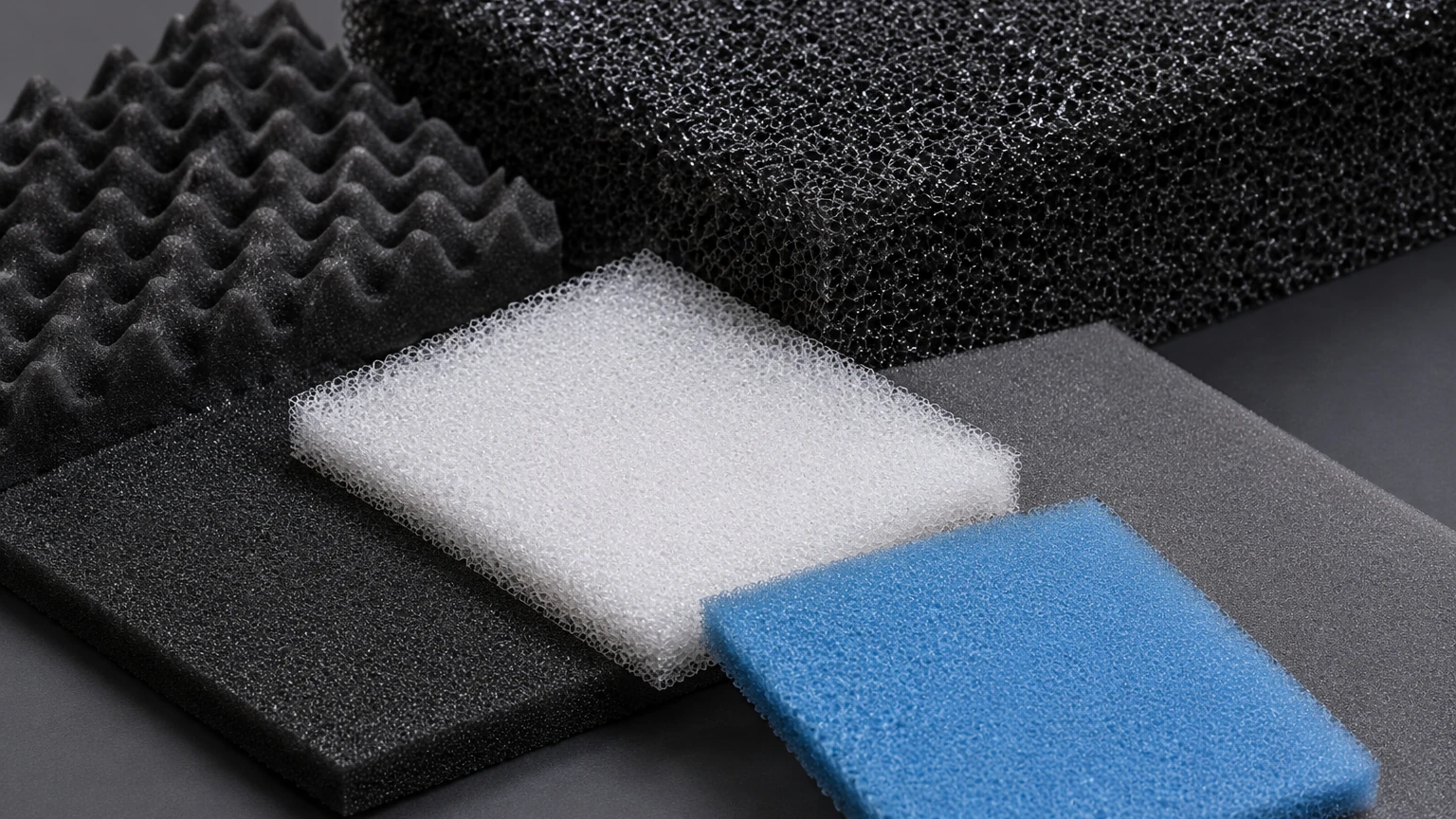
Filter foam is characterized by its open-cell, reticulated structure. Unlike standard sponge materials, which may have closed or semi-closed cells, reticulated foam undergoes a manufacturing process that removes the cell membranes, leaving only a skeletal dodecahedral framework. This results in a material that is highly porous (often up to 95-98% void volume), allowing for high flow rates with minimal initial pressure drop.
Understanding Reticulated Structures in Industrial Filtration
The fundamental value of filter foam lies in its "tortuous path." As a fluid or gas passes through the foam, the interconnected strands of the material force the medium to change direction repeatedly. This mechanism increases the probability that particles will come into contact with and adhere to the filter surface.
In industrial environments, filter foam serves several primary functions:
1. Depth Filtration: Capturing particles throughout the entire thickness of the medium rather than just on the surface.
2. Coalescing: Encouraging small droplets in a gas stream to merge into larger droplets that can be easily drained.
3. Flow Stratification: Breaking up turbulent flow and creating a more uniform velocity profile across a conduit.
4. Acoustic Damping: Reducing noise in pneumatic exhausts and high-velocity gas lines.
Key Technical Parameters: PPI and Porosity
When specifying filter foam, engineers primarily look at two metrics: Pores Per Inch (PPI) and porosity. These metrics determine the filtration efficiency and the resistance to flow.
Pores Per Inch (PPI)
PPI is the standard measurement for the coarseness or fineness of the foam.
* 10–30 PPI (Coarse): Used for large particle pre-filtration, air intake systems, and as a support structure for finer media. These foams offer the lowest pressure drop and are easily cleaned.
* 45–70 PPI (Medium): Common in general industrial machinery, hydraulic breathers, and oil mist elimination.
* 80–100+ PPI (Fine): Utilized for high-efficiency gas filtration and applications requiring a high surface-to-volume ratio, such as catalyst supports.
Porosity and Void Volume
Porosity refers to the percentage of open space within the foam structure. High porosity is critical for minimizing the energy required to move fluids through the system. Industrial filter foams typically maintain a porosity between 90% and 97%. This high void volume also provides a significant "dirt-holding capacity," meaning the filter can accumulate a large volume of contaminants before reaching its terminal pressure drop, thereby extending replacement cycles.
Material Selection: From Polymers to Metal Foams
The material composition of the filter foam must be compatible with the operating temperature and the chemical nature of the fluid being processed.
Polyurethane (PU) Foam
Polyurethane is the most common material for low-to-medium temperature applications (typically under 100°C). It is available in two main types: polyester-based and polyether-based.
* Polyester PU: Offers better resistance to oils and hydrocarbons but is susceptible to hydrolytic degradation (breakdown in the presence of moisture and heat).
* Polyether PU: Highly resistant to water and humidity, making it ideal for outdoor air intakes or water treatment pre-filtration, though it has lower resistance to certain petroleum products.
Metal Filter Foam
For demanding industrial applications involving high temperatures, aggressive chemicals, or high pressures, polymer foams are insufficient. This is where metal filter foam, often manufactured from stainless steel (316L), nickel, or copper, becomes necessary. Metal foams are produced by coating a polymer foam precursor with metal and then thermally removing the polymer, leaving a metallic skeleton.
Metal foams provide:
* Thermal Stability: Capable of operating at temperatures exceeding 500°C.
* Chemical Inertia: Stainless steel 316L foams resist corrosion in acidic or saline environments.
* Structural Integrity: Unlike polymer foams, metal foams can be brazed or welded into housings, providing a robust, leak-proof seal.
Engineering Advantages of Metal Filter Foam
In sectors like chemical processing and aerospace, metal filter foam is often preferred over traditional mesh for specific use cases. One of the primary advantages is the surface-to-volume ratio. A 100 PPI metal foam provides an immense surface area for chemical reactions or heat exchange within a very compact footprint.
Furthermore, the 3D structure of the foam is isotropic, meaning it performs consistently regardless of the flow direction. This is a significant advantage over woven wire mesh, which has distinct directional properties. In high-vibration environments, the rigid structure of a sintered metal foam prevents media migration—the shedding of filter fibers into the downstream flow—which is a critical failure mode in pharmaceutical and food processing applications.
Performance Evaluation and Pressure Drop
For any engineer, the most critical calculation is the pressure drop ($ΔP$) across the filter foam. This is influenced by the fluid velocity, viscosity, and the foam's permeability. Because filter foam has such a high void volume, the initial pressure drop is significantly lower than that of a sintered metal felt or a multi-layered wire mesh of equivalent micron rating.
However, as the foam captures particles, the effective pore size decreases, and the $ΔP$ begins to rise. In B2B procurement, it is vital to request the "clean pressure drop" curves from the manufacturer to ensure the system's pump or fan can handle the resistance throughout the filter's service life. To explore specific performance data and customization options for industrial-grade components, engineers can refer to the Main Page of Kaifil for detailed technical specifications.
Industrial Applications and Integration
Filter foam is rarely a standalone solution; it is typically integrated into a larger filtration strategy.
1. Air and Gas Processing
In compressors and blowers, coarse filter foam acts as a primary barrier against large atmospheric debris. In exhaust systems, it serves as a flame arrestor. The tortuous path of the foam cools the flame front and dissipates energy, preventing ignition in hazardous environments.
2. Hydraulic and Lubrication Systems
Foam is frequently used in hydraulic reservoir breathers. As the fluid level in a tank fluctuates, air is drawn in and out. A foam filter prevents moisture and dust from entering the reservoir, protecting the sensitive hydraulic pumps and valves downstream.
3. Food and Beverage
In these sectors, stainless steel filter foam is used for steam filtration and gas sparging. The ability to withstand Clean-in-Place (CIP) procedures—involving high-temperature caustic washes—makes metal foam a cost-effective long-term investment compared to disposable polymer filters.
Maintenance, Cleaning, and Lifecycle Costs
A common question for purchasing teams is whether filter foam should be cleaned or replaced.
* Polymer Foams: Generally considered semi-disposable. While they can be washed with mild detergents or compressed air, the cellular structure eventually loses its elasticity and filtering efficiency. In critical industrial applications, replacement is usually the safer and more cost-effective option to prevent bypass.
* Metal Foams: These are designed for longevity. They can be cleaned using ultrasonic baths, back-pulsing with high-pressure gas, or chemical solvent cleaning. Although the initial capital expenditure (CAPEX) for a stainless steel foam filter is higher than for a polymer version, the total cost of ownership (TCO) is often lower due to the reduced frequency of replacement and the elimination of waste disposal costs.
Selection Criteria for Engineers
Before finalizing a purchase order for filter foam, technical teams should confirm the following parameters with their supplier:
1. Micron Rating vs. PPI: Ensure the PPI rating correlates with the required particle retention size for your specific fluid.
2. Operating Environment: Define the maximum operating temperature and the full chemical composition of the process fluid.
3. Mechanical Constraints: Determine if the foam needs to be compressed into a housing (which increases its density and changes its filtration properties) or if it will be used in a free-standing state.
4. Customization Requirements: Many industrial applications require specific shapes, such as discs, cylinders, or complex geometries. Manufacturers like Kaifil specialize in providing custom-cut and framed filtration components that meet these exact spatial requirements.
Conclusion
Filter foam remains a versatile and essential component in the industrial filtration landscape. Whether used as a simple pre-filter in a HVAC system or a high-performance stainless steel coalescer in a chemical plant, its ability to balance high porosity with effective particle capture is unmatched by most 2D media. By focusing on the material properties, PPI ratings, and cleaning requirements, engineers can select a filtration solution that maximizes uptime and protects expensive industrial machinery. For those seeking reliable, high-precision metal filtration components, reviewing product options and application support on the Main Page is a recommended next step in the procurement process.
