


Waste Water Screening
In the context of industrial and municipal water treatment, waste water screening serves as the critical first line of defense. This mechanical process is designed to remove large solids, debris, and inorganic matter from the influent stream before it reaches downstream treatment processes. By effectively capturing these materials, screening protects sensitive equipment—such as pumps, aerators, and membranes—from damage, clogging, and excessive wear. For engineers and facility managers, selecting the appropriate screening technology is not merely a matter of filtration; it is an engineering decision that impacts the entire plant's operational efficiency and maintenance lifecycle.
Industrial waste water screening requires a sophisticated understanding of fluid dynamics, material science, and mechanical design. Unlike simple domestic filtration, industrial applications often involve aggressive chemical environments, high flow rates, and varying solid loads. As a professional manufacturer, Kaifil specializes in providing the stainless steel components necessary to meet these demanding requirements, ensuring that the screening media can withstand the rigors of continuous industrial operation.
The Role of Screening in the Treatment Process
Waste water screening is typically categorized into two primary stages: coarse screening and fine screening. Each stage serves a distinct purpose and utilizes different types of filtration media to achieve specific performance goals.
Coarse Screening
Coarse screens are generally the first point of contact for raw influent. These screens typically feature openings larger than 6mm (0.25 inches). Their primary function is to remove large objects such as rags, plastics, wood, and stones. In industrial settings, such as food processing or chemical manufacturing, coarse screens prevent large bypass materials from entering the primary treatment tanks. The structural integrity of the screening media is paramount here, as it must resist the physical impact of heavy debris without deforming.
Fine Screening
Fine screening follows the coarse stage and utilizes media with openings ranging from 0.5mm to 6mm. This stage is designed to capture smaller solids that could interfere with biological treatment processes or damage high-precision equipment like centrifugal pumps. Fine screens often employ stainless steel wire mesh or perforated plates to achieve a high degree of filtration accuracy while maintaining a high open-area ratio to facilitate flow. For those looking for specific component specifications, visiting the Main Page provides a detailed look at the various wire mesh and cartridge options available for these applications.
Engineering Considerations for Screening Media Selection
When specifying components for waste water screening, engineers must evaluate several technical factors to ensure the longevity and efficiency of the system. The choice of material and the geometry of the filtration media are the most significant variables.
Material Selection: The Case for Stainless Steel
In waste water environments, corrosion is a constant threat. The presence of hydrogen sulfide (H2S), chlorides, and various industrial chemicals can rapidly degrade inferior metals or polymers. Stainless steel, particularly grades 304 and 316L, is the industry standard for high-performance screening.
* Grade 304: Suitable for general waste water applications with low chloride levels.
* Grade 316L: Preferred for more aggressive environments, such as chemical processing or coastal treatment plants, due to its superior resistance to pitting and crevice corrosion.
Stainless steel offers the mechanical strength required to handle high differential pressures and the thermal stability to withstand high-temperature industrial effluents.
Filtration Accuracy and Open Area
The effectiveness of waste water screening is determined by the balance between filtration accuracy (the size of the smallest particle retained) and the open area (the percentage of the screen that allows fluid to pass). A higher open area reduces head loss and prevents the "blinding" of the screen, where solids accumulate so rapidly that flow is significantly restricted. Precision-engineered wire mesh allows for a high open-area ratio while maintaining strict tolerances on aperture size.
Types of Screening Media and Their Applications
Different industrial applications require different screen geometries. The three most common types of media used in waste water screening are wire mesh, perforated metal, and wedge wire.
Stainless Steel Wire Mesh
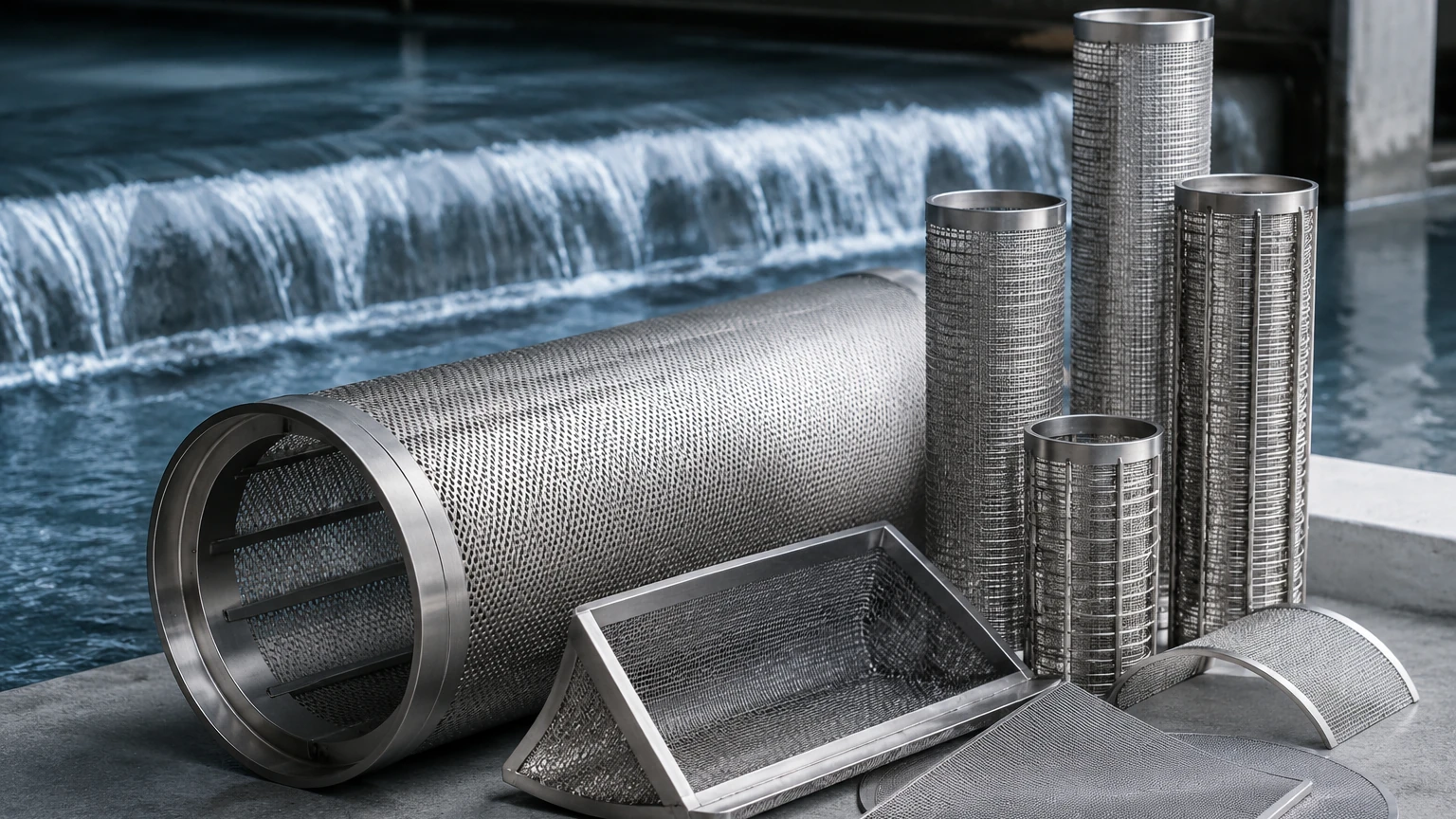
Wire mesh is highly versatile and can be manufactured to extremely fine specifications. It is often used in fine screening and micro-screening applications. The weave type—such as plain weave or twilled weave—affects the screen's strength and flow characteristics. In industrial filtration, multi-layer sintered wire mesh is often employed to combine fine filtration with high structural rigidity.
Perforated Metal Screens
Perforated plates are known for their durability and ease of cleaning. They are commonly used in coarse and medium screening. The hole pattern (staggered vs. straight) and the hole shape (round, square, or slotted) are engineered based on the specific type of solids present in the waste water. Perforated screens are particularly effective at removing flat or fibrous materials that might otherwise bypass a bar screen.
Wedge Wire (Profile Wire)
Wedge wire is characterized by its V-shaped profile, which creates a slot that widens inwardly. This design is inherently non-clogging, as particles that pass through the initial opening are unlikely to become stuck in the widening gap. Wedge wire is ideal for high-load waste water screening and is frequently used in drum screens and static screens.
Managing Operational Challenges: Blinding and Abrasion
Two of the most significant challenges in waste water screening are blinding and abrasion. Blinding occurs when fats, oils, and greases (FOG) or fibrous materials coat the screen, preventing water from passing through. To combat this, screening systems must incorporate effective cleaning mechanisms, such as high-pressure spray bars or mechanical brushes.
Abrasion is caused by the presence of grit, sand, and other hard particles in the influent. Over time, these particles can erode the screening media, increasing the aperture size and reducing filtration efficiency. Using high-quality stainless steel with appropriate hardness levels is essential for extending the replacement cycle of these components. Engineers should evaluate the total cost of ownership, including the frequency of replacement and the labor required for maintenance, when selecting screening media.
Customization and OEM Solutions in Waste Water Treatment
No two industrial waste water streams are identical. A chemical plant’s effluent differs significantly from that of a food processing facility or a pharmaceutical laboratory. Consequently, off-the-shelf filtration products often fail to provide the optimized performance required for specific site conditions.
Customization is a core aspect of modern waste water screening. This includes tailoring the dimensions of filter cartridges, adjusting the micron ratings of wire mesh, and designing reinforced structures for high-pressure applications. Kaifil’s expertise in OEM manufacturing allows for the development of bespoke filtration components that integrate seamlessly into existing infrastructure. By collaborating closely with engineering teams, manufacturers can ensure that the filtration media is optimized for the specific flow rates, solid concentrations, and chemical profiles of the application.
Maintenance and Replacement Cycles
Proactive maintenance is vital for the continued performance of waste water screening systems. While stainless steel components are highly durable, they are not indestructible. Regular inspection schedules should be established to check for:
1. Mechanical Wear: Checking for thinning of the wire or enlargement of perforated holes.
2. Structural Integrity: Inspecting welds and support frames for signs of stress or fatigue.
3. Cleaning Efficiency: Ensuring that backwash systems or mechanical scrapers are effectively removing the screened solids.
Replacement cycles vary depending on the grit load and the aggressiveness of the waste water. However, by utilizing high-quality stainless steel filters, facilities can significantly extend the time between replacements compared to synthetic or lower-grade metal alternatives. This durability directly translates to lower operational costs and reduced downtime.
Conclusion: Selecting the Right Partner for Filtration Excellence
Effective waste water screening is a prerequisite for any successful water treatment strategy. It requires a balance of material science, precision manufacturing, and application-specific engineering. For technical professionals and purchasing teams, the goal is to find a solution that provides reliable performance, minimizes maintenance requirements, and offers a favorable total cost of ownership.
By focusing on high-quality stainless steel filtration solutions, industries can ensure their waste water processes remain compliant with environmental regulations while protecting their capital-intensive downstream equipment. Whether the requirement is for standard wire mesh filters or complex, custom-engineered cartridges, the selection of the right screening media is a fundamental step toward operational excellence. For more information on technical specifications and customized filtration solutions, engineers are encouraged to review the product options and application support available on the Main Page.
