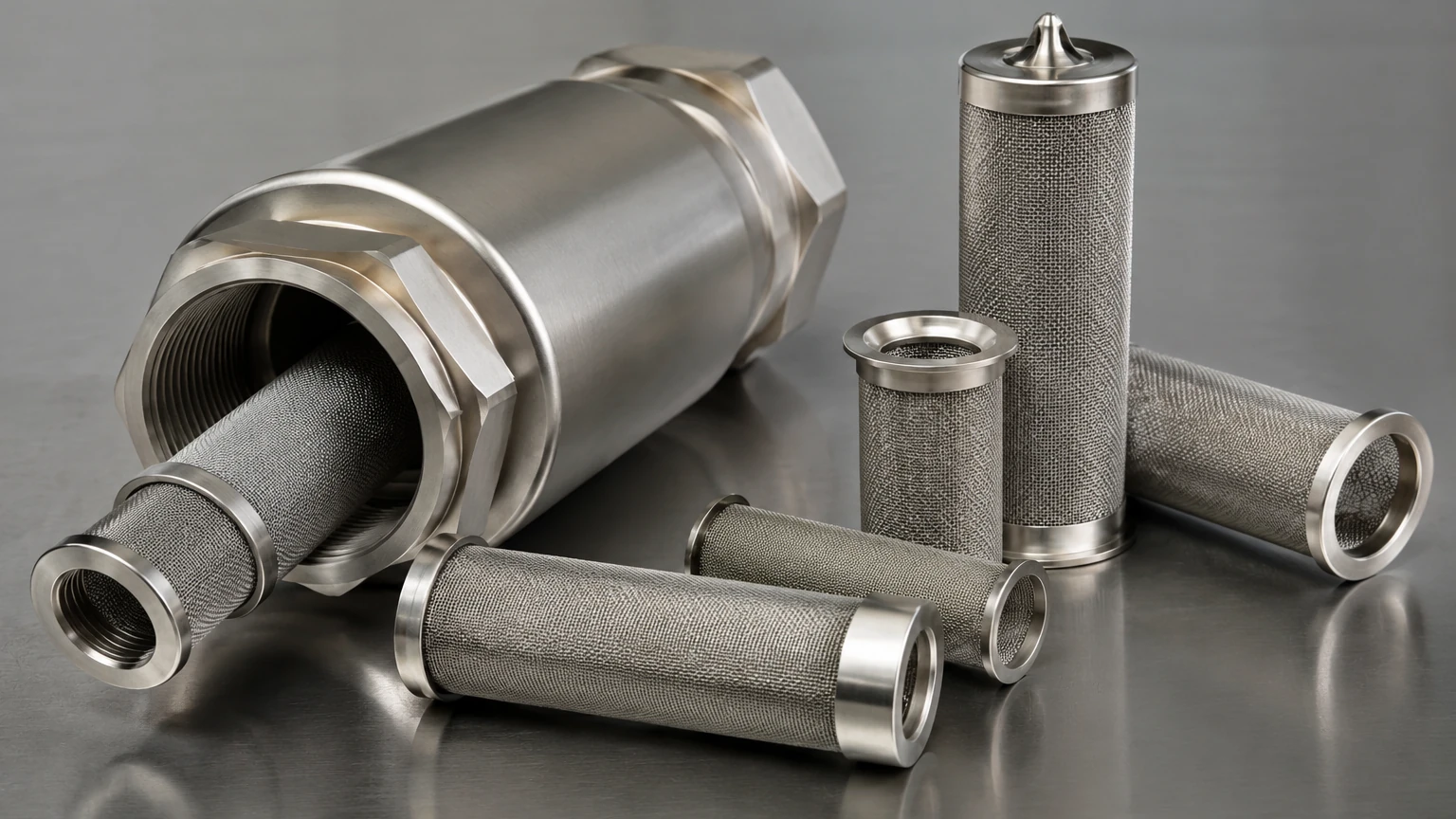
Fuel Gas Filter
In industrial power generation, chemical processing, and large-scale manufacturing, the integrity of a fuel gas system is paramount to operational safety and equipment longevity. A fuel gas filter serves as the primary line of defense, removing solid particulates, pipe scale, and occasionally liquid aerosols from gas streams before they reach sensitive downstream components such as turbines, compressors, and burner nozzles. For engineers and procurement teams, selecting the appropriate filtration solution requires a deep understanding of fluid dynamics, material compatibility, and the specific contaminants present in the fuel source.
The Role of Filtration in Fuel Gas Systems
Fuel gas, whether natural gas, syngas, or refinery off-gas, is rarely pure. During transport through pipelines, it often picks up rust, sand, and welding slag. Furthermore, compressor oils and moisture can condense into droplets, forming a multi-phase flow that is highly abrasive at high velocities.
Without an effective fuel gas filter, these contaminants lead to several failure modes:
1. Erosion of Turbine Blades: High-velocity particulates act as abrasive media, eroding the leading edges of turbine blades and reducing aerodynamic efficiency.
2. Nozzle Clogging: In burner systems, fine particulates can bridge the small orifices of fuel injectors, leading to uneven heat distribution and flame instability.
3. Valve Sticking: Fine dust can settle in the tight tolerances of control valves and regulators, causing mechanical binding and preventing precise pressure regulation.
4. Compressor Damage: Solid particles can cause scoring on cylinder walls or damage the impellers of centrifugal compressors.
Engineering Considerations: Materials and Construction
When designing or specifying a fuel gas filter, material selection is the most critical factor in ensuring long-term reliability. Industrial environments often involve corrosive gases or high-pressure conditions that exceed the capabilities of standard polymer-based filters.
Stainless Steel Media
Stainless steel (typically Grade 304 or 316L) is the industry standard for high-performance fuel gas filtration. Unlike disposable cellulose or fiberglass elements, stainless steel wire mesh and sintered metal components offer high mechanical strength and resistance to thermal shock. 316L stainless steel, in particular, is preferred for applications involving "sour gas" (gas containing hydrogen sulfide, $H_2S$), as it provides superior resistance to sulfide stress cracking and pitting corrosion.
Pleated vs. Cylindrical Designs
To handle high flow rates with minimal pressure drop, many industrial fuel gas filters utilize a pleated design. Pleating the stainless steel mesh significantly increases the effective filtration area within the same housing envelope. This results in a lower flux (velocity through the media), which enhances particulate capture efficiency and extends the interval between cleaning or replacement cycles. For low-flow or high-pressure applications where structural rigidity is the primary concern, cylindrical sintered metal elements may be used to withstand high differential pressures without collapsing.
Technical Specifications and Performance Metrics
To evaluate a fuel gas filter, engineers must look beyond simple micron ratings. Performance is defined by the intersection of efficiency, capacity, and flow resistance.
Micron Ratings and Capture Efficiency
Filtration accuracy is typically measured in microns (µm). It is essential to distinguish between nominal and absolute ratings. A nominal rating indicates the filter's ability to trap a percentage of particles of a given size, whereas an absolute rating (often determined via the Beta Ratio test) indicates the size of the largest particle that can pass through the media. For gas turbines, filters are often required to achieve 99.9% efficiency at 1–5 microns to protect the high-precision internal components.
Differential Pressure ($ΔP$)
Every filter introduces a restriction to the flow. The initial "clean" pressure drop must be calculated to ensure that downstream pressure requirements are met. As the filter accumulates contaminants, the $ΔP$ increases. Industrial systems are typically equipped with differential pressure gauges or transmitters to alert operators when the filter reaches its terminal $ΔP$, signaling the need for maintenance. Excessive pressure drop can lead to "breakthrough," where the pressure forces contaminants through the media or causes structural failure of the element.
Customization for Specific Industrial Applications
Standard off-the-shelf filters rarely meet the complex requirements of specialized industrial plants. Customization is often necessary to account for unique flow profiles, space constraints, and connection types. For detailed technical specifications on customized filtration components, you can review the product options and engineering support available on our Main Page.
Chemical and Petrochemical Processing
In these environments, fuel gas filters must often handle aggressive chemical vapors. Custom seals (such as Viton, Kalrez, or PTFE) and specialized alloy housings (like Monel or Hastelloy) may be required to prevent chemical degradation of the filter assembly.
Power Generation
Gas-fired power plants require high-volume filtration. Large-scale filter housings often incorporate multiple cartridges in parallel to manage the massive flow rates required by utility-scale turbines. These systems may also include a pre-filter stage to remove bulk solids followed by a high-efficiency polishing stage.
Hydraulic and Lubrication Systems
While the primary focus is on fuel gas, similar filtration principles apply to the gas blankets used in hydraulic reservoirs or the seal gas systems in centrifugal compressors. These applications require precision-engineered metal mesh to ensure that no particulate matter enters the lubrication or hydraulic circuits.
Maintenance and Total Cost of Ownership (TCO)
One of the primary advantages of utilizing stainless steel fuel gas filters is their cleanability. While the initial capital expenditure (CAPEX) for a stainless steel element is higher than that of a disposable filter, the total cost of ownership is often significantly lower over the life of the plant.
Cleaning Methods
Stainless steel mesh filters can be cleaned using several methods:
* Backwashing: Reversing the flow of a clean fluid through the filter to dislodge accumulated solids.
* Ultrasonic Cleaning: Using high-frequency sound waves in a solvent bath to remove fine particulates trapped deep within the mesh layers.
* Chemical Cleaning: Using mild acids or solvents to dissolve scale or organic deposits, provided the chemicals are compatible with the filter material.
Replacement Cycles
Even with cleaning, filter elements eventually reach a point where they can no longer be restored to their original clean $ΔP$. However, a high-quality stainless steel fuel gas filter can often withstand dozens of cleaning cycles, whereas disposable elements must be replaced and discarded after every loading event. This reduces waste and eliminates the recurring cost of purchasing and stocking replacement cartridges.
Selection Checklist for Engineers
Before finalizing a fuel gas filter specification, the following technical parameters should be confirmed with the manufacturer:
1. Gas Composition: Is the gas sweet, sour, or containing heavy hydrocarbons?
2. Operating Pressure: What are the maximum and minimum operating pressures? (Ensure compliance with ASME Section VIII or relevant local pressure vessel codes).
3. Temperature Range: Will the filter be subjected to cryogenic temperatures or high-heat environments near burners?
4. Flow Rate: What is the standard and actual cubic feet per hour (SCFH/ACFH)?
5. Contaminant Profile: Is the primary concern solid particulates, liquid slugs, or fine aerosols?
6. Connection Requirements: Are flanged (ANSI/DIN), NPT, or welded connections required for system integration?
Conclusion
A robust fuel gas filter is an essential component for the reliable operation of any industrial gas system. By prioritizing high-quality materials like stainless steel and focusing on precision engineering, facilities can protect their high-value assets from the damaging effects of contamination. Whether for a standard burner application or a complex gas turbine system, the selection of a filter should be based on rigorous technical criteria, including micron efficiency, structural integrity, and long-term maintainability. For those seeking specialized OEM solutions or custom-engineered filtration components, visiting the Main Page provides access to the technical resources and manufacturing expertise necessary to optimize industrial filtration performance.