


Casing Material
In the field of industrial filtration, the casing material serves as the primary structural boundary between the process fluid and the external environment. Whether it is a filter housing for high-pressure hydraulic systems or a protective outer sleeve for a stainless steel filter cartridge, the selection of this material is a critical engineering decision. The casing must not only withstand internal operating pressures but also resist chemical degradation, thermal stress, and mechanical wear over extended service cycles. For engineers and procurement teams, understanding the nuances of casing material selection is essential for ensuring system reliability, safety, and long-term cost-efficiency.
At Kaifil, manufacturing precision filtration components requires a deep understanding of how different alloys and polymers interact with diverse industrial media. Selecting the appropriate casing material is the first step in designing a filtration solution that meets the rigorous demands of chemical processing, pharmaceutical production, and heavy industrial applications.
The Role of Casing Material in Industrial Filtration Systems
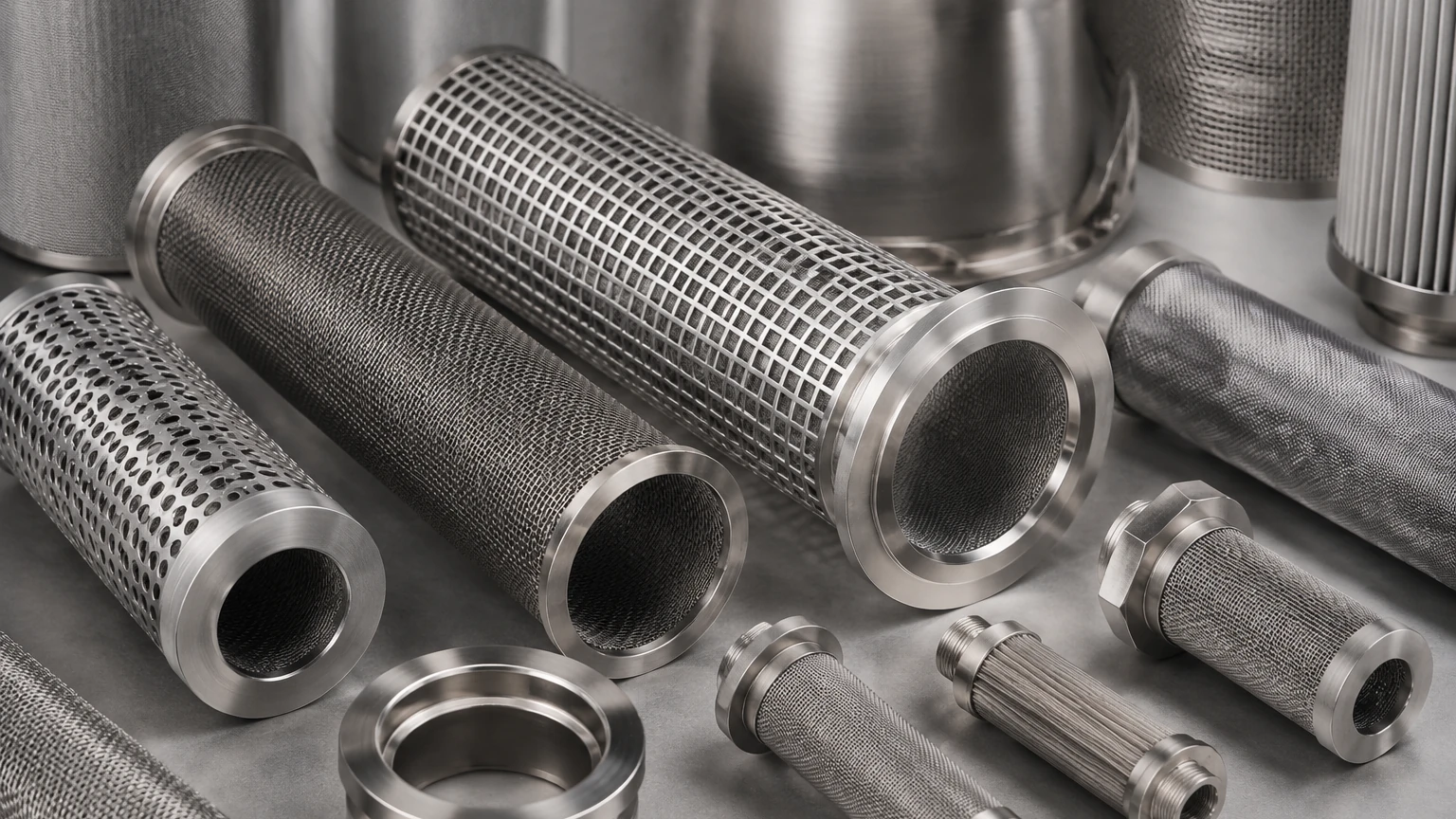
The casing material refers to the solid outer structure that encloses the filtration media. In a filter cartridge, the casing (often a perforated tube or a mesh wrap) provides the mechanical support necessary to prevent the filter media from collapsing or bursting under differential pressure. In larger filter housings, the casing acts as a pressure vessel, containing the fluid while directing it through the internal elements.
From a technical perspective, the casing material performs several vital functions:
1. Structural Integrity: It must provide sufficient yield strength to resist deformation under high-pressure conditions. This is particularly important in hydraulic and high-viscosity fluid applications where pressure spikes are common.
2. Environmental Isolation: It protects the delicate internal filter media from external mechanical damage and prevents the process fluid from leaking into the environment.
3. Chemical Compatibility: The material must be inert to the fluid being filtered. If the casing material reacts with the media, it can lead to corrosion, which compromises the structure and introduces contaminants into the filtrate.
4. Thermal Stability: Industrial processes often operate at extreme temperatures. The casing must maintain its mechanical properties and dimensional stability across the entire operating temperature range.
Comparative Analysis of Metallic Casing Materials
Stainless steel is the industry standard for industrial filtration casings due to its excellent balance of strength, corrosion resistance, and fabricability. However, the specific grade of stainless steel chosen can significantly impact the performance and lifespan of the filter.
304/304L Stainless Steel
Grade 304 is the most common stainless steel used in general industrial applications. It offers good corrosion resistance to many atmospheric environments and fresh water. In filtration, it is often used for casings in non-corrosive water treatment, food processing (where chlorides are low), and general industrial lubricants. The "L" variant (304L) has a lower carbon content, which minimizes carbide precipitation during welding, making it preferable for welded casing structures to prevent intergranular corrosion.
316/316L Stainless Steel
For more demanding environments, 316 stainless steel is the preferred choice. The addition of molybdenum (2-3%) significantly enhances its resistance to pitting and crevice corrosion in chloride-rich environments. This makes it the standard casing material for pharmaceutical, chemical processing, and marine applications. Like 304L, 316L is used when extensive welding is required to ensure the integrity of the joints in aggressive chemical environments.
Duplex and Super Duplex Stainless Steels
In applications involving high-pressure brine, seawater, or highly concentrated acids, standard austenitic stainless steels may fail due to stress corrosion cracking (SCC). Duplex stainless steels, which have a mixed microstructure of austenite and ferrite, provide nearly double the yield strength of 300-series steels and superior resistance to SCC. These are typically selected for high-performance casings in desalination plants and offshore oil and gas filtration.
Specialty Alloys (Hastelloy, Monel, Inconel)
When dealing with extreme temperatures or highly aggressive chemicals like hydrofluoric acid or hot sulfuric acid, specialty nickel-based alloys are required. While significantly more expensive, these materials provide the necessary durability to prevent catastrophic casing failure in critical chemical reactors.
Engineering Criteria for Selecting the Optimal Casing Material
Selecting a casing material is not a one-size-fits-all process. Engineers must evaluate several interdependent factors to ensure the filter performs as expected. On our Main Page, we provide resources to help technical teams navigate these selection criteria.
1. Chemical Compatibility and Corrosion Allowance
The primary cause of casing failure is corrosion. Engineers must consult chemical resistance charts to ensure the material can withstand the process fluid. Factors such as pH levels, chloride concentration, and the presence of oxidizing agents must be analyzed. In some designs, a "corrosion allowance" is added to the wall thickness of the casing to ensure it meets the required service life even if minor surface corrosion occurs.
2. Operating Pressure and Temperature
The casing thickness and material grade are dictated by the maximum allowable working pressure (MAWP). As temperature increases, the allowable stress for most metals decreases. Therefore, a casing material that is suitable at room temperature may be insufficient at 400°F. Engineers must also consider the coefficient of thermal expansion, especially in multi-material assemblies, to prevent seal failure or mechanical binding.
3. Regulatory and Industry Standards
In the food, beverage, and pharmaceutical industries, casing materials must comply with strict regulatory standards such as FDA, 3-A Sanitary Standards, or USP Class VI. These standards often dictate not only the alloy type but also the surface finish and the absence of certain additives or lubricants used during the manufacturing process.
4. Filtration Accuracy and Flow Dynamics
The design of the casing, especially if it is a perforated support core, must allow for optimal flow with minimal pressure drop. The hole pattern, percentage of open area, and the thickness of the casing material all influence the fluid dynamics within the filter housing.
Surface Treatments and Finishes for Enhanced Performance
The performance of a casing material is often enhanced through secondary surface treatments. These processes improve the material’s resistance to the environment and ensure it meets specific cleanliness requirements.
* Passivation: This chemical process removes free iron from the surface of stainless steel, enhancing the protective chromium oxide layer. It is a standard requirement for most industrial filtration casings to prevent rust and contamination.
* Electropolishing: This electrochemical process removes a microscopic layer of material from the surface, resulting in a smooth, mirror-like finish. Electropolishing is critical for pharmaceutical and food-grade casings because it reduces the surface roughness (Ra), making it harder for bacteria to adhere and easier to clean (CIP/SIP processes).
* Pickling: Used primarily after welding, pickling removes the heat-affected zone (scale) to restore the corrosion resistance of the stainless steel at the weld joints.
* Coating and Plating: In some cases, a base metal casing may be coated with PTFE or other polymers to provide chemical resistance that the metal alone cannot offer.
Common Failure Modes Related to Material Selection
Failure to properly specify the casing material can lead to several types of mechanical and chemical failures:
* Pitting Corrosion: Small, localized holes that can penetrate the casing wall. This is common when 304 stainless steel is used in high-chloride environments where 316L was required.
* Stress Corrosion Cracking (SCC): The combined effect of tensile stress and a corrosive environment (usually chlorides). This can cause sudden, brittle failure of the casing even if the material appears otherwise healthy.
* Galvanic Corrosion: Occurs when two dissimilar metals (e.g., a carbon steel housing with a stainless steel internal casing) are in contact in the presence of an electrolyte. This leads to rapid corrosion of the less noble metal.
* Erosion-Corrosion: High-velocity fluids, especially those containing abrasive particles, can physically wear away the protective oxide layer of the casing material, leading to accelerated thinning of the walls.
Customization and Manufacturing Considerations for OEM Solutions
For many equipment manufacturers (OEMs), standard off-the-shelf filter casings do not meet the specific spatial or performance requirements of their machines. Customization of the casing material and design is a core strength of Kaifil’s manufacturing process.
When developing a custom casing, we consider the manufacturing feasibility of the chosen material. For example, while certain high-strength alloys offer great performance, they may be difficult to weld or machine, which can increase production costs and lead times. Our engineering team works closely with clients to balance material performance with manufacturability.
Customization options often include:
* Variable Wall Thickness: To handle specific pressure ratings without unnecessary weight.
* Custom Perforation Patterns: To optimize flow rates for unique fluid viscosities.
* Integrated Fittings: Welding flanges, NPT threads, or tri-clamp fittings directly onto the casing for seamless integration into existing systems.
* Material Traceability: Providing MTRs (Mill Test Reports) to ensure the casing material meets the exact chemical and physical specifications required for the project.
Total Cost of Ownership (TCO) and Maintenance
While the initial cost of a high-grade casing material like 316L or Hastelloy is higher than 304 stainless steel or carbon steel, the Total Cost of Ownership is often lower. A cheaper material that requires frequent replacement due to corrosion or mechanical fatigue leads to increased downtime, labor costs, and potential product loss.
Maintenance cycles are also heavily influenced by the casing material. Durable stainless steel casings can often be cleaned and reused multiple times, whereas lower-quality materials may degrade during the cleaning process (especially if aggressive cleaning agents or high-temperature steam are used). Engineers should evaluate the expected lifespan of the filtration system and choose a casing material that aligns with the desired maintenance intervals.
Conclusion
The casing material is the foundation of a reliable industrial filtration system. By carefully considering chemical compatibility, pressure requirements, and surface finish, engineers can select a material that ensures the safety and efficiency of their operations. Whether you are dealing with standard water filtration or highly corrosive chemical processing, the choice of material will determine the ultimate success of the filtration solution.
Kaifil specializes in providing high-performance, custom stainless steel filtration components tailored to the specific needs of industrial applications worldwide. For more information on our manufacturing capabilities and to explore our full range of filtration solutions, visit our Main Page. Our team is ready to assist with material selection and engineering support to ensure your filtration systems perform at their peak.
