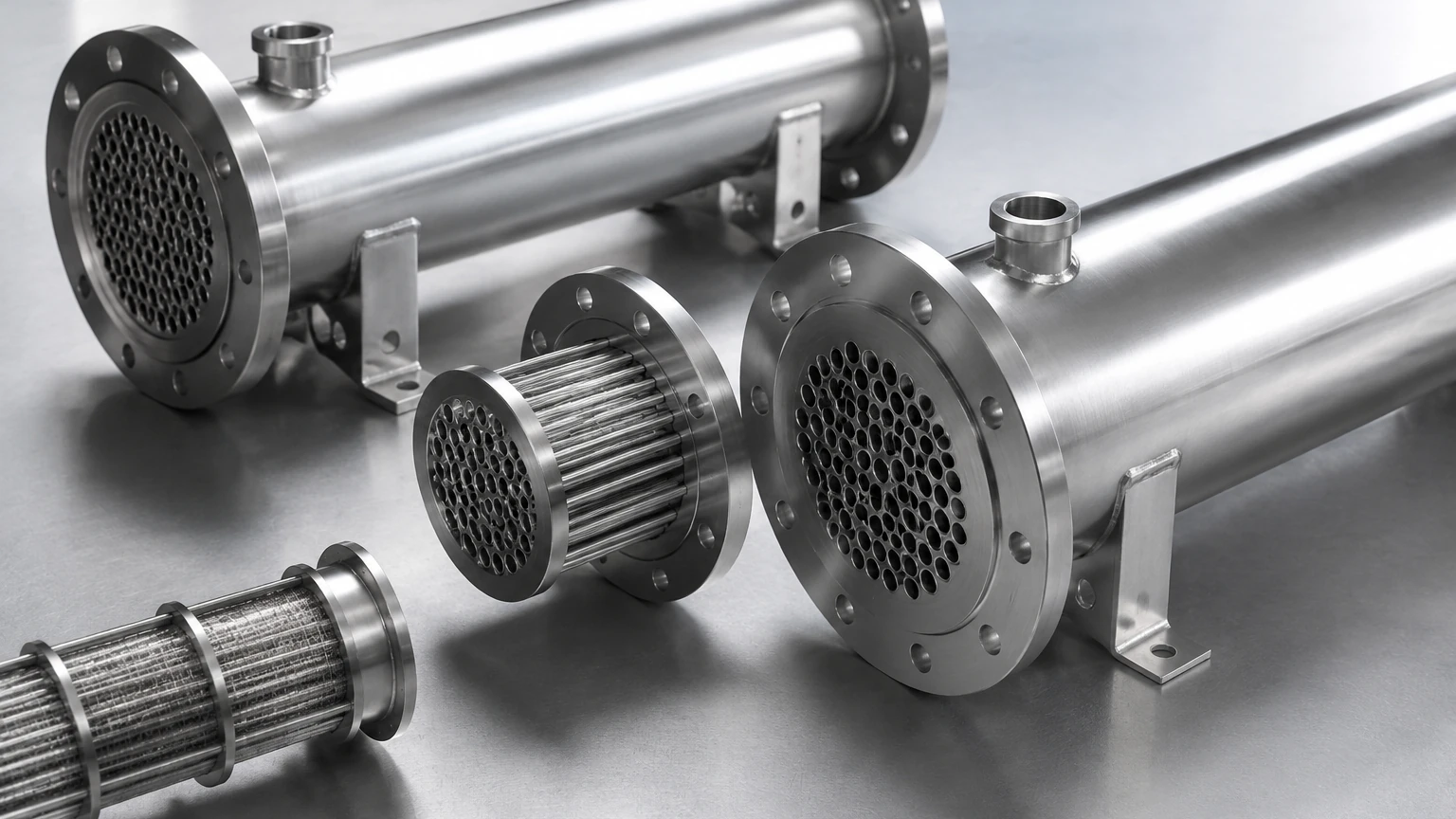
Tubular Heat Exchangers
In the landscape of industrial thermal management, tubular heat exchangers remain the most widely utilized technology for transferring heat between two fluids. Their robust design, ability to handle high pressures, and versatility across various chemical and mechanical environments make them indispensable in sectors ranging from petrochemical processing to food and beverage production. For engineers and procurement specialists, selecting the right tubular heat exchanger involves more than just calculating surface area; it requires a deep understanding of fluid dynamics, material compatibility, and the critical role of filtration in maintaining system integrity.
Understanding Tubular Heat Exchanger Design and Mechanics
The fundamental principle of a tubular heat exchanger involves one fluid flowing through a set of tubes (the tube side) while another fluid flows over those tubes within a sealed shell (the shell side). This configuration allows for efficient heat exchange without the fluids coming into direct contact.
There are several primary configurations of tubular heat exchangers used in modern industry:
1. Shell and Tube Heat Exchangers: The most common variety, consisting of a bundle of tubes housed within a large cylindrical shell. These are highly adaptable and can be designed to withstand extreme pressure differentials.
2. Double Pipe Heat Exchangers: Consisting of a tube within a tube, these are ideal for low-flow applications or where a high temperature difference is required between the two fluids.
3. U-Tube Heat Exchangers: Featuring tubes bent into a U-shape, these allow for thermal expansion of the tube bundle independently of the shell, reducing mechanical stress during high-temperature cycles.
Engineering considerations for these systems include the Reynolds number of the fluids, which determines whether the flow is laminar or turbulent. Turbulent flow is generally preferred for heat transfer as it enhances the mixing of fluid layers, though it comes at the cost of higher pressure drops. Balancing these factors is essential for optimizing the total cost of ownership and operational efficiency.
The Impact of Fluid Quality on Heat Transfer Efficiency
The efficiency of tubular heat exchangers is governed by the heat transfer coefficient ($U$). This value is significantly impacted by the presence of particulates, biological growth, or chemical precipitates in the process fluids. When contaminants accumulate on the inner or outer surfaces of the tubes, a phenomenon known as fouling occurs.
Fouling acts as an insulating layer, increasing the thermal resistance and forcing the system to consume more energy to achieve the desired temperature change. Furthermore, particulate buildup can lead to localized corrosion, specifically pitting corrosion in stainless steel alloys, which can cause premature tube failure. To mitigate these risks, integrating high-performance filtration solutions is a standard engineering practice. By ensuring that the fluids entering the heat exchanger are free from suspended solids, operators can maintain consistent thermal performance and extend the intervals between scheduled cleanings.
Material Selection: Stainless Steel and Alloy Considerations
Material selection is perhaps the most critical decision in the procurement of tubular heat exchangers. The chosen material must provide high thermal conductivity while resisting the corrosive nature of the process fluids. Stainless steel is the industry standard for many demanding applications due to its durability and resistance to oxidation.
* 304 Stainless Steel: Suitable for general industrial use where moderate corrosion resistance is required.
* 316L Stainless Steel: The preferred choice for pharmaceutical, food processing, and marine environments. The addition of molybdenum provides superior resistance to chlorides and acidic environments.
* Duplex Stainless Steel: Used in high-pressure and highly corrosive chemical processing, offering a combination of high mechanical strength and exceptional resistance to stress corrosion cracking.
When designing these systems, it is also vital to match the material of the internal filtration components with the heat exchanger tubes. Using compatible stainless steel wire mesh or sintered metal filters ensures that galvanic corrosion does not occur at the interface of different metal types.
Integrating Filtration to Prevent Fouling and Scaling
To protect the intricate internal structures of tubular heat exchangers, engineers often specify pre-filtration systems. These systems are designed to capture debris before it enters the tube bundle. At Kaifil, we specialize in providing the precision components necessary for these protective measures.
Effective filtration strategies for heat exchangers include:
* In-line Wire Mesh Strainers: These provide a robust first line of defense against large particulates that could clog tube inlets.
* Stainless Steel Filter Cartridges: For applications requiring finer filtration, such as in the pharmaceutical or food and beverage industries, pleated or cylindrical stainless steel cartridges offer high surface area and precise micron ratings.
* Backwashing Filters: In continuous process environments, automated backwashing filters allow for the removal of accumulated solids without interrupting the flow to the heat exchanger, ensuring constant thermal efficiency.
By visiting our Main Page, technical teams can explore the various custom filtration options available to support the longevity of their heat exchange equipment. Selecting a filter with the appropriate filtration accuracy is a balance between protecting the equipment and managing the allowable pressure drop within the system.
Operational Maintenance and Lifecycle Management
Even with optimal design and filtration, tubular heat exchangers require a structured maintenance program. The lifecycle of a heat exchanger is determined by how well fouling and corrosion are managed over time.
Common maintenance practices include:
1. Chemical Cleaning (CIP): Using specialized solvents to dissolve scale and organic deposits without disassembling the unit.
2. Mechanical Cleaning: Utilizing brushes or high-pressure water jets to physically remove stubborn deposits from the tube interiors. This is typically performed during scheduled shutdowns.
3. Non-Destructive Testing (NDT): Techniques such as eddy current testing or ultrasonic thickness gauging are used to monitor tube wall thinning and identify potential leaks before they cause system failure.
Replacing filtration elements is a critical part of this maintenance cycle. If a filter becomes blinded, the resulting pressure spike can bypass the filter or damage downstream components. Monitoring the differential pressure across both the filter and the heat exchanger provides real-time data on the health of the system.
Technical Specifications for OEM and Custom Integration
For original equipment manufacturers (OEMs), the integration of tubular heat exchangers into larger industrial skids requires precise technical coordination. Customization is often necessary to meet specific footprint constraints, connection types (such as NPT, flange, or sanitary tri-clamp), and specialized filtration needs.
When confirming specifications for a new project, engineers should verify:
* Design Pressure and Temperature: Must comply with relevant standards such as ASME Section VIII or PED.
* Fluid Compatibility: A thorough analysis of the chemical composition of both the shell-side and tube-side fluids.
* Filtration Grade: The maximum allowable particle size that can safely pass through the heat exchanger without causing blockages.
* Serviceability: Ensuring there is sufficient clearance for tube bundle removal or filter element replacement.
Kaifil provides the engineering expertise to develop custom stainless steel filtration components that fit seamlessly into these complex thermal systems. Whether the application involves high-viscosity fluids in chemical processing or ultra-pure water in pharmaceutical manufacturing, the synergy between the heat exchanger and its filtration system is the key to operational reliability.
Conclusion
Tubular heat exchangers are the backbone of industrial thermal processing, but their performance is only as reliable as the fluids that pass through them. By prioritizing material quality—specifically the use of high-grade stainless steel—and integrating robust filtration solutions, industrial operators can significantly reduce fouling, prevent corrosion, and lower energy consumption. For those seeking to optimize their filtration setup or source custom components for heat exchange applications, reviewing professional product options and application support on our Main Page is the first step toward achieving long-term system efficiency. Understanding the technical boundaries of these systems allows engineers to make informed decisions that balance initial capital expenditure with long-term operational savings.