


Filter Basket Strainer
In industrial fluid handling systems, the protection of sensitive downstream equipment—such as pumps, valves, flow meters, and heat exchangers—is a primary engineering concern. The filter basket strainer serves as a critical mechanical line of defense, designed to remove unwanted solids from liquid or gas streams. Unlike simpler filtration components, a basket strainer is characterized by its high debris-holding capacity and ease of maintenance, making it a staple in sectors ranging from chemical processing to food and beverage production.
For engineers and procurement professionals, selecting the right filter basket strainer involves more than just matching pipe sizes. It requires a deep understanding of flow dynamics, material compatibility, and the specific filtration requirements of the process. Kaifil, a specialist in custom stainless steel filtration solutions, provides the technical expertise necessary to navigate these complexities, ensuring that each component is engineered for durability and precision.
Engineering Principles of the Filter Basket Strainer
The fundamental operation of a filter basket strainer is based on mechanical separation. As fluid enters the strainer housing, it is directed into a removable, perforated, or mesh-lined basket. The solids are trapped within the basket while the clean fluid passes through the discharge port.
One of the most critical engineering metrics for a basket strainer is the "Open Area Ratio" (OAR). The OAR represents the relationship between the internal cross-sectional area of the inlet pipe and the total net open area of the filter element. For industrial applications, a ratio of 6:1 is often considered the standard for general service, while higher ratios may be required for viscous fluids or systems with high contaminant loads. A higher OAR ensures a lower initial pressure drop and extends the time between cleaning cycles, directly impacting the operational efficiency of the system.
Furthermore, the internal flow path must be designed to minimize turbulence. Excessive turbulence can lead to erosion of the strainer housing and the filter element itself, particularly in high-velocity systems. Precision manufacturing of the basket seating surface is also essential to prevent "bypass," where unfiltered fluid escapes around the edges of the basket rather than passing through the filtration media.
Material Selection and Chemical Compatibility
Material integrity is the cornerstone of industrial filtration. Because filter basket strainers are often exposed to corrosive chemicals, high temperatures, and high pressures, the choice of alloy is paramount. Kaifil specializes in stainless steel constructions, primarily utilizing Grade 304 and Grade 316L.
* Stainless Steel 304: Suitable for general-purpose applications, including water treatment and food processing where moderate corrosion resistance is required.
* Stainless Steel 316L: The preferred choice for chemical processing and marine environments. The addition of molybdenum and a lower carbon content provides superior resistance to pitting and crevice corrosion, especially in chloride-rich environments.
Beyond the metal housing and basket, engineers must also specify the appropriate sealing materials. Gaskets and O-rings must be compatible with the process fluid to prevent leaks. Common options include EPDM for water and steam, Viton (FKM) for fuels and chemicals, and PTFE for high-temperature or aggressive chemical service. Failure to match the seal material to the fluid can lead to premature seal degradation, resulting in system downtime and potential safety hazards.
Customization of Filtration Media: Mesh vs. Perforation
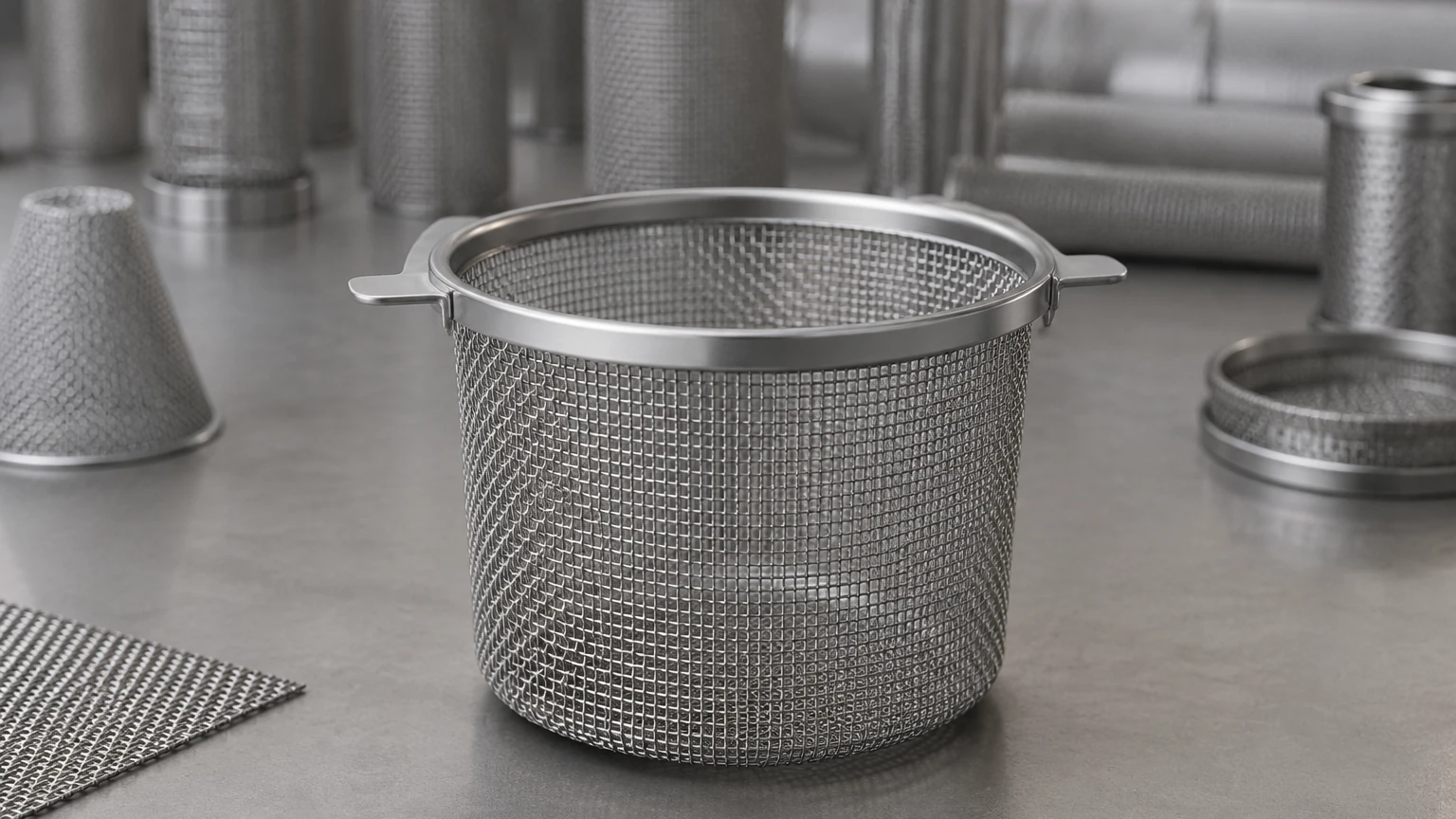
The filtration performance of a basket strainer is defined by the media used within the basket. Depending on the particle size that needs to be captured, the basket may consist of a perforated metal sheet, a wire mesh lining, or a combination of both.
Perforated Baskets
Perforated baskets are typically used for "straining" larger particles (above 0.5 mm). The hole size and pattern (staggered or straight) determine the strength and the open area. These are robust and can withstand significant pressure differentials without deforming.
Wire Mesh Linings
When finer filtration is required, a stainless steel wire mesh is layered inside a perforated support basket. This allows for the capture of microscopic particles while maintaining the structural integrity provided by the perforated outer layer. Engineering considerations here include the weave type—such as plain weave for standard filtration or dutch weave for higher strength and finer precision.
Kaifil’s manufacturing capabilities allow for the customization of these elements to meet specific micron ratings, ensuring that the filter basket strainer performs exactly to the required specifications of the industrial process. For more information on custom configurations, you can review product options and application support on our Main Page.
Sizing and Flow Rate Considerations
Properly sizing a filter basket strainer is vital to prevent excessive pressure drop (Delta P). A common error in system design is selecting a strainer based solely on the existing pipe size. However, the viscosity of the fluid and the expected flow rate are the actual drivers of selection.
As viscosity increases, the pressure drop across the strainer increases exponentially. For instance, a strainer that performs efficiently with water may cause a significant bottleneck if used with heavy oils or syrups unless the size is increased or the mesh density is adjusted. Engineers utilize the Flow Coefficient (Cv), which defines the number of gallons per minute (GPM) of water that will pass through the strainer with a 1 psi pressure drop. By calculating the Cv, technical teams can predict the performance of the strainer under specific operating conditions.
It is generally recommended that the initial clean pressure drop should not exceed 2 psi. If the calculated pressure drop is higher, a larger strainer or a different basket design should be considered to ensure the longevity of the system pumps.
Operational Maintenance and Cleaning Cycles
The primary advantage of the basket-style design is the ease of maintenance. Unlike Y-strainers, which are often oriented horizontally or vertically and can be difficult to access, basket strainers typically feature a top-opening cover that allows for quick removal of the basket.
To optimize maintenance, industrial systems should be equipped with differential pressure gauges. By monitoring the pressure difference between the inlet and outlet, operators can determine exactly when the basket is reaching its holding capacity. Cleaning should typically occur when the differential pressure reaches 5 to 10 psi over the clean reading.
For processes that cannot be shut down for cleaning, a Duplex Basket Strainer is the preferred solution. This configuration consists of two separate strainer chambers connected by a diverting valve. When one basket requires cleaning, the flow is diverted to the other chamber, allowing for continuous operation. This is a critical consideration for hydraulic systems and continuous chemical production lines where downtime is prohibitively expensive.
Total Cost of Ownership (TCO) in Industrial Filtration
When evaluating a filter basket strainer, the initial purchase price is only one component of the total cost of ownership. Engineers must also account for:
1. Durability: A high-quality stainless steel strainer from a reputable manufacturer like Kaifil may have a higher upfront cost but will resist corrosion and mechanical wear for decades, reducing the need for replacements.
2. Maintenance Efficiency: Features such as quick-opening covers (swing bolts or notched knobs) can significantly reduce the labor time required for cleaning.
3. Energy Consumption: A poorly sized strainer with a high pressure drop forces pumps to work harder, leading to increased energy costs over the life of the system.
4. Waste Management: Unlike disposable cartridge filters, stainless steel baskets are cleanable and reusable, which aligns with sustainability goals and reduces the ongoing cost of consumables.
By focusing on these long-term factors, purchasing teams can achieve a more cost-effective filtration solution that supports the overall reliability of the plant.
Conclusion
The filter basket strainer is a versatile and indispensable component in modern industrial infrastructure. Whether it is protecting a high-pressure pump in a water treatment facility or ensuring the purity of a pharmaceutical batch, the performance of the strainer depends on precise engineering and material selection.
By considering factors such as the Open Area Ratio, chemical compatibility of stainless steel grades, and the specific flow characteristics of the medium, engineers can select a filtration solution that balances performance with operational longevity. Kaifil remains committed to providing high-performance, customized filtration components that meet these demanding industrial standards. To explore our full range of capabilities and technical resources, visit our Main Page.
