


Tube Bundle for Heat Exchanger
In industrial thermal management, the tube bundle for heat exchanger stands as the most critical component within shell-and-tube systems. It is the primary interface where heat exchange occurs between two fluids, often operating under extreme pressures, temperatures, and corrosive conditions. For engineers and procurement teams, understanding the mechanical design, material science, and maintenance requirements of these bundles is essential for ensuring system longevity and operational efficiency.
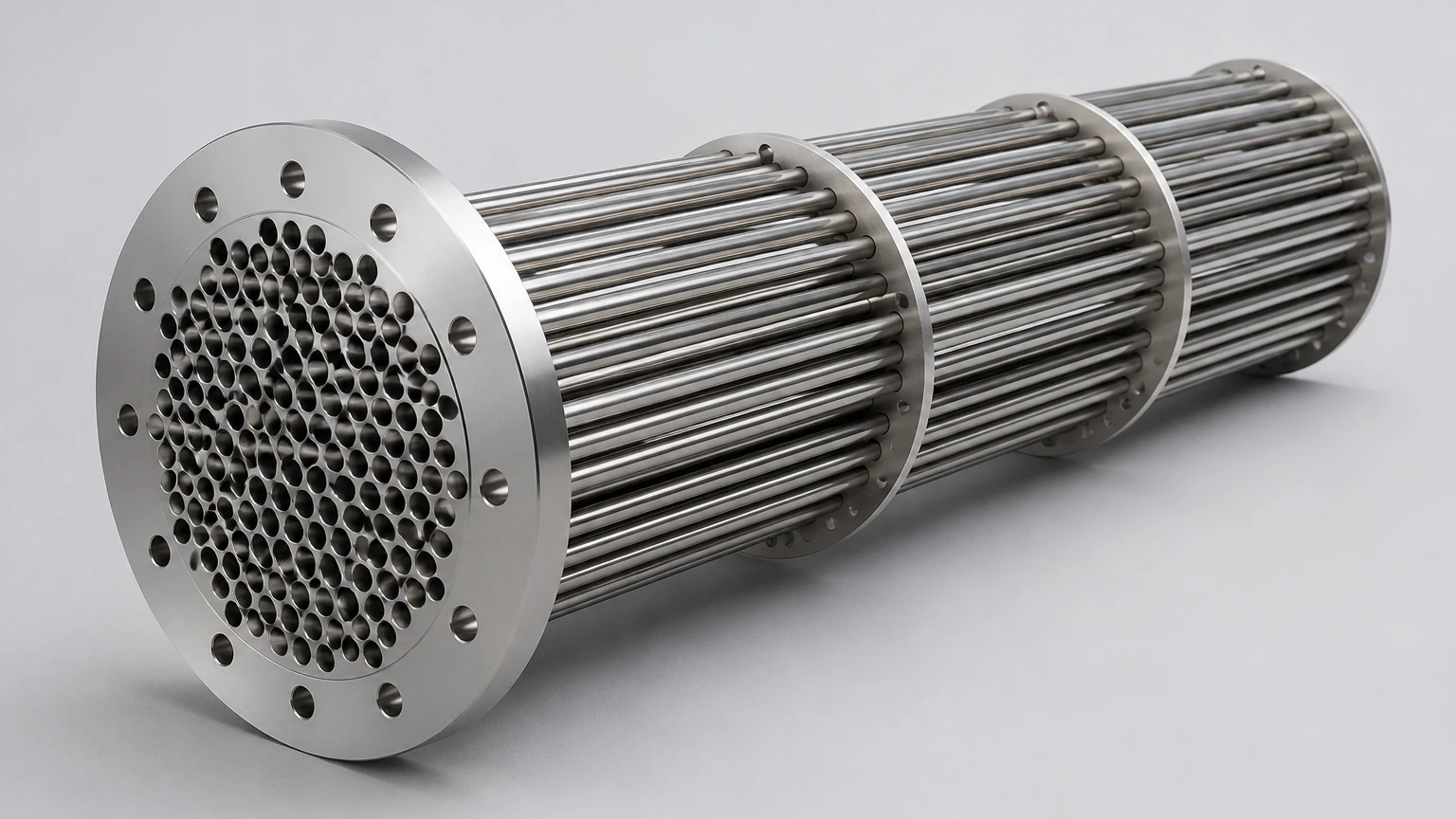
A tube bundle is not a singular part but a complex assembly of tubes, tube sheets, baffles, and tie rods. Each element must be precisely engineered to balance thermal performance with structural integrity. Furthermore, the performance of a tube bundle is inextricably linked to the quality of the fluids passing through it, necessitating robust filtration solutions to prevent fouling and mechanical degradation.
Anatomy and Engineering of a Tube Bundle
The architecture of a tube bundle for heat exchanger is designed to maximize surface area while managing fluid dynamics. The primary components include:
Tubes
These are the fundamental heat transfer surfaces. Tubes can be seamless or welded, with diameters typically ranging from 5/8 inch to 1 inch for most industrial applications. The wall thickness (gauge) is determined by the internal pressure and the corrosion allowance required for the specific process fluid.
Tube Sheets
The tube sheet is a thick, circular plate—usually forged or machined from heavy plate—that holds the tubes in place. Tubes are secured to the sheet via mechanical expansion (rolling) or welding. The choice between these methods depends on the operating pressure and the potential for thermal cycling. Precision drilling of the tube sheet is vital; the layout can be triangular, which allows for more tubes in a given space, or square, which facilitates easier external cleaning of the tubes.
Baffles and Support Plates
Baffles serve two primary purposes: they support the tubes to prevent flow-induced vibration and they direct the shell-side fluid across the tubes in a zigzag pattern to increase turbulence and heat transfer efficiency. Common types include segmental baffles, which are circular disks with a segment cut away, and longitudinal baffles used in multi-pass shells.
Tie Rods and Spacers
These components hold the baffle assembly together, ensuring that the spacing between baffles remains constant throughout the length of the bundle. This structural skeleton prevents the shifting of internal components during high-velocity fluid flow.
Material Selection for Corrosive Environments
Material selection is perhaps the most critical decision in the procurement of a tube bundle for heat exchanger. Because these components are often exposed to aggressive chemicals, high-salinity water, or extreme temperatures, the choice of alloy determines the total cost of ownership.
1. Stainless Steel (304/316L): These are the industry standards for general-purpose applications. 316L, with its molybdenum content, offers superior resistance to chlorides and is frequently used in pharmaceutical and food processing environments.
2. Duplex Stainless Steel: For high-pressure and highly corrosive environments, Duplex alloys provide twice the strength of austenitic stainless steels and exceptional resistance to stress corrosion cracking.
3. Nickel Alloys and Titanium: Reserved for the most demanding chemical processing applications where standard stainless steels would fail due to pitting or general thinning.
When selecting materials, engineers must also consider the galvanic compatibility between the tubes and the tube sheet. Using dissimilar metals can lead to localized corrosion at the tube-to-tube-sheet joint, leading to premature failure.
Common Tube Bundle Configurations
The configuration of the bundle is dictated by the thermal expansion requirements and the ease of maintenance needed for the application.
Fixed Tube Sheet Bundles
In this design, the tube sheets are welded directly to the shell. This is a cost-effective and simple design, but it does not allow for the removal of the bundle for external cleaning. It is best suited for clean fluids and applications with minimal temperature differences between the shell and the tubes.
U-Tube Bundles
U-tube bundles consist of continuous tubes bent into a U-shape. Only one tube sheet is required, and the bundle is free to expand or contract independently of the shell. This makes it ideal for high-temperature applications. However, the internal cleaning of the U-bends can be difficult, necessitating high-clarity fluids or effective pre-filtration.
Floating Head Bundles
One tube sheet is fixed while the other is allowed to "float" within the shell. This design accommodates thermal expansion and allows the entire bundle to be removed for thorough cleaning of both the inside and outside of the tubes. It is the preferred choice for heavy industrial and refinery applications where fouling is a significant concern.
The Critical Role of Filtration in Protecting Tube Bundles
The efficiency of a tube bundle for heat exchanger is significantly compromised by fouling—the accumulation of unwanted material on the heat transfer surfaces. Fouling increases thermal resistance and creates a pressure drop that forces pumps to work harder, leading to increased energy consumption.
To mitigate these risks, industrial systems rely on precision filtration. Particulates such as sand, scale, and biological growth can lodge within the tubes or settle in the stagnant zones created by baffles. For more information on how to protect your industrial equipment with high-performance components, you can visit our Main Page.
Preventing Erosion and Clogging
High-velocity particulates can act as abrasives, thinning the tube walls over time (erosion-corrosion). Conversely, larger debris can partially or fully block tubes, leading to uneven thermal distribution and localized overheating. Utilizing stainless steel filter cartridges or wire mesh filters upstream of the heat exchanger ensures that only clean fluid enters the bundle, extending the interval between manual cleanings.
Maintaining Heat Transfer Coefficients
Even a thin layer of scale or biofilm can act as an insulator. By implementing effective filtration, the design heat transfer coefficient is maintained for longer periods. This is particularly important in the chemical and food industries, where precise temperature control is vital for product quality.
Evaluating Performance and Efficiency
When evaluating a tube bundle, engineers focus on several key performance indicators (KPIs):
* Heat Transfer Coefficient (U): This measures the overall ability of the bundle to transfer heat. It is influenced by the fluid velocity, material conductivity, and the fouling factor.
* Pressure Drop (ΔP): A high pressure drop across the bundle indicates either excessive turbulence (which can be good for heat transfer but bad for energy costs) or significant fouling.
* Vibration Analysis: Engineers must ensure that the fluid flow velocity does not reach the natural frequency of the tubes, which could lead to mechanical fatigue and tube failure.
In the design phase, software modeling is used to determine the optimal tube pitch and baffle spacing to balance these factors. For replacement bundles, it is often beneficial to review the performance data of the previous unit to see if adjustments in material or baffle design could improve the service life.
Maintenance, Cleaning, and Replacement Cycles
A proactive maintenance strategy is essential for any system utilizing a tube bundle for heat exchanger. Fouling is inevitable in many industrial processes, but its impact can be managed.
Cleaning Methods
* Mechanical Cleaning: Involves the use of brushes, scrapers, or high-pressure water jets (hydro-blasting) to remove scale from the tube interiors. This is only possible with straight-tube designs.
* Chemical Cleaning: Circulating specialized cleaning agents through the bundle to dissolve mineral scale or organic deposits. This method is effective for U-tube bundles where mechanical access is limited.
Identifying Failure
Signs that a tube bundle requires immediate attention include a noticeable drop in thermal efficiency, a significant increase in pressure drop, or cross-contamination between the shell-side and tube-side fluids. Eddy current testing is a common non-destructive testing (NDT) method used to detect wall thinning or cracks before a catastrophic leak occurs.
Procurement and Customization: What Engineers Should Confirm
When ordering a replacement or custom tube bundle for heat exchanger, precision in documentation is paramount. Manufacturers like Kaifil emphasize the importance of technical accuracy during the specification phase. Engineers should confirm the following before proceeding:
1. Fluid Characteristics: Confirm the chemical composition, viscosity, and presence of solids in both the tube-side and shell-side fluids.
2. Operating Parameters: Clearly define the maximum operating pressure and the full range of temperatures the bundle will encounter, including start-up and shut-down transients.
3. Dimensional Constraints: For replacement bundles, exact measurements of the tube sheet diameter, thickness, and bolt hole patterns are required to ensure a proper fit within the existing shell.
4. Compliance Standards: Ensure the bundle is designed and manufactured in accordance with relevant codes, such as ASME Section VIII or TEMA (Tubular Exchanger Manufacturers Association) standards.
Customization options, such as the inclusion of impingement plates to protect tubes from high-velocity entry steam or the use of enhanced surface tubes (finned tubes) for gas-to-liquid applications, should be discussed with the manufacturer to optimize performance for specific site conditions.
Conclusion
The tube bundle for heat exchanger is a sophisticated piece of industrial equipment that requires a deep understanding of thermal dynamics and material science. By selecting the appropriate configuration and materials, and by protecting the assembly with high-quality filtration systems, industrial facilities can achieve high thermal efficiency and long-term reliability. Whether managing chemical processing or hydraulic cooling, the integrity of the tube bundle remains the cornerstone of effective heat management. For technical support and to explore a wide range of industrial filtration components that support these systems, visit the Main Page of our site to review product options and application support.
