


Sock Filter Housing
In industrial liquid filtration, the sock filter housing—more commonly referred to in technical specifications as a bag filter housing—serves as a critical pressure vessel designed to remove particulate matter from fluid streams. These systems are favored for their high flow capacity, ease of maintenance, and cost-effectiveness in handling high solids loading. For engineers and procurement specialists, selecting the correct sock filter housing requires a deep understanding of fluid dynamics, material compatibility, and the specific mechanical requirements of the application.
Kaifil specializes in the manufacture of high-precision stainless steel filtration components, ensuring that every housing meets the rigorous demands of industrial environments. This guide examines the technical architecture, selection criteria, and operational considerations of sock filter housings to assist in informed decision-making.
Technical Architecture of a Sock Filter Housing
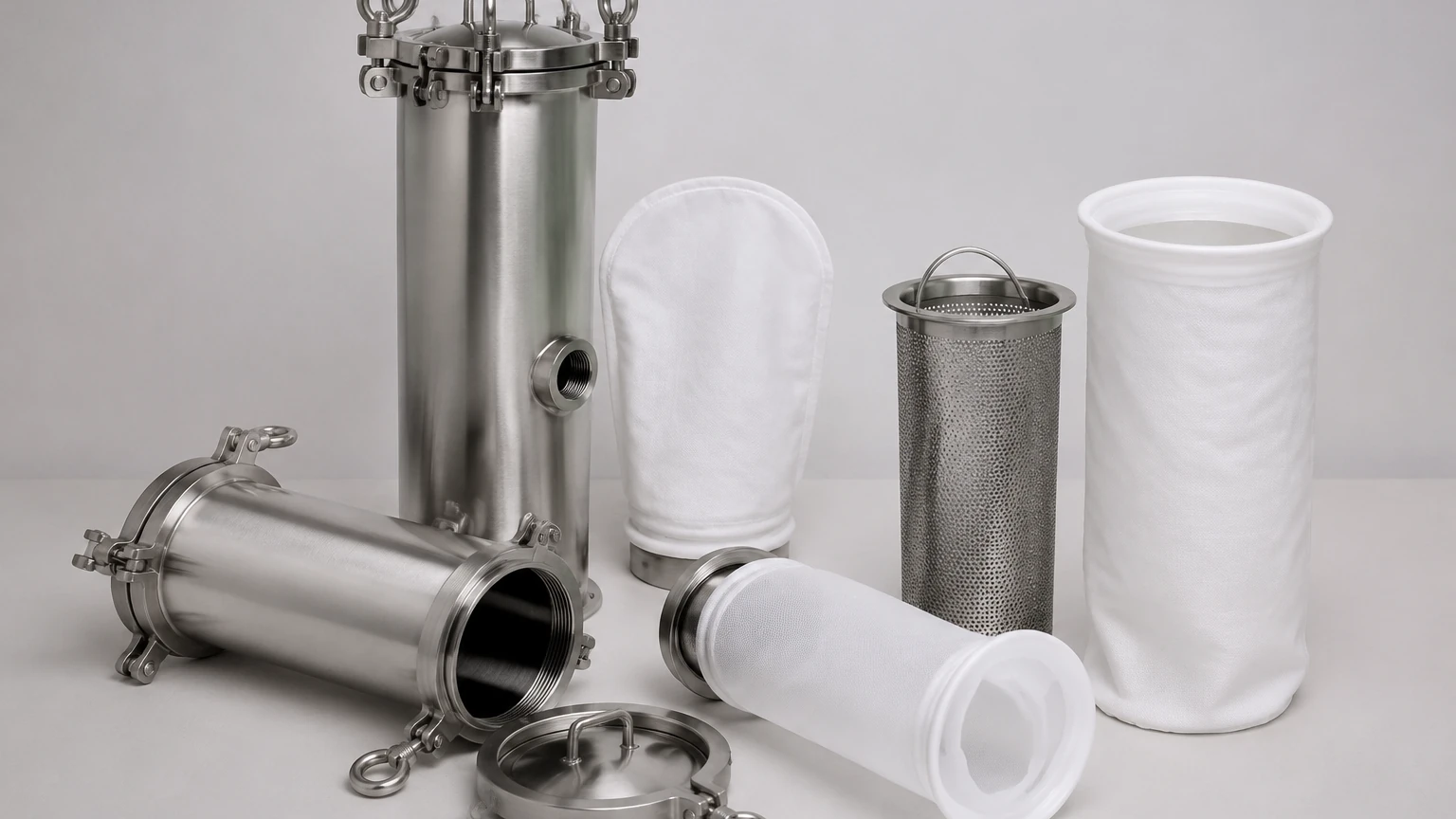
A sock filter housing is not merely a container; it is an engineered system designed to manage pressure while ensuring that 100% of the process fluid passes through the filtration medium. The primary components include:
The Pressure Vessel
Typically constructed from 304 or 316L stainless steel, the vessel must be rated for the maximum operating pressure of the system. In many industrial settings, this involves adherence to ASME Section VIII standards. The housing body is designed to withstand hydraulic shock and constant pressure cycles without fatigue.
The Internal Support Basket
Because the "sock" or filter bag is a flexible medium, it cannot withstand the differential pressure of a flowing liquid on its own. A heavy-duty perforated metal basket, often made of stainless steel mesh or punched plate, provides the necessary structural support. The quality of this basket is paramount; any burrs or sharp edges can puncture the filter bag, leading to bypass and downstream contamination.
Sealing Mechanisms
To prevent bypass, the housing must feature a robust sealing arrangement where the bag meets the housing inlet. Common designs include a compression-fit V-post or a machined seat that utilizes the bag’s integrated O-ring or plastic flange. A secondary seal is provided by the housing lid, which is typically secured by swing bolts, eye bolts, or a quick-release V-clamp for high-frequency change-outs.
Engineering Considerations for Material Selection
Material selection is the most critical factor in ensuring the longevity of a sock filter housing. While carbon steel options exist for non-corrosive water applications, stainless steel remains the industry standard for chemical, food, and pharmaceutical processes.
1. 304 Stainless Steel: Suitable for general industrial water filtration, oils, and mild chemicals. It offers excellent structural integrity and cost-efficiency.
2. 316L Stainless Steel: Required for applications involving chlorides, high-acidity fluids, or pharmaceutical-grade processes. The "L" designation (low carbon) is essential if the housing requires extensive welding, as it prevents sensitisation and intergranular corrosion.
3. Surface Finishes: For the food and beverage or pharmaceutical sectors, internal surfaces must be polished to a specific Ra (Roughness Average) value. Electropolishing is often employed to remove microscopic peaks and valleys where bacteria or contaminants could lodge.
When evaluating a Main Page for filtration solutions, engineers should confirm that the manufacturer can provide material certifications (MTRs) to verify the alloy composition.
Determining Flow Rates and Pressure Drop
A common error in sizing a sock filter housing is selecting a unit based solely on the pipe size. Instead, the housing must be sized based on the maximum allowable clean pressure drop ($ΔP$) and the viscosity of the fluid.
The Impact of Viscosity
As fluid viscosity increases, the resistance to flow through the filter medium increases exponentially. A housing rated for 100 GPM of water may only handle 20 GPM of a heavy resin or oil at the same pressure drop. Engineers must apply correction factors for viscosity to ensure the housing is not undersized, which would lead to premature bag blinding and excessive downtime.
Velocity Limits
To prevent erosion of the housing internals and to minimize turbulence, the velocity of the fluid at the inlet should generally be kept below 10-15 feet per second. High-velocity entry can cause the filter bag to flutter or shift, potentially compromising the seal.
Comparison of Housing Designs: Top Entry vs. Side Entry
There are two primary configurations for sock filter housings, each offering distinct advantages depending on the application requirements.
Side Entry Housings
In a side-entry design, the fluid enters through the side of the housing and flows over a baffle before entering the filter bag. This is often a more economical choice and allows for easier piping in certain plant layouts. However, because the lid is located above the bag, there is a small volume of unfiltered liquid that remains above the bag during change-outs, which can lead to spills if not managed correctly.
Top Entry Housings
Top-entry housings are engineered so that the inlet is integrated into the lid or the very top of the vessel. The fluid enters directly into the center of the bag. This design ensures a more uniform flow distribution and eliminates the "dead space" found in side-entry models. For high-purity applications, top-entry is preferred because it ensures that all fluid must pass through the bag before the housing can be opened, minimizing the risk of downstream contamination during maintenance.
Operational Safety and Maintenance Protocols
Maintaining a sock filter housing requires strict adherence to safety protocols, particularly because these units operate under pressure.
Differential Pressure Monitoring
The most effective way to determine when a filter sock needs replacement is by monitoring the differential pressure across the housing. Gauges should be installed at the inlet and outlet. A typical change-out point is when the $ΔP$ reaches 15-25 PSI, depending on the bag material and the pump's capabilities. Operating beyond this point risks "breakthrough," where particles are forced through the media, or bag rupture.
Venting and Draining
Before opening a sock filter housing, it must be completely depressurized and drained. A high-quality housing will include a dedicated vent port on the lid and a drain port at the lowest point of the vessel. For hazardous fluids, these ports should be plumbed into a closed recovery system.
Gasket Integrity
During every bag change, the housing lid gasket (O-ring) should be inspected for swelling, cracking, or compression set. Common materials include Buna-N, EPDM, Viton, and PTFE-encapsulated silicone. Using a gasket that is incompatible with the process fluid can lead to external leaks and potential safety hazards.
Customization and OEM Integration
Standard off-the-shelf housings may not always meet the spatial or functional requirements of a specific industrial skid. Customization options provided by manufacturers like Kaifil allow for seamless integration into existing systems. Key customization parameters include:
* Multi-Bag Configurations: For flow rates exceeding the capacity of a single bag (typically >200 GPM), multi-bag housings allow for high-volume filtration within a single vessel footprint.
* Steam Jackets: For fluids that must be kept at a specific temperature to maintain low viscosity (such as waxes or chocolates), housings can be fitted with external heating jackets.
* Leg Adjustments: Custom leg heights or mounting brackets can be engineered to match existing piping elevations, reducing installation costs.
* Advanced Closures: For systems requiring frequent bag changes, hydraulic-assisted davit arms or quick-opening closures can significantly reduce labor time and improve operator safety.
Conclusion: Selecting the Right Filtration Partner
Choosing a sock filter housing involves balancing initial capital expenditure with long-term operational efficiency. An undersized or poorly constructed housing will lead to frequent filter changes, increased labor costs, and potential product quality issues. By focusing on high-grade stainless steel construction, precise sealing surfaces, and accurate flow sizing, engineers can ensure a reliable filtration process.
For those seeking technical support or customized filtration components, visiting the Main Page of a specialized manufacturer like Kaifil provides access to engineering expertise and a broad range of stainless steel filtration solutions. Whether the application involves chemical processing, water treatment, or food production, the right housing is the foundation of a clean and efficient fluid system.
