


Dust Collection Booths
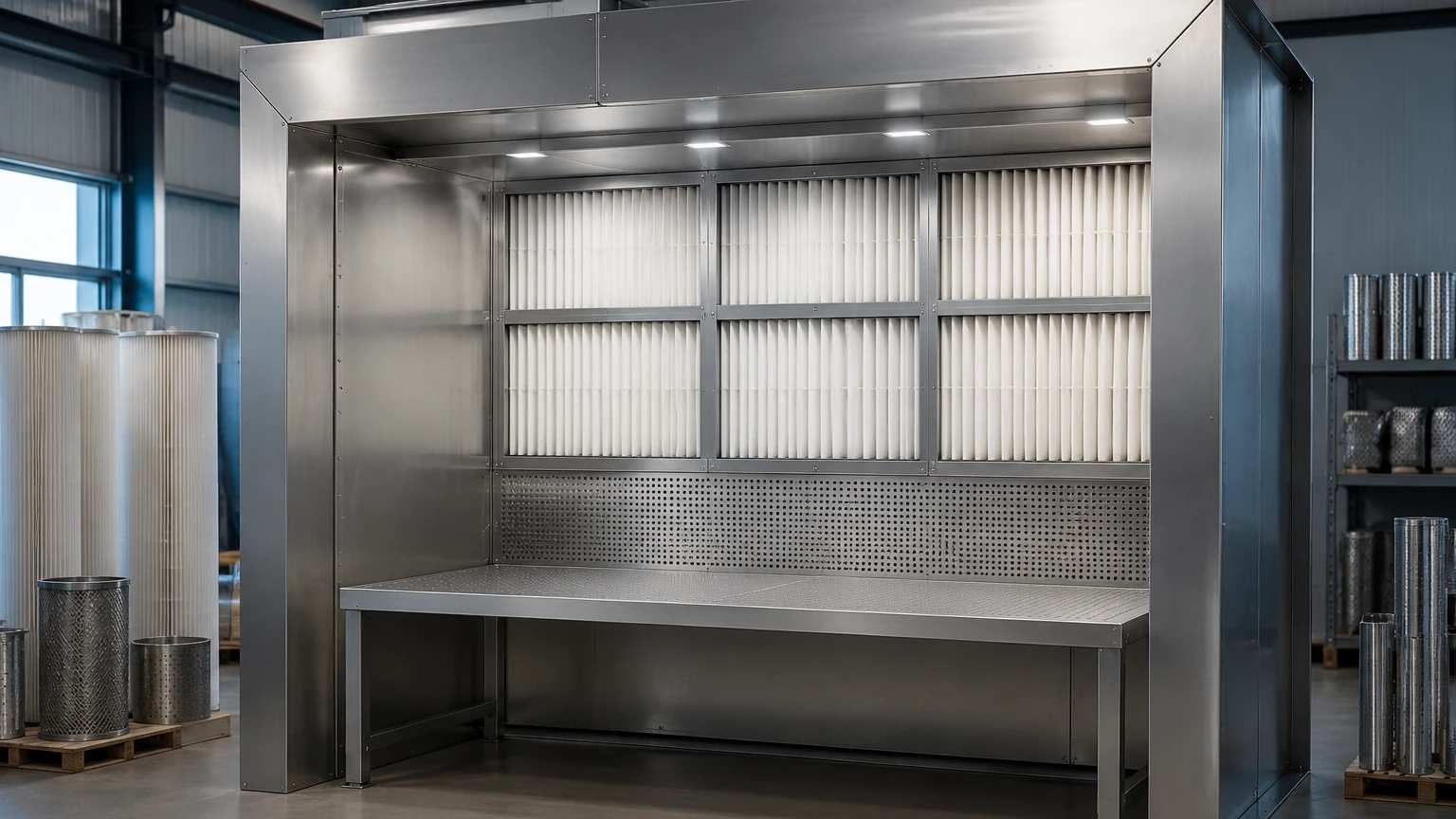
In modern industrial manufacturing, the control of airborne particulates is not merely a matter of housekeeping but a critical requirement for operational safety, regulatory compliance, and product integrity. Dust collection booths, also known as environmental control booths or workstation enclosures, represent a specialized solution for capturing contaminants at the source. Unlike centralized dust collection systems that rely on extensive ductwork, these booths provide a localized, high-velocity airflow zone that prevents dust, fumes, and smoke from migrating into the broader facility environment.
For engineers and facility managers, selecting the right filtration components for these booths is paramount. The efficacy of a dust collection booth is fundamentally tied to its filtration media. While many standard booths utilize disposable fabric or paper filters, demanding industrial applications—such as those involving abrasive materials, high temperatures, or corrosive chemicals—require the durability and precision of stainless steel filtration solutions. Understanding the technical nuances of these systems is essential for optimizing performance and minimizing the total cost of ownership.
The Role of Dust Collection Booths in Industrial Environments
Dust collection booths are utilized across a wide spectrum of industries, including pharmaceutical compounding, chemical processing, metalworking, and food production. Their primary function is to create a "clean zone" for processes such as grinding, sanding, powder weighing, and welding. By drawing air away from the operator’s breathing zone and through a series of filters, these booths mitigate the health risks associated with fine particulate inhalation.
In the pharmaceutical and food sectors, the focus extends beyond operator safety to cross-contamination prevention. Here, the filtration system must be capable of capturing sub-micron particles with high efficiency. In contrast, heavy industrial applications like metal finishing focus on the containment of abrasive dust that can cause premature wear on facility machinery. In all cases, the booth acts as a primary containment barrier, making the reliability of the internal filter cartridges a non-negotiable factor.
Engineering Principles: Airflow and Containment
The performance of dust collection booths is governed by the principles of fluid dynamics, specifically the relationship between face velocity, capture velocity, and air volume (CFM).
Face Velocity and Capture Efficiency
Face velocity refers to the speed of the air as it enters the booth opening. For most industrial dusts, a face velocity of 60 to 100 feet per minute (fpm) is standard, though higher velocities may be required for heavier particulates or high-energy processes like thermal spraying. If the velocity is too low, dust will escape the booth; if it is too high, it may create turbulence that interferes with the process or causes unnecessary filter loading.
Laminar vs. Turbulent Flow
Engineers often strive for laminar airflow within the booth to ensure that contaminants are moved in a predictable, unidirectional path toward the filter bank. Turbulence can cause "dead zones" where dust accumulates or eddies that push particles back toward the operator. The design of the back-wall plenum and the distribution of the filter cartridges are critical in achieving this uniform flow.
Filtration Media and Material Selection
The core of any dust collection booth is the filtration media. While standard pleated paper or polyester filters are common, they often fail in environments characterized by moisture, high heat, or chemical volatility. This is where stainless steel filtration components, such as those discussed on our Main Page, offer a significant technical advantage.
Stainless Steel Wire Mesh Filters
Stainless steel wire mesh is an ideal medium for dust collection in harsh environments. Unlike fiber-based media, wire mesh is structurally rigid and resistant to mechanical deformation. It can be manufactured with precise aperture sizes, allowing for consistent filtration ratings. In dust collection booths, these filters are often used as pre-filters to capture larger debris or as primary filters in high-temperature applications where synthetic materials would melt or degrade.
Sintered Metal Cartridges
For applications requiring higher filtration accuracy, sintered metal filter cartridges provide a robust solution. These are formed by fusing layers of wire mesh or metallic fibers under heat and pressure, creating a porous structure that is exceptionally strong. Sintered filters can withstand high differential pressures and are easily cleaned through back-pulsing or ultrasonic baths, extending their service life far beyond that of disposable alternatives.
Material Compatibility
Selection of the specific alloy—typically 304 or 316L stainless steel—depends on the chemical nature of the dust. 316L is preferred in pharmaceutical and marine environments due to its superior resistance to pitting and crevice corrosion. For engineers, confirming the chemical compatibility of the filter media with the process byproducts is a critical first step in the procurement process.
Key Evaluation Criteria for Engineers
When specifying filtration for dust collection booths, several technical parameters must be evaluated to ensure the system meets the application's demands.
1. Micron Rating and Efficiency: Engineers must define the particle size distribution of the dust being collected. A filter that is too coarse will allow fine dust to bypass the system, while one that is too fine will clog prematurely, increasing energy costs due to high pressure drop.
2. Pressure Drop (Delta P): This is the resistance to airflow across the filter media. A high initial pressure drop reduces the available CFM of the booth’s blower. Stainless steel filters are engineered to provide high porosity, maintaining low pressure drop even at high flow rates.
3. Filter Loading Capacity: This refers to the amount of dust a filter can hold before the pressure drop reaches a critical level. Pleated designs increase the surface area, significantly improving the loading capacity and extending the time between cleaning cycles.
4. Temperature and Chemical Resistance: In chemical processing or metal smelting, ambient temperatures can exceed the limits of standard polymer filters. Stainless steel components maintain their integrity at temperatures exceeding 500°C (932°F), depending on the alloy and seal materials.
Managing Risks: Safety and Compliance
Dust collection in industrial settings involves inherent risks, particularly when dealing with combustible dusts or hazardous materials.
Combustible Dust and Explosion Prevention
Many industrial dusts, including aluminum, wood, and certain organic powders, are explosive when suspended in air at specific concentrations. Dust collection booths must comply with NFPA (National Fire Protection Association) standards or ATEX directives in Europe. A critical safety feature of stainless steel filters is their ability to be effectively grounded. Unlike plastic or synthetic media, which can accumulate static charges that lead to sparks, metal filters provide a continuous conductive path to the ground, significantly reducing the risk of ignition.
Filter Blinding and Maintenance
Filter blinding occurs when particulates become deeply embedded in the media, and cannot be removed by standard cleaning methods. This leads to a permanent increase in pressure drop and a decrease in booth performance. For engineers, selecting a filter media with a "surface loading" characteristic—where dust remains on the exterior of the filter—is vital. Stainless steel mesh is naturally surface-loading, making it much easier to clean via compressed air pulses compared to depth-loading fiber media.
Customization and OEM Integration
No two industrial processes are identical, and standard off-the-shelf dust collection booths often require modification to meet specific spatial or performance constraints. Customization options for filtration components include:
* Custom Dimensions: Tailoring the length, diameter, and mounting hardware of filter cartridges to fit existing booth plenums.
* Specialized End Caps: Utilizing flange, thread, or bolt-on end caps made from compatible metals to ensure a leak-proof seal.
* Reinforced Structures: Adding internal cores or external cages to filters that must withstand extreme pressure surges or mechanical handling.
Working with a manufacturer that understands these engineering requirements allows for the development of OEM solutions that are optimized for the specific airflow dynamics of the booth.
Total Cost of Ownership (TCO) Considerations
While the initial purchase price of stainless steel filtration components is higher than that of disposable paper or polyester filters, the Total Cost of Ownership (TCO) is often significantly lower in the long run.
Longevity and Reusability
Disposable filters must be replaced frequently, leading to ongoing procurement costs, labor for replacement, and waste disposal fees. In contrast, stainless steel filters are designed for years of service. Their ability to be cleaned and reused multiple times means the cost per operating hour is drastically reduced.
Energy Efficiency
Filters that maintain a lower average pressure drop over their lifespan require less power from the booth’s fan motor. Over several years of operation, the energy savings achieved by using high-performance metal filters can offset the initial investment. Furthermore, consistent airflow ensures that the booth remains in compliance with safety regulations without the need for frequent blower adjustments.
Conclusion: Making an Informed Decision
Selecting the appropriate dust collection booth and its constituent filtration system requires a deep understanding of the material properties, airflow requirements, and safety standards of the specific application. For engineers, the move toward stainless steel filtration solutions represents a commitment to durability and precision. By focusing on high-quality components that offer cleanability, chemical resistance, and static dissipation, facilities can ensure a safer work environment and more efficient production processes.
Before finalizing a purchase or design, technical teams should confirm the particle size distribution, chemical environment, and expected cleaning intervals to ensure the chosen filtration media is perfectly aligned with the operational goals. For those seeking specialized guidance on integrating high-performance metal filters into their systems, reviewing technical specifications and application support on our Main Page is a recommended next step in the engineering process.
