


Cartridge Dust Collection Systems
Industrial air filtration is a critical component of modern manufacturing, directly impacting workplace safety, environmental compliance, and equipment longevity. Among the various technologies available, cartridge dust collection systems have emerged as a preferred solution for capturing fine dust and fumes in a compact footprint. Unlike traditional baghouse filters, which rely on long fabric sleeves, cartridge systems utilize pleated filter media to maximize surface area within a smaller physical space. This engineering approach allows for high-efficiency filtration in applications ranging from metalworking and chemical processing to pharmaceutical manufacturing.
For engineers and facility managers, selecting the right filtration components is not merely a matter of matching dimensions. It requires a deep understanding of particle characteristics, airflow dynamics, and the physical properties of the filter media. As industrial processes become more complex, the demand for specialized filtration solutions, such as those found on the Kaifil Main Page, continues to grow, particularly when standard synthetic filters fail to meet the rigors of high-temperature or corrosive environments.
The Mechanics of Cartridge Dust Collection Systems
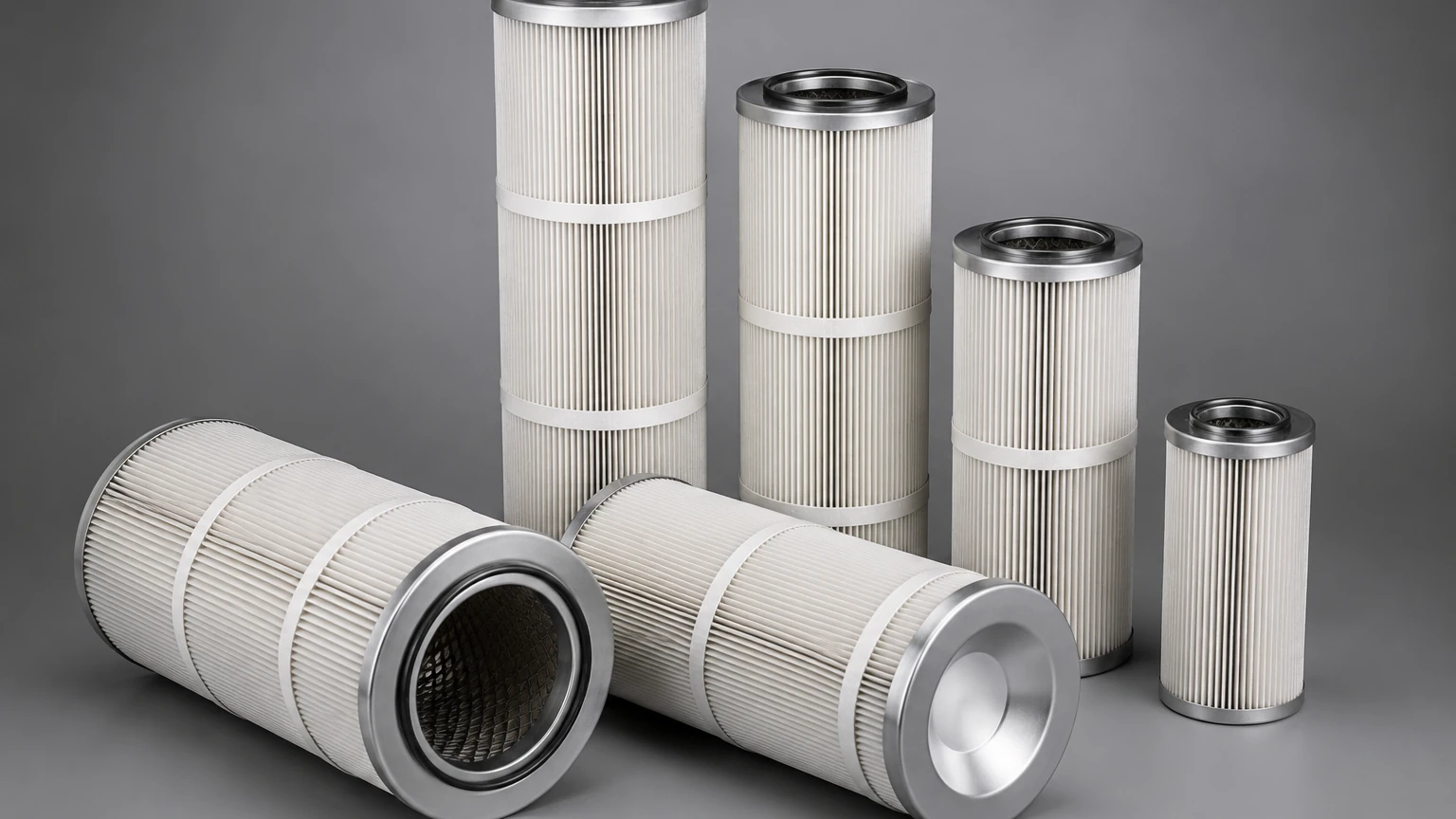
Cartridge dust collection systems operate on the principle of surface filtration. The core of the system is the filter cartridge, which typically consists of pleated media supported by an inner and outer metal cage. The pleating significantly increases the total filtration area, allowing the system to handle higher volumes of air at lower velocities, a metric known as the air-to-cloth ratio.
When dust-laden air enters the collector, it passes through the filter media. The dust particles are trapped on the exterior surface of the pleats, while clean air exits through the center of the cartridge. To prevent the filter from clogging, most modern systems employ a pulse-jet cleaning mechanism. A blast of compressed air is directed down the center of the cartridge, momentarily reversing the airflow and dislodging the accumulated dust cake into a hopper below. This continuous cleaning cycle allows the system to maintain a consistent differential pressure, ensuring stable operation over long periods.
Material Selection: Beyond Standard Synthetic Media
While many standard cartridge dust collection systems utilize cellulose or polyester media, demanding industrial applications often require more robust materials. In environments involving high temperatures, abrasive particles, or corrosive chemicals, synthetic fibers may degrade rapidly, leading to frequent replacements and system downtime.
Stainless steel filtration components offer a high-performance alternative for these challenging conditions. Using 304 or 316L stainless steel wire mesh or sintered metal fibers provides several technical advantages:
1. Thermal Stability: Stainless steel can withstand operating temperatures far exceeding the limits of synthetic polymers, making it ideal for smelting, kiln exhaust, and high-heat chemical reactions.
2. Chemical Resistance: In pharmaceutical and chemical processing, filters are often exposed to aggressive solvents and acidic or alkaline vapors. Stainless steel resists corrosion, maintaining structural integrity where other materials would fail.
3. Durability and Cleanability: Metal filters are physically tougher than fabric or paper. They can withstand higher pulse pressures during cleaning cycles and can often be ultrasonically cleaned and reused, reducing the total cost of ownership over the life of the system.
Key Engineering Metrics for System Evaluation
When specifying or upgrading cartridge dust collection systems, engineers must evaluate several key performance indicators to ensure the system meets the specific needs of the facility.
Filtration Efficiency and Micron Ratings
Efficiency is typically measured by the Minimum Efficiency Reporting Value (MERV) or by specific micron ratings. For fine dust, such as welding fumes or pharmaceutical powders, filters with a MERV 15 or higher are often required. Engineering teams must confirm that the selected media can capture the smallest particles generated by their process without creating an excessive pressure drop.
Differential Pressure (ΔP)
Differential pressure is the difference in static pressure between the dirty side and the clean side of the filter. A high ΔP indicates that the filters are loaded or that the airflow is restricted. Monitoring this metric is essential for optimizing the pulse-jet cleaning frequency and determining when a filter cartridge has reached the end of its functional life.
Air-to-Cloth Ratio
This ratio represents the volume of air (CFM) passing through one square foot of filter media. A lower air-to-cloth ratio generally leads to higher filtration efficiency and longer filter life, as it reduces the velocity at which particles impact the media. For heavy dust loads, a more conservative ratio is necessary to prevent "blinding" the pleats.
Customization and OEM Integration
Standard off-the-shelf cartridge filters do not always fit the unique geometry or performance requirements of specialized industrial machinery. This is where custom engineering becomes vital. Manufacturers often require bespoke filtration components that integrate seamlessly into their existing cartridge dust collection systems.
Customization options include:
* Variable Pleat Geometry: Adjusting the depth and spacing of pleats to handle specific dust types, such as hygroscopic or fibrous materials that might bridge between standard pleats.
* Specialized End Caps: Utilizing stainless steel or high-temperature gaskets to ensure a leak-proof seal in extreme environments.
* Reinforced Support Structures: For high-pressure applications, internal cores and outer shrouds can be engineered to prevent cartridge collapse or media migration.
By working with a manufacturer capable of producing custom stainless steel cartridges, engineering teams can solve persistent filtration failures that standard products cannot address.
Common Risks and Mitigation Strategies
Implementing or maintaining cartridge dust collection systems involves navigating several operational risks. Identifying these early in the procurement or design phase is essential for long-term reliability.
Moisture and Oil Contamination
If the air stream contains moisture or oil mist, standard dry dust collectors can suffer from "mudding," where the dust turns into a paste that cannot be removed by pulse-jet cleaning. In these cases, oleophobic or hydrophobic coatings, or the transition to stainless steel mesh filters that can be chemically cleaned, may be necessary.
Combustible Dust Hazards
Many industrial dusts, including aluminum, wood, and certain organic chemicals, are explosive. Systems must be equipped with explosion venting, fire suppression, and anti-static filter media to comply with NFPA standards. Ensuring the cartridge conductivity is maintained through proper grounding is a critical safety requirement.
Incorrect Media Selection
Choosing a filter based solely on price often leads to higher costs due to frequent replacements and increased energy consumption. A filter that is too restrictive will force the system fan to work harder, while a filter that is too porous will allow particulate bypass, potentially damaging downstream equipment or violating emissions permits.
Pre-Purchase Confirmation: A Checklist for Engineers
Before finalizing a purchase or a custom design for cartridge dust collection systems, technical professionals should confirm the following data points with their supplier:
* Particle Size Distribution: What is the mean particle size, and what percentage of the dust is sub-micron?
* Gas Stream Chemistry: Are there corrosive elements or high humidity levels that require stainless steel components?
* Operating Temperature: What are the continuous and peak temperature ratings of the process?
* Regulatory Requirements: Does the system need to meet specific HEPA standards or local emissions limits?
* Maintenance Access: Is the system designed for easy filter changes to minimize downtime and worker exposure to dust?
The Role of Precision Manufacturing in Industrial Filtration
The effectiveness of any dust collection system is ultimately determined by the quality of its components. Precision in manufacturing ensures that every pleat is uniform, every weld is secure, and every seal is airtight. For industries where filtration is a mission-critical process—such as chemical refining or high-purity water treatment—the reliability of the filter cartridge is non-negotiable.
As industrial standards tighten and the cost of energy and raw materials rises, the shift toward durable, high-efficiency filtration solutions is accelerating. By focusing on engineering-led designs and robust materials like stainless steel, facilities can achieve a more sustainable and cost-effective approach to air quality management. For more information on specialized metal filtration components and custom OEM solutions, technical teams can explore the resources available on the Main Page of industry specialists.
In conclusion, cartridge dust collection systems represent a sophisticated intersection of fluid dynamics and material science. Whether managing routine nuisance dust or capturing high-value pharmaceutical powders, the successful implementation of these systems depends on a rigorous technical evaluation of the application’s specific demands. Through careful material selection and a focus on long-term performance metrics, engineers can ensure their filtration systems provide reliable service in even the most demanding industrial environments.
