


High Flow Filter Cartridges
In industrial liquid filtration, the transition from standard diameter cartridges to high flow filter cartridges represents a significant shift in engineering strategy for managing large-scale fluid processing. As industries such as chemical processing, water treatment, and power generation demand higher throughput with smaller equipment footprints, understanding the technical nuances of high-flow systems becomes essential for process engineers and procurement specialists. High flow filter cartridges are specifically engineered to handle significantly higher flow rates—often up to 500 gallons per minute (GPM) per single element—compared to the 5–10 GPM typical of standard 2.5-inch diameter cartridges.
Selecting the appropriate filtration technology requires a balance between filtration efficiency, mechanical durability, and operational cost. This guide examines the technical specifications, material considerations, and engineering advantages of high-flow systems to assist in informed decision-making for complex industrial applications.
The Engineering Advantages of High Flow Systems
The primary driver for adopting high flow filter cartridges is the optimization of the filtration footprint. In traditional systems, achieving a high total flow rate requires a multi-round housing containing dozens of standard cartridges. This configuration increases the number of seals, the complexity of the housing design, and the labor required for maintenance.
High flow cartridges typically feature a large diameter, often 6 inches (152 mm), which allows for a much higher surface area within a single element. By utilizing a pleated geometry, manufacturers can maximize the effective filtration area, leading to lower clean pressure drops and higher dirt-holding capacities. For an engineer, this translates to a reduction in the size of the filter housing. A single high-flow housing can often replace a vessel three to four times its size that uses standard cartridges. This reduction in hardware not only saves floor space but also reduces the initial capital expenditure (CAPEX) for the pressure vessel and associated piping.
Furthermore, the "inside-to-outside" flow path common in high-flow designs ensures that contaminants are trapped within the interior of the cartridge. This design feature is critical during the change-out process, as it prevents debris from falling back into the clean side of the filter housing, thereby maintaining the integrity of the downstream process.
Material Selection and Chemical Compatibility
The performance of high flow filter cartridges is heavily dependent on the materials used in their construction. Industrial environments often involve aggressive chemicals, high temperatures, and fluctuating pressure conditions, necessitating a careful review of material compatibility.
Synthetic Media
For many water treatment and general industrial applications, polypropylene or glass fiber media are standard. Polypropylene offers broad chemical resistance and is suitable for food and beverage applications due to its inert nature. However, it is limited by temperature, typically losing structural integrity above 80°C (176°F).
Stainless Steel and Metal Alloys
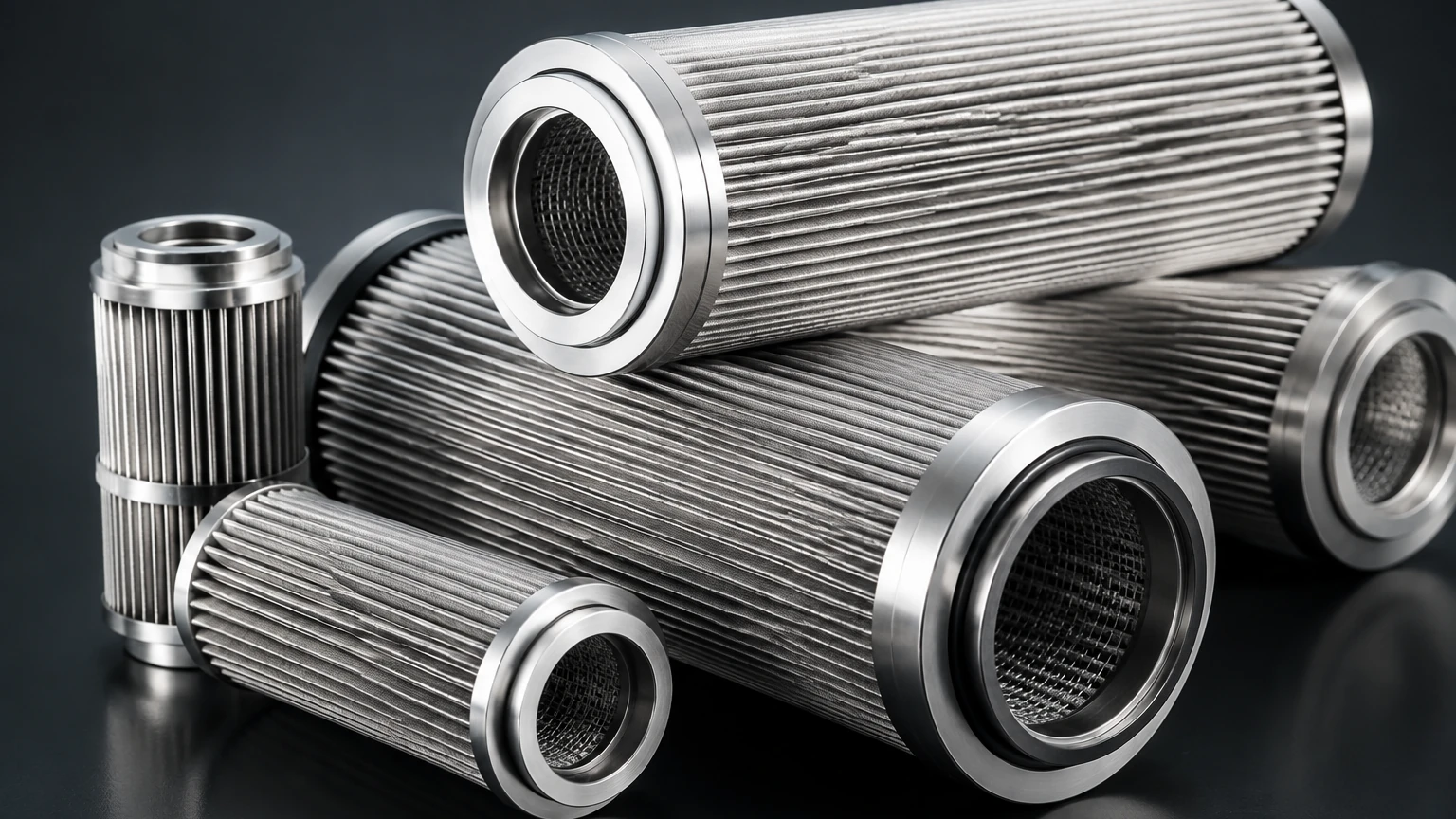
In demanding applications involving high-temperature steam, corrosive solvents, or high-viscosity fluids, stainless steel high-flow elements are preferred. As a specialist in custom filtration, Kaifil provides precision-engineered stainless steel solutions that offer superior mechanical strength. Stainless steel (304 or 316L) wire mesh or sintered metal fiber media can withstand extreme temperatures and differential pressures that would cause synthetic cartridges to collapse.
Metal high-flow filters are also cleanable and reusable, which is a critical factor for processes where the cost of disposable cartridges becomes prohibitive or where waste reduction is a corporate priority. When specifying these components, engineers must confirm the alloy's resistance to the specific chemical composition of the process fluid to prevent pitting or stress corrosion cracking.
Performance Metrics: Beyond Micron Ratings
While the micron rating is the most frequently cited specification, it is only one component of filter performance. To accurately evaluate high flow filter cartridges, engineers must consider the following metrics:
Absolute vs. Nominal Ratings
A nominal rating is an empirical value indicating the filter's ability to retain a majority of particles of a specific size. However, for critical applications like pharmaceutical intermediate filtration or fine chemical processing, an absolute rating is required. An absolute rating implies a retention efficiency of 99.9% (Beta ratio of 1000) for the specified particle size. High-flow elements must be tested under standardized conditions (such as ISO 16889) to verify these claims.
Beta Ratio
The Beta ratio ($β$) provides a more precise measurement of filtration efficiency. It is the ratio of particles of a given size in the upstream fluid to the particles of the same size in the downstream fluid. For high-flow applications, a high Beta ratio ensures consistent product quality and protects sensitive downstream equipment, such as high-pressure pumps or membranes.
Clean Pressure Drop (ΔP)
The initial pressure drop across a clean filter is a function of the media density, the fluid viscosity, and the flow rate. High flow cartridges are designed to minimize this ΔP. A lower initial pressure drop provides a longer "run time" before the filter reaches its terminal differential pressure, at which point it must be replaced or cleaned.
Design Considerations: Pleated vs. Depth Media
The internal structure of high flow filter cartridges determines how they handle solids loading.
* Pleated Media: This design maximizes surface area, making it ideal for removing rigid, non-deformable particles. Pleated cartridges excel in applications where high flow rates must be maintained with minimal pressure loss. The high surface area allows for a lower flux (flow per unit area), which can improve the efficiency of depth-loading mechanisms within the pleats.
* Depth Media: These cartridges use a thick gradient of fibers to trap particles throughout the entire thickness of the media. While they generally have lower flow capacities than pleated designs, they are more effective at handling deformable or "gel-like" contaminants that might otherwise blind the surface of a pleated filter.
For custom industrial solutions, hybrid designs are often employed. For instance, a stainless steel pleated mesh can be combined with a support structure to provide both high flow capacity and the ability to withstand back-pulsing or ultrasonic cleaning.
Total Cost of Ownership (TCO) and Maintenance
When evaluating high flow filter cartridges, procurement teams should look beyond the unit price. The total cost of ownership (TCO) includes the cost of the cartridge, the labor required for change-outs, the cost of process downtime, and disposal fees.
1. Labor Savings: Replacing one high-flow cartridge takes significantly less time than replacing 20 standard cartridges. In large plants, this can save hundreds of man-hours annually.
2. Disposal Costs: Fewer cartridges mean less hazardous or non-hazardous waste. This is particularly relevant in industries where the saturated filters must be treated as toxic waste.
3. Energy Efficiency: By maintaining a lower differential pressure over a longer period, high-flow systems reduce the load on circulating pumps, leading to measurable energy savings.
To optimize the replacement cycle, it is recommended to install differential pressure gauges or transmitters across the filter housing. Most high-flow systems are designed for a change-out at a differential pressure of 2.0 to 2.5 bar (30-35 psi), though this varies based on the structural limits of the specific cartridge and the sensitivity of the process.
Customization and OEM Integration
Every industrial process has unique variables—temperature fluctuations, pressure surges, and varying particle size distributions. Off-the-shelf filtration solutions often fall short in specialized environments. This is where custom manufacturing and OEM capabilities become vital.
Engineers should work with manufacturers to specify custom end-cap configurations (such as Code 7, 222, or 226 O-rings) to ensure a bypass-free seal within existing housings. Furthermore, the selection of gasket and O-ring materials (Viton, EPDM, Silicone, or PTFE-encapsulated) must be matched to the chemical profile of the fluid.
For those seeking specialized metal filtration components, reviewing the Main Page of a dedicated manufacturer like Kaifil can provide insights into the range of customization available, from wire mesh specifications to precision-welded assemblies. Customization allows for the fine-tuning of the filter's mechanical properties, ensuring it can withstand the specific hydraulic shocks or thermal cycles of a particular plant.
Conclusion: Selection Checklist for Engineers
Before finalizing the procurement of high flow filter cartridges, technical teams should confirm the following parameters:
* Fluid Characteristics: Viscosity, density, and chemical compatibility at operating temperatures.
* Contaminant Profile: Particle size distribution and the nature of the solids (rigid vs. deformable).
* Operational Constraints: Maximum allowable pressure drop, required flow rate, and system pressure.
* Housing Compatibility: Ensure the cartridge length (typically 20, 40, or 60 inches) and end-cap style match the installed vessel.
* Regulatory Compliance: Confirm if the materials meet FDA, REACH, or other industry-specific certifications if required.
By focusing on these technical boundaries, industrial operations can achieve a filtration solution that balances high-performance throughput with long-term reliability and cost-efficiency.
