


Flüssigkeitsfilter
In industrial processing, the efficiency and reliability of a system often depend on the precision of its liquid filtration components. A flüssigkeitsfilter (liquid filter) is not merely a consumable part but a critical engineering component designed to protect sensitive downstream equipment, ensure product purity, and maintain the integrity of complex hydraulic and chemical systems. For engineers and procurement specialists, selecting the right filtration solution requires a deep understanding of material science, fluid dynamics, and mechanical design.
Industrial liquid filtration involves the removal of solid contaminants from a liquid stream. This process is essential across diverse sectors, including chemical processing, food and beverage production, pharmaceutical manufacturing, and heavy hydraulic applications. The choice of filter media, housing, and structural design directly impacts the total cost of ownership (TCO) and the operational uptime of the entire facility.
Engineering Fundamentals of Industrial Liquid Filtration
To specify an effective flüssigkeitsfilter, one must first distinguish between the two primary mechanisms of filtration: surface filtration and depth filtration.
Surface Filtration vs. Depth Filtration
Surface filtration occurs when particles are trapped on the upstream side of the filter medium. Stainless steel wire mesh is the standard for surface filtration, offering precise pore sizes and the ability to be cleaned and reused. This is ideal for applications where particle size distribution is narrow and predictable.
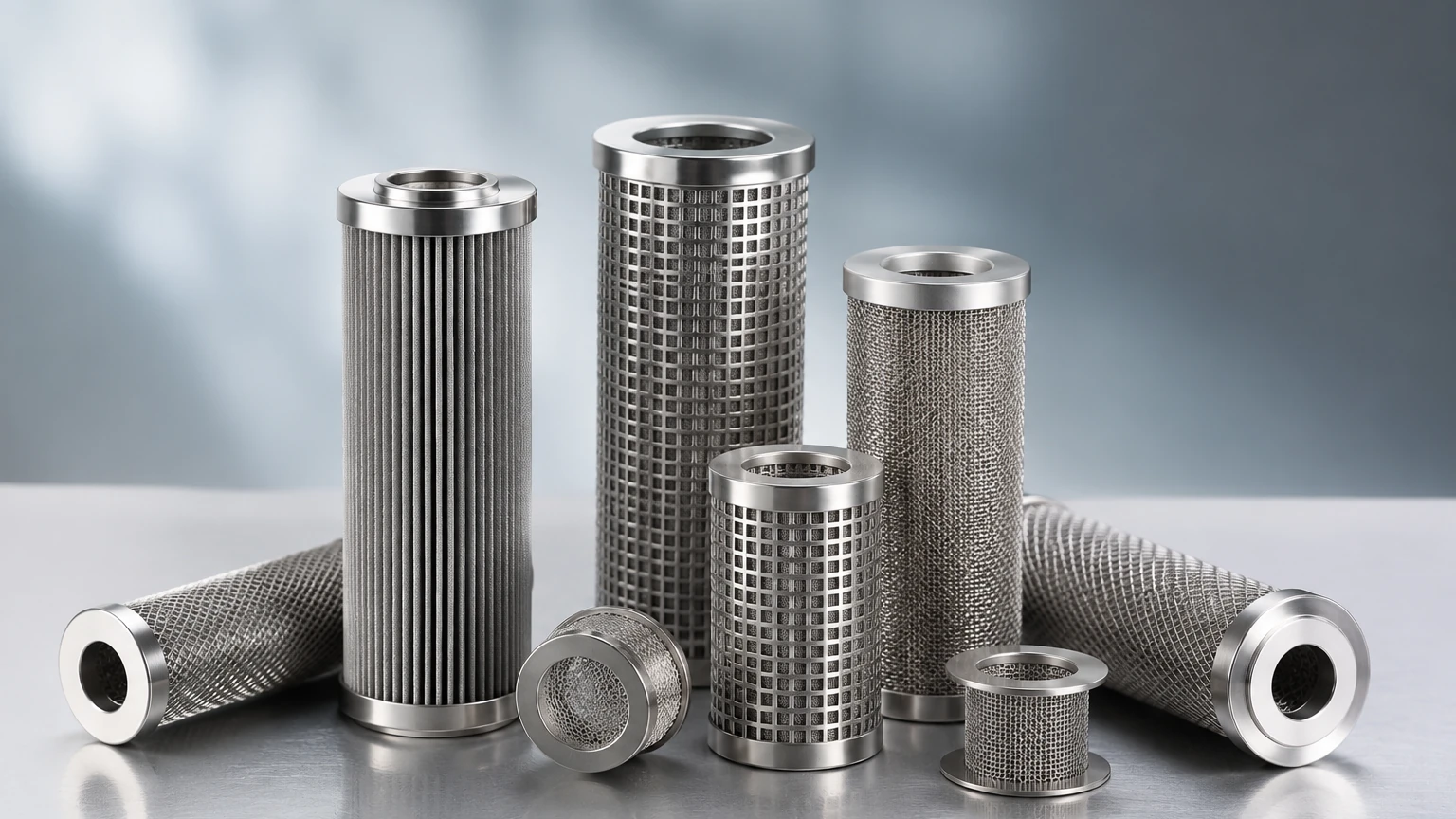
Depth filtration, conversely, utilizes a thick medium—often composed of multiple layers of sintered metal or fiber felt—to trap particles throughout the thickness of the material. This method provides a higher dirt-holding capacity, making it suitable for fluids with a high concentration of varying particle sizes. For many industrial applications, a hybrid approach using pleated stainless steel cartridges provides the benefits of a large surface area within a compact footprint, optimizing both flow rate and filtration efficiency.
Micron Ratings: Absolute vs. Nominal
A critical technical specification for any flüssigkeitsfilter is its micron rating. Engineers must distinguish between nominal and absolute ratings to avoid premature component failure:
* Nominal Rating: Indicates the filter's ability to retain a major weight percentage of particles of a certain size (e.g., 90% of 10-micron particles). This is often used for non-critical pre-filtration.
* Absolute Rating: Refers to the diameter of the largest hard spherical particle that will pass through the filter under specified test conditions. In critical pharmaceutical or high-pressure hydraulic applications, absolute ratings are mandatory to ensure that no particles above a specific threshold enter the system.
Material Selection for Demanding Environments
The durability of a flüssigkeitsfilter is largely determined by its material composition. While polymer-based filters are common in low-temperature, non-corrosive environments, industrial processes often demand the resilience of stainless steel and specialized alloys.
Stainless Steel 304 and 316L
Stainless steel is the preferred material for industrial filtration due to its mechanical strength and resistance to temperature extremes.
* Type 304: Suitable for general industrial use where basic corrosion resistance is required.
* Type 316L: Contains molybdenum, which provides superior resistance to chlorides and organic acids. The "L" denotes low carbon content, which is essential for components that require welding, as it prevents carbide precipitation and maintains corrosion resistance at the weld joints.
Specialized Alloys and Sintered Structures
In highly aggressive chemical environments or high-temperature applications (exceeding 300°C), specialized alloys like Hastelloy or Inconel may be required. Furthermore, the manufacturing process—such as sintering—greatly affects performance. Sintered wire mesh involves bonding multiple layers of mesh through heat and pressure without the use of binders. This creates a structurally integrated medium that can withstand high differential pressures without deformation or media migration.
Customization and OEM Design Considerations
Standard off-the-shelf filters rarely meet the exact requirements of specialized industrial machinery. At Kaifil, the focus is on providing customized filtration solutions that align with specific engineering parameters. When designing a custom flüssigkeitsfilter, several factors must be evaluated:
1. Pressure Drop ($ΔP$): The resistance to flow caused by the filter media and housing. A high initial pressure drop reduces the effective service life of the filter and increases energy consumption by the pumps.
2. Flow Velocity: Excessive velocity can lead to particle "breakthrough" or structural damage to the mesh. Proper sizing ensures that the fluid moves through the media at a rate that allows for efficient capture.
3. End-Cap Configurations: Custom filters must interface perfectly with existing housings. Options include DOE (Double Open End), SOE (Single Open End) with various O-ring configurations (e.g., 222, 226), and threaded connections (NPT/BSP).
4. Structural Support: For high-viscosity fluids or high-pressure systems, the filter medium often requires internal or external support cores made of perforated metal to prevent collapsing.
By addressing these factors during the design phase, manufacturers can ensure that the filtration component enhances rather than hinders system performance.
Key Performance Indicators (KPIs) for Filter Selection
When evaluating a flüssigkeitsfilter, engineers should look beyond the initial purchase price and focus on performance metrics that impact long-term operational costs.
Dirt-Holding Capacity (DHC)
DHC refers to the total amount of contaminant a filter can retain before reaching its terminal pressure drop. A filter with a high DHC requires fewer change-outs, reducing labor costs and system downtime. Pleated designs are frequently employed to maximize the available surface area within a standard cartridge size, significantly increasing DHC compared to cylindrical designs.
Cleanability and Regeneration
One of the primary advantages of stainless steel filtration media is the ability to be cleaned. Depending on the contaminant, filters can be cleaned via ultrasonic baths, backwashing, or chemical cleaning. This capability is vital for processes where the cost of replacement filters would be prohibitive or where waste reduction is a corporate priority.
Chemical and Thermal Compatibility
The filter must be inert to the fluid being processed. This includes not only the mesh but also the adhesives, gaskets, and O-rings used in the assembly. For example, Viton or PTFE gaskets are often required for high-temperature chemical applications where standard EPDM would fail.
Operational Maintenance and Replacement Cycles
The effective management of a flüssigkeitsfilter involves consistent monitoring of the differential pressure across the filter element. As the filter accumulates debris, the pressure on the upstream side increases relative to the downstream side.
Monitoring Differential Pressure
Most industrial systems are equipped with differential pressure gauges or transducers. A common practice is to establish a "clean" pressure drop baseline and a "terminal" pressure drop limit. Once the terminal limit is reached, the filter must be cleaned or replaced. Ignoring these limits can lead to media rupture, bypassing of contaminants, or damage to upstream pumps due to cavitation.
Failure Analysis
When a filter fails prematurely, it is often a symptom of a change in the process fluid or upstream conditions. Common causes include:
* Incompatibility: The fluid is reacting with the filter material.
* Surge Pressures: Sudden spikes in flow can deform the mesh.
* Biological Growth: In water systems, biofilm can rapidly blind a filter, regardless of its micron rating.
Regular inspection and failure analysis help in adjusting the filtration strategy, such as moving to a coarser pre-filter or changing the material specification.
Industry-Specific Applications for Liquid Filters
Different industries impose unique demands on flüssigkeitsfilter technology, necessitating specialized designs.
Chemical and Petrochemical Processing
In these environments, filters must handle aggressive solvents, acids, and high-temperature polymers. Sintered metal cartridges are often used here because they offer the structural integrity needed to handle high-viscosity fluids at elevated pressures.
Food and Beverage Industry
Filtration in this sector requires compliance with strict hygienic standards (such as FDA or 3A). The filters must be free of dead spaces where bacteria could proliferate and must be capable of withstanding CIP (Clean-in-Place) cycles involving caustic chemicals and steam sterilization.
Hydraulic and Lubrication Systems
Precision hydraulic components have extremely tight tolerances. Even microscopic particles can cause catastrophic wear. High-pressure liquid filters are used to maintain the ISO 4406 cleanliness codes required by pump and valve manufacturers, ensuring the longevity of expensive machinery.
Conclusion
Selecting an industrial flüssigkeitsfilter is a technical decision that impacts the safety, efficiency, and profitability of a production line. By focusing on material integrity, precise micron ratings, and customized engineering, facilities can optimize their filtration processes. For more information on custom stainless steel filtration components and technical specifications, visit the Main Page to explore the full range of industrial solutions.
As a professional manufacturer, Kaifil provides the expertise necessary to navigate these complex variables, delivering reliable filtration components tailored to the most demanding industrial environments. Whether the requirement is for high-precision wire mesh or robust sintered cartridges, understanding the technical nuances of liquid filtration is the first step toward operational excellence.
