


Reverse Air Dust Collector
In the landscape of industrial air pollution control, the reverse air dust collector stands as a cornerstone technology for managing high-volume gas streams and heavy dust loads. Unlike smaller, localized filtration units, reverse air systems are engineered for large-scale operations where continuous performance and filter media longevity are critical. These systems are commonly found in industries such as cement production, steel manufacturing, power generation, and chemical processing, where they handle massive quantities of particulate matter while maintaining a relatively low operational cost over time.
Understanding the technical nuances of a reverse air dust collector is essential for engineers and plant managers tasked with optimizing air quality and meeting stringent environmental regulations. This guide explores the mechanical principles, engineering design considerations, and maintenance requirements that define these robust filtration systems.
The Fundamentals of Reverse Air Filtration Technology
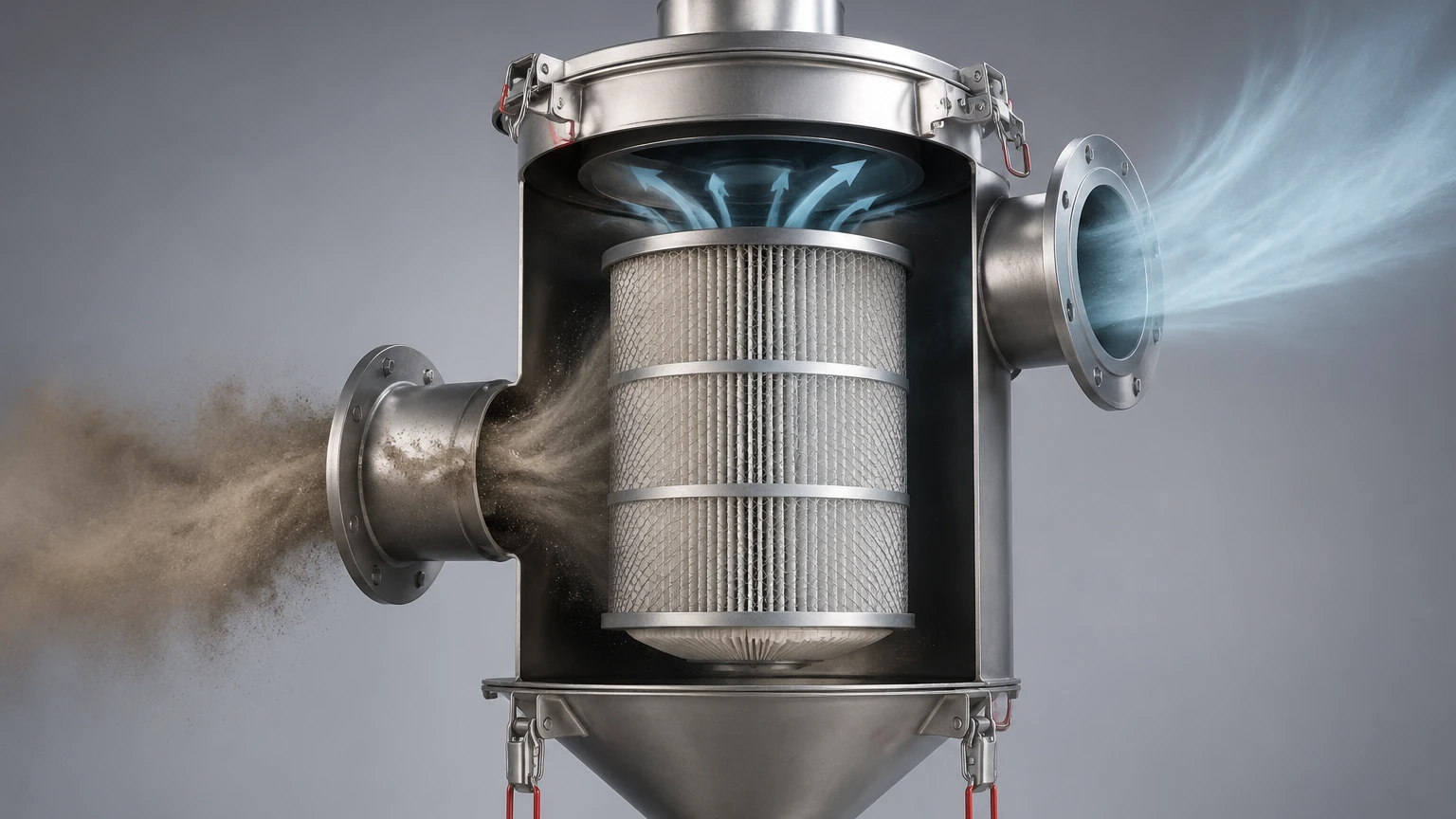
A reverse air dust collector is a type of baghouse filter that utilizes a gentle, low-pressure cleaning mechanism to remove accumulated dust from filter bags. Unlike pulse-jet systems that use high-pressure compressed air, reverse air collectors rely on a secondary fan or a system of dampers to reverse the flow of air through the filter media. This reversal causes the bags to partially collapse, which in turn causes the accumulated dust cake to crack and fall into a collection hopper.
These systems are typically compartmentalized. This design allows the collector to remain operational even during a cleaning cycle. While one compartment is isolated and cleaned, the remaining compartments continue to filter the process gas. This modularity is a key advantage for facilities that require 24/7 operation without downtime for maintenance. For organizations looking to integrate high-quality filtration components into these systems, visiting the Main Page of a specialized manufacturer like Kaifil can provide insights into the precision metal components required for such demanding environments.
Operational Mechanism: The Cleaning Cycle Explained
The efficiency of a reverse air dust collector is primarily determined by its cleaning cycle. The process is divided into several distinct phases:
1. Filtration Phase: Dirty, dust-laden gas enters the collector and is directed into the interior of the filter bags (in most reverse air designs). As the gas passes through the fabric, the dust is trapped on the inner surface, forming a "dust cake." The clean gas then exits through the top of the bags into the clean air plenum.
2. Isolation Phase: When the pressure drop across a compartment reaches a predetermined setpoint, the outlet damper for that specific compartment closes. This stops the flow of process gas through those bags.
3. Reverse Air Phase: A secondary fan, known as the reverse air fan, is activated. It blows clean air into the clean air plenum of the isolated compartment in the opposite direction of the normal filtration flow. This reverse pressure causes the bags to flex and slightly collapse inward.
4. Dust Release: To prevent the bags from collapsing completely and sticking together, they are often equipped with anti-collapse rings—precision metal components that maintain the bag's shape while allowing enough movement to dislodge the dust cake. The shattered cake falls by gravity into the hopper below.
5. Settling and Re-entry: After the reverse air flow stops, a brief period is allowed for the dust to settle in the hopper. The outlet damper then reopens, and the compartment returns to the filtration phase.
Engineering Considerations: Air-to-Cloth Ratios and Sizing
One of the most critical specifications in the design of a reverse air dust collector is the Air-to-Cloth (A/C) ratio, also known as the filtration velocity. This ratio represents the volume of gas passing through a square foot of filter media per minute (expressed in CFM/ft² or m/min).
For reverse air systems, the A/C ratio is typically much lower than that of pulse-jet collectors. While pulse-jet systems might operate at ratios of 3:1 to 6:1, reverse air systems generally operate between 1.5:1 and 2.5:1. There are several reasons for this conservative design:
* Gentle Cleaning: Because the cleaning mechanism is less aggressive, it takes longer to remove the dust. A lower A/C ratio ensures that the pressure drop does not rise too quickly between cleaning cycles.
* Bag Longevity: Lower velocities reduce the impact of abrasive particles on the filter fabric, significantly extending the life of the bags, which can often last five to ten years in a well-maintained reverse air system.
* Efficiency: A lower velocity allows for the development of a more stable dust cake, which actually aids in the filtration of very fine sub-micron particles.
Engineers must also consider the total gas volume, temperature, and moisture content. High-temperature applications may require specialized stainless steel internal supports and housings to prevent thermal warping and corrosion.
Material Selection for High-Performance Filtration
The choice of materials for both the filter media and the internal structural components is paramount. In a reverse air dust collector, the filter bags are often made of woven fiberglass, polyester, or specialized synthetic fibers like Aramids (Nomex) or P84, depending on the chemical and thermal demands of the process.
However, the performance of the fabric is only as good as the hardware supporting it. Stainless steel plays a vital role in these systems, particularly in the following areas:
* Anti-Collapse Rings: These rings must be precisely manufactured to ensure they do not have sharp edges that could tear the fabric during the cleaning collapse. Stainless steel is preferred for its strength-to-weight ratio and resistance to the corrosive gases often found in industrial exhausts.
* Dampers and Valves: The dampers that isolate compartments must provide a tight seal to ensure the reverse air flow is effective. Precision-machined stainless steel components ensure longevity and reliable sealing under high-temperature conditions.
* Custom Cartridges and Mesh: In some specialized reverse air designs, custom wire mesh or stainless steel filter cartridges are used instead of traditional fabric bags to handle extremely abrasive or high-temperature materials where fabric would fail.
By selecting high-grade materials, operators can reduce the total cost of ownership by minimizing part replacements and preventing unplanned outages.
Comparative Analysis: Reverse Air vs. Pulse Jet Systems
When selecting a dust collection strategy, engineers often weigh the pros and cons of reverse air versus pulse-jet technology.
Reverse Air Advantages:
* Lower Mechanical Stress: The gentle cleaning action is far less taxing on the filter media than the high-pressure "shock" of a pulse-jet. This makes it ideal for fragile media like fiberglass.
* Higher Capacity: Because they are designed for lower A/C ratios, reverse air collectors are physically larger and can handle significantly higher total air volumes.
* Compartmentalization: Maintenance can often be performed on one compartment while the rest of the unit stays online.
Reverse Air Limitations:
* Footprint: Due to the lower A/C ratio, these units require a much larger physical footprint than pulse-jet systems.
* Initial Capital Cost: The larger size and the need for secondary fans and complex ductwork usually result in a higher initial investment.
For many heavy industrial applications, the increased bag life and reliability of the reverse air dust collector justify the higher initial cost and larger footprint.
Maintenance Protocols and Troubleshooting Common Issues
To maintain the efficiency of a reverse air dust collector, a rigorous maintenance schedule is required. The most important metric to monitor is the differential pressure (DP) across the filter bags.
* High Differential Pressure: This usually indicates that the cleaning cycle is ineffective. Potential causes include a failing reverse air fan, leaking dampers that prevent proper pressure buildup, or "blinding" of the filter bags due to moisture or excessive dust loading.
* Low Differential Pressure: While low DP is generally good, a sudden drop may indicate a torn bag or a bypassed compartment.
* Dust Emissions: Visible dust from the stack is a clear sign of bag failure. In a compartmentalized system, operators can isolate individual compartments one by one to identify which section contains the failed bags.
Regular inspection of the anti-collapse rings and the tensioning system of the bags is also necessary. If bags are too loose, they will not collapse correctly; if they are too tight, they may tear at the attachment points.
Customization and OEM Solutions for Industrial Dust Collection
Every industrial process has unique requirements, from the chemical composition of the dust to the temperature of the exhaust stream. Standard off-the-shelf solutions rarely provide the optimal balance of efficiency and durability. This is where customization becomes essential.
Manufacturers like Kaifil specialize in providing the precision metal components that allow a reverse air dust collector to function in extreme environments. Whether it is custom-sized stainless steel support rings, high-temperature resistant wire mesh filters, or specialized cartridges for chemical processing, the integration of high-quality OEM components is vital.
When designing a system, engineers should confirm the following with their component suppliers:
* Material Compatibility: Ensure the stainless steel grade (e.g., 304, 316L) is appropriate for the acidity or alkalinity of the gas stream.
* Filtration Accuracy: Define the required micron rating to meet environmental discharge permits.
* Structural Integrity: Verify that internal components can withstand the mechanical stresses of the reverse air cleaning cycle over thousands of repetitions.
For technical professionals and purchasing teams, focusing on these engineering details during the procurement phase prevents costly retrofits later. By leveraging advanced manufacturing capabilities and material expertise, facilities can ensure their reverse air dust collector operates at peak performance for years to come.
In conclusion, the reverse air dust collector remains a vital tool for large-scale industrial filtration. Its ability to provide continuous, high-efficiency cleaning with minimal wear on filter media makes it the preferred choice for the world's most demanding environments. By understanding the mechanical principles and prioritizing high-quality, customized components, industrial operators can achieve a reliable and cost-effective air quality solution.
