


Filtro Autolimpiante
In industrial liquid processing, maintaining continuous flow while ensuring high-precision particle separation is a critical engineering challenge. The filtro autolimpiante, or self-cleaning filter, has emerged as the standard solution for applications where downtime for manual cleaning is either cost-prohibitive or technically unfeasible. Unlike traditional bag or basket filters that require periodic intervention, these systems utilize automated mechanisms to remove accumulated debris from the filter element without interrupting the process flow.
For engineers and procurement professionals, selecting a filtro autolimpiante involves a deep understanding of fluid dynamics, material compatibility, and the specific mechanical cleaning technology required for the medium. As a specialized manufacturer of stainless steel filtration components, Kaifil provides the technical foundation for these systems, ensuring that the core filtration media can withstand the mechanical stresses of automated cleaning cycles.
Operational Principles of Self-Cleaning Mechanisms
The efficacy of a filtro autolimpiante depends on its ability to sense a rise in differential pressure (ΔP) and trigger a cleaning cycle. When the accumulated solids on the internal surface of the filter element reach a predetermined threshold, the system initiates one of several cleaning methods.
Mechanical Scraping
In high-viscosity applications or environments with sticky contaminants, mechanical scraping is often preferred. A scraper blade, typically made of reinforced polymer or stainless steel, moves across the surface of the wire mesh or wedge wire element. This action dislodges the "filter cake" and directs it toward a collection chamber at the bottom of the housing. This method is highly effective for maintaining consistent flow rates in food processing and chemical manufacturing.
Backwashing (Backflushing)
Backwashing systems utilize a portion of the filtered fluid—or an external clean fluid source—to reverse the flow through a section of the filter element. This high-velocity reverse flow forces trapped particles out of the mesh openings. In advanced multi-element designs, only one segment is cleaned at a time, allowing the rest of the system to remain online. This is the primary mechanism used in water treatment and cooling tower applications.
Suction Scanning
Suction scanning combines the benefits of backwashing with localized high-velocity cleaning. A scanning nozzle moves in a spiral path across the inner surface of the filter screen. The pressure differential between the process fluid and the atmosphere creates a high-suction effect at the nozzle tip, vacuuming the debris off the screen. This method is particularly efficient for removing fine suspended solids with minimal wastewater generation.
Material Science: The Role of Stainless Steel in Filtration
The durability of a filtro autolimpiante is fundamentally tied to the quality of its filter element. Because these systems are designed for high-frequency cleaning cycles, the media must possess exceptional structural integrity and corrosion resistance. Stainless steel is the material of choice for industrial-grade self-cleaning units.
* Grade 304 Stainless Steel: Suitable for general industrial water filtration and non-corrosive environments. It offers a balance of strength and cost-effectiveness.
* Grade 316L Stainless Steel: Essential for pharmaceutical, food and beverage, and chemical processing. The low carbon content and addition of molybdenum provide superior resistance to pitting and crevice corrosion, especially in chloride-rich environments.
* Specialty Alloys: For extreme conditions involving high temperatures or highly acidic fluids, alloys such as Duplex stainless steel or Hastelloy may be integrated into the custom filter design.
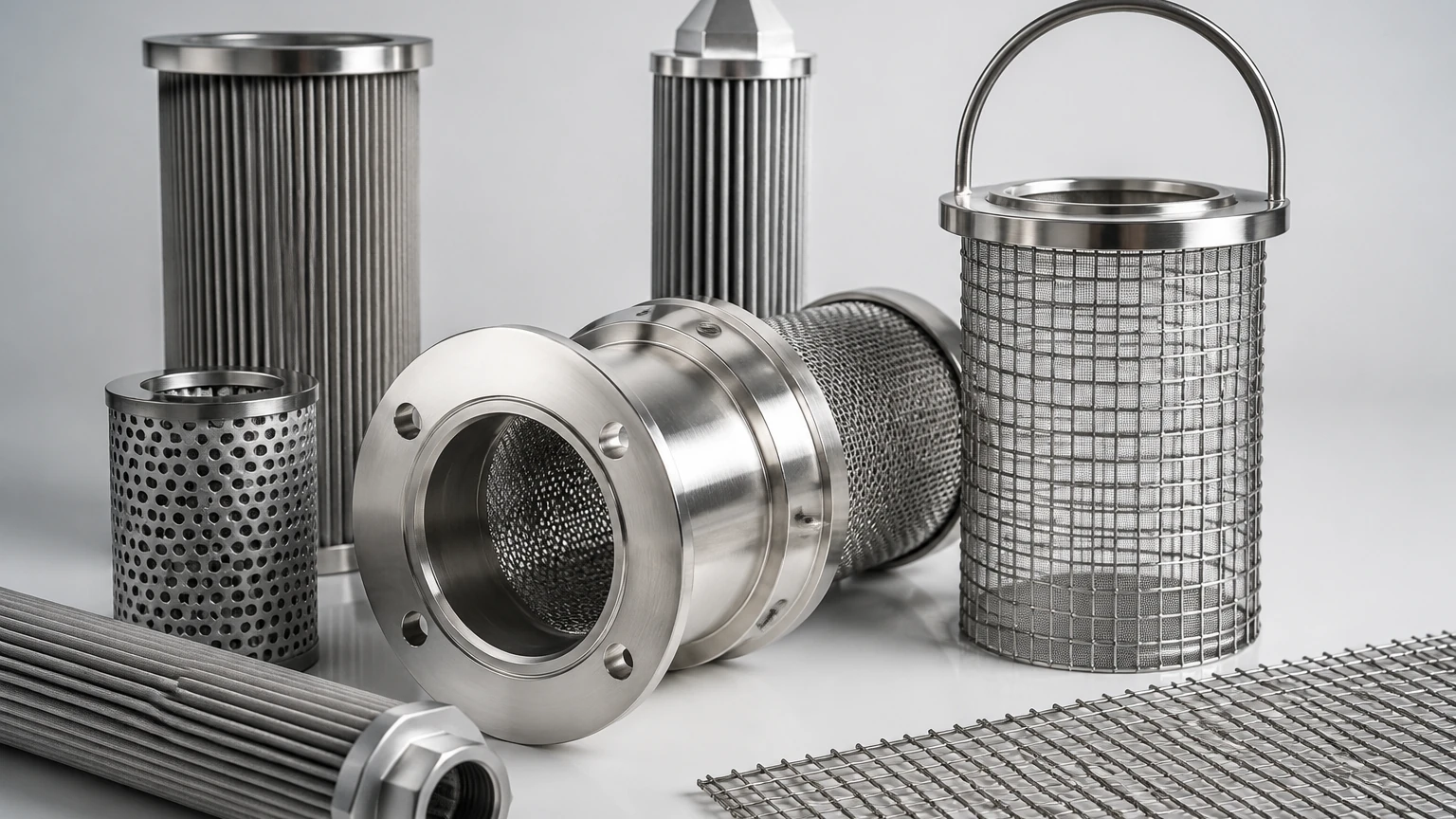
Kaifil specializes in manufacturing the precision wire mesh and sintered components that serve as the heart of these systems. By focusing on material purity and precise weave patterns, these components ensure that the filtro autolimpiante maintains its micron rating over thousands of cleaning cycles.
Technical Selection Criteria for Industrial Engineers
Specifying a filtro autolimpiante requires more than just identifying a pipe size. Technical teams must evaluate several variables to ensure the system meets the performance expectations of the facility.
1. Micron Rating and Open Area: The micron rating defines the size of particles the filter will retain. However, engineers must also consider the "open area" percentage. A higher open area reduces the initial pressure drop and extends the time between cleaning cycles.
2. Flow Rate and Velocity: Systems must be sized to handle peak flow rates without exceeding the maximum recommended velocity across the filter media. Excessive velocity can drive soft contaminants through the mesh or cause premature wear on the cleaning mechanism.
3. Nature of Contaminants: Are the solids hard and abrasive, or soft and deformable? Abrasive solids require hardened scraper blades and wear-resistant mesh coatings, while soft solids may require specific backwash pressures to ensure complete removal.
4. Operating Pressure and Temperature: The housing and internal seals must be rated for the maximum system pressure, including potential surges. Temperature fluctuations can affect fluid viscosity and material expansion, necessitating robust engineering tolerances.
To explore specific configurations and technical data sheets for stainless steel filtration components, engineers can visit the Main Page for a comprehensive overview of available OEM solutions.
Application-Specific Challenges and Solutions
Different industries impose unique demands on a filtro autolimpiante. Understanding these nuances is vital for successful implementation.
Chemical Processing
In chemical plants, the primary concern is often chemical compatibility and the handling of hazardous fluids. Self-cleaning filters eliminate the need for operators to open the filter housing, significantly reducing the risk of exposure to toxic or volatile substances. Custom-engineered stainless steel elements are required to withstand the aggressive nature of solvents and acids.
Food and Beverage Production
Hygiene is the priority in food and beverage applications. The filtro autolimpiante must be designed with "sanitary" principles, featuring smooth surfaces and minimal dead legs where bacteria could proliferate. Stainless steel 316L is the standard here, often requiring specific surface finishes (Ra values) to comply with FDA or EHEDG standards.
Cooling Water and Intake Systems
Power plants and large manufacturing facilities use self-cleaning filters to protect heat exchangers from fouling. These systems often handle large volumes of water with high organic loads, such as algae or silt. In these cases, the backwash efficiency and the ability to handle large debris without clogging the flush valve are the most critical performance metrics.
Maintenance, Durability, and Total Cost of Ownership
While the initial capital expenditure for a filtro autolimpiante is higher than that of a manual filter, the Total Cost of Ownership (TCO) is typically much lower. The reduction in labor costs, the elimination of disposable filter media, and the prevention of downstream equipment damage provide a rapid Return on Investment (ROI).
Maintenance Requirements
Although "self-cleaning," these units are not "maintenance-free." Routine inspections should focus on:
* Seal Integrity: Checking O-rings and gaskets for wear, especially in high-temperature applications.
* Scraper/Nozzle Wear: In mechanical systems, the scraping edge must be inspected for erosion to ensure it continues to clean the mesh effectively.
* Control System Calibration: Ensuring the differential pressure sensors and PLC logic are correctly triggering the cleaning cycles.
Customization and OEM Integration
Every industrial process has unique spatial and functional constraints. Kaifil’s expertise lies in providing customized filtration components that fit seamlessly into existing filtro autolimpiante architectures. Whether it is a non-standard diameter for a filter cartridge or a specific mesh weave for a unique particle distribution, customization ensures that the filtration system is optimized for the specific fluid dynamics of the plant.
Conclusion and Technical Verification
The implementation of a filtro autolimpiante is a strategic investment in process stability and operational efficiency. By automating the removal of contaminants, facilities can achieve higher throughput, lower waste, and improved product quality. However, the success of the system relies heavily on the quality of the internal filtration media and the precision of the engineering specifications.
Before finalizing a purchase, technical teams should confirm the following:
* Verification of the micron rating through laboratory testing or certified documentation.
* Compatibility of all wetted parts with the process fluid.
* Availability of replacement components and technical support from the manufacturer.
By partnering with a manufacturer like Kaifil, which understands the rigors of industrial filtration, engineers can ensure their self-cleaning systems are equipped with the durable, high-performance components necessary for long-term reliability. For detailed product options and application-specific support, reviewing the resources available on the Main Page is a recommended next step for any procurement or engineering project.
