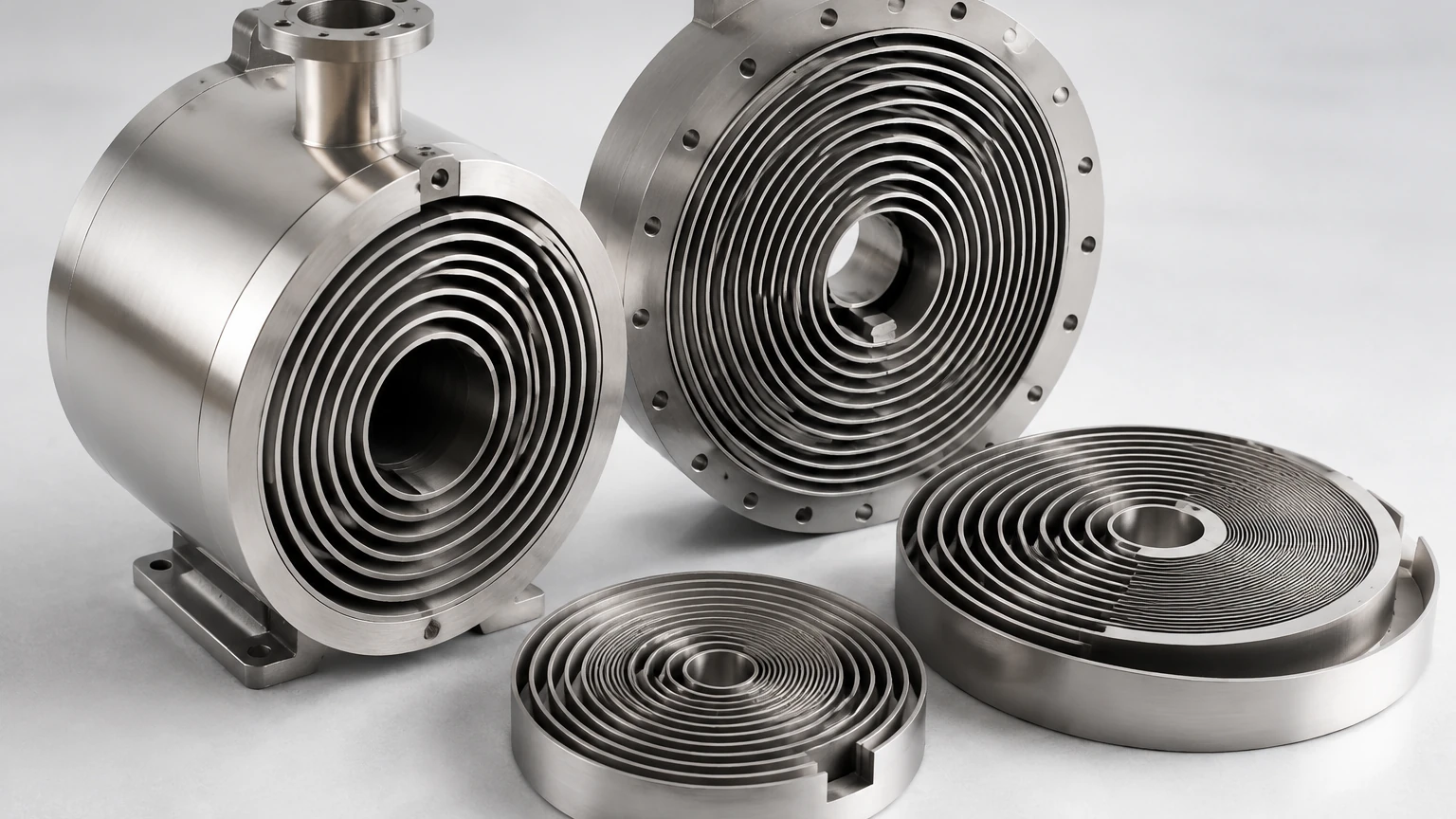
Spiral Plate Heat Exchangers
In the landscape of industrial thermal management, spiral plate heat exchangers represent a specialized engineering solution designed to handle challenging fluids while maintaining high thermal efficiency. Unlike conventional shell-and-tube designs, the spiral configuration utilizes a unique geometry that promotes turbulence and minimizes fouling, making it a preferred choice in chemical processing, wastewater treatment, and heavy industrial applications. For engineers and facility managers, understanding the mechanical nuances of these units—and the critical role of auxiliary systems like precision filtration—is essential for optimizing process uptime and reducing total cost of ownership.
Engineering Principles and Design Geometry
The fundamental design of spiral plate heat exchangers consists of two long, relatively wide metal plates that are rolled around a central mandrel to create two concentric spiral channels. These channels allow for a counter-current flow pattern, which is the most efficient method for heat transfer as it maintains a consistent temperature gradient between the hot and cold media throughout the entire length of the flow path.
One of the primary engineering advantages of this geometry is the "single-channel" flow. In a shell-and-tube exchanger, fluid is distributed across dozens or hundreds of tubes. If one tube becomes blocked, the fluid simply bypasses it, leading to localized hot spots and accelerated fouling in the remaining tubes. In a spiral plate heat exchanger, any localized restriction in the channel causes a temporary increase in fluid velocity at that specific point. This increase in velocity creates a "scrubbing" effect, often referred to as a self-cleaning mechanism, which can dislodge deposits before they solidify into a permanent blockage.
Performance Characteristics in Demanding Environments
Spiral plate heat exchangers are frequently selected for applications involving high-fouling liquids, slurries, and fibrous suspensions. The curved flow path induces centrifugal forces on the fluid, which generates secondary flow patterns. These patterns enhance heat transfer coefficients even at lower Reynolds numbers compared to straight-tube designs.
From a mechanical perspective, these units are robust. They are typically fully welded, which eliminates the need for the extensive gaskets found in plate-and-frame heat exchangers. This makes them suitable for handling hazardous or corrosive fluids where leak prevention is a critical safety requirement. Common materials of construction include various grades of stainless steel (such as 304L and 316L), duplex steels, and nickel alloys, depending on the chemical compatibility requirements of the process.
The Critical Role of Pre-Filtration and Protection
While the self-cleaning nature of spiral plate heat exchangers is a significant benefit, it is not a panacea for all types of contamination. Large particulates, metal shavings, or long-chain fibrous materials can still bridge the narrow gaps between the spiral plates. Once a bridge is formed, it acts as a secondary filter, trapping smaller particles and eventually leading to a complete channel blockage.
To maintain the operational integrity of these heat transfer systems, high-performance filtration is an engineering necessity. This is where the integration of precision stainless steel filtration components becomes vital. By implementing a robust pre-filtration stage, engineers can ensure that only particles smaller than the heat exchanger's channel clearance enter the system.
For those seeking reliable filtration components to protect their thermal equipment, it is advisable to Review product options and application support on the Kaifil Main Page to understand how customized wire mesh and cartridge solutions can be tailored to specific flow rates and micron ratings.
Evaluating Filtration Requirements for Heat Exchangers
When selecting a filtration system to support spiral plate heat exchangers, several engineering factors must be evaluated:
1. Filtration Accuracy: The micron rating of the filter must be significantly smaller than the channel width of the heat exchanger. Typically, a safety factor of 3:1 or 5:1 is recommended (e.g., if the heat exchanger channel is 15mm, the filter should catch anything larger than 3mm-5mm, though many chemical processes require much finer filtration in the 50-200 micron range).
2. Pressure Drop (ΔP): Both the heat exchanger and the filter contribute to the system's total pressure drop. Engineers must calculate the clean pressure drop and the maximum allowable terminal pressure drop before the filter requires cleaning or replacement to ensure the pumps are correctly sized.
3. Material Compatibility: Just as the heat exchanger must withstand the process fluid, the filter housing and the internal mesh must be resistant to corrosion and temperature fluctuations. Stainless steel 316L is often the standard for industrial filtration due to its excellent resistance to pitting and crevice corrosion.
4. Durability under Flow Surges: Industrial systems often experience hydraulic shocks or flow surges. Precision-welded stainless steel filter cartridges offer the structural integrity needed to withstand these forces without bypassing or collapsing.
Maintenance and Operational Longevity
The maintenance profile of spiral plate heat exchangers is generally lower than that of shell-and-tube units, but it is not zero. Periodic Cleaning-in-Place (CIP) is the most common method for maintaining thermal efficiency. By circulating chemical cleaning agents through the spiral channels, scale and organic deposits can be dissolved and flushed out.
However, if the system is not protected by adequate filtration, mechanical cleaning may become necessary. This involves removing the end covers of the spiral unit and using high-pressure water jets to clear the channels. This process is time-consuming and risks damaging the internal spacers (studs) that maintain the channel gap. By investing in high-quality stainless steel wire mesh filters at the inlet, the frequency of these invasive mechanical cleanings can be drastically reduced, thereby extending the service life of the heat exchanger.
Customization in Filtration Solutions
No two industrial processes are identical, and off-the-shelf filtration often fails to meet the specific demands of complex heat transfer loops. Customization is key to achieving optimal performance. This includes designing filter elements with specific surface areas to handle high dirt-holding capacities or creating unique geometries that fit into existing piping layouts without requiring extensive modifications.
Manufacturers like Kaifil specialize in these custom stainless steel filtration solutions. By focusing on the engineering requirements of the application—such as the specific characteristics of the solids being removed and the thermal properties of the fluid—custom filters can be developed to provide a seamless interface with spiral plate heat exchangers. This synergy ensures that the heat exchanger operates at its designed thermal efficiency for the longest possible interval.
Total Cost of Ownership Considerations
When engineers evaluate the acquisition of spiral plate heat exchangers, the initial capital expenditure is only one part of the equation. The total cost of ownership (TCO) includes energy costs (pumping power), maintenance labor, chemical cleaning costs, and the cost of unplanned downtime.
An unprotected heat exchanger may have a lower initial system cost, but the rapid degradation of heat transfer efficiency and the high cost of manual cleaning quickly erode those savings. Conversely, a system integrated with high-efficiency stainless steel filtration ensures stable thermal performance and predictable maintenance cycles. The use of cleanable and reusable stainless steel filter cartridges further reduces the TCO by eliminating the recurring cost of disposable filter bags or plastic cartridges.
Conclusion
Spiral plate heat exchangers are a powerful tool in the engineer's arsenal for managing difficult fluids and high thermal loads. Their unique geometry offers distinct advantages in fouling resistance and compact design. However, the success of these units is inextricably linked to the quality of the fluid entering them.
By prioritizing precision filtration and selecting robust, stainless steel components designed for industrial rigors, technical professionals can protect their investment in heat transfer technology. Whether in chemical processing, pharmaceutical manufacturing, or heavy industrial water treatment, the combination of advanced heat exchange and precision filtration represents the gold standard for efficient, reliable, and cost-effective thermal management.