


Panelfilter
In the landscape of industrial filtration, the panelfilter serves as a primary line of defense and a critical component in multi-stage purification systems. Unlike standard commercial air filters, industrial-grade panelfilters must withstand rigorous operating conditions, including high pressure, corrosive chemical exposure, and extreme temperature fluctuations. For engineers and procurement specialists, selecting the correct panelfilter involves a deep understanding of material science, fluid dynamics, and the specific mechanical requirements of the application environment.
At its core, a panelfilter is a flat or pleated filtration device housed within a rigid frame. While disposable versions exist for light-duty HVAC applications, industrial sectors—such as chemical processing, food and beverage, and pharmaceutical manufacturing—rely on permanent, cleanable, and highly durable stainless steel panelfilters. These components are engineered to provide high-efficiency particulate removal while maintaining structural integrity over long service life cycles.
Technical Anatomy of an Industrial Panelfilter
To evaluate a panelfilter for industrial use, one must look beyond the external dimensions. The performance of the filter is dictated by three primary elements: the filter media, the frame construction, and the sealing mechanism.
Filter Media and Weave Types
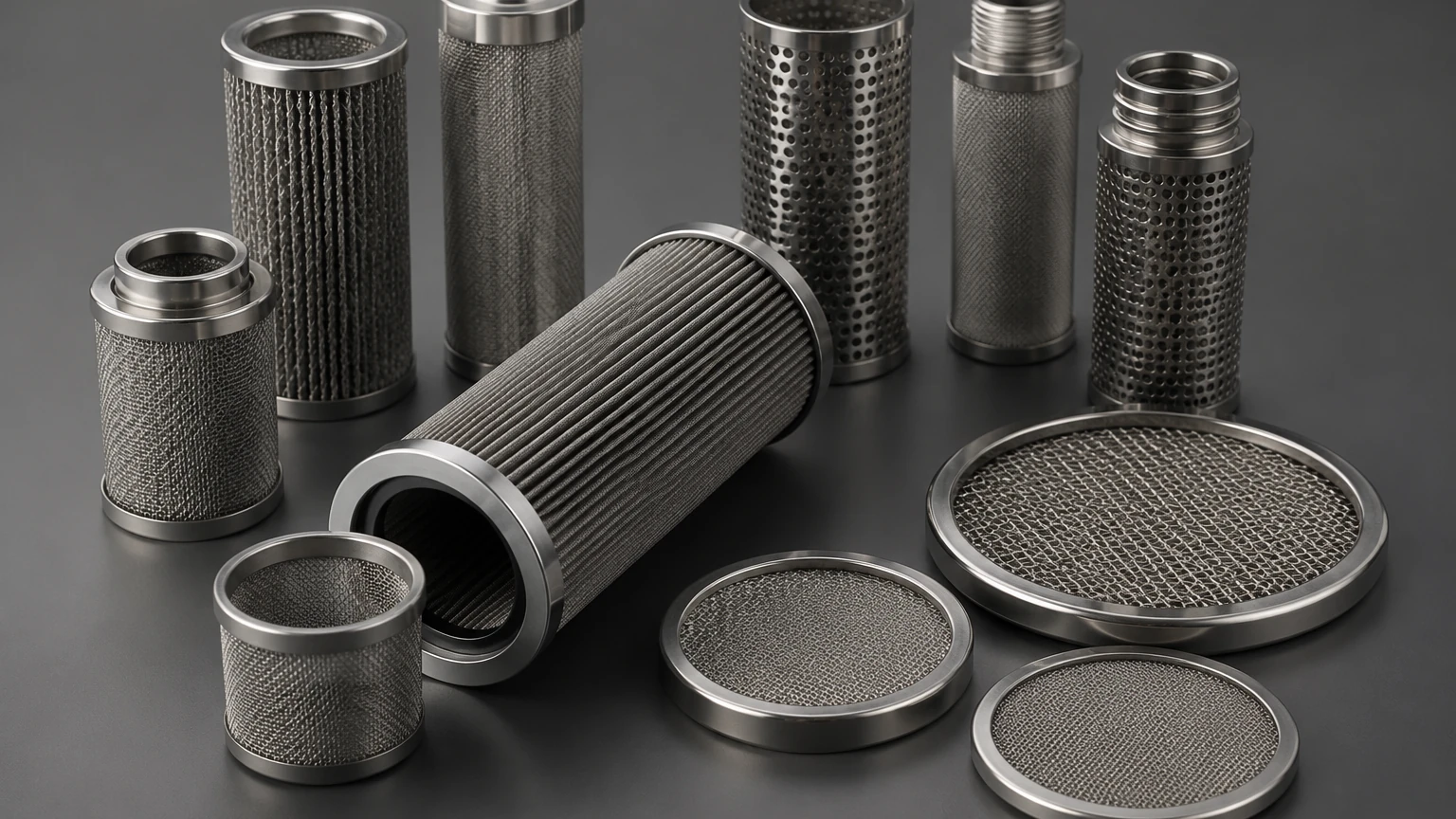
In high-performance environments, the media is typically constructed from stainless steel wire mesh. The choice of weave—such as plain weave, twilled weave, or Dutch weave—determines the filtration accuracy and the flow resistance.
* Plain Weave: Offers a straightforward aperture for high-flow applications with lower pressure drops.
* Dutch Weave: Provides a denser structure, suitable for high-pressure applications where fine particle retention (down to the micron level) is required.
* Sintered Mesh: For the most demanding environments, multiple layers of wire mesh are sintered together to create a porous metal plate that offers exceptional mechanical strength and heat resistance.
Frame Integrity
The frame of a panelfilter must be robust enough to prevent bypass—a common failure where unfiltered fluid or gas escapes around the edges of the media. Industrial frames are usually fabricated from 304 or 316L stainless steel, providing the necessary corrosion resistance for washdown environments or chemical venting. The frame depth and flange configuration are critical for ensuring a secure fit within the filter housing or air handling unit.
Engineering Considerations: Pressure Drop and Efficiency
One of the most significant factors for engineers is the relationship between filtration efficiency and differential pressure ($\\Delta P$). A panelfilter with a high filtration rating (small micron size) will naturally create a higher initial pressure drop.
Initial vs. Final Pressure Drop
Engineers must calculate the system's tolerance for pressure loss. The initial pressure drop refers to the resistance of a clean filter, while the final pressure drop is the point at which the filter is considered blinded or loaded and requires cleaning or replacement. Over-specifying a filter (choosing a finer mesh than necessary) can lead to frequent maintenance cycles and increased energy consumption by the pumps or fans driving the system.
Dust Holding Capacity (DHC)
The DHC of a panelfilter determines how much contaminant it can retain before reaching its terminal pressure drop. Pleated designs are often preferred in industrial settings because they significantly increase the effective filtration surface area within the same footprint. By increasing the surface area, the face velocity of the fluid is reduced, which improves the DHC and extends the service interval.
Material Selection for Corrosive and High-Temperature Environments
In sectors like pharmaceutical and chemical processing, the panelfilter is often exposed to aggressive cleaning agents or high-temperature process streams. Standard synthetic or aluminum filters often fail under these conditions. Stainless steel, specifically Grade 316L, is the industry standard for these applications due to its molybdenum content, which provides superior resistance to pitting and crevice corrosion in chloride-containing environments.
Furthermore, metal panelfilters are capable of operating at temperatures exceeding 500°C, where polymer-based media would melt or degrade. This makes them indispensable for hot gas filtration and steam filtration processes. When reviewing product options and application support, engineers should verify that the welding and assembly techniques used in the filter’s construction are compatible with the intended operating temperature to prevent thermal fatigue.
Customization and OEM Integration
Many industrial systems require non-standard dimensions or specific performance characteristics that off-the-shelf products cannot meet. Customization of a panelfilter can involve:
1. Variable Micron Ratings: Tailoring the mesh layers to capture specific particle sizes while optimizing flow.
2. Reinforcement Layers: Adding perforated metal backing or support grids to withstand high-pressure surges.
3. Specialized Gaskets: Utilizing PTFE, EPDM, or Silicone seals to ensure a leak-proof interface with the existing machinery.
For organizations looking to integrate these components into larger proprietary systems, working with a manufacturer that understands OEM requirements is essential. You can find detailed information on customized filtration solutions and engineering support on our Main Page.
Applications Across Key Industries
The versatility of the stainless steel panelfilter allows it to be used across diverse industrial sectors, each with unique requirements.
Food and Beverage
In food production, hygiene is the primary concern. Panelfilters used in these environments must be easy to clean (CIP – Clean-in-Place) and resistant to the caustic chemicals used in sterilization. Stainless steel mesh filters are ideal here as they do not shed fibers, ensuring that the filtration media itself does not become a contaminant.
Hydraulic and Lubrication Systems
Panelfilters are frequently used as air breathers on hydraulic reservoirs. They prevent airborne dust and moisture from entering the tank as fluid levels fluctuate. By maintaining the cleanliness of the hydraulic fluid, these filters protect expensive pumps and valves from premature wear.
Chemical and Petrochemical
In chemical venting, panelfilters capture fine droplets or particulate matter from exhaust streams. The ability to withstand acidic or alkaline vapors without losing structural integrity is why 316L stainless steel is the preferred material for these panelfilter units.
Maintenance and Total Cost of Ownership (TCO)
While the initial purchase price of a stainless steel panelfilter is higher than that of a disposable synthetic filter, the Total Cost of Ownership is often significantly lower in an industrial context.
Cleaning vs. Replacement
A metal panelfilter can be cleaned and reused hundreds of times. Cleaning methods include ultrasonic cleaning, backwashing, or chemical baths, depending on the nature of the contaminant. This eliminates the recurring cost of purchasing new filters and the environmental burden of disposing of used, often contaminated, media.
Monitoring Performance
To optimize the replacement or cleaning cycle, industrial systems should be equipped with differential pressure gauges. Monitoring the $\\Delta P$ across the panelfilter allows maintenance teams to perform "condition-based maintenance" rather than relying on arbitrary calendar dates. This ensures the filter is only serviced when necessary, maximizing uptime and reducing labor costs.
Selecting the Right Partner for Filtration Solutions
Choosing a panelfilter is not merely a matter of finding a part that fits a slot; it is about ensuring the long-term efficiency and safety of an industrial process. Engineers must verify the manufacturer's capabilities in terms of material traceability, welding certifications, and filtration testing standards.
When evaluating a supplier, consider the following checklist:
* Does the supplier offer material certificates (e.g., 3.1 certs) for the stainless steel used?
* Can they provide bubble point testing or other validation of filtration accuracy?
* Are they capable of producing custom sizes to fit legacy equipment?
* What is the expected lead time for OEM quantities versus replacement units?
By addressing these questions early in the procurement process, technical professionals can avoid the risks of system downtime or product contamination. For more information on how precision-engineered metal filters can improve your specific application, please refer to the technical resources available on our Main Page.
Conclusion
The panelfilter is a vital component that demands technical scrutiny. Whether it is used for protecting sensitive hydraulic components, ensuring the purity of a pharmaceutical batch, or filtering air in a high-temperature kiln, the quality of the panelfilter directly impacts the bottom line. By prioritizing durable materials like stainless steel and focusing on engineering metrics like pressure drop and surface area, industrial facilities can achieve a more reliable and cost-effective filtration process. Investing in high-quality, cleanable panelfilters is a strategic decision that supports both operational excellence and sustainability goals.
