


Woven Wire Mesh: Industrial Engineering vs. Agricultural Fencing Standards
In the procurement of wire-based products, the term "woven wire" spans a vast spectrum of applications, from heavy-duty agricultural containment to high-precision industrial filtration. For many property owners and farmers, searching for a woven wire fence rural king provides a reliable solution for livestock management and perimeter security. However, for engineers and technical purchasing teams in the chemical, pharmaceutical, or food processing sectors, the requirements for Woven Wire Mesh shift from basic structural integrity to precise micron ratings and chemical compatibility.
Understanding the technical distinctions between commercial-grade fencing and industrial-grade filtration mesh is essential for ensuring operational efficiency and long-term durability. While retail options like those found at Rural King serve the agricultural market effectively, industrial applications demand a level of material science and manufacturing precision that goes far beyond standard fencing specifications.
The Fundamental Differences in Weave Construction
At its core, woven wire is produced by interlacing longitudinal (warp) wires and transverse (shute) wires. However, the methods of interlacing vary significantly based on the intended use.
Agricultural Woven Wire (Fencing)
Agricultural fencing, such as the woven wire fence options typically found at Rural King, often utilizes a "hinge joint" or "fixed knot" construction. These designs are engineered to absorb impact from livestock and provide flexibility over uneven terrain. The wire diameters are generally thicker (often 9 to 14 gauge), and the openings (apertures) are large, designed to contain animals rather than filter particles.
Industrial Woven Wire Mesh
In contrast, industrial Woven Wire Mesh is manufactured using high-precision looms that maintain strict tolerances on aperture size. Common industrial weaves include:
* Plain Weave: The most common industrial weave where each shute wire passes over and under one warp wire. It provides high flow rates and is easily cleaned.
* Twill Weave: Each wire passes over two and under two wires, allowing for a heavier wire diameter in a given mesh count. This is ideal for high-pressure applications.
* Dutch Weave: This utilizes different wire diameters for the warp and shute, creating a dense, multi-layered structure that provides superior filtration accuracy down to the micron level.
Material Selection: Beyond Galvanized Steel
One of the primary differentiators between a standard woven wire fence and industrial mesh is the metallurgical composition. Most agricultural fencing is made from carbon steel with a galvanized coating (zinc) to prevent rust in outdoor environments.
In industrial filtration, carbon steel is rarely sufficient due to the presence of corrosive chemicals, high temperatures, or strict hygiene requirements. Kaifil specializes in high-grade stainless steel alloys, specifically:
* SS304: The standard grade for general industrial use, offering excellent corrosion resistance and durability in most atmospheric conditions.
* SS316L: An extra-low carbon version of SS316, providing superior resistance to pitting and crevice corrosion in chloride-rich environments, such as marine or chemical processing applications.
For engineers evaluating a woven wire fence rural king for a specialized project, it is critical to confirm if the environment involves acidic or alkaline exposure. If so, a transition to a stainless steel industrial mesh is necessary to prevent premature failure and product contamination.
Technical Specifications: Aperture vs. Mesh Count
When purchasing fencing at a retail outlet, the primary measurements are the height of the roll and the spacing of the wires (e.g., 6-inch by 6-inch squares). In the B2B industrial sector, the language of specification is much more granular.
Defining Mesh Count
Mesh count refers to the number of openings per linear inch. An industrial mesh might range from a coarse 2-mesh (large openings) to an incredibly fine 635-mesh (openings invisible to the naked eye). This level of precision is required when the goal is to remove specific particulate sizes from a fluid or gas stream.
Aperture and Open Area
The aperture is the clear distance between two adjacent wires. For filtration efficiency, engineers must calculate the "percentage of open area," which determines the flow rate and pressure drop across the filter. A standard woven wire fence provides nearly 100% open area relative to the wire, but in industrial filtration, balancing structural strength with a high open area is a complex engineering trade-off.
Engineering Considerations for Industrial Filtration
When selecting a Woven Wire Mesh for an industrial system, engineers must look past the surface-level similarities to agricultural products and focus on performance-driven metrics.
1. Filtration Accuracy (Micron Rating)
While a fence only needs to stop a cow or a goat, a filter must stop particles measured in microns (1/1000th of a millimeter). Determining the "nominal" vs. "absolute" micron rating is a key step in the selection process. Kaifil provides Plain, twill and dutch woven wire mesh in SS304/316L — rolls, cut mesh and framed panels. Send mesh count or micron target for a technical quote.
2. Mechanical Strength and Pressure Differential
Industrial filters are often subjected to high-pressure pumps. The mesh must be able to withstand the differential pressure without deforming or "bursting." This often requires the mesh to be pleated or supported by a perforated metal core, a level of fabrication not found in standard fencing products.
3. Temperature Resistance
Agricultural fencing is designed for ambient outdoor temperatures. Industrial mesh, however, may operate in cryogenic conditions or extreme heat (up to 800°C for certain stainless grades). Material selection must account for thermal expansion and potential loss of tensile strength at elevated temperatures.
Customization and OEM Capabilities
A significant advantage of working with a professional manufacturer like Kaifil over a retail supplier is the ability to customize the product to exact equipment specifications. Retail products like a woven wire fence rural king come in standardized rolls that must be manually cut and adapted on-site.
In the B2B industrial world, customization includes:
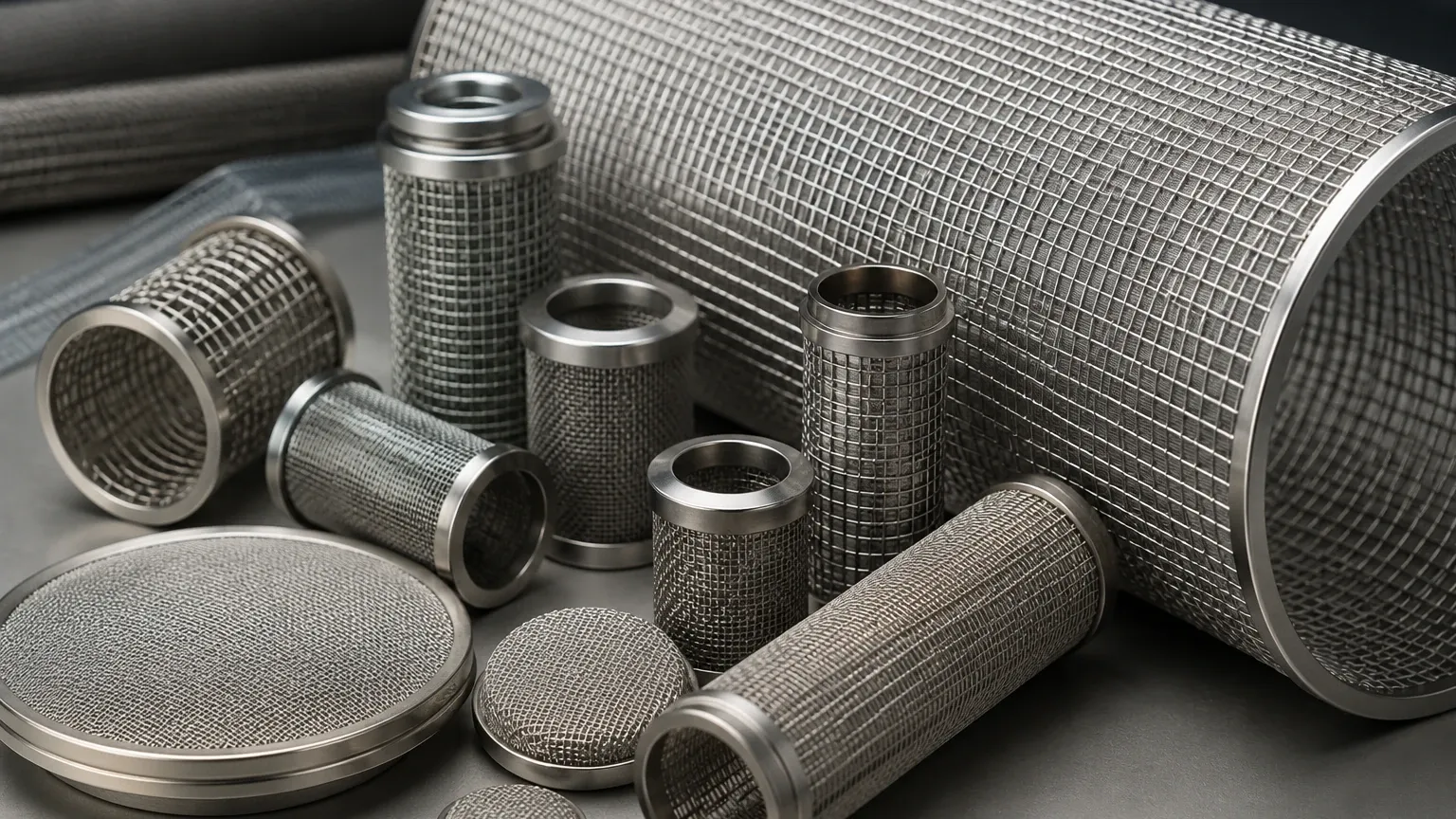
* Custom Dimensions: Mesh can be supplied in specific widths, lengths, or pre-cut shapes (discs, rectangles, or cylinders) to fit directly into a housing.
* Edge Treatments: To prevent fraying and ensure safety, industrial mesh can be provided with welded edges, framed borders, or capped ends.
* Multi-Layer Sintering: For extreme environments, multiple layers of mesh can be sintered (diffusion-bonded) together to create a single, incredibly strong porous plate that maintains the filtration properties of fine mesh with the structural integrity of heavy plate.
Total Cost of Ownership (TCO) and Replacement Cycles
While the initial cost of a high-grade stainless steel Woven Wire Mesh is higher than a galvanized agricultural fence, the Total Cost of Ownership (TCO) in an industrial setting is often lower.
Durability and Longevity
In a chemical plant, a galvanized fence-grade wire would corrode within weeks, leading to system downtime, pump damage, and contaminated batches. Stainless steel mesh, correctly specified for the chemical environment, can last for years with proper maintenance.
Cleanability and Reuse
Unlike many disposable synthetic filters, stainless steel woven mesh is highly cleanable. Techniques such as backwashing, ultrasonic cleaning, or chemical baths can restore the mesh to its original flow characteristics, significantly reducing the frequency of replacement and the associated waste.
Conclusion: Making the Informed Decision
Whether you are securing a rural property or designing a complex hydraulic filtration system, selecting the right wire product is a matter of matching specifications to the environment. While a woven wire fence rural king is a cost-effective and durable choice for agricultural boundaries, it lacks the precision, material purity, and engineering tolerances required for industrial processing.
For engineers and procurement professionals, the focus should remain on technical performance: micron ratings, alloy integrity, and mechanical stability. By partnering with an experienced manufacturer like Kaifil, businesses can ensure that their filtration components provide the reliability and efficiency necessary for demanding industrial applications. When precision matters, industrial-grade Woven Wire Mesh is the only viable solution for protecting downstream equipment and ensuring product quality.
