


Water Well Screen Replacement
In industrial water supply systems, the integrity of the well screen is paramount to maintaining consistent flow rates and preventing sediment infiltration. Over time, even the most robust filtration components succumb to the harsh conditions of subsurface environments. Understanding the technical nuances of water well screen replacement is essential for facility managers and engineers tasked with maintaining water-intensive operations in sectors such as chemical processing, food and beverage production, and large-scale irrigation.
A successful replacement project is not merely a maintenance task; it is an engineering challenge that requires a deep understanding of hydrogeology, material science, and filtration mechanics. When a screen fails, it compromises the entire well's efficiency, leading to increased energy costs for pumping and potential damage to downstream equipment. This guide explores the critical factors involved in evaluating, selecting, and executing a replacement strategy to ensure long-term operational stability.
Identifying the Need for Water Well Screen Replacement
The decision to undergo a water well screen replacement is typically driven by a measurable decline in well performance. Engineers should monitor specific capacity—the yield per unit of drawdown—as a primary indicator of screen health. A significant drop in specific capacity often suggests that the screen slots are becoming restricted or that the surrounding filter pack is clogged.
Common indicators that a replacement is necessary include:
* Sand Pumping: The presence of fine particulates or sand in the discharged water indicates that the screen has suffered mechanical failure, such as a breach or severe corrosion, allowing formation materials to enter the well casing.
* Increased Drawdown: When the pump must work harder to extract the same volume of water, it often points to encrustation or biofouling on the screen surface.
* Water Quality Changes: Significant shifts in the chemical composition or turbidity of the water can signal that the screen is no longer effectively isolating the desired aquifer zones.
Diagnostic tools, such as downhole video inspections and geophysical logging, are indispensable for confirming the physical state of the screen. These methods allow technical teams to visualize corrosion patterns, structural deformations, or the buildup of mineral scales before finalizing a replacement plan.
Causes of Screen Failure in Industrial Applications
Industrial wells often operate under more demanding conditions than municipal or domestic wells. Several factors contribute to the degradation of filtration components:
1. Chemical Corrosion: In environments with low pH or high chloride concentrations, standard carbon steel or low-grade alloys can deteriorate rapidly. This leads to the widening of screen slots or the complete collapse of the screen structure.
2. Encrustation: Mineral deposits, such as calcium carbonate or iron manganese, can precipitate out of the water and bridge the screen openings. This is particularly common in high-capacity wells where the entrance velocity of the water is too high.
3. Biofouling: The growth of iron-oxidizing bacteria or other microbial colonies can create a thick slime layer over the screen. While chemical treatments can sometimes mitigate this, chronic biofouling often necessitates a complete water well screen replacement to restore flow.
4. Mechanical Stress: Improper installation or shifts in the geological formation can exert uneven pressure on the screen, leading to buckling or sand-tightness failure.
Technical Criteria for Selecting Replacement Screens
When selecting a new screen, engineers must look beyond the dimensions of the original component. A replacement project offers an opportunity to optimize the well's design based on historical performance data. For a comprehensive overview of available filtration technologies, engineers can visit the Main Page to review product options and application support.
Slot Size and Open Area
The slot size must be precisely engineered based on a sieve analysis of the aquifer material and the filter pack. If the slots are too large, the well will pump sand; if they are too small, the entrance velocity will increase, leading to faster encrustation and higher energy costs.
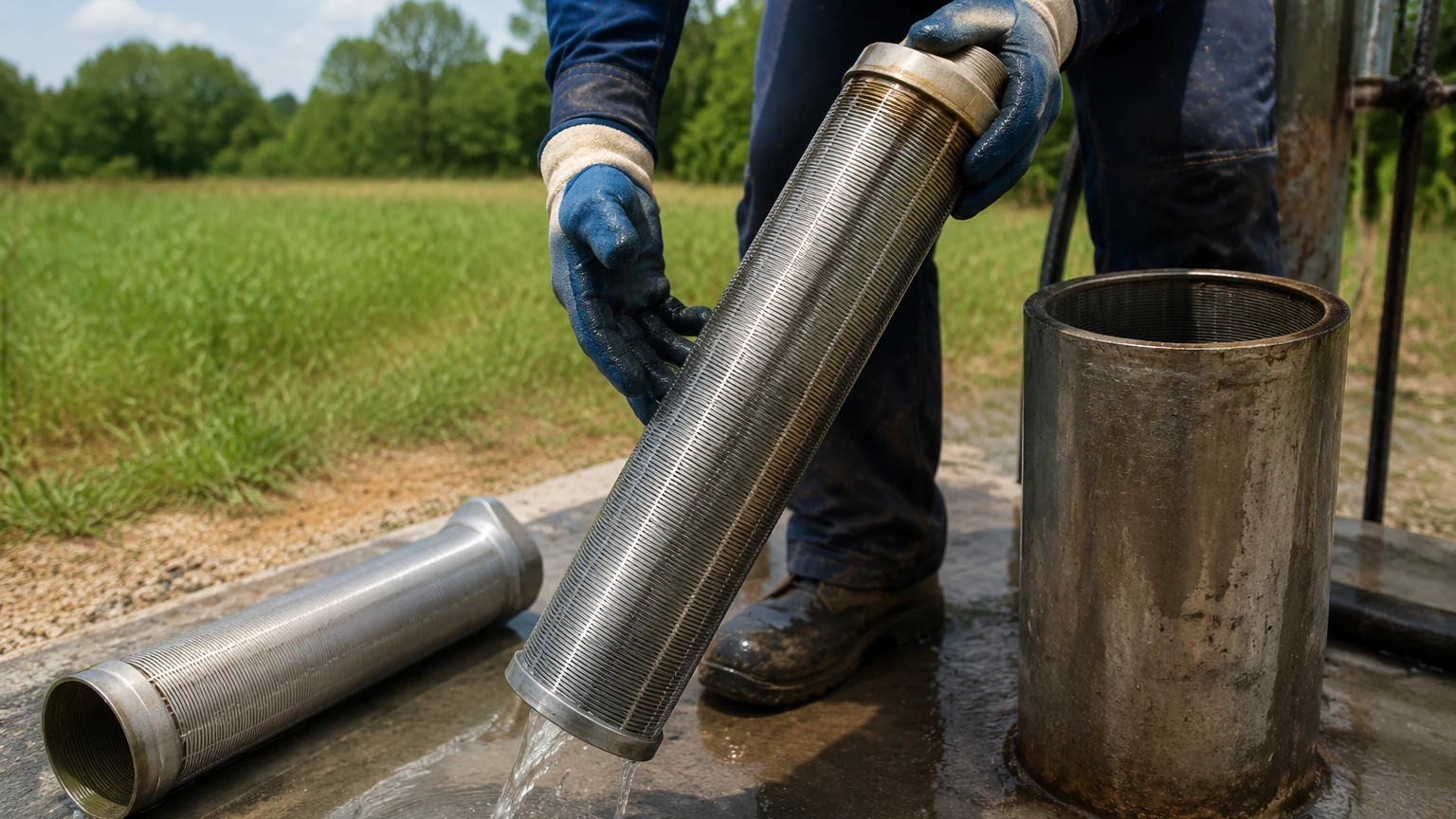
Maximizing the "open area" is a critical goal. A higher percentage of open area reduces the velocity of water entering the screen, which minimizes friction loss and reduces the likelihood of mineral precipitation. Continuous-slot wedge wire screens are often preferred in industrial applications for their superior open area compared to shutter or bridge-slot designs.
Material Selection: The Case for Stainless Steel
Material selection is perhaps the most significant factor in determining the lifespan of a replacement screen. In industrial filtration, stainless steel is the standard for durability.
* Type 304 Stainless Steel: Suitable for most freshwater applications where corrosion levels are moderate. It offers excellent structural strength and resistance to oxidation.
* Type 316L Stainless Steel: Recommended for environments with high salinity or chemical aggressiveness. The addition of molybdenum enhances resistance to pitting and crevice corrosion, making it ideal for chemical processing or coastal water treatment.
Using high-quality stainless steel ensures that the replacement screen can withstand aggressive well-cleaning chemicals, such as strong acids or chlorine, which may be required for future maintenance.
Engineering Considerations for the Replacement Process
The physical act of water well screen replacement can be executed through several methods, depending on the well's construction and the extent of the damage.
Full Screen Extraction
In some cases, the old screen can be pulled from the well using specialized hydraulic jacks or drilling rigs. This allows for a complete cleaning of the borehole and the installation of a new screen and filter pack. However, this method carries the risk of borehole collapse, especially in unconsolidated formations.
Liner Screen Installation
A more common approach for repairing deep industrial wells is the installation of a liner screen. A smaller-diameter screen is lowered inside the existing damaged screen. The annulus between the old and new screen is then filled with a specialized filter media or grout. While this slightly reduces the well's diameter, it is often a more cost-effective and lower-risk solution for restoring filtration integrity.
Well Development After Replacement
Once the new screen is in place, the well must undergo a rigorous development process. This involves surging, jetting, or over-pumping to remove fine sediments from the formation and properly settle the filter pack. Effective development ensures that the new screen achieves its maximum potential yield and operates sand-free from the outset.
Customization and OEM Solutions in Filtration
Standard off-the-shelf screens rarely meet the precise needs of specialized industrial processes. Customization is often required to match specific flow rates, pressure requirements, and chemical compatibilities. Kaifil specializes in providing customized stainless steel filtration solutions, including precision-engineered wire mesh and wedge wire components that can be tailored to the unique specifications of a water well screen replacement project.
By working with an OEM partner, engineers can specify exact tolerances, custom end fittings (such as NPT threads or weld rings), and reinforced internal supports for deep-well applications. This level of customization ensures that the replacement component integrates seamlessly with existing infrastructure and provides the reliability required for continuous industrial operation.
Evaluating Total Cost of Ownership (TCO)
When budgeting for a water well screen replacement, it is vital to consider the total cost of ownership rather than just the initial purchase price of the hardware. A cheaper screen made from inferior materials may save costs upfront but will likely lead to higher expenses in the long run due to:
* Energy Consumption: Screens with low open area increase drawdown, requiring pumps to consume more electricity to maintain the same flow.
* Maintenance Frequency: Lower-grade materials require more frequent chemical cleanings and mechanical interventions to combat corrosion and encrustation.
* Premature Failure: The cost of a second replacement project far outweighs the investment in a high-quality stainless steel screen during the first intervention.
Investing in precision-manufactured components ensures that the well remains productive for decades, providing a stable water source for critical industrial processes.
Conclusion
Water well screen replacement is a critical intervention that restores the efficiency and longevity of industrial water systems. By accurately diagnosing failure modes, selecting superior materials like 316L stainless steel, and optimizing slot designs for specific geological conditions, engineers can significantly improve well performance.
For technical professionals seeking reliable, high-performance filtration components, choosing a manufacturer with extensive experience in custom industrial solutions is essential. To explore how customized stainless steel filtration can support your facility's needs, visit the Main Page for detailed product specifications and engineering guidance. Proper planning and the use of high-quality components are the keys to ensuring that a replacement project delivers lasting value and operational security.
